



Archive by Author | judyabl

ARCWP Woman Priest Maureen McGill Interviewed by NPR

DSCF0892IMG_0117

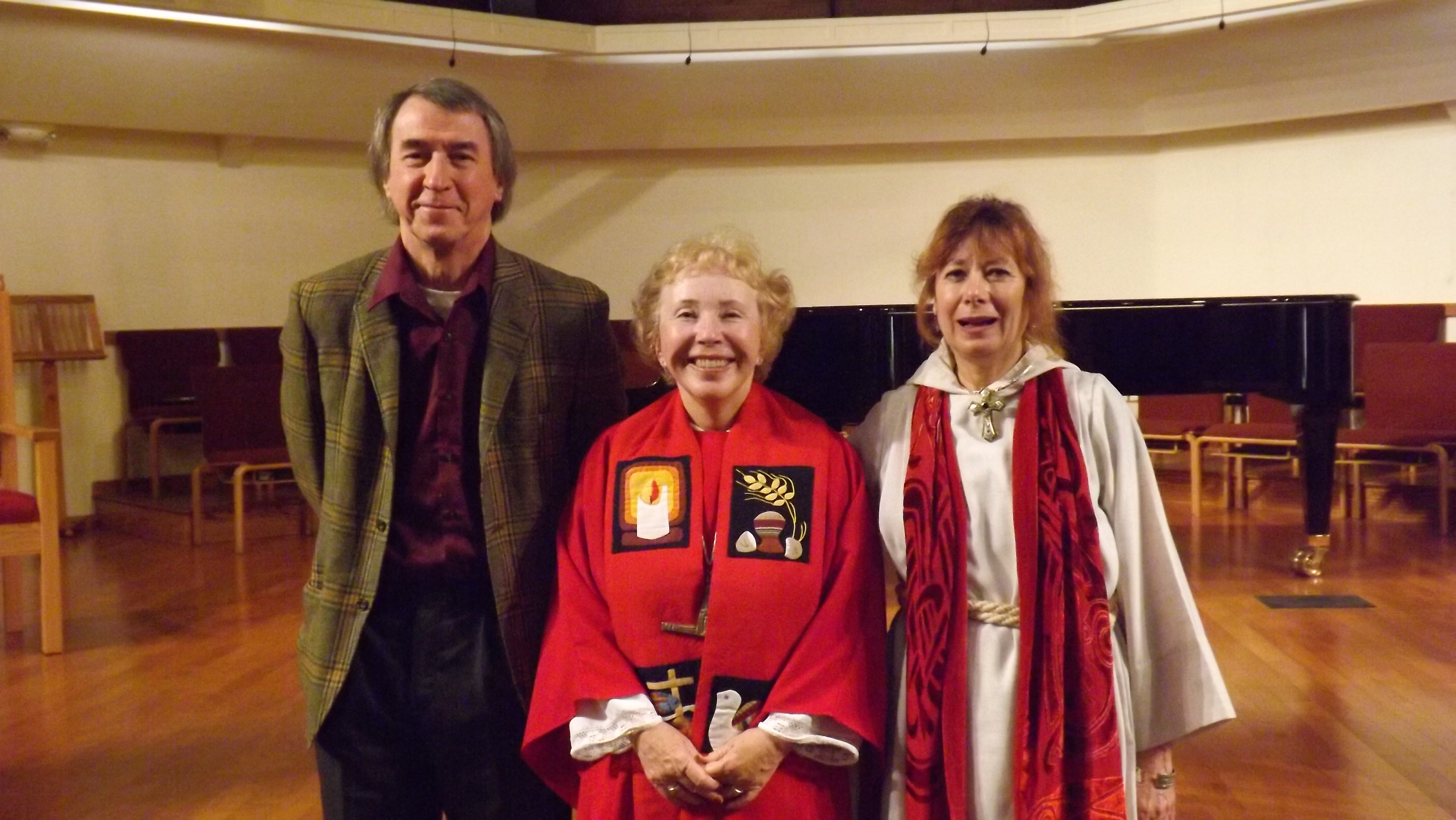
Rev. Maureen Mc Gill, ARCWP Ordained January 18,2014 Sarasota, Florida with Bishop Bridget Mary Meehan and Marina Teresa Sanchez Mejia, Maureen is on the left in Ordination Picture

On the left Maureen is at the hospital bed of  Gloria Laracuente in Tampa with Rev. Judy Beaumont and Gloria’s Family members

Women Priests Ordained in Sarasota, Florida

by Yoselis Ramos, WGCU, NPR

News polls show a majority of American Roman Catholics believe women should be allowed to become priests. A group of women in Sarasota who are doing just that—with or without permission from the Roman Catholic Church.

The sun shone like a beacon through the windows of the St. Andrew United Church of Christ in Sarasota. It started off like a regular Catholic mass but instead of men wearing the deacon slashes as they walked down the aisle it was women.

This isn’t a regular mass. It is a ceremony for ordaining women priests and deacons. Two women were joining the more than 145 women priests around the world. They’re a part of the Association of Roman Catholic Women Priests. It’s a part of a movement that started in 2002 with the ordination of seven women at the Danube River in Germany. They were ordained by an episcopal male bishop whose own ordination was not considered valid by the Roman Catholic Church.

Actually, the Vatican punishes women who seek ordination with excommunication. It’s a crime against the church as severe as priests who sexually abuse children. But excommunication doesn’t intimidate this group of women. Maureen McGill of Pensacola is one of them. She was ordained a priest in Sarasota.

McGill found the association through the internet after leaving the Catholic Church for a few years.

“At that point, nobody in the family was going to church”, McGill said. “We were just done with church. We had a bad experience at my mother’s funeral and we kinda just left.”

To McGill, this community felt right.

“I was home but there was none of the rigidity, there was openness to women, openness to birth control, openness to divorced Catholics, openness to gay, lesbian, transgender, bisexual people”, McGill said. “It was a totally open experience and I think that’s what I had been looking for for 67 years.”

But this group is not recognized by the Roman Catholic Church. Frank Murphy is a spokesman for the Diocese of St. Petersburg.

“The diocese of Venice does not recognize them at all”, Murphy said. “It’s just a group of people making a claim that’s just not valid within our church.”

Pope Francis has said the door of allowing women in the priesthood is closed. McGill says she understands that doors close.

“But they open, they do open”, Murphy said. “And if you knock loud enough and hard enough and keep going at it, that door might open.”

Some folks like Murphy, don’t see that door opening anytime soon.

“I think that the ordination of a woman to priesthood, I think it involves a teaching of the church which is for men only at this point in time and I think it will continue to be that way”, said Murphy.

Even so, McGill holds out hope as she jokes often with her husband.

“He said the other day, ‘you’ll never live to see women completely accepted in the church’ and then he looked at me and he says, ‘given your genes, you probably will live to see it’”, laughed McGill. “And I will crawl to the Vatican with my walker if I have to on that day if they do accept us.”

But history may be on her side.

A recent poll conducted by Bendixen & Amandi for the Spanish-language network Univision, showed Catholics internationally are split on a variety of issues including gay marriage, divorce, and abortion. Specifically, 59% of the Catholics surveyed in the United States believed women should be ordained into priesthood.

Fan Into Flame the Gift of God Which Is In You

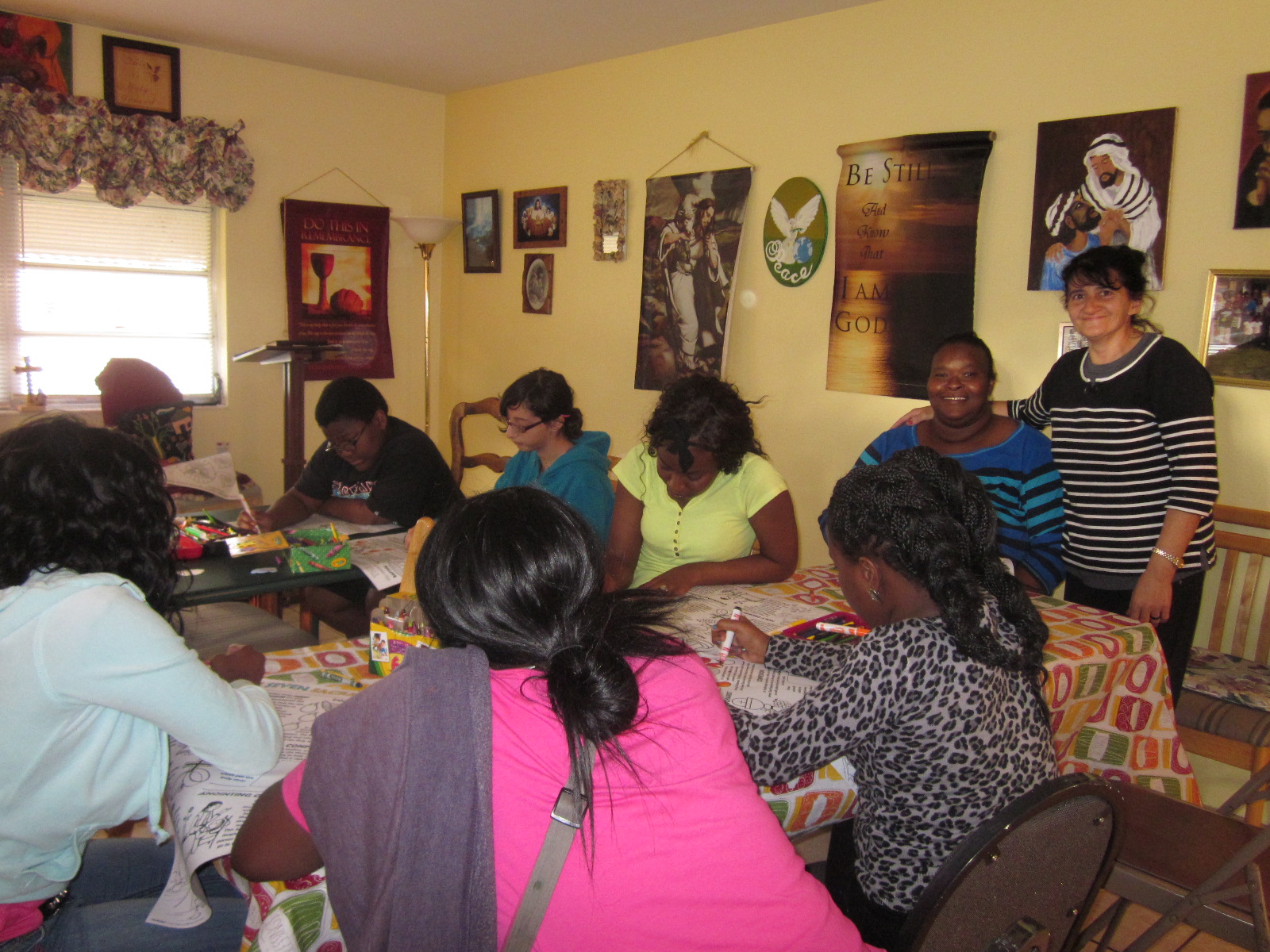
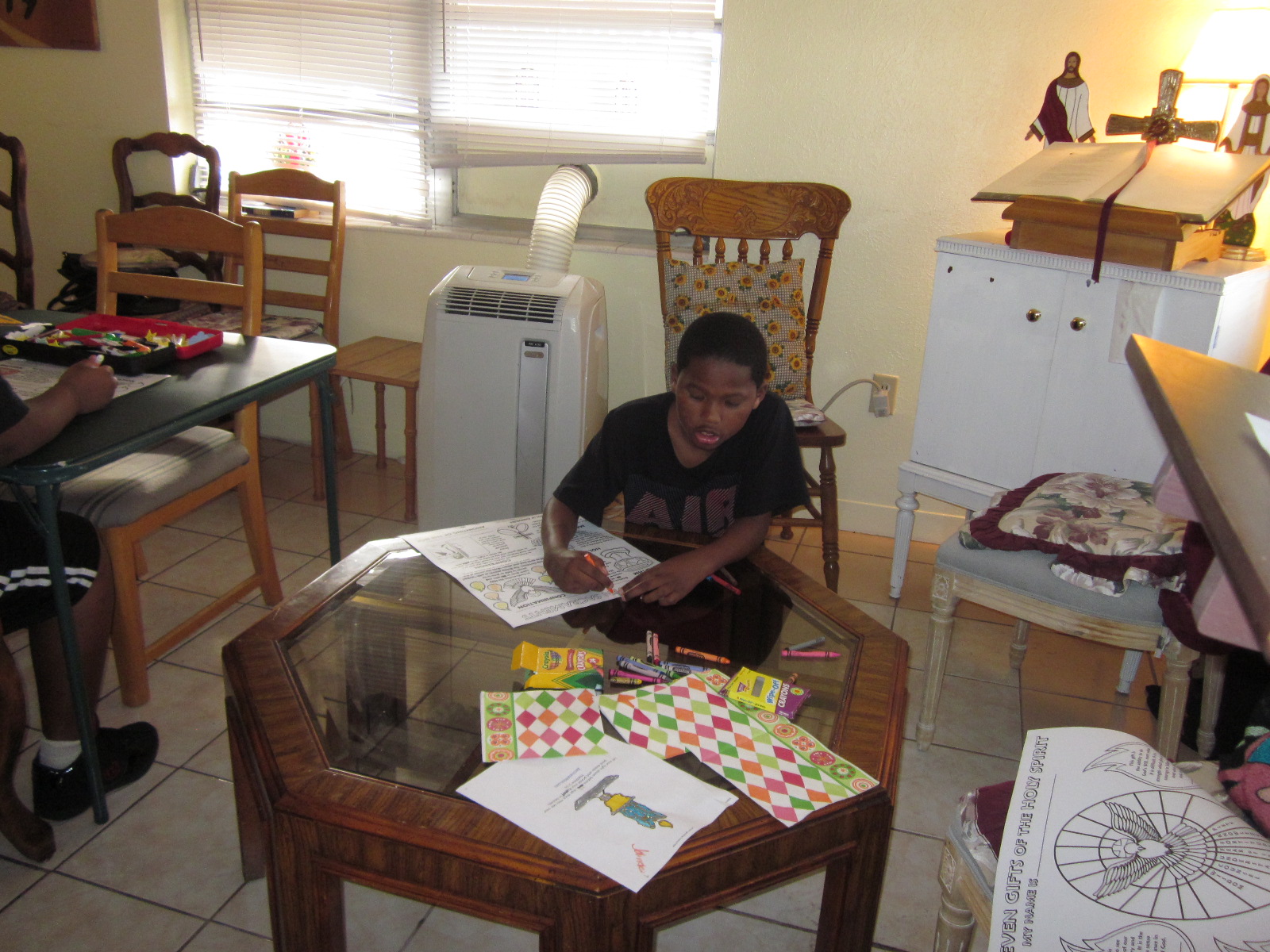
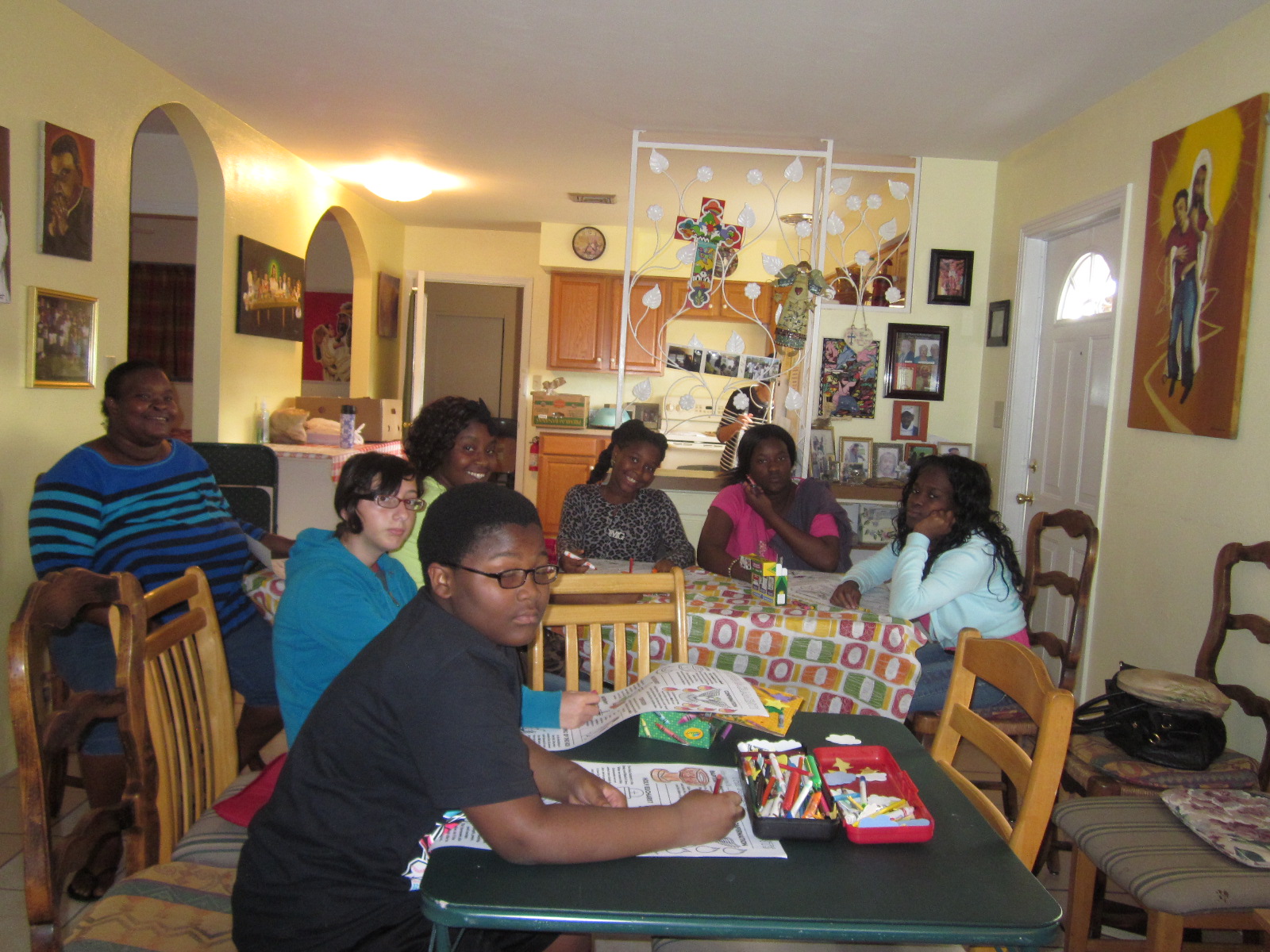
The young people of our Good Shepherd Inclusive Catholic Community are setting the church afire with their examples of faithfulness and excitement in learning and living the Gospel. When asked how they witness to their faith they are initially stumped and then they can identify helping others, bearing other’s problems, being peacemakers and studying to do well at school. This is not easy in a neighborhood where violence is ever present and others may drop out of school and family life. Sometimes there are problems and bumps in the road large and small. One family was struck with tragic illness of one member and these youngsters did more than children are expected to do in being there for that member and the stressed adult caretakers. Economic realities are hard yet these young people do not ask for much. They are clear that most important is love and they are grateful for their parents and grandparents. Most significant for the youth who have remained with us over the years is that adult family members come to church with them. They are not just sent, they are led by parents, grandparents, aunts and Godparents. Instead of withdrawing from church as so many do, they come to church faithfully and to our Sunday classes where they share their lives, share God’s love with all present, and work at learning how to follow Christ.

They are not fully aware of how much joy they bring into the lives of their church family members with their smiles, and participation in the liturgy and in the life of the church. We are happy to support them as they work hard at success in school and having fun as kids should have. Most recently we were amazed as all of our young people elected to move forward to Confirmation at the end of April, the week after Easter. (On Easter our three youngest children, the triplets who are 5 and a half, will be baptized).The enthusiasm of our youth led about ten of our adults to elect Confirmation as well. Yesterday we held a joint Confirmation class with the young people and the adults. As Timothy was told by Paul to fan the flame of the gift of God in him by the laying on of hands by Paul and the community, our young people are leading their elders into the laying on of hands and receiving the gifts of the Holy Spirit not only in Confirmation but in every day life. We are blessed with wonderful families and young people!

  Image 

Nia, Kia and Ria Preparing for Baptism

Image


LInda and Lili, Two of the Moms look on as the Youngsters prepare for Confirmation

Image


Keion doing a good job!

Image


Using our gifts

Image


Joy in our Junior class

Image

Efe Jane Cudjoe,Our Youth Leader and Pearl Cudjoe, Our Junior Class Teacher

This picture was taken at The Good Shepherd in mid-January before Efe Jane who is a Junior at Brown University left for Washington DC to prepare for a semester abroad. Efe,who is pre-med was chosen to go to Viet Nam, South Africa and Brazil to study community support for local medical centers.  She will live with host families and we are sure that her joy and light will brighten their lives even as our lives are brightened by her. We are already looking forward to Efe’s return this summer to share her experiences with our youngsters.

Image


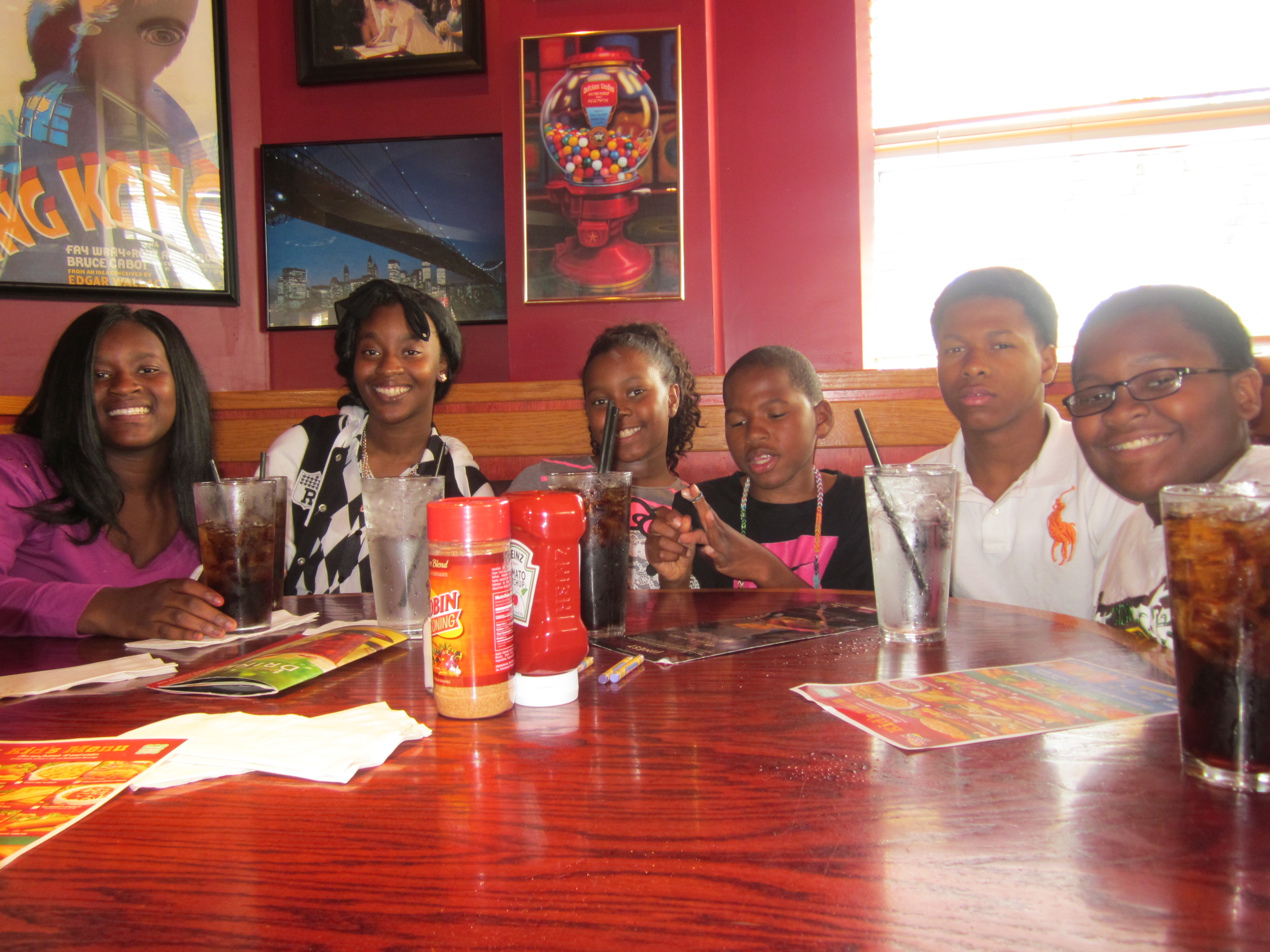
Going to see Frozen and Play Miniature Glow Golf

Image


Trying Something New Our Golfers with Pastor Judy B.


JOY !

Image


We thank God for our Good Shepherd youth! We also thank the Sophia Inclusive Catholic Community of New Jersey with Pastors Mary Ann Schoettly,RCWP and Mike Corso for their generous support of our youth activities. Seven of our youngsters also led the procession with drums and liturgical dancing and carried the gifts in the recent Ordination of two women priests and two deacons in Sarasota on January 18,2014. Efe Jane Cudjoe was the Lector for the First Reading. 

“Don’t let anyone look down on you because you are young,but set an example for the believers in speech, in life,in love, in faith….”  Tim 4:12 

Let us pray for young people everywhere to enliven the church!

Rev. Dr. Judy Lee,ARCWP

Pastor Good Shepherd Inclusive Catholic Community

Fort Myers, Florida


Be Salt, Be Light,Be Blessed! Rev. Judy’s Homily for 5th Sunday-2/9/14

Image

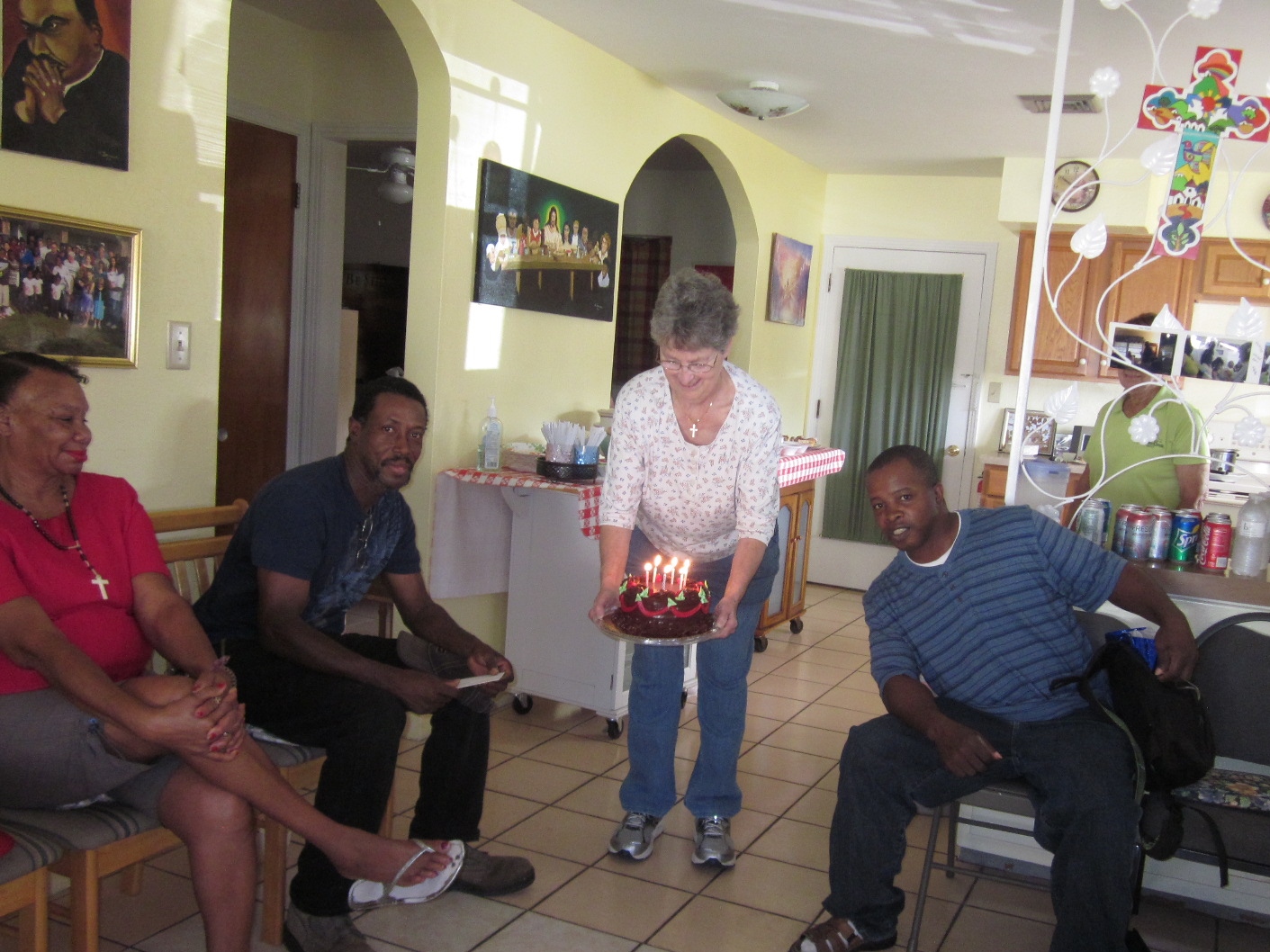
Pastor Judy Beaumont brings Eddie and Robert a Birthday cake as Betty looks on during our Tuesday Church

Be Salt, Be Light, Be Blessed!  Rev. Judy’s Homily for the Fifth Sunday in Ordinary Time-2/9/14

The readings for this Sunday are some of my favorite as they establish what the life of the Christ follower will look like. In rich imagery and poetry Jesus, using the Aramaic idioms easily understood in his time, teaches us how to live. The Gospel is part of the Sermon on the Mount as recorded by the writer of Matthew (Matthew 5: 13-16). After the Be-attitudes (Matthew 5:3-12), after showing those attitudes and actions that enrich being with joy, happiness and deep satisfaction: humility, losing everything and depending on God alone (as the poor in the goods of this world must), a thirst for justice, compassion and peacemaking, Jesus says that we who follow his teachings, his light,are to be the salt and light of the world. We are not to lose our saltiness and we are to put our lights on a lampstand so that they can be seen. This light is to reflect Christ not ourselves, to demonstrate what it means to be Christ-like in a world that is marching to a different drummer-or many different drummers. To be light we are to understand what Jesus taught and live it though this is so much easier said than done and to do it is the operative word.

Salt is a preservative and a flavor enhancer. In Jesus’ time it was an expensive, necessary and precious commodity. In that time as in modern times, mining for salt was a difficult, back breaking and dangerous job. So salt comes with a price and so does being salty. In our vernacular “salty” is to speak up and to say what needs to be said. That is often prophetic as well.  Jesus is asking us to be bold as we enhance the world with God’s meanings, ways and purposes-to be salt and light for people.  The Message Bible has a lovely rendition of these verses (5:13-16):

“Let me tell you why you are here. You’re here to be salt seasoning that brings out the God-flavors of this earth….Here’s another way to put it: You’re here to be light, bringing out the God-colors in the world. God is not a secret to be kept. We’re going public with this, as public as a city on a hill…now that I’ve put you on a hill-top, on a light stand—shine! Keep open house, be generous with your lives….” (The Message).

And, what exactly are the God- flavors and the God-colors? What will people taste and see if we are salt and light? Jesus is clear in the preceding Be-attitudes and throughout the Gospels and the prophet Isaiah is clear in the first reading (Is. 58:7-10): people will taste compassion and they will see justice in living vivid color. They will therefore not go hungry either physically or spiritually.  Isaiah says” Share your bread with those who are hungry, and shelter homeless poor people; clothe those you see naked, and do not hide from the needs of your own flesh and blood. Then your light will shine like the dawn and your wound will be quickly healed over….If you bestow your bread on the hungry and satisfy the afflicted, then light will rise for you in the darkness, and the gloom will become for you like midday”.

If we love our neighbors (and yes, our difficult family members) as ourselves and care for those in most need, whatever those needs/afflictions are-we then are healed of our own wounds and find light in the darkness that enters our own worlds. When we are salt and light we too are whole and healed. Wow!

This rings so true.  Yesterday we had our Tuesday ministry and once again my heart and spirits were lifted by our people- most once homeless, a few still homeless, some  broken and yet full of God’s love. When I am at my lowest and think I can’t take another step let alone provide care for anyone in need: “the convincing power of the Spirit” (I Cor. 2:1-5) takes over and we are transported together. Yesterday we sang that we are holy ground and we were. We sang about joy and we were joyful. The joy of Mary and Phyllis, Gary and Nate and Lauretta and the others as they read and reflected on the Scriptures for the day lifted all of us. The prayer time lifted the needs of those present and those prayed for to the heart of God. The hot and delicious lunch provided by Jack and Ellen was so much appreciated. The clothing in our free store was a big hit, especially for the women yesterday. Four people spoke individually with me at length and both tears and laughter was shared.  And as we celebrated the birthdays of Roger, Eddie and Robert it was truly a happy day. Jesus was so right, living the Gospel brings great joy and satisfaction: it is as simple and as hard as that. The hard part is that there is so much need and it hurts deeply to know that there are such meager resources for those who need a place to lay their heads. The work is slow and tiring: filling out endless forms for Social Security Disability benefits and waiting, sometimes years, with people for incomes and housing can break your heart. Yesterday, Kris finally had good news. He filled out a housing application for persons with disabilities in 2010 and his name is finally near the top of the list. In a few months he will have his own place. He laughed then cried for joy and so did we. But 60 year old Carrie is still waiting living on the charity of others who are impatient, and Jenny has lost her housing again as she went off her meds and failed to care for her apartment and pay the rent. Giving yourself away can be endless and difficult. Yet that is also the source of greatest joy.

I will end this homily with sharing a reflection:

(Please see               http://upload.wikimedia.org/wikipedia/commons/c/c6/The_creation_of_man_-_Zipaquira.JPG      )

One of the most beautiful places I have seen is the Salt Cathedral in Bogota, Colombia. This beautiful underground cathedral and marvel of engineering was started by the miners who worked the salt mine near Zipaquira, Cudinamarca . Deep in the salt mine they carved out a chapel where they could pray. By 1932 the building of an underground cathedral was underway.  In the 1950’s a major effort completed a three story underground cathedral depicting Christ’s story in sculptures of salt (halite) emerging from the darkness of the mine by beautiful strong lighting. The birth, death and resurrection of Christ, including the Stations of the Cross and other biblical scenes are artistic masterpieces. Although it is not under the jurisdiction of a bishop and therefore not an official Roman Catholic Church over 3000 people worship there each Sunday.  But what struck me most was not the beauty of it all-and it was awesome, but a window where we could look in and see the helmets and lights and messages of faith by miners who were killed in this mine. It was their very lives that brought salt to the earth and beauty to this mountain. Indeed they were the lights and salt of the earth. And serving God’s poor who risk their lives to do work that must be done and yet goes unrewarded materially in this 21st Century must remain the essence of the Christ followers mission-however we enact it.  But enact it we must, for to follow Christ is to do and to do is ultimately to be, to be salt and light and to be blessed.

Rev. Dr. Judy Lee,ARCWP

Iconic Singer of Equality-Pete Seeger Dies at 94-Revs. Chava and Judy Reflect

I cried when Pete Seeger died this past weekend, I thought he might live forever, and I think he will. I am happy to present Rev. Chava’s reflections here and echo them. Pete Seeger’s simple melodious strumming and singing moved my soul as a teen and young adult living through the Civil Rights Era and  Human Rights era. I applauded him for his courage-to be blacklisted and still sing. I still remember his song parodying the fear of “a red under the bed” and his description of suburbia as “houses made of ticky tacky-and they all looked just the same”. As a city kid I thought exactly that when I visited the suburbs. Pete Seeger sang about equality and individuality not blanket conformity. His music was a fuel to give me the courage to be different as I was and would be in so many ways. But most of all, like Chava, I remembering singing Pete Singer songs, many of which were old favorite folk songs, in a small circle with my beloved Pastor, Rev. David Ver Nooy and my group of friends.  I’ll admit that I wanted to sound more like Joan Baez than Pete Seeger, but his songs were the basis for all other folk singing for us. It is not one of his famous songs, but I remember this Quaker ballad as it is associated with the spirituality of Rev. Dave and Pete Seeger for me ” It’s a gift to be simple, it’s a gift to be free, it’s a gift to come down where we ought to be… and by turning, turning we come back home….” Pastor David lived in Beacon, New York in his last several years. He loved attending Pete Seeger’s concerts in the area and the ship Clearwater.  Pastor Dave went home to our loving God a year ago December, now that Pete Seeger is there too, I can hear them jamming-Pete on the banjo or guitar and David on the trumpet,or maybe they are just singing together in that heavenly chorus that I hear singing all the time in my head-the songs of the community of saints that live on in our hearts forever.

The Sunday Morning Show featured highlights of Pete Seeger’s life. The commentator said that Pete Seeger was deeply upset when Bob Dylan started playing the electric guitar, not because it was Rock music and the dawning of an age that would end the folk song revival era, but because the musician stood on a stage blaring music out way above the people. Pete Seeger was a prophet of equality-he wanted everyone to sing together, on the same level, standing side by side and even locked arm in arm, as we did and still do in our churches when we are singing We Shall Overcome, since there is much to be overcome. Pete Seeger did not preside over he sang with. Chava, wouldn’t you agree that that is exactly what we are trying to achieve in the women’s priest movement? That the renewal of the Church is symbolized by the circle where we all link arms and sing together with no rock star towering above us-pastor and priest, man and woman, young and old, documented or not documented, and all colors of the rainbow- united in equality and freedom together?  

We are so blessed,Chava, to be shaped by Pete Seeger, his music and that beautiful era in time. We shall indeed carry it on! The Sunday Morning Commentator said “Pete Seeger carried that music a long way, now the music will carry him”.

Amen! 

Rev. Judy Lee, ARCWP

Rev Chava Redonnet’s Reflections on Pete Seeger 

Oscar Romero Inclusive Catholic Church
Bulletin for Sunday, February 2, 2014
4th Sunday in Ordinary Time

Dear Friends,

The world lost one of its great troubadours this week. Pete Seeger died, at
the age of 94. I’ve been trying to imagine what the world would have been
like without him and his music, without “We Shall Overcome” and “Turn,
Turn, Turn.”  – and what my own life would have been like without him.

As a small child, I gleefully learned the words to “Be Kind to Your
Parents” – “so treat them with patience, and kind understanding, in spite
of the foolish things they do…”  and then to “Where Have All the Flowers
Gone?”  My best friends and I used to walk to the store together, singing
“If I Had a Hammer” at the top of our lungs. In the ‘70’s I watched a TV
special about the sloop “Clearwater,” the boat that Pete Seeger sailed up
and down the Hudson River, holding concerts and calling attention to the
filthy water and the need to clean it up. And it worked! It was a great
example of how one person with a good idea and some energy can get things
moving and change the world for good.

When the crisis at Corpus Christi happened in 1998, we sang “We Shall
Overcome” together, lots of times. I sent Pete a letter, telling him how
important music had been to us during that time, and thanking him for his
songs. Some time later I got a postcard back from him with a simple
message. It said, “Chava, thank YOU!” I’ll bet thousands of people had
notes like that from him, because he was always about including all the
voices and encouraging people to participate. He said, “Participation –
that’s what’s going to save the human race.”

All his life, he got people to sing. You couldn’t go to a Pete Seeger
concert without having a chance to sing along. In fact, he perfected the
art of “singing a song twice at the same time,” shouting out the lines just
before everybody sang them together. He was all about getting people to use
their voices. None of that “are you good enough to sing” stuff – just SING!

When I was a chaplain resident at Strong, one morning we all crowded around
the computer to watch Pete, aged 89 or 90, singing “This Land is Your Land”
at President Obama’s first inauguration. It was wonderful – seeing someone
who had worked so many, many years for justice, singing with hope and joy
with hundreds of thousands of people. He kept singing even though his voice
was shot, and it was always wonderful to hear him.

Thanks, Pete, for living your life the way you did! The best memorial I can
think of is that each of us use our own voices – for justice, for peace,
for cooperation and for joy. (Find a recording of Pete singing “Wimoweh” if
you want to hear what utter joy sounds like!). Use our own voices, and
encourage each other, and keep an eye out for anybody whose voice is being
silenced. Participate! Encourage each other. Share. And sing!

Blessings and love to all,
Chava

Oscar Romero Church
An Inclusive Community of Liberation, Justice and Joy

REV. MARINA TERESA SÁNCHEZ MEJIA, ARCWP IN PLAYA RENACIENTE-CALI

evangelizadorasdelosapostoles's avatarEvangelizadoras de los apóstoles

LA REV. MARINA TERESA, ELLA,  AL IGUAL QUE MARIA Y OTRAS MUJERES NOS PRESENTA A JESÚS EN EL TEMPLO.

descarga (1)descarga (2)descarga (3)descarga (4)descarga (5)descarga (7)descarga (9)descarga (10)descarga (11)

View original post

Led By Mary and the Prophet Anna-Rev.Judy’s Homily for The Presentation Of Christ 2/2/2014

Image

Dedicating these temples of the living God, ourselves and the youth we have baptized to God and Community.

While the Scriptures are full of the faith of our fathers, today also speaks to the faith of our mothers and grandmothers and that calls for a wonderful celebration. We focus today on who Jesus is and on who his mother Mary is, and the prophet Anna as well. We also note the power of elderly Simeon and Anna who in their eighties heralded the Christ.

The feast of the presentation of Jesus at the Temple is also the feast of the purification of Mary.  Mary is an observant Jew of her times. She is  presenting herself for ritual purification after childbirth as is the Law, even as Mary and Joseph are presenting Jesus as their firstborn child, an act of thanking God for the gift of Jesus and, as it were, giving him back to God but redeeming him from a life of Temple service (really done by Levites) with their offering.  Exodus 13:1 instructs on the consecration of the firstborn.  Leviticus 23: 9-14 discusses the law of offering first fruits to God. This is similar to Hannah giving the much longed for Samuel back to God although Samuel was to be raised in the Temple. The Law says that a firstborn must be dedicated to God.  The dedication of a firstborn son is still practiced today among Orthodox and Conservative Jews and is a wonderfully happy family and communal event (Pidyon haben). There is also a Pidyon ha-Bat/ha-Ben developed by the Leifer’s, a reconstructionist/ reformed Jewish couple in the 1970’s to assure that either a girl or a boy could be dedicated to God. Other ceremonies such as a naming event are practiced for firstborn girls in all branches of Judaism today. In some of these ceremonies the baby girl is placed in water, somewhat similar to our infant baptism. It is a joyous occasion where the parents are dedicating their child and connecting her to the covenantal faith. Jesus’ presentation was also symbolic of this covenantal connection.

Mary and Joseph followed the Law, at eight days Jesus was circumcised and at 40 days Jesus was presented at the Temple (Luke 2:22-40).  The first reading of the day from Malachi (3:1-4) is the prophecy: “the Sovereign One you are seeking will suddenly enter the Temple….” Simeon and Anna were waiting.  The old, strong and wise were waiting.

On that day God’s Spirit guided the elderly devout man, Simeon, to the Temple. When he saw the baby Jesus he knew right away that his eyes had seen God’s salvation and a light of revelation to all. He said he could then die in peace. Anna the prophet who is 84 years old, was there as well, at that moment she gave thanks to God and then talked about the child to all who anticipated the deliverance of Jerusalem.  Here we note the strength and importance of these elderly people in the prophetic role of welcoming Jesus and spreading the word.  This respect for the wise and prophetic words of the elderly is refreshing in a time where “youth culture” is totally glorified. The ads for Super Bowl Sunday are said to make billions for companies, let us see how many mature people are featured positively in these ads?

The Gospel of Luke is known to have included women far more than the other Gospels and there has even been speculation that it may have been written by a woman or at least influenced by women (Loretta Dornisch, A Woman Reads The Gospel of Luke: 5; 1996). The writer of Luke is making Mary, and Anna as well, central figures in this pericope (brief story) of Jesus’ presentation at the Temple.  Simeon blesses the couple, talks of Jesus’ destiny and addresses Mary directly and foretells her pain at the rejection of Jesus and the related events- “And a sword will pierce your heart as well”.  Indeed every mother and all mothering persons can identify with Mary’s pain. When a teenager that I had fostered, loved and cared for left my home and got into trouble with the police he was brought before the judge in shackles. His head was down and he was clearly broken. Seeing him like that broke my heart. How much more was Mary’s heart broken?

Anna who is described as a prophet who “never left the temple” gave thanks and shared the good news about the child with all who had hopes of the deliverance of Jerusalem. Both Simeon and Anna have a prophetic belief in Jesus as the expected Messiah.  This is noteworthy as the writer of Luke is speaking to a varied, mainly Gentile Christian community and is usually more concerned with Jesus’ inclusion of all people in God’s kin-dom than with Messianic prophecy. Yet as we look carefully, Luke is consistent as Simeon is describing Jesus as “a light of revelation to the Gentiles AND the glory of your people Israel”.  Luke has a both/and approach to seeing the Christ– deliverance and the light of revelation is for the Jews and for the whole world.  Luke is giving women and the elderly a central role in this presentation of Christ.

As he later shows Jesus to be growing in wisdom (sofia) and the grace of God (charis), feminine words in Greek that also show feminine aspects of God, the writer of Luke seems to be embracing Christ as a feminine aspect of God and beyond all notions of gender. Schussler-Fiorenza (1994) develops extensive thinking on Christ as Wisdom Sofia.  Mary remains central as the teacher of the faith for Jesus. When Jesus, at 12, gets left behind and is found in the temple, (Luke 1:41-52) it is Mary, not Joseph that he dialogues with.  It is reasonable to think that Mary was his primary faith teacher (Dornisch, 1996). Reflecting on Mary’s Song- Magnificat- (Luke 1:46-55), we see Mary’s knowledge of the Scriptures and her sense of identification with the compassion and justice that the Law represents with the poor and outcast.

The non-canonical Gospels of The Birth of Mary ascribed to Matthew and the Protoevangelion ascribed to James say that Mary was a much longed for child who was presented to the Temple by her parents Anna and Joachim at age 3 and remained there until she was 14 and betrothed to Joseph. She was given back to God in thanksgiving for her birth and also to be educated. There is historical evidence that “Temple Virgins” lived in a separate building behind the Temple walls and that they recited prayers and sewed the Temple veil and took care of vestments and other liturgical items. This was the only way a girl could become educated as well. Older women, usually widows like the prophet Anna in the Presentation pericope lived with them and cared for them.  It is reasonable to think that Mary was a temple servant and that she was now dedicating her son Jesus, even as she was dedicated although he would become the new Temple, “to be torn down and rebuilt in three days”, and not live in the Temple. The Christ presented in the Gospel of Luke could have indeed been educated for his first twelve years by a woman, Mary his mother.

As Mary and Joseph present Jesus, as Anna and Simeon recognize and present Jesus, may we not lose hold of our faith and its roots in the depth of the beautiful Jewish faith.  May we embrace our sisters in the Scriptures and revere our elderly.  May we realize that like Jesus, we are all temples of the living God and act accordingly.  May we also learn to present Jesus to the world, and to present ourselves and our own children and faith communities to be dedicated to God and to all of God’s people, especially to those in most need of inclusion.

Rev. Dr. Judy Lee, ARCWP

2/1/2014

Sermon by Archbishop Desmond Tutu for The Presentation of Christ in the Temple

In preparing for my Homily on the Presentation of Jesus for this Sunday I found this 2004 Sermon by the wonderful preacher,homilist and near sainted human being, Most Rev.  Desmond Tutu. In it he addresses many of the issues we continue to face today in the world and as followers of Christ: war and blood on our hands, inclusion and attitudes towards the LGBTQ community, women’s ordination and episcopate, the false dualism of spiritual and material (read human) nature, and the reality of God in Christ and God in us according to how, indeed we present ourselves and Christ to others. His ending with God’s abiding love for us is beautiful. The text is Luke 2:22-30. I had the pleasure of hearing the dynamic and deep Desmond Tutu preach in New York City when I was a youth. I am so happy to read his words when I can and to present them here.

Sermon by Archbishop Desmond Tutu at Southwark Cathedral

[ACNS source: Southwark Cathedral]

The Feast of the Presentation of Christ in the Temple

Sunday 1 February 2004 – 11.00am Choral Eucharist

Long, long ago, very clever people decided that the human body, flesh, all material things, that all of these were in and of themselves, evil, intrinsically, inherently and always. So there was no way that the good, the pure, the sublime and, by definition, the perfectly good spirit could be united with the material. For these people, the dualists, the incarnation, God, pure spirit, becoming a human being was totally and in principle, and always, out of the question. What people thought was God become flesh in Jesus Christ, well, that was all just playacting, a charade. Could you imagine God the all-powerful, God the eternal, dying? Oh come off it! Get real! When this one was crucified, it was not really Jesus – God – dying. You and I may pooh-pooh all this superiorly and say, “How odd, flying in the face of facts” but aren’t so many of us really closet duallists or worse, have we not sometimes been embarrassed with our physicality, when we have found it attractive to engage in the familiar dichotomies as between the sacred and the secular, the profane and the holy? When we have thought that Original Sin, must somehow have had to do with the facts of life, we snigger a little bit, wink, wink, as if when God said to Adam and Eve, “Be fruitful and multiply”, God meant that they would do so by perhaps looking into each others’ eyes!

And have we not heard so many, many times: “Don’t mix religion with politics”, so very much the philosophical position of duallists. And just look at the tangle we have got into about human sexuality, about gays and lesbians, etc. Now what follows is really in parenthesis. I hope so very much that you have got over the anguish of last summer and may I salute Canon Jeffrey John who acted with so much dignity and selfless generosity.

The Jesus I worship is not likely to collaborate with those who vilify and persecute an already oppressed minority. I myself could not have opposed the injustice of penalizing people for something about which they could do nothing – their race – and then have kept quiet as women were being penalized for something they could do nothing about – their gender, and hence my support inter alia, for the ordination of women to the priesthood and the episcopate.

And equally, I could not myself keep quiet whilst people were being penalized for something about which they could do nothing, their sexuality. For it is so improbable that any sane, normal person would deliberately choose a lifestyle exposing him or her to so much vilification, opprobrium and physical abuse, even death. To discriminate against our sisters and brothers who are lesbian or gay on grounds of their sexual orientation for me is as totally unacceptable and unjust as Apartheid ever was.

The God we worship has taken our physical material selves seriously because God declared about everything that God had created – matter and spirit, everything, not just that it was good, God said it was “very good”. That is why we say in the Nicene Creed: ‘maker of all there is, visible and invisible’. That matter is not recalcitrant, hostile and antagonistic to the spirit and so God could and did become a real human being, a real baby, belonging to a particular couple who have names, who lived in a real, a particular village, Nazareth, in an actual, real part of the world God created, belonging to an actual, real community with particular and specific laws, rules and customs.

So this baby’s parents obeyed the law and brought the baby to be redeemed as the first-born male who belonged therefore to God. God took human history seriously and so fulfilled promises God had made earlier to a Simon and to a faithful widow, Anna. God became a real human being; God took on our humanity – why? Other clever people said God became a human being so that we could become God. The epistle of St Peter speaks daringly of us as partakers of the divine nature. In this Eucharist, we will mix water and wine in the chalice and the President prays a remarkable prayer: ‘Oh God, who didst wonderfully create and wonderfully renew the dignity of man’s nature, grant that by the mystery of this water and wine, we may be made partakers of His divinity, who shared our humanity.’

Here God uses everyday, mundane, material things to communicate the very life of God, making Christianity, as Archbishop William Temple used to say “the most materialistic of all the great religions.” Yes, we are made partakers of the divine nature, God became a human being so that we could become as God. The Orthodox Church makes far more of our so-called ‘deification’ than we and you might recall how in the epistle to the Ephesians, the author speaks of us as being those who are going to be filled with the fullness of God – yes, we have been created in the image of God, that is our destiny, our destiny to be God-like, God-like so that we are perfect, even as our heavenly father is perfect.

So in the Old Testament, God exalts God’s people to be holy, “even as I your God am holy” and though this injunction occurs in the book Leviticus, which spends a great deal of time over the minutiae of cultic, ritual things, it turns out that this holiness that God requires of God’s people has nothing to do – or very little to do – with cultic purity. No, it is to reflect the divine compassion and concern for the weak and the hungry and so the assertion is when you are harvesting, don’t take up everything, leave some, leave some for the poor, be kind to the alien, for you see you were aliens in Egypt. How apt as we contemplate ever more stringent requirements for asylum-seekers and refugees. When you worship this God, if it does not make you see and feel like God, then that worship is a cult and for God it is an abomination, however elaborate it might be.

God will not heed your worship, your beseeching, for your hands are full of blood, the blood of your sisters and brothers killed in wars that were avoidable. Demonstrate your repentance by how you treat the most vulnerable: the orphan, the widow, the alien. When you are king over this people, and this God gives you God’s righteousness, it is so that prosperity will prevail, will prevail because as king, you judge rightly, you judge rightly especially the poor with equity, you give justice to the poor, you deliver the needy when they cry and the poor man who has no helper. You will pity the helpless and needy and save the lives of the poor. How many of our governments would pass this stringent test: “how did you deal with the poor?”

And when God’s spirit anoints you, it is so that you may preach the Good News, especially again to the poor, to preach the release of the imprisoned ones and to announce the year of the Lord’s favour, the year of jubilee, the year of release, the year of the cancellation of debt – of heavy, un-payable, draining international debt.

To be partakers of the divine nature means we become more and more God-like, treating all with an even-handedness, even those we regard as evil. For you know, even the most evil, the Shipmans, the Saddam Husseins, Bin Ladens – we may not like it – but they remain God’s children. This God, who lets God’s sun shine on good and bad alike; who makes God’s rain fall on all, for all, and we, who want to be God-like, are asked to forgive, even as God has forgiven us in Christ, forgive even that which we consider to be unforgivable.

To be like this God, who gives up on no-one, who loves us, not because we are loveable but that we become loveable only because God loves us, God loves us with a love that will not let us go, a love that loved us before we were created, a love that loves us now, a love that will love us forever, world without end. A love that says of each single one of us: “I love you, you are precious and special to me, I love you as if you were the only human being on earth, I love you and there is nothing you can do to make me love you more because I already love you perfectly.”

How incredibly, wonderfully, it is that God says to you, to me: “There is nothing you can do to make me love you less. I take you, I take you very seriously, I take you – you – body and soul, you the visible and the invisible of you, I love you, I love you, I love you.”

[Archbishop Desmond Tutu is the retired Anglican Archbishop of Cape Town]

Some Lessons on Peace from Woman Priest Janice Sevre-Dusynska,ARCWP and Other Peace Activists

Image

Janice Sevre-Dusynska,ARCWP on the right with her friend Max Obuszewski also a peace activist and Bridget Mary Meehan

When our sister Priest Janice Sevre-Dusynska and other peace activists were arrested for a recent anti-nuclear action  their sentence was unusual: to write essays on questions asked by the judge. The National Catholic Reporter printed some of their responses and I share them below. They are honest, moving and insightful. Not everyone will agree with all of their answers but we can all learn about what peace,peacefulness, peace activism and love for our neighbors means by reading their answers.

When I was growing up there was a song from the Rodgers and Hammerstein Musical South Pacific that was popular and very true: “You have to be taught to hate, you have to be taught by six ,seven or eight…”. I remember the many ways I learned patriotism and that one side in war,any war, was righteous and right while the other was always wrong. I remember how it was wrong to hate, especially if you hated people like yourself-but somehow it was okay to hate people different from yourself especially if they were in a group we had been or were at war with. As a child I could not catch the inconsistencies, but I have caught them for a long while now and I marvel at how hard it still is to truly love your enemies as Jesus taught us to do. I remember how I felt after 911 when in my own “backyard” in New York City the two Towers  came tumbling down with thousands of deaths and tragedies along with a sense of safety at home that was now forever violated. I remember that I had to remember how to love my “enemies” once again and it took a while.

I think if I could, and I am not musically gifted, I would add a stanza to that Rodgers and Hammerstein song that would begin: “You have to be taught to love….”. Most of us have experienced the love of families and friends, spouses and partners or significant others, neighbors,and communities,religious and secular. But that doesn’t mean we know how to love, loving those we are taught to hate doesn’t come easily or naturally. It is a discipline of the heart, mind and soul. It is risking ridicule and rejection to love beyond what is popular and “patriotic”. It is not at all easy to love as Jesus did. I present these words of peace activists from the NCR here because they are words to teach us how to love enough to risk comfort and safety and freedom and self for a world at peace.

Pastor Judy Lee, ARCWP

Guilty nuclear resistors write essays for judge

Megan Fincher  |  Jan. 27, 2014 NCR Today
Eight nuclear protesters found guilty of trespassing onto the Kansas City Plant were given an unusual sentence Dec. 13 (see story here [1]).  Instead of jail or community service, Presiding Judge Ardie Bland sentenced the defendants with homework. They were required to write one-page, single-spaced answers to six questions Bland posed on the spot.

The following are a sampling of the defendants’ answers to the six questions, which their lawyer delivered to Bland Jan. 23. The full text for each defendant can be accessed here [2].

1. If North Korea, China or one of the Middle Eastern countries dropped a nuclear bomb on a U.S. city tomorrow, would that change your opinion about nuclear weapons?

“Could the dead be brought back to life? What restitution is there for losing a child, a sister or brother, a parent, relative or friend?  There is nothing that can replace a human being.  I know…I lost my mother when I was 16 and the oldest of four. I also lost my younger son when he was 18. We know from experience that the death of a loved one causes grief beyond measure and it takes a long time before those left behind can gather their soul and breathe without feeling their heart aflame in the fires of hell. In fact, one never recovers completely.  Instead, we learn to transform our suffering and loss into doing good in the world to bring about the Kin-dom. Bringing about the Kin-dom, not Kingdom. Jesus in the Gospels is not about hierarchy or relationships of a domination/subordination paradigm. Rather, he calls us to friendship – which implies equality between each man and each woman.  Everyone is invited to the table.” –​ Janice Sevre-Duszynska, Association of Roman Catholic Women Priests, of Lexington, Ky.

“I would certainly be angry. I can only hope and pray that in time and with the help of others around me that my anger would be a source of energy for good. I know this can happen. I have been influenced in this hope by hearing the children of survivors of Hiroshima and Nagasaki. They speak quietly but as if they are on a mission, sent by their ancestors to plead with the world to never let this happen again.” – Sister of Charity Cele Breenof Kansas City, Mo.

2. If Germany or Japan had used nuclear weapons first in World War II, do you think that would have changed your opinion?

“I was 14 when Pearl Harbor was bombed and was taught and propagandized that the Japanese were cunning and vicious.   Though I didn’t know what an atom bomb was, I rejoiced at age 17 that the U.S. had dropped the bomb and defeated Japan. I feel that if Germany or Japan had dropped ‘the bomb’ first, I would have been filled with that time’s spirit of revenge and retaliation and would have wanted to see the weapon used against any foe. However, over the years, the life and teachings of Jesus to put away the sword, to forgive and to love one another, have hopefully taken root in me so that I will not return violence for violence. The followers of Jesus’ teaching, such as Gandhi, Martin Luther King, Oscar Romero, Dorothy Day and others, have taught me by their lives that the Kingdom of Peace is possible and that if nonviolence is not accepted, then the global village is headed towards nonexistence. … The house I live in now is called Jean’s House of Peace, part of the Tacoma Catholic Worker. It belonged to a Japanese lady, Jean Shimoishi, who lived here 55 years. She had lived in the internment camp for the Japanese in World War II in Minidako, Idaho, for three years, from 1942 to 1945, with her husband, her parents, and her young daughter. They lived in cabins, two families to a cabin, with no insulation, only bare boards. They used outside latrines and had a separate building for a dining hall. The concentration camps were surrounded by barbed wire, chain-link fences, and towers with armed guards. Many persons there had been born in the U.S. and were therefore U.S. citizens. Jean died in 1999, the most gentle, loving person.” –​ Jesuit Fr. William J. “Bix” Bichsel of Tacoma, Wa.

“In 2008, Henry [Stoever] and I hosted four persons from the Hiroshima Peace Culture Foundation, including a translator and Hibakusha (A-bomb survivor) Yoshiko Kajimoto. A tiny, delightful woman, Kajimoto-santold of the deaths and destruction in Hiroshima in 1945, when she was 14. She and a classmate had been at work in a suburban factory 1 ½ miles from the epicenter of the attack. They crawled out from under the wreckage and then carried classmates out of the building and away from the fires around them. Kajimoto-san saw people walking away from the city holding their arms out in front of themselves because flesh was hanging from their arms, melted. Carrying her classmates to safety, she inadvertently stepped on parts of dead bodies. ‘I don’t want anyone else ever to see what we had to see,’ she told groups at Rockhurst University and the Community of Christ Temple in Independence [Mo.]. Later, during a videoconference between Avila University and Kajimoto-san in Hiroshima, a student asked her, ‘Do you feel revenge toward this country?’ She replied, ‘Oh, no!’ She said she just wanted an end to nuclear weapons. Kajimoto-san, in working for peace, I’m trying to walk in your footsteps!” –​ Jane Stoever of Overland Park, Kan.

3. What would you say to those who say, “If we [the U.S.] do not have the big stick, that is, if we get rid of our nuclear weapons, and other countries develop nuclear weapons, then we do not have the opportunity to fight back”?

“Since I have a sarcastic streak, I would probably say, ‘O yes, this tactic is working so well for us! We spend roughly half our resources on war-related expenses, can’t afford to fund our education system adequately, aren’t investing in maintaining infrastructure we have, let alone improvements, and make new enemies every day, contributing to this spiral of insecurity and dependence on violence.’ I believe that the United States, if it wishes to live up to its own myth of moral superiority, needs to forsake the path of nuclear escalation that will bankrupt us, and eventually any nation that follows this blind and arrogant path.  To use the weapons is to cause irreparable harm to the ecosystem we depend upon for life. To build and possess them exposes us to the risk of accident or sabotage every day. This is a reckless policy! Believing that it provides security is delusional. It hasn’t prevented us from becoming involved in inconclusive, expensive and unpopular wars, or protected us from terrorism. The idea of American ‘exceptionalism’—that it is noble for us to do what we would label ‘rogue’ behavior from a smaller nation—is ridiculous. We are as much blinded by our self-interest as any other individual or group, and should be as willing to submit to International Court and UN mandates, as we wish others to be. The attitude of ‘No one can stop us from doing what we want’ is no guarantee of wisdom! Instead we use international organizations as a tool when it suits us, and ignore them if they wish to call our behavior to account.” – Catholic Worker Elizabeth “Betsy” Keenan of Maloy, Iowa

4. You defendants say you are Christians and one is a Buddhist. Fr. [Carl] Kabat says that you should disobey ungodly laws. How do you respond to someone who believes there is no God? Who is to say what God believes, for example, when Christians used God to justify slavery and the Crusades?

“I am the one Buddhist among the defendants and will have a difficult time answering this question seeing as, according to Buddhist belief, the matter of an existence of a God is up to the Buddhist. It doesn’t really matter if a God exists, according to Tibetan Buddhism, but that persons live their lives according to what they believe is good (the Dharma and Karma) and in an enlightened place to escape reincarnation. … These are points that we could mostly agree on: humanity and compassion are overall good; destruction and hate are overall bad. It should be these points alone that should answer this question for us. One does not need to believe in a God to know that nuclear war brings nothing but destruction to our Planet and the living organisms on it, just as one does not need to believe that nuclear war is detrimental in the most tremendous ways to believe in a God.” –​Lauren Logan of Independence, Mo.

“For someone who does not agree with the existence of God, we can understand their denial of God because with the state of the world, there has been so much slaughter, so much of it caused by Christians. The 20thcentury was the bloodiest century in history—and Christians stand at the head of the ranks of the violent. We give people reason to believe there is no God. We need to follow Jesus: lay down your arms, forgive one another, love one another. In the Lord’s Prayer, we say give us this day our daily bread. We mean nobody should be without bread. We say forgive us our trespasses. We mean nobody should be without forgiveness. Concerning the old doctrine of the just war theory, A.J. Muste said, ‘The just war theory is just war.’ We are called to the nonviolence of Jesus, where we do not return evil for evil, blow for blow, insult for insult. We should not wonder how people would say there is no God. The thing that makes a difference in people’s lives is if they see somebody acting out of love. We need the evidence of those following in the footsteps of Jesus. All religious traditions have the sense that we are all connected one to another and honor that. Unless we actively live that out, people will not be led to believe in God.” –​ Jesuit Fr. William J. “Bix” Bichsel of Tacoma, Wa.

5. How do you respond to those who have a God different from you when they argue that their religion is to crush others into dust?

“A question such as this one seems to suggest that there are actually major world religions that call for the systematic elimination of people who worship a God different from theirs.  Most scholars who have comparatively studied the religious documents of all the world’s major religions seem to refute this.  Comparing the world views and written holy documents of Christianity, Judaism, Islam, Hinduism, Buddhism, Confucianism and Baha’ireveals an inherent common thread of a preference for peace and toleration for humans of diverse faiths. I personally do not accept the view that any of those major religions promote the idea of annihilating those who worship a God different from their own.” –​ Georgia Walker of Kansas City, Mo.

6. Who determines what “God’s law” is, given the history of the USA and the world?

“Very often, it is simple to determine what the Holy One/God wants. Sometimes, such is not true. It requires prudent and deliberate judgment, and sometimes that judgment is wrong. It is then when one asks pardon and attempts to make up for the wrong. It is not easy, but in many instances, it is clear what should be done. The hard part is doing it.” – Oblate Fr. Carl Kabat of St. Louis, Mo.

“For me, and for most people, I imagine, we come to accept and absorb God’s Law not only through the printed Scripture and charismatic religious leaders – but especially through HOW these ‘divine teachings about law’ are lived out by those same people and others. In my lifetime thus far, being influenced by certain holy and courageous people throughout history, I find reason to believe that certain laws of Love, Justice, Compassion and Truth come from the heart of our Creator. For the moment I point out a few among contemporaries who have profound impact on me (along with Jesus and St. Francis of Assisi), especially regarding God’s Law:

1) Matahma Gandhi

2) Martin Luther King, Jr.

3) Pope Francis

4) The three ‘Transform Now Ploughshares’ activists”

– Franciscan Fr. Jerome Zawada of Burlington, Wis.


TRUTH Knocked To The Ground Will Rise Again

TRUTH Knocked To The Ground Will Rise Again

This cartoon is worth a thousand words-Let us join Pope Francis in prayer and action to change this equation.

Judy Lee, ARCWP

Three Women Priests Reflect on Miriam Dancing

Below is an original painting of Miriam Leading the Women Across The Sea/Exodus  by Mary Theresa Streck, ARCWP a gifted artist and priest. The energy, joy  and triumph and sense of women’s prophetic community in this painting is worth more than a thousand words. Yet, ARCWP Bishop Bridget Mary Meehan finds some of the right words to describe it: or maybe just a few words- words about the God’s endless love for us.

The prophet Miriam and her brothers Moses and Aaron lived in the terrible slavery and oppression imposed on the Israelites by Egypt. Their story is one of great faith,courage and triumph over the oppressors. As a girl Miriam helped save her baby brother Moses and her courage to speak up to the Egyptian princess who found him in a basket in the river and assured him of his own mother’s care and love (Exodus 2:7).  Moses became the leader of the Hebrews, his faith and courage were rooted in the love of his mother and his identity as  one of God’s people.  When Moses followed God’s promptings and led the people through the Sea of Reeds (“Red Sea) that swallowed up their oppressors, he and Miriam sang a song of praise and joy ” In your unfailing love you will lead the people you have redeemed…”(Ex 15:13). “Then…the prophet Miriam picked up a tambourine,and all the women followed her, dancing,with tambourines while Miriam sang…”(Ex 15:20-21). Miriam was a woman of great courage and never failed to speak up for what she saw as right . Contrary to popular Movies about Moses, the triumvirate of Moses, Aaron and Miriam were in their eighties at the height of their  leadership of God’s people. For us in the Roman Catholic women priest Movement the prophet Miriam is our Hebrew Scriptures heroine and we affirm the leadership God has given us in the renewal of the church.   Let us now affirm God’s call, God’s love for all and dance with Miriam as the church is renewed. Judy Lee,ARCWP

Saturday, January 25, 2014

Like Prophet Miriam ,the Communion of Saints Continues the Dance of Liberation Today

Miriam Leading the Women Across the Sea/Exodus by Mary Therese Streck, ARCWP

A friend recently shared that a priest said something that deeply touched her:

“there is nothing you can do to make God love you more, and there is nothing you can do to make God love you less.”
Yes, this is true. The purpose of life is not to make “brownie points” with God.
We are the beloved of God, each of us, is loved completely and totally as we are right now. Like Miriam and the Exodus women, the Spirit of God is with us, leading us, guiding us, renewing us. As we open ourselves to God’s indwelling presence liberating and healing us each and every day so, like Miriam, prophet and sister in the communion of saints, we too can dance and sing, live and love in the fullness of God’s love always with us in our loving care for each other and creation.
The Communion of Saints is a holy company of kindred spirits, who have gone before us and who continue to be with us.  They cheer  us on in our earthly journey and  one day we will meet them again because we all belong in God’s family. (on earth, in heaven, on the way to heaven) Let  us celebrate our mystical oneness in God and  dance the cosmic dance with our sisters and brothers on earth and in heaven.
Like Prophet Miriam, the Communion of  Saints Continues the Dance of Liberation in our Church and World Today
Bridget Mary Meehan, ARCWP, http://www.arcwp.org