Home

  • Rev. Chava’s Reflection On Gifts

    Here is a beautiful reflection by Rev. Chava Redonnet,RCWP, Priest with the Migrant Workers in New York State. Please remember Rev. Chava’s church in your prayers and giving. They are nearly able to buy the house for the church they so richly deserve. Address on bottom. 

    thank you and blessings,

    Rev. Dr. Judy Lee

    Rev. Chava’s Reflection Sunday July 3, 2016, Oscar Romero Church

                                                                                                               
    Dear friends,   

    One day many years ago, someone complemented me on my singing. I deflected the complement, thinking of all the wonderful singers we had at church – Eastman students, and professionals, lots of amazing voices. But I felt in my spirit a powerful nudge that said, “don’t devalue your singing!!!” It was like an order.

    I think about that sometimes when I’m leading services. Whether at St Romero’s on Sunday mornings, or at the Migrant Mass, or leading services on the floors at the nursing home, we are singing a capella. Without my voice, there is no music. I sing in the car to Santiago all the time, too. He calls me his pajarita, his little bird.

    So this past week, we had that reading where Jesus sends people out “like lambs among wolves” and tells them not to bring anything with them, and to accept whatever hospitality they are given. That’s a lot like our little church, worshipping in borrowed spaces, with makeshift altars, no musicians, sometimes even out in the open air. The floor services in the nursing home are like that, too, just making church with what we have and the people that are there. It was so hot one day last week I chose not to wear my alb, and thought that fit pretty well with “don’t even bring an extra cloak.”

    Services in the nursing home are usually pretty sleepy affairs, with just one or two really alert people in the room. This week, though, in that one service, it was like a light went on. We were singing “Lord of the Dance,” and people were clapping. One woman was dancing in her wheelchair. A man who was visiting sang along, and his bass voice made it feel like we really had music happening, almost as good as if we’d had an instrument accompanying us. When it was over he thanked me and said “That was great!” It wasn’t until later that I realized, a big part of what made it great was his voice! He was our gift in that moment.

    Are you aware of yourself as gift? When I was a student chaplain, we students tended to want to walk into patient’s rooms with stuff in our hands – Bibles, prayer books, rosaries, whatever. Our teachers told us over and over, “YOU are what you bring into the room!” It was our listening presence that people needed, not the stuff we carried.

    I think when we are aware of ourselves as gift, we are more easily aware of the gift that others are to us. The giving always goes both ways!


    We won’t be having the migrant Mass this week, or Mass at St Romero’s on Sunday, because I will be away.  I’m going to Boston to speak at Spirit of Life church, where Jean Marchant and Ron Hindelang are pastors. Jean asked me to bring pictures, so this week I found all the pictures from five years of the migrant ministry to put on a flash drive. I found photos I’d forgotten, pictures of so many old friends, most of whom have moved on – deported, or moved away – but lots of happy memories.


    Blessings and peace, and enjoy this beautiful summer. (Beautiful, but they badly need rain out near Batavia!)

    Love to all , Chava


    Oscar Romero Church  An Inclusive Community of Liberation, Justice and Joy
    Worshiping in the Catholic Tradition   Mass: Sundays, 11 am
    St Joseph’s House of Hospitality, 402 South Ave, Rochester NY 14620                                                                          A member community of the Federation of Christian Ministries

    east ord2

  • The Apostle to the Apostles-Mary Magdalene Recognized by Pope Francis

    This long overdue recognition of Mary Magdalene as Apostola Apostolarum, the Apostle to the Apostles is another welcomed act of Pope Francis. Feminist theologians have long taught this and it is a moment of joy to have it recognized with a genuine Feast Day. Who knows what is next? Maybe we, Roman Catholic Women Priests will be welcomed back too! (Well, it is always good to be hopeful)!

    Here is the article from NCR, National Catholic Reporter:

    Pope elevates memorial of St. Mary Magdalene to feast day

    VATICAN CITY

    Recognizing St. Mary Magdalene’s role as the first to witness Christ’s resurrection and as a “true and authentic evangelizer,” Pope Francis raised the July 22 memorial of St. Mary Magdalene to a feast on the church’s liturgical calendar, the Vatican announced.

    A decree formalizing the decision was published by the Congregation for Divine Worship June 10 along with an article explaining its significance.

    Both the decree and the article were titled “Apostolorum Apostola” (“Apostle of the Apostles”).

    In the article for the Vatican newspaper, Archbishop Arthur Roche, secretary of the congregation, wrote that in celebrating “an evangelist who proclaims the central joyous message of Easter,” St. Mary Magdalene’s feast day is a call for all Christians to “reflect more deeply on the dignity of women, the new evangelization and the greatness of the mystery of divine mercy.”

    “Pope Francis has taken this decision precisely in the context of the Jubilee of Mercy to highlight the relevance of this woman who showed great love for Christ and was much loved by Christ,” Roche wrote.

    While most liturgical celebrations of individual saints during the year are known formally as memorials, those classified as feasts are reserved for important events in Christian history and for saints of particular significance, such as the Twelve Apostles.

    In his apostolic letter “Dies Domini” (“The Lord’s Day”), St. John Paul II explained that the “commemoration of the saints does not obscure the centrality of Christ, but on the contrary extols it, demonstrating as it does the power of the redemption wrought by him.”

    Preaching about St. Mary Magdalene, Francis highlighted Christ’s mercy toward a woman who was “exploited and despised by those who believed they were righteous,” but she was loved and forgiven by him.

    Her tears at Christ’s empty tomb are a reminder that “sometimes in our lives, tears are the lenses we need to see Jesus,” the pope said April 2, 2013, during Mass in his residence, the Domus Sanctae Marthae.

    Francis also mentions her specifically in the prayer he composed for the Year of Mercy: “Your loving gaze freed Zacchaeus and Matthew from being enslaved by money; the adulteress and Magdalene from seeking happiness only in created things; made Peter weep after his betrayal, and assured paradise to the repentant thief.”

    Roche explained that in giving St. Mary Magdalene the honor of being the first person to see the empty tomb and the first to listen to the truth of the resurrection, “Jesus has a special consideration and mercy for this woman, who manifests her love for him, looking for him in the garden with anguish and suffering.”

    Drawing a comparison between Eve, who “spread death where there was life,” and St. Mary Magdalene, who “proclaimed life from the tomb, a place of death,” the archbishop said her feast day is a lesson for all Christians to trust in Christ who is “alive and risen.”

    “It is right that the liturgical celebration of this woman has the same level of feast given to the celebration of the apostles in the general Roman calendar and highlights the special mission of this woman who is an example and model for every woman in the church.”

  • Comforted, Made New and Sent:Two RCWP Homilies for Sunday July 3rd,2016

    As we experience local and global events that raise anxiety and concern this 4th of July weekend in the United States, we may be prompted to say: What kind of a God do we have? It seems that  acts of horrific terrorism are only matched by  acts of love and kindness. Millions of dollars have been raised to help the families of the 49 Orlando victims and millions of loving acts have been expressed as well. This happens after each mass tragedy and restores our hope though it cannot change what happened. Natural disasters, some precipitated clearly by human neglect or environmental abuse, also challenge us. We are up to the gills here in usually beautiful Florida with a major water problem threatening infection by a blue-green algae and a run-off of murky brown water. Unless we can turn the channel quickly we see over and over again a baby manatee stuck in a surreal and toxic blue-green sludge.  It is a powerful symbol and a page from a bad science fiction movie but alas, it is real. Our mis-management of our water resources has come to this. And yet God was there-there in human love and care- there were people endlessly dragging hoses to the water’s edge and bathing the little one ,making sure it drank clean water. If only people acting together can literally turn this tide. But maybe we can….

    The First Reading from Isaiah 66:10-14 is a beautiful poem about God’s love for Jerusalem, and for us.We know that the State of Israel has become a life-filled former desert flowing with water that continues to represent hope for so many and yet the eternal wars and now nuclear threats almost block out the sun of this joy. Almost but not quite.  The text tells us that God is like “a mother who comforts her child” and God says”So I will comfort you….” So, we have a God who loves and provides comfort when we are most in need of it. We are in need of it as a global community, and as a nation and in our individual lives. This year Pastor Judy Beaumont and I have faced the literal threat of another two cancers. Mine could be handled (again!) by surgery and I am on the mend after a second scare that was unfounded-nothing had spread- but hers is not so easy and we turn again to our God of comforting and our God of healing. She has been healed- cured of three other cancers in the last 16 years. We know that God is still with her now. And the prayers and love of the community also bring comfort and strength to us.

    The Entrance Antiphon for Sunday in Living with Christ (p.56) says “Your merciful love ,O God, we have received in the midst of your temple.  Your praise,O God, like your name, reaches the ends of the earth; your right hand is filled with saving justice”.  Yes, God is still with us. And while it may not always seem so to us,  saving Justice is always with us. The responsorial Psalm of the day is Psalm 66. Verse 20 says” Hear now, all you who fear God, while I declare what God has done for me, Blessed be God who refused not my prayer or God’s kindness”. The response is “Let all the earth cry out to God with joy”. Yes, it is hard to cry out with joy in the midst of terrorism, violence, pollution and our individual tragedies and challenges-but it is our faith and living experiences of God that let us know that God’s kindness and comfort and God’s saving justice is still with us. Like the 72 sent forth in the Gospel of Luke(10:1-12 and 17-20) we are to “declare what God has done for us”.  And, the Gospel for the day let’s us know that God’s reign IS with us BUT we are to spread it everywhere. We  are called and sent to bring the reign of God, with the Gospel of love and justice and inclusion all over the world, and that means to bloom fully as maturing Christ followers, imitating Christ, right where we are planted for most of us. Jesus has given us the power to deal with all of the enemies of love and justice that we can name, but more, to be thankful that we are named by God. Wow! We belong to the God who  reigns and longs to mother us like a mother comforts her child.  And more, to em-power us to change the world around us. As the Apostle Paul says in Galatians 6: 14-18-it is only the new creation that matters. The new creation, the reign of God, comes through us with power and with love as we LIVE the Gospel and heal the sick and say ” The reign of God is at hand for you”.  Thanks be to God!


    DSCF0130

    And now Rev. Dr. Beverly Bingle’s inspiring homily:

    In the chapter before today‘s Gospel,
    Luke tells the story of the sending of the twelve apostles,
    symbolic of the twelve tribes
    and therefore representing the church’s mission to Israel.
    Matthew and Mark also tell of the sending of the twelve.
    Luke, though, is the only one
    who adds the sending of the seventy-two
    that we heard in today‘s Gospel.
    Like the twelve, the seventy-two is symbolic.
    A little background here:
    the Greek manuscripts of Luke’s gospel
    differ about the number—
    it’s seventy in some, seventy-two in others.
    In Genesis Moses chose seventy elders to help him,
    and Jacob had seventy descendents.
    Both seventy and seventy-two
    may also symbolize the number of nations in the world—
    the Hebrew text of Genesis says seventy nations,
    the Greek text seventy-two.
    Whichever number is used,
    it stands for the mission of the church to the whole world
    and shows the understanding of the early church
    that they were sent to proclaim Jesus’ message
    to all people everywhere.
    _________________________________________
    And that message begins with peace.
    They are to be bearers of peace everywhere they go,
    telling people that God is in charge,
    not the violent or the greedy or the hate-filled.
    As Luke writes it, “The reign of God is at hand for you.”
    _________________________________________
    Comparing the ways the gospel writers
    described the sending of the disciples
    makes it clear that the early church communities
    freely adapted Jesus’ words to their own circumstances.
    The word of God is not abstract.
    It doesn’t exist in a vacuum.
    God’s word is alive,
    and like our ancestors in faith,
    we must interpret God’s word
    to learn how we are called and sent to preach the good news.
    We are the ones who are sent now,
    apostles of peace in our time.
    _________________________________________
    But how can we possibly bring peace to this world?
    Or maybe the question is how we can BE peace In the world.
    _________________________________________
    Down at Claver House this week I noticed Katy being peace.
    She and her husband Rob are regular guests.
    Katy greets folks by name when they come in.
    Whenever a bag of donated clothes arrives,
    she unpacks it and folds things on the table,
    calling out to folks, “Shirley, this would look great on you!”
    or “Matt, wouldn’t your granddaughter like this?”
    When Katy notices someone near her with an empty coffee cup,
    she’ll get up and get them a refill.
    And she does all this with cheerful respect.
    And Rob… whenever one of the guests starts to get loud,
    or, two of the guests let an argument get out of hand,
    Rob calmly and firmly asks them to quiet down.
    I’ve seen him defuse some situations that could have turned nasty.
    Katy and Rob are peace in the world.
    _________________________________________
    Then there’s Barbara Coleman.
    From her experience
    with the anti-racism “Dialogue-to-Change” group,
    she realized that her life did not include people of color.
    Sure, she worked with black people,
    and she went to church with them.
    But she went home to a white suburb.
    So she decided to integrate her social life.
    She began to invite participants in her group
    to supper at her house,
    eventually resulting in new friendships
    among a half dozen or so people
    of different races and backgrounds.
    _________________________________________
    I remember my Aunt Anne being peace in the world.
    She preached with her actions,
    mothering her five boys,
    welcoming their neighborhood buddies into the house
    with smiles and snacks
    and always an invitation to stay for the next meal.
    Whenever a new family moved into the neighborhood,
    she was on the step with a cake to welcome them.
    She volunteered at the Church.
    She made sure people had what they needed,
    whether it was a ride to the doctor’s office or a listening ear.
    She was a good listener,
    asking the right questions and never criticizing.
    Kind and generous, she preached peace in her own house,
    peace in the neighborhood, peace in her parish—
    just by being who she was, all without saying a word.
    Aunt Anne had the marks of Jesus in her heart—
    marks made by a life of gentleness and a loving spirit.
    _________________________________________
    In our second reading St. Paul says he’s been troubled so much—
    stoning, chains, beatings—
    that he considers his scars
    to be like the marks of Jesus on his body.
    Paul had turned away from his deadly persecution of Christians
    to preach peace and practice nonviolence.
    We may not have the marks of Jesus on our bodies,
    but we can bear the marks of Jesus in our hearts.
    Those marks are visible, especially in the world we live in.
    They’re the ones that John’s Gospel says
    will make all people know that we are Jesus’ disciples—
    that we love one another.
    _________________________________________
    No one of us can bring peace to the Middle East.
    No one of us can stop the killings on our city’s streets.
    What we can do is be peace right where we are.
    Like Tom McDonald and Sharon Havelak
    and the Northwest Ohio Peace Coalition,
    we can stand on a street corner and hold up a sign.
    Like Katy and Rob at Claver House,
    we can urge peace in the middle of turmoil.
    Like Barbara Coleman,
    we can build friendships with people who are different from us.
    Like my Aunt Anne, we can reach out with hospitality and concern
    to family and friends and neighbors.
    _________________________________________
    Our hearts will grow in peace
    when we walk the way that Jesus taught,
    and we too will become peace in the world.
    We will be apostles of peace,
    living signs of love that can soothe tempers,
    bridge divisions,
    and heal wounds.
    Glory be to God!


    Holy Spirit Catholic Community
    Saturdays at 4:30 p.m./Sundays at 5:30 p.m.
    at 3925 West Central Avenue (Washington Church)

    www.holyspirittoledo.org

    Rev. Dr. Bev Bingle, Pastor
    Mailing address: 3156 Doyle Street, Toledo, OH 43608-2006
    419-727-1774

    AMEN!DSCF1513

  • Following Jesus-Not So Easy! Homily and Reflection of RC Women Priests – 13th Sunday in OT-6/26/16

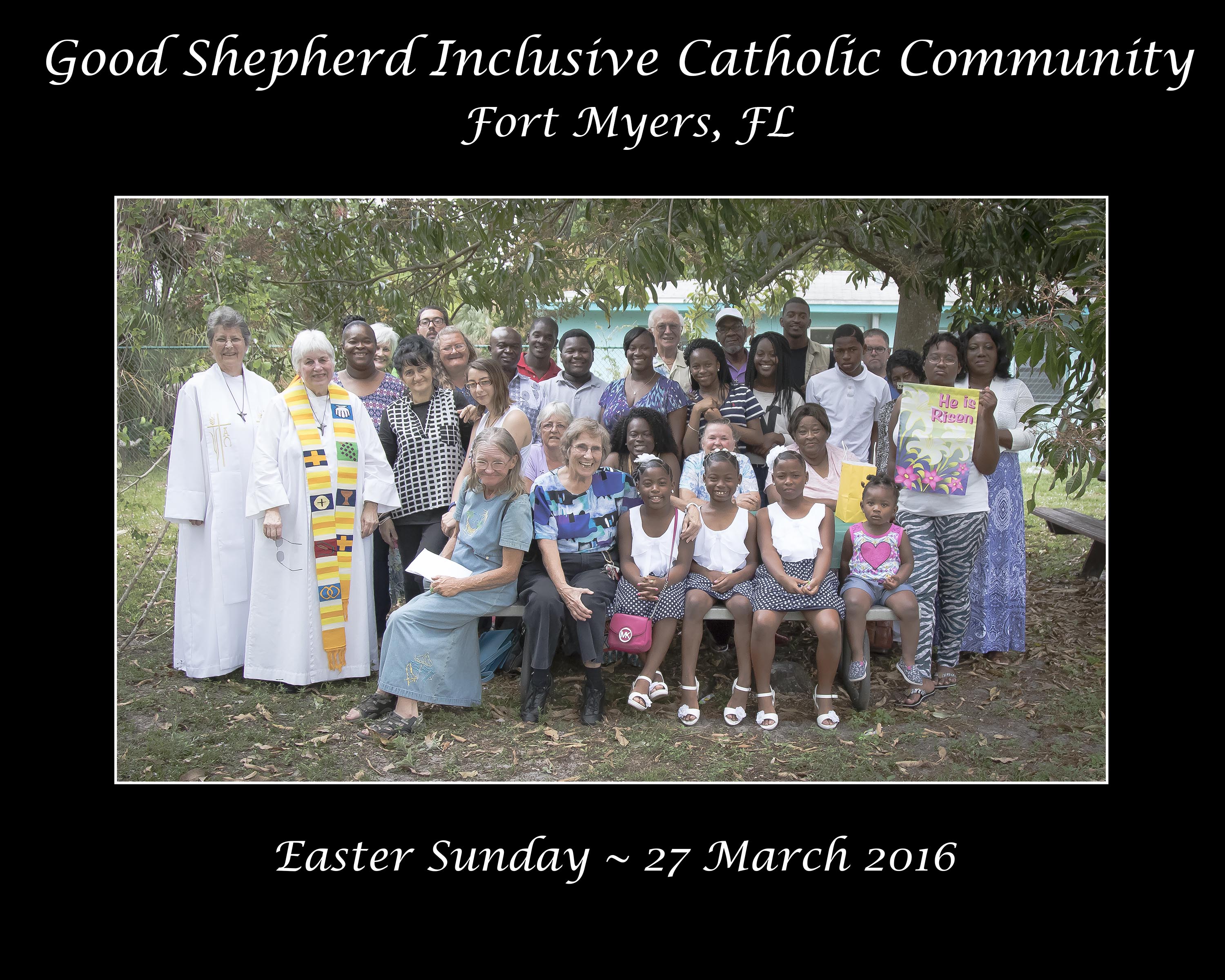
    Here we have an inspiring homily by Rev. Dr. Beverly Bingle,RCWP of Toledo, Ohio with Reflections by Rev. Dr. Judy Lee,RCWP of Fort Myers, Florida.

    The Readings are: I Kings 19: 16b,19-21 where the prophet Elijah passes on his mantel to Elisha who has to go back and provide for his parents first, before accepting the call to walk with then succeed Elijah. Yet, Elisha did this quickly and followed Elijah.

    Psalm 16:1-2,5,7-8,9-11
    You are my inheritance, O God!” God will show the faithful the path to life and there will be fullness of joy in God’s presence.

    Galatians  5: 1,13-18-The whole law is fulfilled in one statement, namely, You shall love your neighbor as yourself. Serve one another through love…

    Gospel: Luke 9:51-52-Jesus is resolutely traveling to Jerusalem where he will face the Cross. He lets those who want to follow him know that the way will be hard and take all they have to give. He asks for whole hearted devotion-for their love and their very lives .

    The road to following Jesus is as hard as loving is. Real loving demands all we have.  We can’t love one day and decide to go for ourselves,putting our wants and needs and desires first above all others on another day. We have to learn to love in the way Jesus loved. Paul tells the Galatian followers not to “bite and devour one another”. Indeed the church has been biting and devouring since its inception as well as expressing love in the most beautiful ways. Jesus’ way of inclusion is expressed in his acceptance and love for “hated strangers” like the Samaritans who were a religiously and ethnically mixed group of people who wanted to serve God;and mixing with ” sinners and hated tax collectors” and women, of all people!

    I have no doubt that Jesus wept not only for Jerusalem but that he weeps now for Orlando even as people professing his name, feeling they were being good Baptists, stood outside of funerals and carried hate signs for the members of the LGBTQ community whose funerals were taking place. Talk about biting and devouring and the farthest thing from the love of Christ. Yet I know their problem.  I remember a wonderful woman who was a Deaconess in the Methodist church, the wife of  a beloved Pastor  and a friend since my youth.  She visited my partner , Pastor Judy Beaumont, and I in our home in Florida. One day, on a second visit, with tears she confided that she was opening herself to the acceptance of both women and gay men and lesbians in the Methodist Ministry because she witnessed the quality of our lives. This was hard because of the explicit teachings of the church about our sinfulness. But she could only experience our love and she could no longer support such church teaching. Also, she shared that she could now accept the gayness of one of her own children and see the love in that child more than the difference. How wonderful it was for her to share this with us and to give us this gift. How hard it was for her to change and transform herself into this last bit of loving like Jesus, for she , indeed, resembled Christ in every other way and was a role model for us. She has now gone home to our loving God, but what a lesson she left behind. Our Roman Catholic Church and many other churches need this lesson.  They have considered all members of the LGBTQ community “disordered” yet advise pastoral caring. Yet all are excluded from the sacraments of the church including Holy Communion.  How can there be pastoral caring without a full welcome for all people at the Table of Jesus? We have a young man in our church who is gay and he experienced scorn from his family and his African American community that was deeply alienating and painful for him. He literally hung onto our acceptance as a life boat, demonstrating to his family that he was loved fully for himself, and most surely good enough to be baptized and confirmed and accepted as an equal in the church. His family grew to love him without judgement. This was transforming for him and for the family, some of whom still work on this level of Christ like acceptance.   Jesus characterized no one as disordered, except, perhaps, the hypocrites within the religious establishment for whom he often had a few chosen words. And so often these words were about the intolerance and rigidity of the religious establishment. We would be wise as we, with all of our human frailty, seek to follow Christ to realize that the Way of Love is not easy but with God’s grace,  we can be transformed to do it.   And this transformation is possible for all of us, Thanks be to God! Amen.

    Rev. Dr. Judy Lee, RCWP, Co-Pastor The Good Shepherd Inclusive Catholic Community in Fort Myers, http://www.goodshepmin.org
    IMG_0125


    And Now for Rev. Dr.  Beverly Bingle’s Homily: 

    This begins the most important section of Luke’s Gospel,

    referred to by scripture scholars as the “journey narrative.”
    Fr. Raymond Brown calls Luke’s story
    of the long journey to Jerusalem
    “an artificial framework.”
    It’s a literary device created by Luke
    so he can tell about Jesus in an organized way.
    ________________________________________
    Jesus actually did travel from Galilee to Jerusalem.
    For later followers, his journey takes on symbolic meaning:
    it’s the way by which Jesus went from death to new life,
    and the way that we, as his disciples,
    are called to do the same.
    ________________________________________
    Luke’s story of the beginning of Jesus’ long journey
    begins with a lesson that we still need today.
    At the very beginning of the trip,
    Jesus’ disciples are not welcome in a Samaritan village,
    but Jesus will not let them call down fire from heaven
    to destroy the villagers.
    ________________________________________
    In the 18th century, Jonathan Swift, Irish Anglican priest,
    criticized Christians for having
    just enough religion to hate
    but not enough to love.
    History continues to give us examples of people who,
    like the first disciples,
    want to do violence to people who don’t agree with them.
    We don’t have to look any farther
    than the front pages of our newspapers to see it.
    People killing other people when they disagree.
    People killing other people because they are different.
    And people doing murder in the name of God.
    It happened in the Crusades.
    In Nazi Germany.
    In the Middle East.
    In Orlando.
    It’s still happening.
    ________________________________________
    What motivates people to hate so viciously in the name of God?
    Maybe their religion is just a veneer on the surface of their lives.
    Maybe they just can’t grasp the message of love
    that’s at the heart of all real religions.
    Maybe they never really learned what their own religion is about.
    Or maybe it’s the failure of religious leaders
    to keep their own hatred out of their beliefs.
    Whatever it is, Fr. Joseph Pollard rightly calls it blasphemy.
    ________________________________________
    But for us Christians, we should know the way.
    Jesus’ response to his disciples call for vengeance
    is to go on to another village.
    He teaches us that our way to new life
    is not through violence and retribution
    but through peaceful avoidance of conflict.
    ________________________________________
    So Jesus and his disciples continue on the journey,
    and Luke has Jesus give us more advice.
    Three people come up to him, one by one,
    and each one hears radical requirements for discipleship.
    The first person, wanting to follow Jesus wherever he goes,
    hears that there will be no place to rest
    for the one who joins Jesus on the Way.
    We have to ask ourselves if we are ready to follow,
    even if we have to walk away
    from the comfort and security of our homes and friends.
    Are we ready to speak up for what is right and just,
    even if we know our family members and best friends
    will disagree with us?
    ________________________________________
    The second person, invited by Jesus to join the group,
    wants to go bury his father,
    and Jesus responds with “let the dead bury their dead.”
    If the man goes home to wait for his father’s death
    so he can fulfill the law of honoring his parents,
    he himself will become dead
    to the new life that comes with the journey to Jerusalem.
    We have to ask ourselves what we’re waiting for
    that keeps us from following Jesus along the Way.
    Maybe it’s job security—
    I won’t object to my boss’ racist remarks
    until I have another job lined up.
    ________________________________________
    And the third person
    wants to say goodbye to family before he follows,
    but Jesus warns that anyone
    who expects to live in the reign of God
    can’t live in the past.
    As followers along the way, we look ahead.
    We don’t regret the past and we’re not obsessed with it,
    either by focusing on its mistakes
    or by imagining it as a golden age.
    ________________________________________
    We know from other scriptures
    that Jesus does not mean these sayings to be absolutes.
    What Jesus is doing is making clear
    the mindsets that undermine living in the reign of God.
    He is reminding us of the greater goal,
    and that everything else falls by the wayside
    in our choice to follow him.
    ________________________________________
    Rarely are we called to burn all our bridges,
    like Elisha in the first reading.
    These sayings remind us that, at rare, particular moments,
    we are called to be heroic.
    But most of the time
    we are called to reflect, adapt, and take action.
    As Paul puts it in that second reading,
    we have to live by the Spirit, not by the law.
    We are required to serve one another through love.
    ________________________________________
    I recall times in my own life
    when I lacked the courage to follow Jesus’ way,
    and a few times when I had the courage to burn bridges,
    to walk away from security for the sake of a vision.
    Out of Africa author Karen Blixen once said that
    “There is probably always one moment in life
    when there is still the possibility of two courses,
    and another when only one is possible.
    At the latter point I have burnt my boats,
    and afterwards there can be no retreat.”
    Elisha reached that point.
    Paul reached that point.
    Jesus reached that point.
    ________________________________________
    We reach that point, too,
    faced with the question of what it means
    for us
    to follow Christ today.
    It means to act with love where we are,
    in our chosen career,
    on our chosen life path,
    true to the commitments we have made.
    It’s not only what we do that’s important.
    It’s how we do it.
    There’s more than one way to follow Jesus,
    but each path has this in common:
    we are called to follow with our whole heart,
    and our heart must be full of love,
    no matter what.
    Amen!


    Holy Spirit Catholic Community
    Saturdays at 4:30 p.m./Sundays at 5:30 p.m.
    at 3925 West Central Avenue (Washington Church)

    www.holyspirittoledo.org

    Rev. Dr. Bev Bingle, Pastor
    Mailing address: 3156 Doyle Street, Toledo, OH 43608-2006
    419-727-1774
  • A Catholic Response to the Orlando Massacre

    From the Quixote Center:

    Dear Judith,


    Following the weekend’s tragedy in Orlando, we here at the Quixote Center have been subdued with grief for this senseless loss. We were particularly moved by the following blog post by our friend Frank DiBernardo of the New Ways Ministry and wanted to share it with you.
    “This past week, I have been in London, England, for New Ways Ministry connections, and so I feel somewhat disconnected from the grief and anguish that folks in the U.S. are experiencing these past couple of days.  I make the qualification “somewhat” because the news of Orlando is still very much in the forefront here.  For one thing, it’s Pride Week in London, and people are gearing up for their big parade on Saturday, though this year security will be beefed-up because of the Orlando tragedy.
    Londoners rally in support of Orlando’s victims and the LGBT community.
    Londoners’ hearts are very sensitive to the Orlando news, not only because they have experienced political terrorism, but also because they know the pain of an attack on a gay nightclub.  On April 30, 1999, a member of a neo-Nazi organization set off a nail bomb in a Soho neighborhood gay pub, The Admiral Duncan. The bomb killed three people, one of whom was a pregnant woman.  That event galvanized the LGBT community here in London. Networking with the LGBT Catholic community in England, I’ve learned that one of the positive outcomes of the renewed resolve for equality that emerged from the 1999 tragedy was the establishment of an outreach ministry to LGBT Catholics by the Westminster diocese.
    I find it very hard to read news accounts of the shooting, and I don’t even dare attempt to look at any online video. So I’ve busied myself checking out Catholic responses to this tragic event.   New Ways Ministry’s initial response noted that the Catholic bishops’ first reactions were totally unsatisfactory.  Despite the fact that almost every headline reported the event as having taken place in an LGBT venue, statements from the Vatican, the United States Conference of Catholic Bishops, the bishop of Orlando, and several other U.S. prelates, glaringly omitted any reference to the LGBT character of this event.
    Were such omissions intentional?  Did the issuers of the statements go out of their way not to mention that the victims were predominantly members of the LGBT community and that the site of the shooting was an LGBT club?   Were they all so oblivious to the prominent details of the news that they did not detect what people around the world noticed about this event?  Last night, here in London, thousands of people marched in solidarity with Orlando. Rainbow flags were everywhere.
    Perhaps the Catholic bishops’ omission of LGBT references was not intentional because their eyes have become blinded.  Are they so isolated from LGBT lives that they don’t even recognize a tragedy for these communities when it is staring them in the face?   Are the bishops so used to seeing LGBT people as opponents that they could not muster the most basic forms of Christian charity in the face of such a horrific event?   Or are  they so ignorant of church teaching condemning violence against LGBT people that they simply forgot to apply this official teaching to such an obvious case?
    One of the most disappointing responses came from San Francisco’s Archbishop Salvatore Cordileone.  As leader of the church in one of the most populous LGBT communities of the U.S., one hopes that he would have shown better awareness of LGBT issues. His response did not refer to the LGBT lives lost.  Instead, trying to be sensitive, the Archbishop stated that “regardless of race, religion, or personal lifestyle, we are all beloved children of God.”
    “Personal lifestyle”?  His advisors should have informed him that no one uses such language to refer to the lives of LGBT people because it is inaccurate and misleading; it wrongly implies that sexual orientation is a matter of choice and a matter of sexual actions.  He should have been warned that using such a term would push people further away, instead of drawing them closer to the Church and the love of God during this time of deep need.
    Cordileone’s statement shows that bishops need much better education about LGBT issues than they have.  Without the simple knowledge of basic terminology, they cannot be pastorally sensitive in a crisis of any size, let alone one of such enormous and historic proportions.  Lack of education does not make someone a bad person.   But becoming aware of this lack makes it incumbent upon a person–especially a bishop–to seek better knowledge, especially knowledge of the Church’s teaching that sexual orientation is not a choice and is not just a series of actions.
    In the Catholic world, this incident will be remembered not just for the sheer horror and tragedy of lives lost, but for the fact that it highlighted that so many church leaders still have a long way to go in being aware and sensitive to even the most basic human needs of LGBT people.
    Thankfully, there have been a handful of bishops whose statements have offered condolences to the LGBT community.  We reported one on Monday, three more yesterday, and today, the latest bishop to join this small band is Bishop Gerald Barnes, of San Bernardino, California, who noted in his statement that he wanted to “make clear our condemnation of discriminatory violence against those who are gay and lesbian, and we offer our prayers to that community.”
    Finally, I am truly saddened that the hierarchy’s LGBT omissions separate them not only from the LGBT community, but also from an overwhelming majority of the laity and the wider world.  In this moment of tragedy, people are banding together to support the LGBT community in a global expression of solidarity.  Catholics, people of other faiths, and people of no faith at all are finding common ground of compassion and witness because of this tragedy.  By ignoring the important LGBT character of this unique moment in human history, the bishops are excluding themselves from the many ways that God’s beloved children are building up the reign of justice and peace, as a way to counter the forces of terror and hate.  It is truly sad that our Catholic bishops are missing out on such an opportunity.
    –Francis DeBernardo, New Ways Ministry”
    AMEN! jl
  • Orlando: LGBTQ Massacre by Terrorist-Stop the Violence and Hatred

    (Revised edition).

    World-wide sympathy  pours out for the victims, families and friends of the terrorist massacre of 49 (and rising) members of the LGBT community gathered at a club in Orlando,Florida on June 12th, 2016. In articles below: Pope Francis strongly decried this horrific event. Francis De Bernardo of New Ways Ministries notes that many of the religious who decry this event fail to mention that it was a directed attempt against the LGBTQ community.

    As I listened to the initial debates as to whether it was terrorism or a hate crime, I was amazed that people thought it had to be either or when, in fact, both hatred and terrorism are events that members of the LGBTQ community have had to endure throughout history. It turns out that the killer did identify with Isis and also other terrorist groups, some hated by Isis. The killer’s former wife said that he was unstable, bipolar and aggressive. Her life was in danger before she escaped and was divorced. The killer’s father said that the killer witnessed gay couples together in Miami and that he hated gays. Yet later reports placed him in the Pulse Club, sitting alone and talking loudly(to himself) over a three year period. So here we have the situation of a profoundly disturbed person with mental illness, unrecognized and untreated by the killer, who identified with terrorists, had some connections with terrorists abroad although he was born in the USA, and hated gays. Perhaps he also hated himself and his own inclinations.His father, a self-styled Afghan leader in the USA, also was quoted with anti-gay statements.

    People talk glibly of how easy this would have been to prevent. But the killer was an American,not an immigrant so keeping immigrants or the Muslim faith out would be a ridiculous solution.  (Well, it is ridiculous and hateful anyway!This thinking is the problem not the solution.) Improving the mental health system here might help-but what a big job that will be! Gun control would definitely help-but not eliminate the problems-a multifocal approach is needed.   Attending to diverse youth(both non-majority youth and youth struggling with or being gay) with greater care as they pass through educational institutions and negotiate dominant society in which minorities of all sorts can meet with prejudice and discrimination in doses that cause impotence and rage could help- and yet another tall order.

    It is ironic and paradoxical that the killer, a second generation Afghan-American, probably experienced painful discrimination and  his difference as “less than” and those massacred in Orlando experience this most of the time. I remember struggling with my own LGBTQ identity in my thirties and only wanting to be able to hold hands and exchange affection with my beloved partner  in a manner that was so easy to do when I was with my former husband. In many places it was totally unsafe to do this simple thing. And as I fell from heterosexual grace in the church , family and community I realized that I no longer had any of the privileges of heterosexual status. Difference became my name. It took a long while just to be me again. Prejudice, discrimination, misinformation and, yes, hatred, was something I learned to live with.  And so many learned to live with direct violence as well. The horrible example of Matthew Wayne Shepard, a young man in Wyoming who was tied to a fence, pistol-whipped and killed by gay-haters stays in my vivid memory although it was in 1998. Indeed, his sufferings were not unlike Christ’s. Let us see Christ in every one harmed by hate.

    It was Latino/a Night at the Pulse Bar where the Massacre took place. The participants there, many in their twenties and thirties, had experienced painful discrimination as Latinos/as and as gays and lesbians (along the LGBTQ spectrum). It is not unusual that one minority may turn against another when the roots of the problem lie in the intolerance for difference passed down the generations. To the extent that some of these roots are part of religious cultures, the church and other religions must cry : mea culpa. mea culpa, mea maxima culpa-“the fault is mine”-and change it. That change must come now-it is already too late, but before it happens again, let us affirm the worth of our GLBTQ sisters and brothers, and ALL people of different religions, races and cultures.  As Pope Francis earlier said and some, like Hillary Clinton and others affirm: let us build bridges not walls.

    While there may be some level of greater tolerance for difference in the younger generation there is no doubt that the seeds of prejudice, fear and discrimination are passed on and take root, adding to the kind of horrific event we have witnessed in Orlando.

    It is time for all people of good faith to build those bridges: and build them now.    Build them in all we say, in all we do, in all we hope for and in all we are. Build them with progressive political candidates, do not tolerate idiocy even for a minute, build them with good people everywhere-and do it NOW.

    Rev. Dr. Judy Lee, RCWP 


    Friends and family members of victims embrace outside the Orlando Police Headquarters during the investigation of a shooting at the Pulse nightclub  - REUTERS

    Friends and family members of victims embrace outside the Orlando Police Headquarters during the investigation of a shooting at the Pulse nightclub – REUTERS

    12/06/2016 19:22
    (Vatican Radio) Pope Francis is shaken and saddened by the ‘homicidal folly and senseless hatred’ that has left at least 50 people dead in an attack on a nightclub in Orlando, Florida.A statement released  by the Holy See Press Office Director, Father Federico Lombardi SJ, on the Orlando massacre which has been described as the worst mass shooting in American history.

    Please find below Vatican Radio’s translation of the statement:

    The terrible massacre that has taken place in Orlando, with its dreadfully high number of innocent victims, has caused in Pope Francis, and in all of us, the deepest feelings of horror and condemnation, of pain and turmoil before this new manifestation of homicidal folly and senseless hatred. Pope Francis joins the families of the victims and all of the injured in prayer and in compassion. Sharing in their indescribable suffering he entrusts them to the Lord so they may find comfort. We all hope that ways may be found, as soon as possible, to effectively identify and contrast the causes of such terrible and absurd violence which so deeply upsets the desire for peace of the American people and of the whole of humanity.

    The attack, which took place early Sunday in a crowded nightclub, was perpetrated by a gunman wielding an assault-type rifle and a handgun.

    Authorities are reportedly investigating the attack as an act of terrorism.

    Officials said at least 53 other people were hospitalized, most in critical condition. A surgeon at Orlando Regional Medical Center said the death toll was likely to climb.

    And from Francis De Bernardo-New Ways Ministries:

    The following is a statement of Francis DeBernardo, New Ways Ministry’s Executive Director, released on June 12, 2016, in response to the mass shooting at a gay and lesbian nightclub in Orlando, Florida, earlier that day.

    Words truly cannot express the horror, anguish, anger, and revulsion at the news of the mass murder of at least 50 people at a gay and lesbian nightclub in Orlando, Florida.  Such an action should instill in all people around the globe a commitment to end gun violence and to protect the lives of LGBT people.

    Adding to the anguish of this tragedy is the response of most Catholic leaders. The Vatican’s initial statement expressed sorrow and condemnation, and hope “that ways may be found, as soon as possible, to effectively identify and contrast the causes of such terrible and absurd violence . . .” But the Vatican did not refer to the fact that this violence was directed at the LGBT community.

    Similarly, Archbishop Joseph Kurtz, president of the United States Conference of Catholic Bishops, made no direct reference to the LGBT community in his statement, noting only that the incident should call people to “ever greater resolve in protecting the life and dignity of every single person.”

    While individual bishops have reacted publicly to the violence, the only statement thus far from a Catholic leader which mentions the gay and lesbian community is Chicago’s Archbishop Blase Cupich. In sympathy, Archbishop Cupich stated that “our prayers and hearts are with. . . our gay and lesbian brothers and sisters.” Such simple words should not be difficult for Catholic leaders to mention in the face of such vicious horror.  Archbishop Cupich is to be praised for being a light in the darkness.

    Clearly the targeting of a gay nightclub shows that, homophobia is a major factor which causes “terrible and absurd violence.”  This attack highlights the fact that around the globe, every day, LGBT people face oppression, intimidation, and violence. Homophobic and transphobic attitudes and behaviors are carried out all-too-commonly in the form of discriminatory practices, verbal abuse, bullying, imprisonment, physical and sexual abuse, torture, and death. In many cases, this brutality is sanctioned by governments and religious leaders who propagate homophobic and transphobic messages.  The Vatican and other church leaders have yet to speak clearly and definitively on these contemporary issues despite the fact that official church teaching would support condemnations of these hate-filled messages, practices, and laws.

    As we pray for an end to gun violence and an end to violence directed against LGBT people, we also include in our prayers the hope that Muslim people will not become victims of a backlash against them because of the shooter’s religious background.  Such a response is as vicious and senseless as the violence perpetrated against the nightclub victims.

    The Orlando murders should move all Catholic leaders to reflect on how their silence about homophobic and transphobic attitudes and violence contributes to behaviors which treat LGBT people as less than human and deserving of punishment.  This sad moment in our history should become a time when Catholic leaders speak loudly and clearly, with one voice, that attacks on LGBT people must stop.

    –Francis DeBernardo, New Ways Ministry

    STOP HATE-STOP TERRORISM-BUILD BRIDGES NOW!

  • Blessings at Rev. Chava’s Migrant Ministry

    We are happy to share the good news from Rev. Chava Redonnet’s Migrant Ministry in a Newsletter from RC woman Priest, Rev. Chava. I am sure that all support is still needed and welcomed. Rev. Judy Lee,RCWP

    Oscar Romero Inclusive Catholic Church
    Bulletin for Sunday, June 12, 2016                                                  11th Sunday in Ordinary Time

    Dear friends,

    This past week, my daughters and I traveled to Boston for the funeral of my Uncle Ed. Clare, Bridget and I shared the driving, and Emily met us there. As such moments often are, it was a warm family time. I talked with my aunt, my cousins and their spouses and children. My aunt and uncle had five children, fifteen grandchildren and fifteen great-grandchildren, so you can imagine the size of the group. At lunch nearly everybody had on Red Sox outfits, even the four-month-old baby. It was a loving and beautiful family time, with lots of gratitude for a life well lived.

    Last night Santiago and I had dinner at our favorite Mexican Restaurant, where we are always greeted like old friends. Our server was a young man who always makes a point of coming over to talk with us. His wife and small daughter are in Mexico; every week he calls them, and sends money home. I know so many people who are doing that. They have kids at home who are growing up, never seeing their parents. Grandchildren never met except on the telephone. Spouses not seen for years. Funerals unattended because they can’t get back. Even weddings never performed, because “We can’t do it without Mom there.”

    Culturally, most Mexicans can run circles around most of us in the US when it comes to family values. But when there is no work, no way to support your family in the place where you live, family values mean years of separation, hard work, loneliness. Family values – and survival – means coming to a place where you will be persecuted for being undocumented, for being here without permission. We in the United States haven’t got a clue – when we talk about building a wall, sending everybody back – what the reality is that we’re sending people back to. Every family matters. And we are all family.

    I still have not solved the problem of how to get the bulletin out each week, and will be asking Rachael to make another special exception for this one. There are three pieces of news to share: it’s good news/ bad news/ good news.

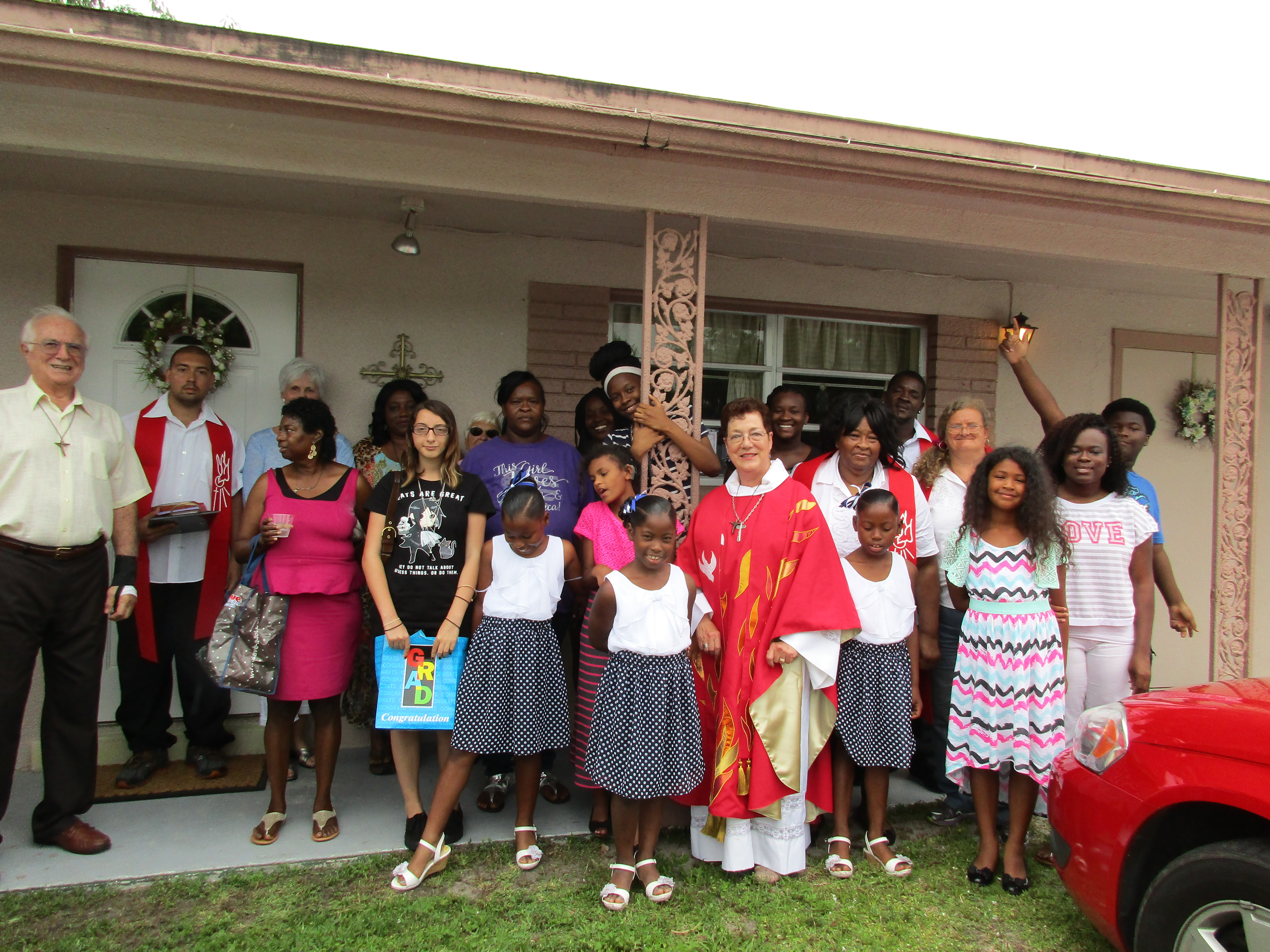
    First, the wonderful news that Oscar Romero Inclusive Catholic Church is the recipient of a grant of $30,000 from the Joseph Rippey Trust, for the purpose of buying and retrofitting an existing farmhouse to use for the migrant ministry. We had already raised $20K, so now we have met the goal of $50,000 and can start looking. Woo hoo!

    Second, we started the migrant Mass earlier than usual this year, and had a lovely celebration in early May, in the little house we’ve been using for church these past several summers. Since then, people have been working too late planting, but by the end of May we were ready to start again. Then, ten days ago when I went to set up for Mass – I found there was someone living in the house! There had been a miscommunication, and someone thought the house was empty and told him he could use it. In the end, his need for a place to live outweighed our need for a place to worship, and last weekend we cleared out all our things but the bookshelves and table (which I still need to go get if I can get the use of a truck). All our books and toys and folding chairs are in my basement, probably until we get a place of our own. The farmer told me that without the house, that man would have been homeless — so here’s a nice bit of reversal. A homeless person threw out a church! – instead of the other way around, as it has so often been. God is smiling.

    And I’m not worried. This is our latest blessing, I am sure. Before long we will be saying “oh, thank goodness that happened!” – so we might as well start being grateful right now.

    And that brings me to the last bit of good news. Do you know what this coming Thursday is??? It’s our fifth anniversary!!!!!!!!!!!! The first Migrant Mass was on June 16, 2011. We started celebrating Mass in a parking lot in front of a migrant dwelling in Byron, NY, everybody standing around, hearing the birds in the trees and feeling the breeze on our faces while we worshipped. So much has happened since then! So this Thursday we will have a special Mass and party to celebrate. I was trying to figure out where we would have it, when Santiago pointed out, “We started outside…. How about over there?” …pointing to Idalia and Fili’s yard across the street. So that’s where we will be, and everybody is welcome. Bring a dish to pass and we’ll have a community supper before Mass. We’ll try for 7 for supper and 8 for Mass, and afterwards we’ll have cake! – and we are celebrating, not only our fifth anniversary, but Ana’s graduation from High School!!!!! Congratulations, Ana! We are so proud of you.

    Let me know if you want to join us and I’ll tell you how to find us!

    So: hope, and gratitude, and trust. All will be well. Thank you, God of Love, for five years that none of us could have imagined! You are so amazing.

    Love and blessings to all –

    Chava

    “If you have come to help me, you are wasting your time. If you have come because your liberation is bound up with mine, then let us work together.”

    Words used by Lilla Watson, Aboriginal elder, activist and educator from Queensland, Australia.

    Oscar Romero Church  An Inclusive Community of Liberation, Justice and Joy
    Worshiping in Catholic Tradition   Mass: Sundays, 11 am
    St Joseph’s House of Hospitality, 402 South Ave, Rochester NY 14620
    A member community of the Federation of Christian Ministries

  • Follow the women: Reflections on the 11th Sunday in Ordinary Time-6/12/16

    The readings for this Sunday are wonderful: Great love is shown by God and by the women in the gospel of Luke. Sins are forgiven when our hearts turn to God no matter how terrible those sins are, as in the case of King David guilty of murder and adultery and more (2 Samuel 12:7-10,13).  We can only imagine that David could finally breathe again when he heard: “…God forgave your sin; you will not die.” And in the Gospel, Luke 7:36-8:3, we see a woman, deemed “a sinner” by the Pharisees/religious leaders, who turns to Jesus in great love, anointing his weary feet despite the presence of her judges, experiencing his understanding, forgiveness and love and giving her best to him. I love the point Kathryn Matthews, UCC Pastor and preacher, makes:  This woman knows she is in the presence of God and is completely free in relating to Jesus despite those who surround her with judgement. And, I also love the end of this Gospel reading where the women loyal to Jesus, forgiven and healed, are finally named.  In so much of the Scriptures, including the Gospels, women simply are called “the women” but here we see the names of Mary of Magdala, Joanna, Susanna “and many others” who accompanied Jesus and the male disciples on their evangelizing journeys and ,in fact, even supported their work.  Jesus says to the woman who anointed his feet in the midst of severe criticism “Her many sins were forgiven her, because she has shown great love”.Obviously Mary, Joanna and Susanna showed great love as well. Let us rejoice in these women, whether or not we are surrounded by the judgement of others,and let us follow them in showing great love.

    From Rev. Kathryn Matthews:  www.ucc.org/worship_samuel_sermon_seeds_June_12_2016

    Additional reflection on Luke 7:36-8:3:

    “It’s very common these days, around the church, to hear the phrase, “We’re all sinners.” Usually it’s in connection with the struggle of the churches to deal with accepting or not accepting gay folks, but it could also apply to, say, divorced and remarried people (which used to be quite scandalous) or people who have been in prison (their sentence is never really over in some minds) or people who are living with HIV/AIDS (we tend to judge people for how they got sick, or how we think they got sick). In any case, we still think there is a subtle, double standard of “sinnerhood”: there are sinners, and then there are sinners.

    In this story, the woman who washes Jesus’ feet out of extravagant gratitude and love is a notorious “sinner” in the town. She’s really a sinner with a capital S. Simon the religious leader may be a sinner because “we’re all sinners,” but that’s different. His status as a sinner doesn’t make him unworthy to have Jesus visit his home, along with certain other preferred guests, and it certainly doesn’t put him above judging the intruder and even judging Jesus himself as he witnesses the scene before him.

    Simon is too busy to notice

    Simon’s not moved or touched by the woman’s love and tenderness, and he’s not impressed by Jesus’ apparent lack of discernment and taste. In fact, he’s so busy judging that he forgets to take care of the basics of hospitality himself, so it’s ironic that the man with all the resources at his command (we can almost picture the setting in his comfortable home) doesn’t use them generously for the sake of his guest, and then he turns a blind eye to the grace of a lowly woman entering uninvited into his little party. If Jesus used the term “debts” to speak of the relief of being forgiven (and how many of us wouldn’t love to be forgiven all our debts, financial and otherwise?), it’s as if this man Simon hasn’t gone online lately to check his credit card balance and doesn’t know just how deep he is in trouble.

    Of course, the real twist can be for us, reading the text today. We love the intruder woman and want to identify with her, right? Sometimes it’s hard to find the character we connect with most closely in a story from the Bible. In the prodigal son story, for example, when we take the side of the older brother who has been working hard and doing the right thing all along and has a right to feel outrage at a party being thrown for his good-for-nothing brother, we forget that we probably resemble the prodigal son much more than the righteous older brother. But in this story and in the church, we may find ourselves behaving more like the Pharisee than the open-hearted woman returning in gratitude, even though we find ourselves judging him in our own hearts.
    The freedom to enjoy grace

    Ironically, it’s the woman in this story who has both power and freedom: she does what she wants to do, from the bottom of her heart, and she is free of worry about what people think about the propriety of her actions.  Rebecca J. Kruger Gaudino sees in her humility an awareness of God’s presence that we should all strive to achieve: “From this foundational principle that reorients our lives from self to divine Presence, all the other principles flow: how we bear ourselves, how we speak, how we live in community, and to what degree we may reveal ourselves to others. In all things, we live out of the humility that comes in recognizing God’s presence among us” (New Proclamation Year C 2007). (Emphasis mine- JL)

    Simon, unfortunately, wasn’t in tune with God’s presence in the midst of his party, in the grace experienced by this woman forgiven, the wisdom and tender love of Jesus, who accepted her gratitude, and his own need for God’s mercy and understanding, which were available to him in the person of Jesus, right there before his eyes. Instead, his eyes were clouded by judgment and he missed a golden opportunity for grace….”

    In the reading from Galatians 2:16,19-21 we learn that it is faith that justifies us, not the Law and not even good works. David’s faith in a God who could forgive; the anointing woman’s faith in Jesus to accept her and her offerings of love; and the faith of Mary, Joanna and Susanna and many other woman as well as the men who followed Jesus as he loved inclusively and showed us the way of justice and compassion freed each of them to love as Jesus did. However, there are two interpretations of the faith that saves and frees us: first, it is interpreted as our faith in Christ;but the early Greek meanings also imply that it is the faith of Jesus, the faithfulness of Christ that frees us not even our own faith.

    Perhaps it is the power of faith in a forgiving ,loving God whose faithfulness demonstrates what love is that frees us. Let us then be as free as the women in this Gospel ,and let us include everyone in our love.

    Rev. Dr. Judy Lee, RCWP

    Co-Pastor The Good Shepherd Inclusive Catholic Community of Fort Myers

    IMG_0047IMG_0127

  • Desmond Tutu’s Daughter Must Leave Anglican Priesthood

    This is a beautiful BBC Online story about Rev. Mpho Tutu Van Furth, Rev.Desmond Tutu’s daughter, who had to leave the Anglican priesthood due to her marriage to a woman last December. She speaks with candor and pain, saying “when in doubt do the most loving thing.” That is wonderful advice in the face of adversity and downright hatred.  Her struggle mirrors the struggle in the Anglican church over gayness and acceptance of those persons on the LBGTQ spectrum. And of course this struggle is an underground struggle in the Roman Catholic Church as well. It is one place, as well, where the Roman Catholic Woman Priest Movement leads the church. RCWP internationally maintains that there is no  connection between the call to the priesthood and one’s status as single, married, gay, or straight or everyone in between. Our priests fit all descriptions.  Responding to God’s call and service and justice to God’s people, all of them, is our common ground.    Here’s to the love of Jesus for ALL persons.
    Rev. Dr. Judy Lee, RCWP
    (Live links below)
    Media player help

    Tutu’s daughter ‘sad’ to leave priesthood after gay marriage

    9 June 2016 Last updated at 07:09 BST

    The daughter of Archbishop Desmond Tutu has said she felt part of her had been “stripped away” when she had to relinquish the Anglican priesthood after marrying her female partner in December.

    Mpho Tutu van Furth has been speaking to the BBC’s Nomsa Maseko about falling in love, and the pain of leaving the church.

    The Link and video: (Can cut and paste).

     http://www.bbc.com/news/world-africa-36486908?ocid=global_bbccom_email_09062016_top+news+stories
  • Illinois Woman to be Ordained a Roman Catholic Priest

    Chicago Tribune 6/8/16

    Northbrook woman to be ordained by Womenpriests group

    Phil RockrohrPioneer Press

    Despite the disapproval of some fellow Catholics and her likely excommunication from the Roman Catholic Church, Susan Vaickauski says she must answer the “call.”

    “For me, ‘call’ is this inner presence and movement that pushes me in a certain direction, and it is a presence and movement that I have no control over,” Vaickauski said. “So when I say I am called to priesthood, I am saying there is this profound ‘something’ that is more than myself that says, ‘Yes, this is what I am asking you to do.’”

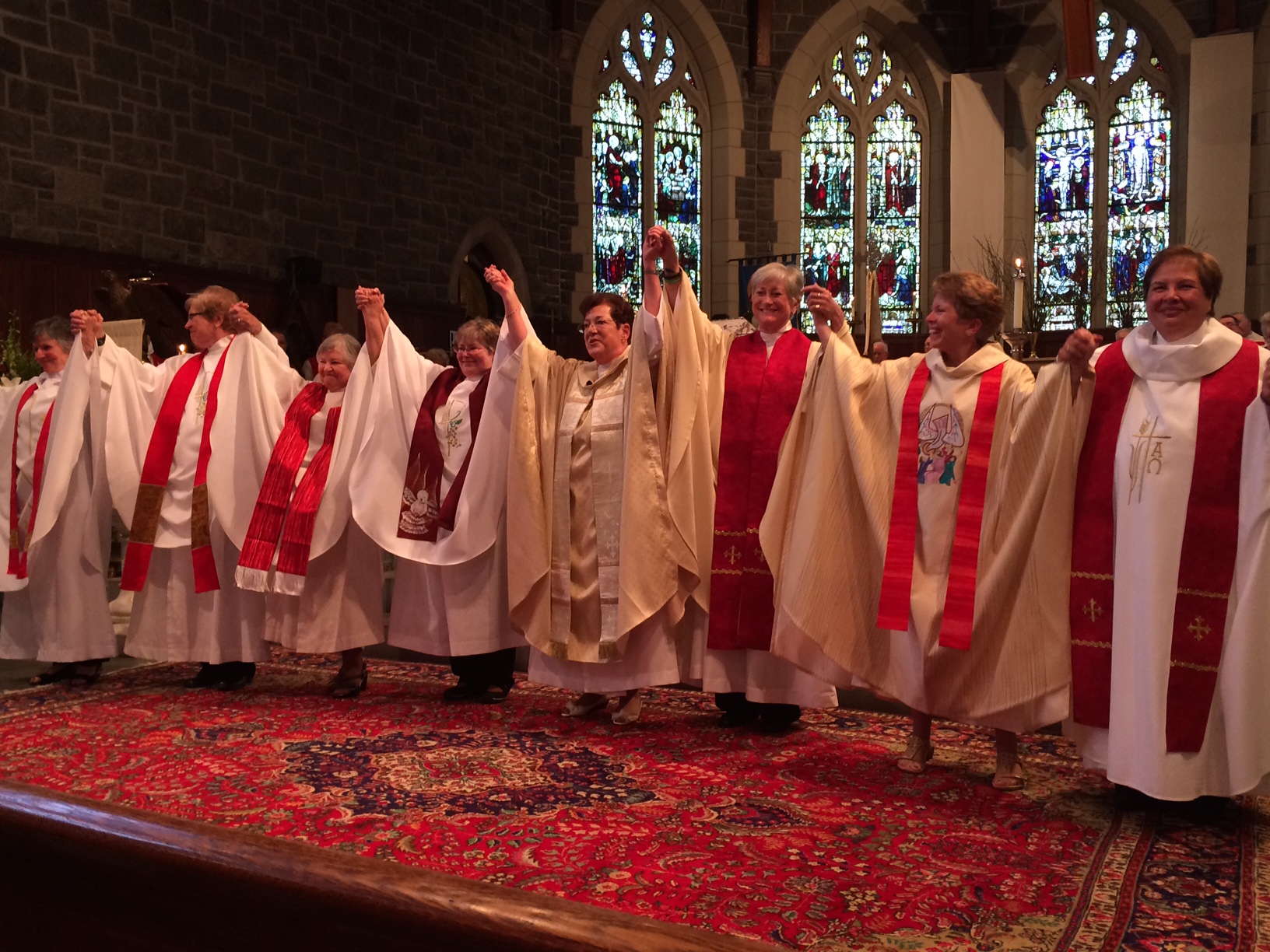
    Vaickauski, 69, a member of Northbrook’s Our Lady of the Brook since shortly after moving to the village in 1974, is scheduled to be ordained on June 11 by Roman Catholic Womenpriests, a group that calls itself an “international movement within the Roman Catholic Church,” according to the group’s website.

    Her ordination is scheduled for 2 p.m. at United Methodist Church, 1190 Western Ave. in Northbrook.

    Roman Catholic Womenpriests first ordained seven women as priests in 2002, according to Vaickauski, a member. Male bishops – whose names will not be revealed by the organization until they die – ordained two of the women as bishops, and told them to ordain more women as priests, she said.

    The Catholic Church, which prohibits women from being ordained as priests, excommunicated Roman Catholic Womenpriests in 2008, according to the group’s website.

    Vaickauski said she also expects to be excommunicated.

    The Archdiocese of Chicago did not directly respond to a question about whether Vaickauski would be excommunicated, or how it planned to respond to her ordination. In an email, an Archdiocesan spokesperson said that “this is a ceremony done in an entity apart from the Catholic Church. As such, as a rule, we make no comments on their activities.”

    The Rev. Bob Heinz, priest at Our Lady of the Brook, could not immediately be reached for comment.

    “I can’t remember a time it wasn’t there”

    Vaickauski said she has felt the call to be a priest her entire life, even while growing up in Lafayette, Ind.

    “I can’t remember a time when it wasn’t there,” she said. “When you’re young, you don’t know what it is. You just know something inside you is different. The people around me knew something was different, too.”

    Vaickauski said she first learned of Roman Catholic Womenpriests in 2005, while traveling with her husband, Ronald, in Quebec, and hearing that the group planned to ordain women as priests on a boat as the Vaickauskis were traveling on the St. Lawrence Seaway.

    Despite a strong pull to answer the call then, Vaickauski returned to Northbrook and continued heading The Fred Outa Foundation, which she founded to “improve the lives of vulnerable children in Kenya through education,” until stepping down last year.

    In 2011, she retired after 13 years as a secretary at Westmoor Elementary School in Northbrook, and in July 2013 her desire to become a priest “got so bad I had to do something,” Vaickauski said.

    “I saw a picture of women prostate being ordained. That’s what moved me to action,” she said. “I call it consumed, overpowered, overwhelming, intense. It was intense to the point that I couldn’t sleep, eat or function. People said, ‘What’s wrong with you?’ Until I pursued it, I wasn’t at peace.”

    Roman Catholic Womenpriests requires priests over 55 years old to earn a master’s degree in ministry, Vaickauski said. She also completed three years of study in “formation,” or the preparation for a Catholic vocation, such as becoming a priest, she said.

    The Rev. Elsie McGrath, a St. Louis priest who was ordained by the same group in November 2007, has guided Vaickauski through the process.

    Vaickauski is an “exemplary” student who is very dynamic, animated and eager with a “wealth of background in ministry,” said McGrath, who serves a congregation of about 20 in space rented from the First Unitarian Church of St. Louis and has led at least 16 other women through the process.

    “Because she is a naturally pastoral person, she is extremely caring and sensitive,” she said. ”

    Although ordained women priests are not officially permitted to practice in a Catholic church, their services are “absolutely Catholic,” McGrath said.

    “That is a part of why we are doing this, because even though they say we have been excommunicated, we do not accept excommunication,” she said. “So that’s what makes the excommunication null and void, because in a sense excommunication is kind of like a contract. We are legally ordained as Roman Catholic priests, and we are doing Roman Catholic liturgies.”

    The services do not resemble traditional Catholic Mass because they are conducted by women, welcome any participants, and do not engage in “all of the finery of the spectacle,” McGrath said.

    “It’s not a spectacle,” she said. “It’s a prayer. And everyone in our community is equal. But it is definitely Roman Catholic. We follow the Roman Catholic rites for every sacrament. It is recognizable as Catholic, but it’s extremely different because it is very warm and welcoming.”

    Ronald Vaickauski, a retired electrical engineer and lifelong Catholic, said he fully supports his wife’s decision, even though he knows she will be excommunicated.

    “This is one thing she’s always wanted, and I think she deserves it,” Vaickauski said. “All her life she’s done God’s work, taught religion classes. She puts on dinners at homeless shelters and things like that. For a while, she headed a foundation where she raised money to build a school in Kenya.”

    Vaickauski said he plans to attend his wife’s services and continue to attend Mass at Our Lady of the Brook with his wife, even though she won’t be permitted to take communion. He said he harbors no ill will toward the Catholic Church.

    “Eventually the Catholic Church will catch up to the concept,” he said. “From what I’ve seen Pope Francis doing, he’s slowly working to change some of these rules…I think things will change. Whether it happens in our lifetime, I don’t know.”

    Susan Vaickauski said she has not decided where she will practice as a priest, but plans to either serve the homeless, addicted and mentally ill on the streets of Chicago or to take the helm of one of at least 40 area Catholic churches slated for closure.

    Fellow parishioners at Our Lady and at the Vaickauskis’ second church, Holy Family Catholic Community in Inverness, have expressed support and plan to attend the ordination, Ronald Vaickauski said.

    Nonetheless, not all friends and family approve of Susan Vaickauski’s decision, she said. And one of her closest friends, a fellow Catholic who presented her last year “on behalf of the people of God” at her required ordination as a deacon before becoming a priest, declined to comment for this story for fear of reproach.

    “I’m not angry,” Vaickauski said. “I’m not hurt. I’m just trying to be who God wants me to be. I love my church, and I don’t want other people to be angry.”

    Phil Rockrohr is a freelance reporter for Pioneer Press.

    Copyright © 2016, Chicago Tribune