Home

  • Thoughts of a RC Woman Parish Priest: In Response to Pope Francis’ Praise of Parish Priests

    Today,June 20,2017 Pope Francis gave an inspiring speech praising parish priests in various parts of Italy who entered into the dark corners of society and reached out with the hands of Christ by keeping the poor and marginalized primary in their service.
    Rev. Dr. Bridget Mary Meehan of the Association of Roman Catholic Women Priests responded in her blog that she hoped the Pope would also end the darkness of the church by including women priests in his consideration for Holy Orders. I would like to illustrate the ministry of three RC woman priests,members of Roman Catholic Women Priests, Eastern Region who attempt the kind of service the Pope desires of priests. Even as illness causes a curtailing of services of the Good Shepherd Inclusive Catholic Community in Fort Myers, Pastors Judy Lee and Judy Beaumont and Marina Teresa Sanchez Mejia press on as parish priests among the poor and homeless and marginalized. We present here some of the recent activities of two RC women Priests and then ,for reference, the articles on Pope Francis’ Speech and Rev. Dr. Meehan’s Response.

    IMG_0923
    IMG_0920

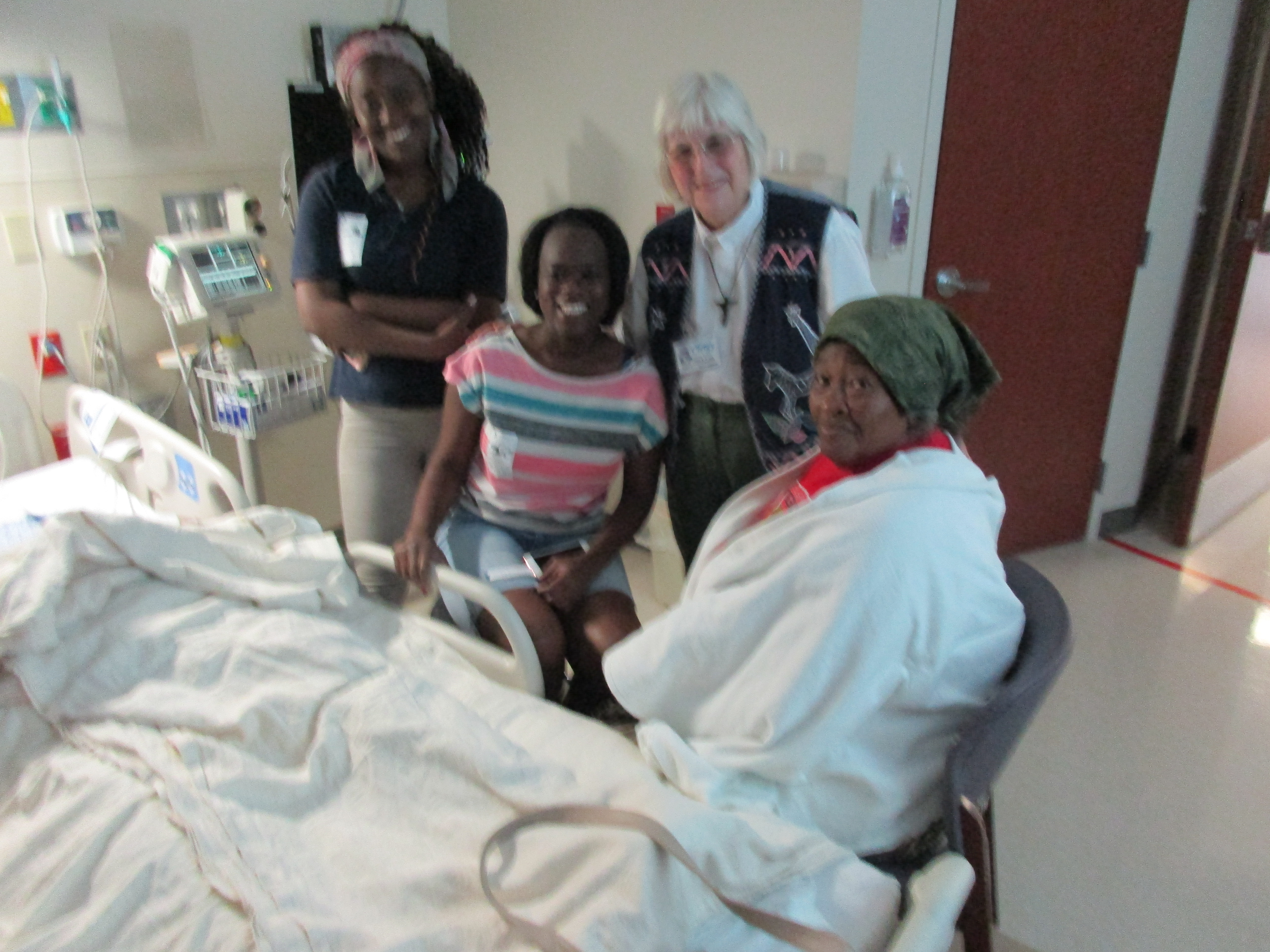
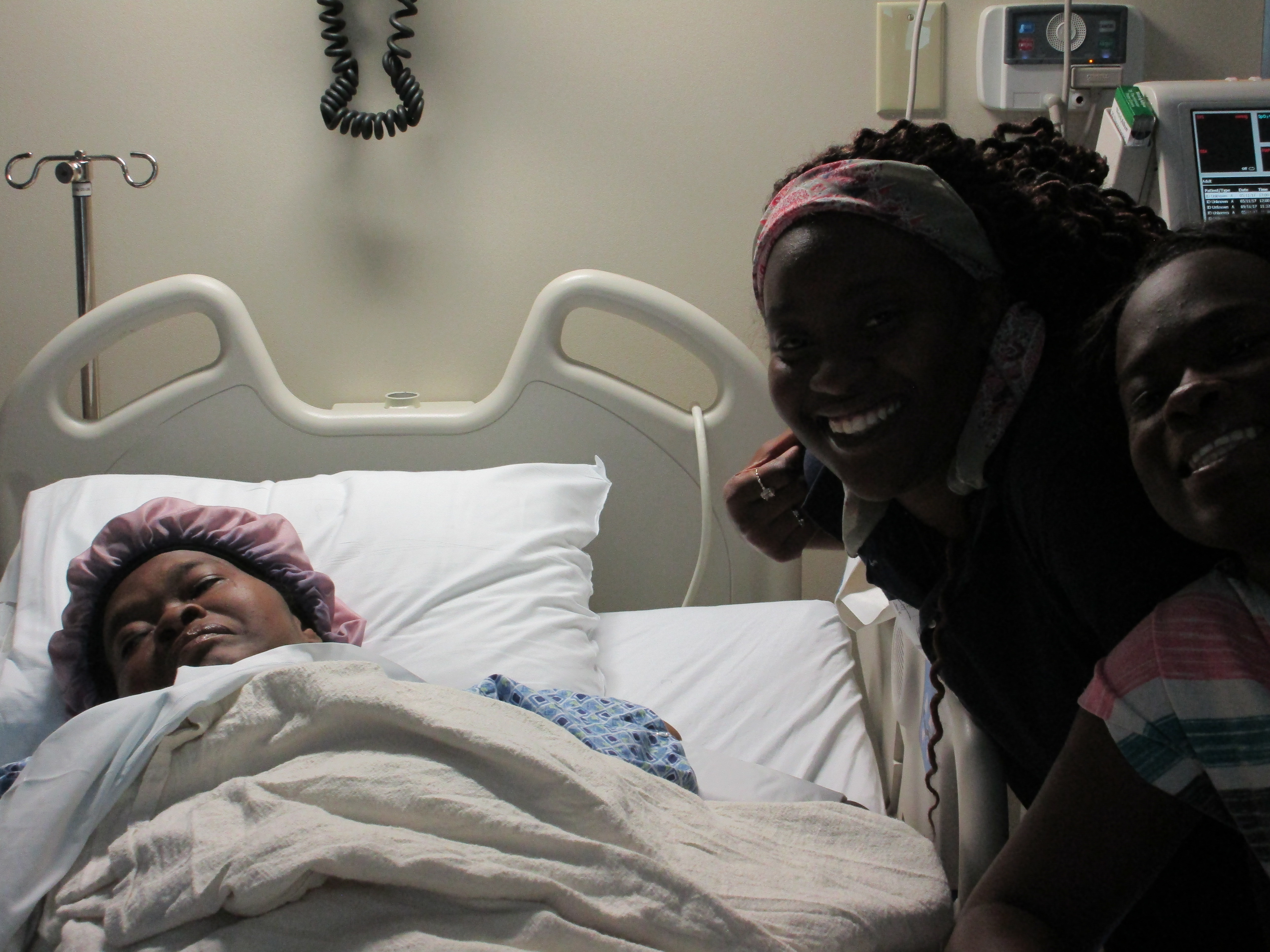
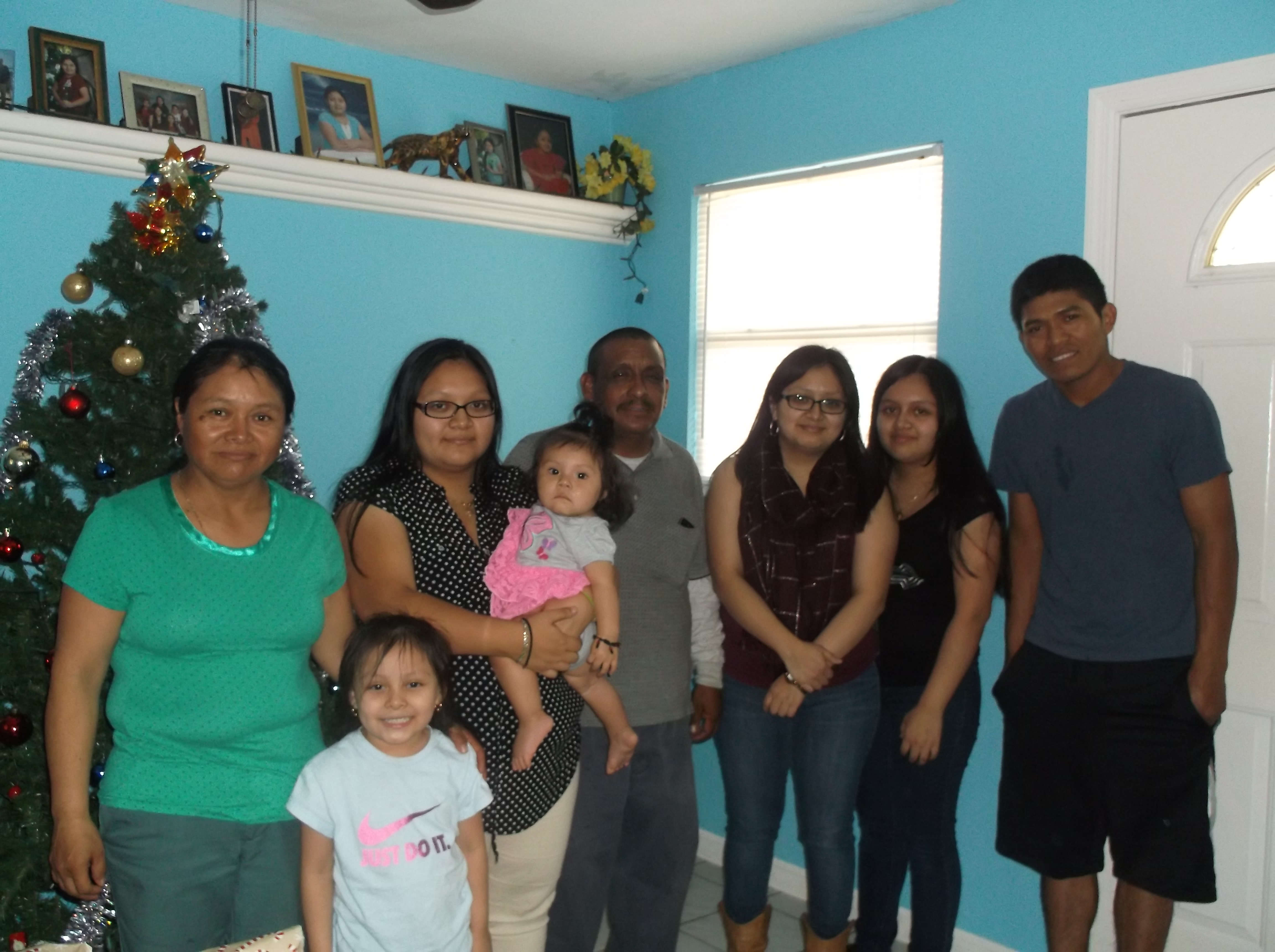
    Here (above) we minister to and with a church member and her family as she deals with hospitalization for advanced cancer and critical corollary problems. Linda has been in the hospital for almost 40 days now and her Health Plan, for those on Disability, is inadequate for discharge planning. Also she has so many Doctors who do not coordinate with each other that she is hardly seen as a whole person and her cancer treatment has fallen by the wayside while the family needs much assistance in negotiating the medical and hospital systems that are critical to her life. Pastor Judy Lee is working with the oldest children and the husband to help them get the best care for her and she is also challenging the systems directly herself. She has helped them apply to two Cancer Foundations for help with daily living expenses so they do not become homeless as their Mom receives treatment. She has anointed Linda with the family present and participating twice and prays with the family as often as she can. This is a family that is falling between all of the cracks and suffering with a lack of real safety net for the poor in America and in this area. Pastoral work with Linda and this extended family of over 20 people includes many helpers from the congregation. This large and close family keeps vigil in the hospital almost daily.
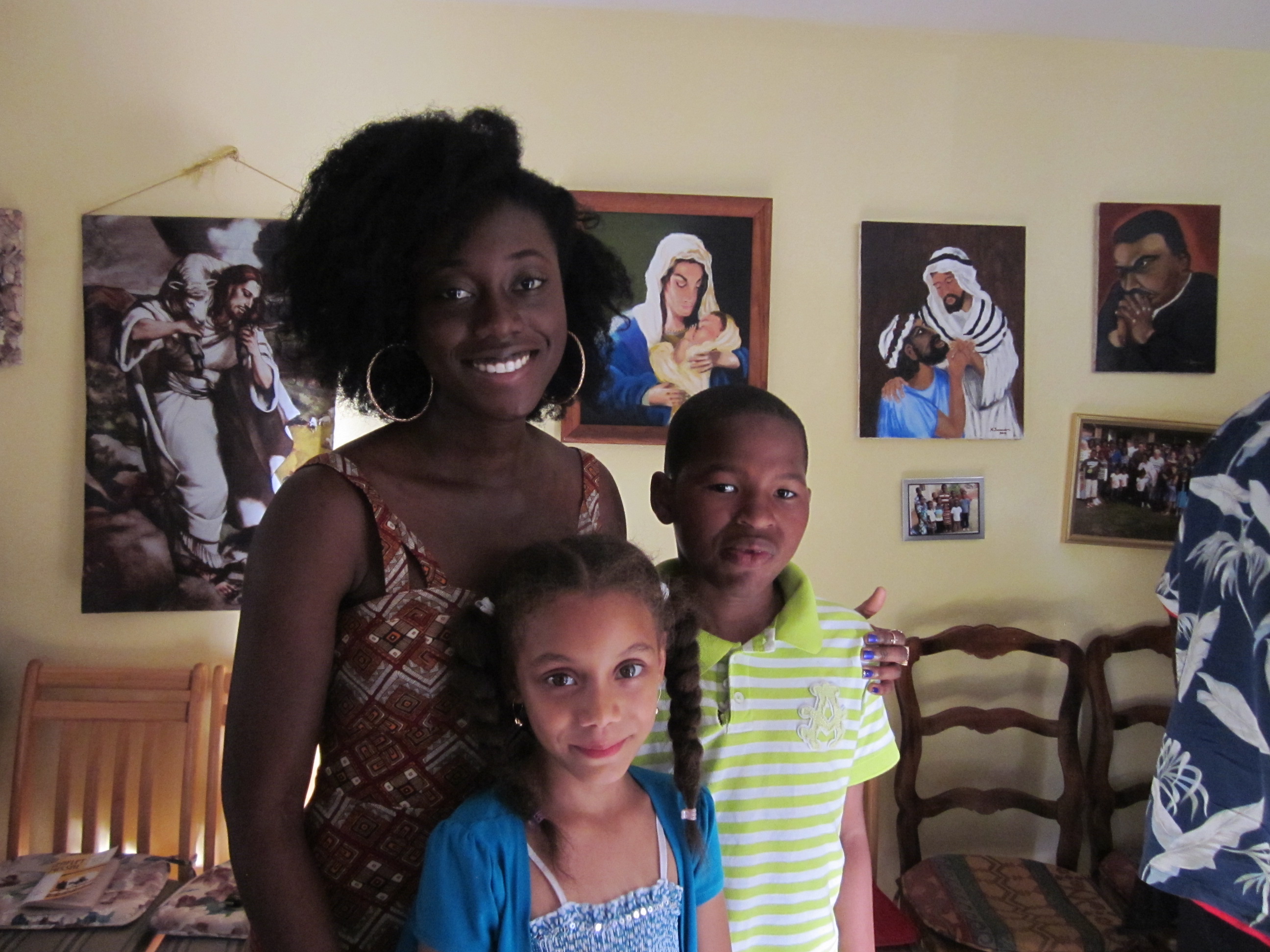
    Below Judy Alves is with one of the little nieces who visit the hospital and Judy Alves, a Lawyer, is also the mentor for Linda’s 15 year old twins. She takes them to tutoring, and enriching educational opportunities and monitors school progress while their Mom is so ill.
    IMG_0216

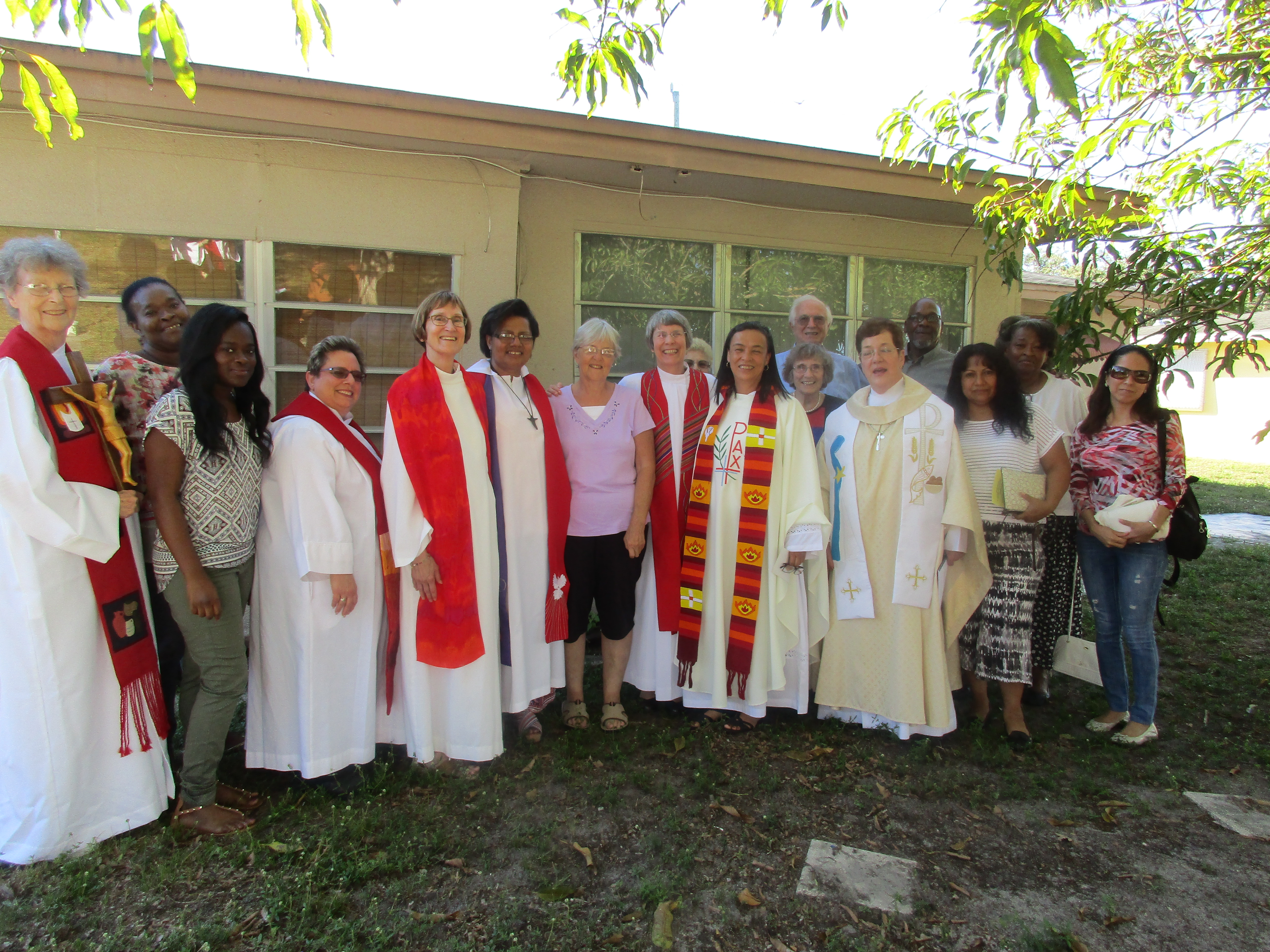
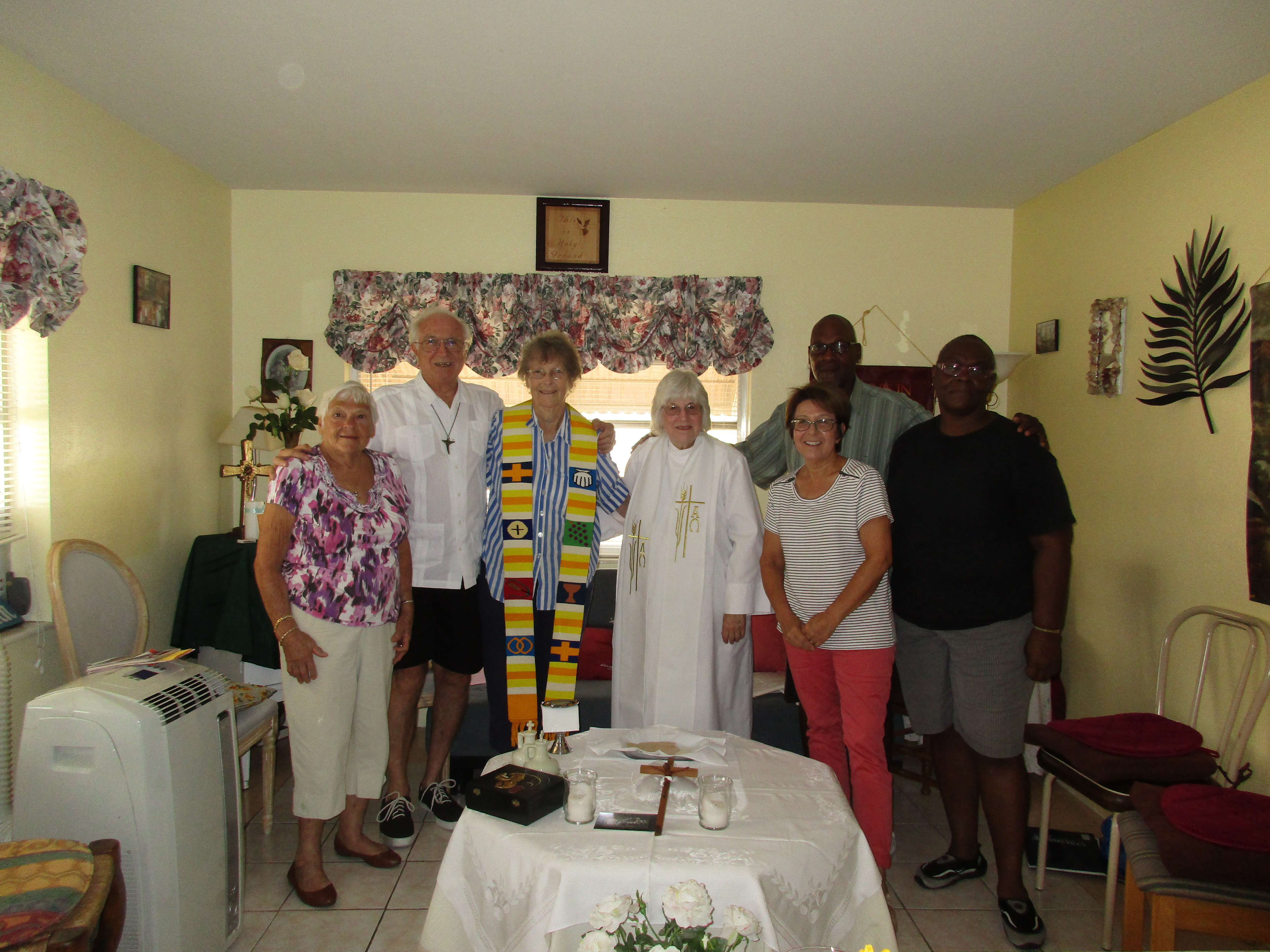
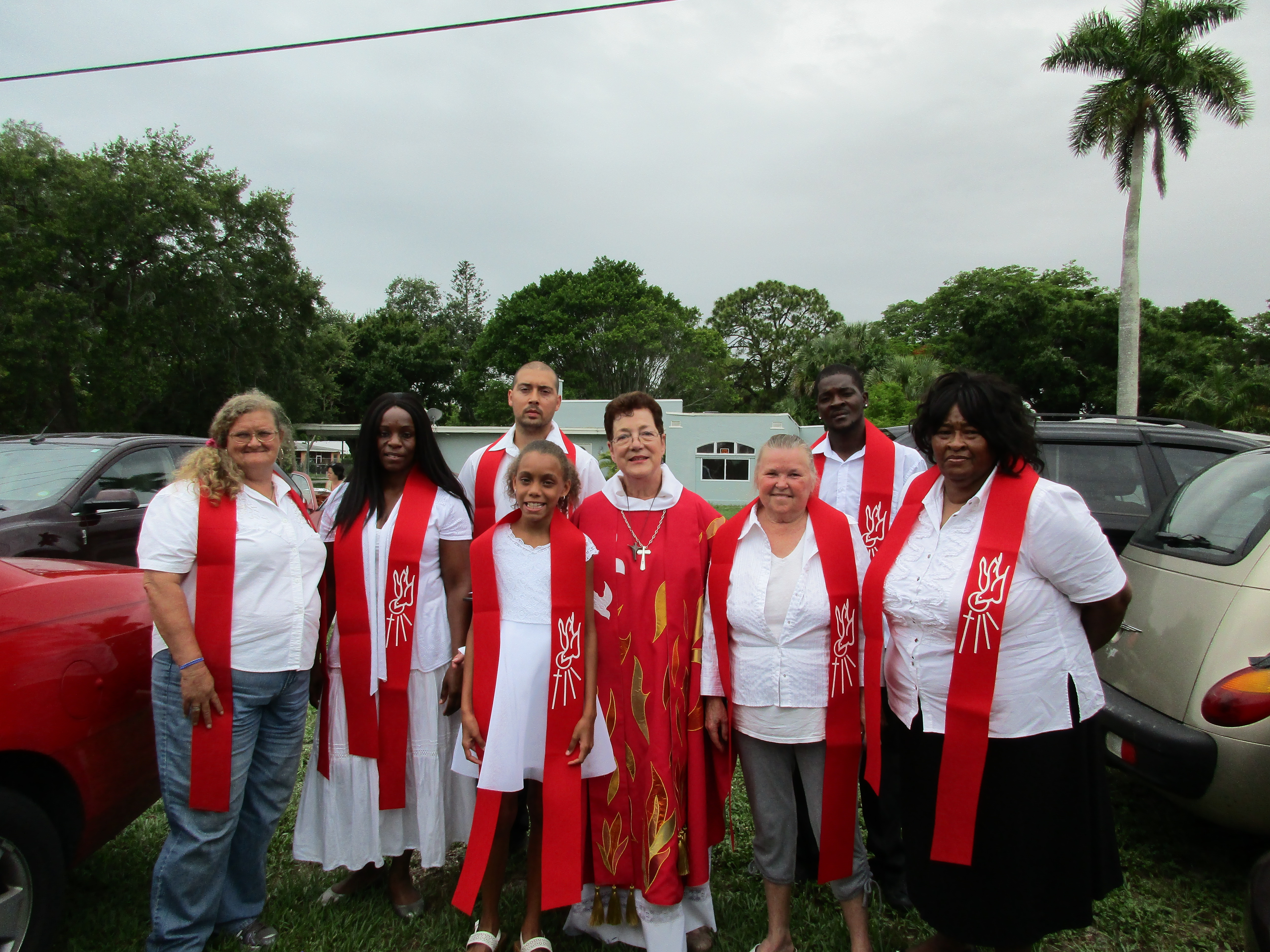
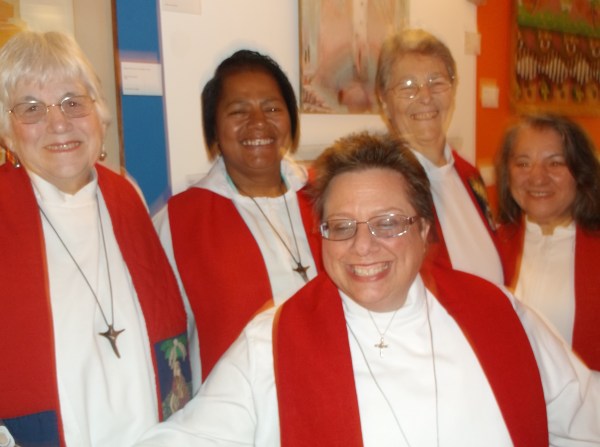
    Here (below) are some members of the Core leadership Group with the three Pastors serving this community after a recent Mass. We must be fed in order to feed the sheep.

    IMG_0937.JPG

    IMG_0936

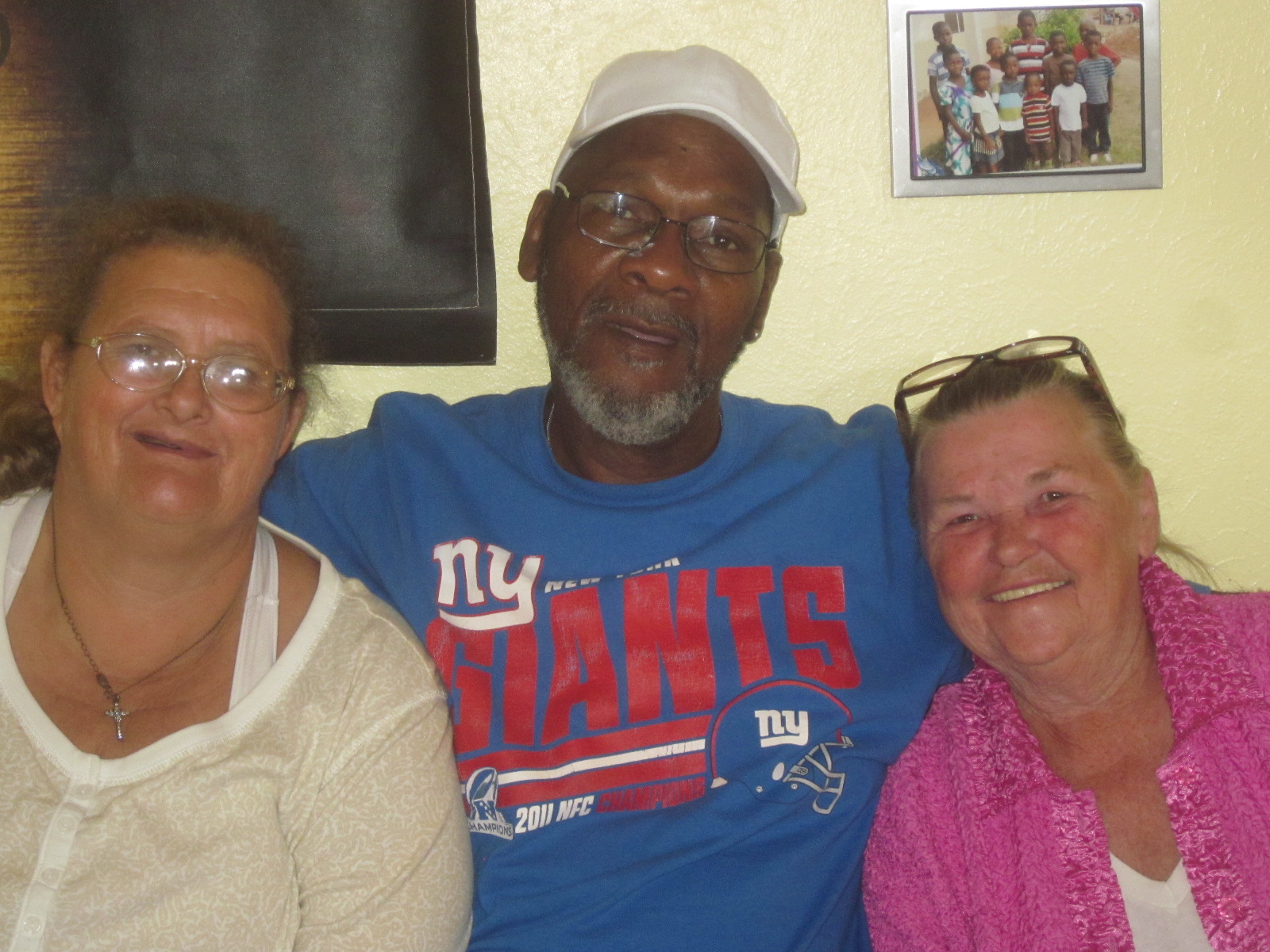
    Another pastoral activity is helping to prevent homelessness with supporting formerly homeless people in housing and helping them to find new housing when needed. Brenda (left) is seeking housing for her family of two and four pets. Mr. Gary is continually thankful for his apartment in housing for the physically disabled, and Patricia is delighted with her housing in Senior Housing.
    IMG_0011

    Below Patricia shows her home to our parishioners . Patricia lived in the woods for almost two years before meeting our Pastors and then living behind our church for seven months. She remains a member of our community and was confirmed in 2016 along with Brenda and two members of Linda’s family, her eldest son, Quayschaun and her mother, Mrs. Jolinda Harmon.

    IMG_0124

    DSCF4006DSCF1747

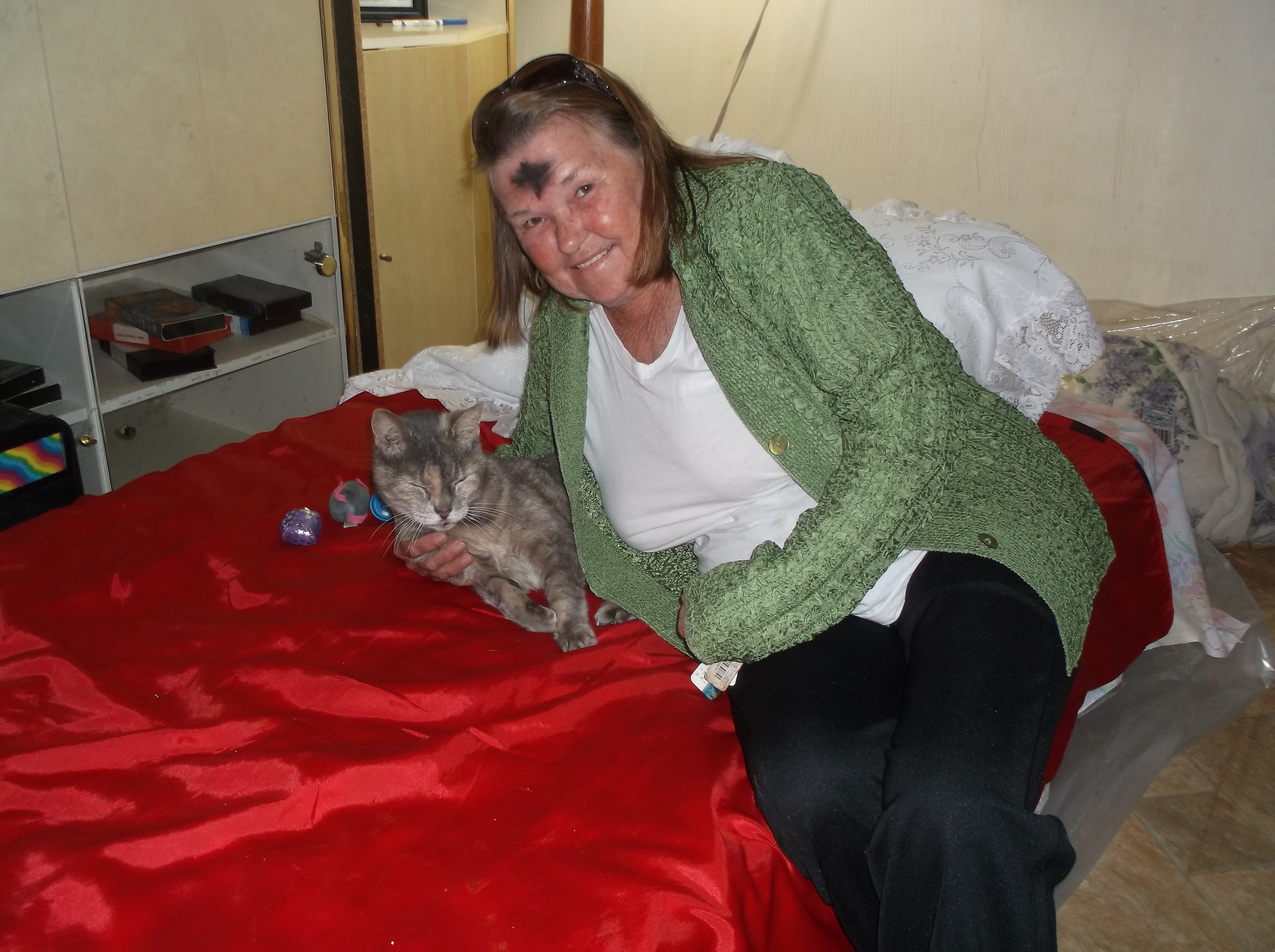
    Two months ago Patricia lost her beloved cat Sarah who died suddenly. Sarah was her companion in the woods and in her church and Senior Housing. (above Pat and Sarah relax in their room behind the church). Pat was truly bereaved at Sarah’s loss and we shared her grief. Last week Pastor Judy Beaumont and I brought her a little kitten that completed her home and family again. Assisting homeless animals often brings joy to our people as well.

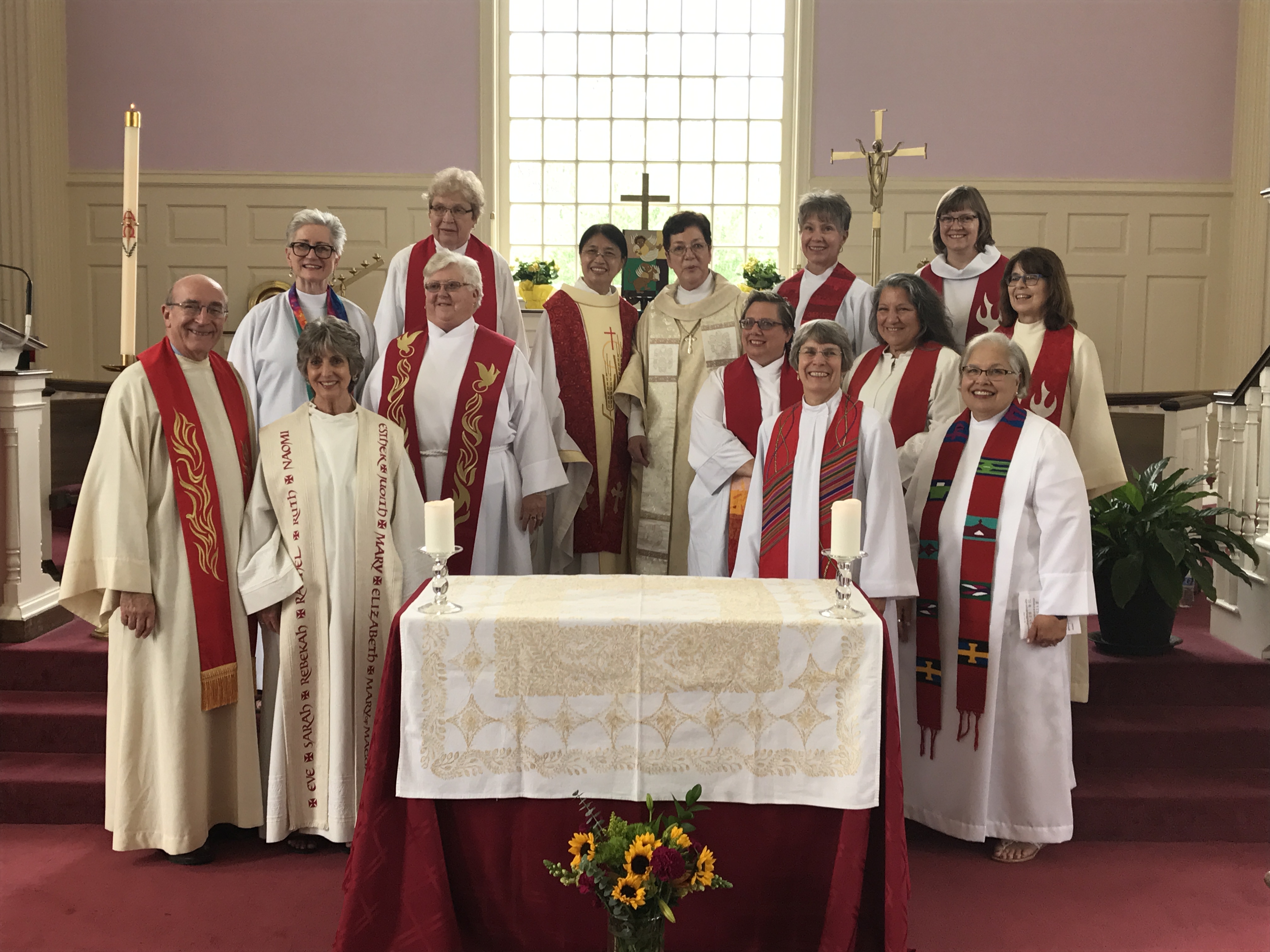
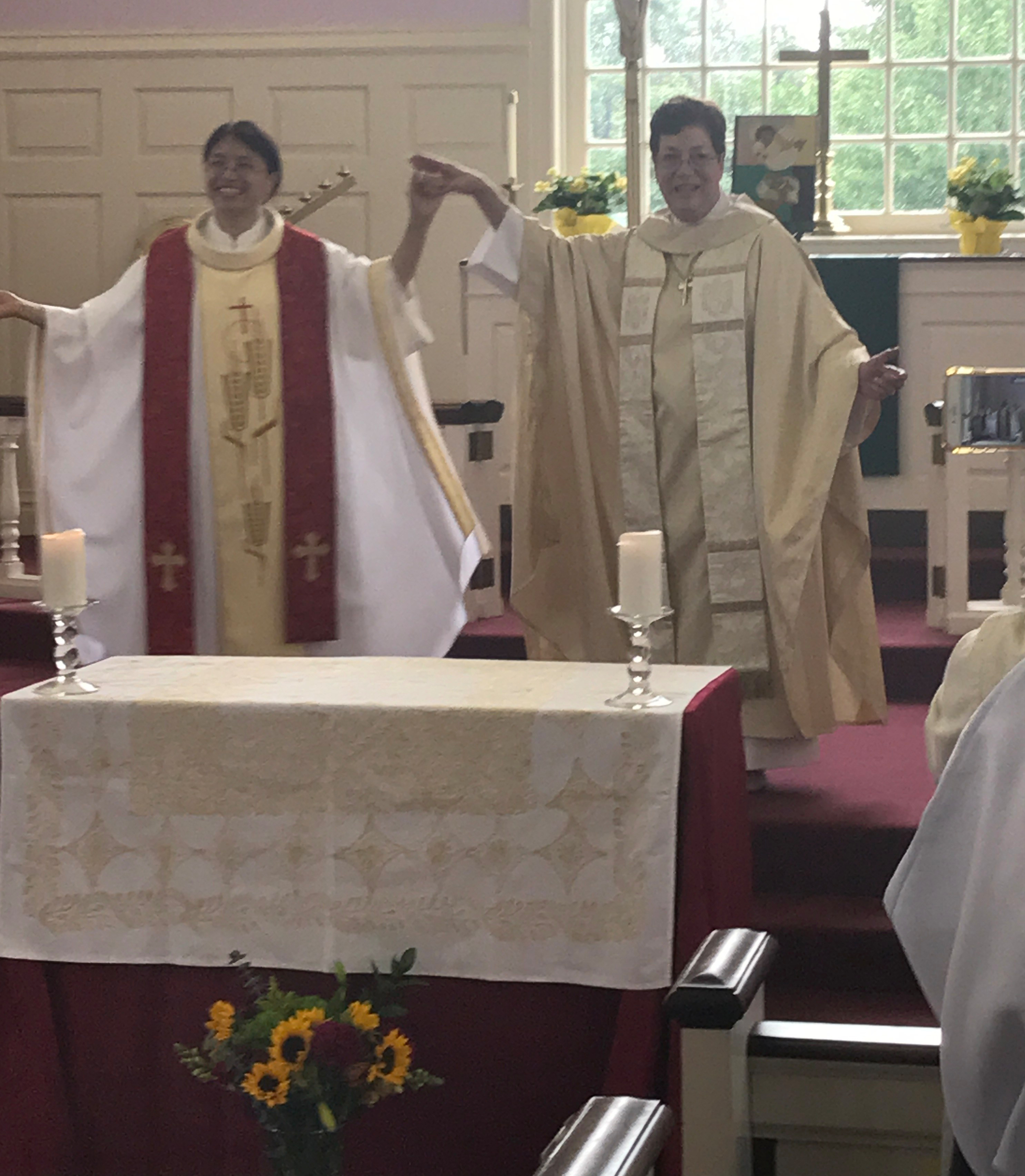
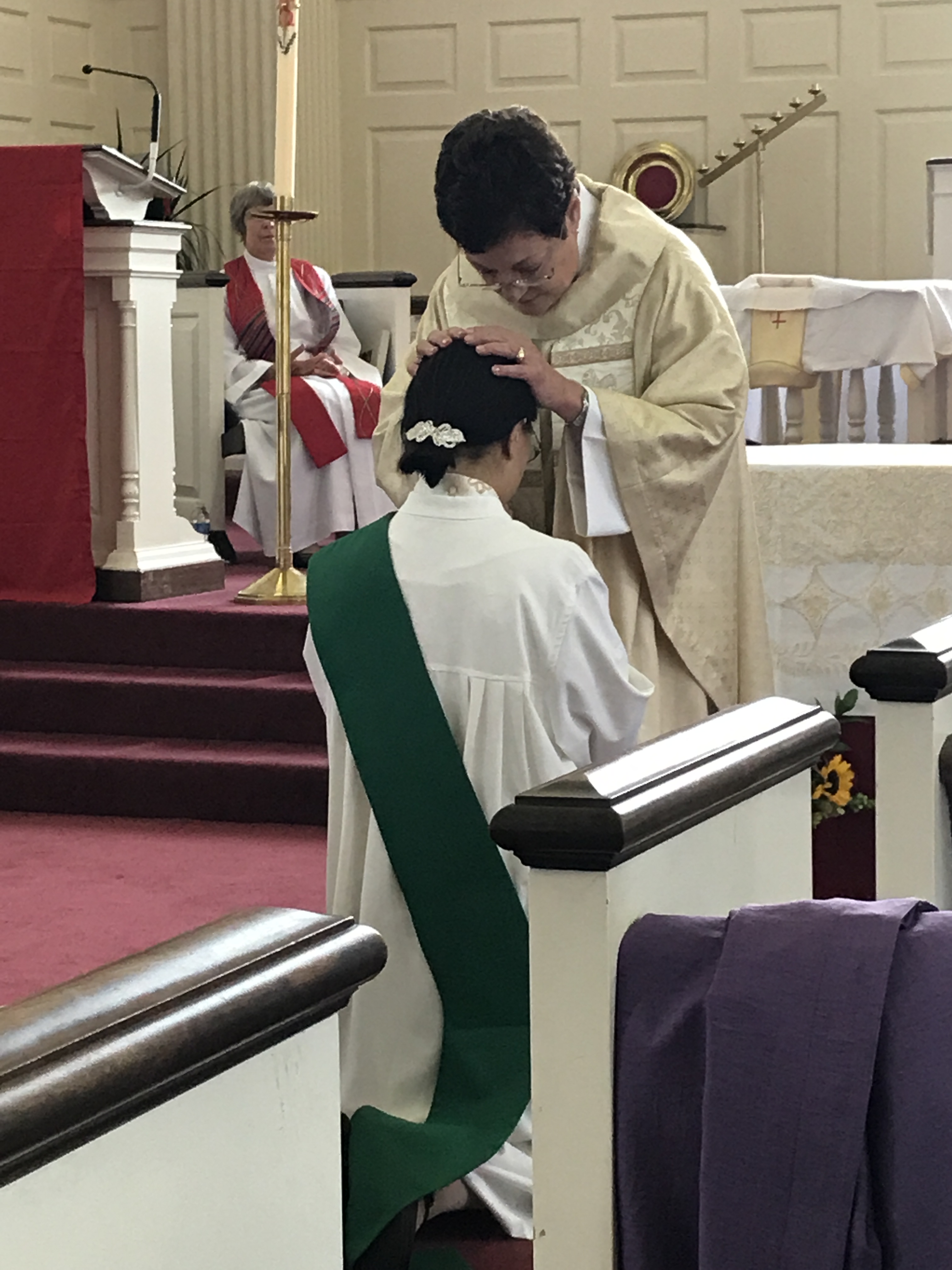
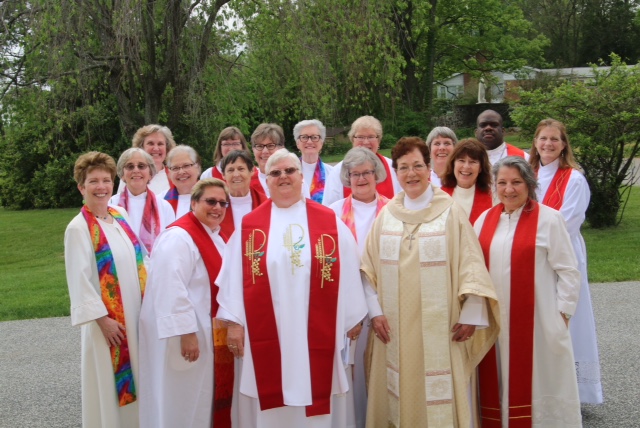
    IMG_0951 Our members( picture below) were delighted to participate in the ordination  of Rev.Maria Elena Sierra Sanchez at our church, welcoming a new Pastor who would serve the poor and outcast in Colombia, South America.

    Pope Francis, will you welcome your new women Roman Catholic Priests of the Poor as well?
    img_0652

    From Radio Vaticana:
    Pope Francis pays tribute to “Italy’s parish priest”
    Pope Francis pays tribute to Father Primo Mazzolari in Bozzolo, near Cremona – ANSA
    Pope Francis pays tribute to Father Primo Mazzolari in Bozzolo, near Cremona – ANSA

    20/06/2017 12:58SHARE:
    (Vatican Radio) Pope Francis on Tuesday made a pilgrimage to northern Italy to honor two 20th-century parish priests whose commitment to the poor and powerless challenged many faithful – inside and outside the Vatican – to step outside their comfort zones.
    The Pope flew by helicopter to Bozzolo, near Cremona in the region of Lombardy, to pray at the tomb of Don Primo Mazzolari, parish priest of a small town, a scholar who wrote about St. Francis and Blessed John Henry Newman, he opposed the Mussolini regime and emphasized the importance of the poor. Sanctioned for a time by diocesan authorities, Father Mazzolari was a friend of Pope John XXIII and praised by the future Pope Paul VI. He died in 1959.
    The Pope then travelled to Barbiana, near Florence to pay tribute to Don Lorenzo Milani, a wealthy convert to Catholicism who founded a parish school to educate the poor and workers.
    In Bozzolo, Francis stood in silent prayer before the simple tomb of Mazzolari, and then delivered a long tribute to the priest whom he described as “Italy’s parish priest.”
    The Pope quoted Mazzolari’s writings about the need for the Church to accompany its flock and recalled his exhortation that a priest’s job isn’t to demand perfection from the faithful, but to encourage them to do their best.
    Quoting Mazzolari’s own words he said: “Let us have good sense! We don’t to massacre the backs of these poor people.”
    He said the legacy of priests like Don Mazzolari is a bright one that challenges us to leave our comfort zones.
    “Don Mazzolari tried to change the world without regrets for the past; he was not one who hung on to the Church of the past, but tried to change the Church through love and unconditional dedication” he said.
    Pope Francis warned against those men of the Church who “do not want to soil their hands” and who “observe the world through a window”; he warned against those who engage in what he called “separatist activism” where one runs Catholic institutions like banks or businesses; and he spoke out against the temptation for spiritualism which dehumanizes and is devoted only to the apostolate.
    Don Mazzolari, the Pope said, conceived the Church going forth into world in the firm belief that that is the only way to reach out to those who do not come to Church any more.
    “He was rightly described as ‘the parish priest of those who are far’ because he always loved those on the peripheries and to them dedicated his mission.
    Pope Francis concluded his speech with an exhortation to all priests to “listen to the world”, to “step into the dark areas without fear because it is amongst the people that God’s mercy is incarnate.”
    He urged them to live in poverty and said that the credibility of the Gospel message is in the simplicity and poverty of the Church and he reminded them always to treasure the lesson of Don Mazzolari.

    Bridget Mary’s Response:
    As a movement for inclusiveness within the Roman Catholic Church, we are on the peripheries, serving the rejected, marginalized Body of Christ. When will Pope Francis leave his comfort zone and embrace a church for everyone including women called to Holy Orders? Bridget Mary Meehan ARCWP, http://www.arcwp.org

  • Happy Birthday Church! Pentecost 2017

    Today is celebrated as the Birthday of the Church and it offers each one of us and the church the hope of renewal and revitalization. It offers the earth itself and all of God’s creatures a new chance at life as we are renewed in our abilities and commitments to care for them. We are renewed by the very breath of God that gives life to all. And so we pray:
    “Send forth your Spirit, Oh God, and renew the face of the earth!”

    And we offer these reflections written earlier but still fresh:

    I spent the week breathing in the Gulf breezes and inhaling sea air. Health and strength renews with each breath. And there, and everywhere, I breathe in God’s holy, sacred breath, and I breathe out love, justice ,forgiveness, inclusion and- church. That happens on my best days, I am sure that I also pollute the world with less than elegant breaths and words,actions and thoughts that are sometimes the opposite of all that is good, and very human. But the most  beautiful thing is that it is not my breath or even the breath of saints, but the Breath of God that will renew our people.

    As I do not return to preaching until next week I am sharing here an updated homily from 2014.

    Jesus said:

    “ ‘Peace be with you. As Abba God sent me, so I am sending you.’ After saying this, Jesus breathed on them and said, ‘Receive the Holy Spirit…’” John 20: 21-22

    Jesus left his disciples with the gift of the Holy Spirit.   He filled them with his Spirit so they could carry on his work of love, inclusion and justice.  Still they were frightened, they had not fully tried their wings to see if they could fly-could really carry on the work of the kin-dom.  On Pentecost, this gift came again in a dramatic way enlivening the followers, the men and women gathered together, with the abilities to reach out to peoples of all languages and cultures with the Good News of the living Christ. The Pentecost story in Acts 2 is such a wonderful accounting of how God provides the church the gifts that are needed to include everyone in the church. In the diverse group gathered in Jerusalem peoples of all then known languages and cultures had gathered. Suddenly, as if with the force of a hurricane, all could hear the Good News in his or her own languages, the disciples could preach to everyone! What a wonderful message of unity in diversity and in how Christ and the Church mandates, speaks, breathes,  diversity.

    In our church the reading from Acts 2:1-11 has been be read simultaneously in  African languages and in Spanish and English and  Italian. How exciting it is to hear the first Pentecost enacted in this way and to know that our church like the Pentecost church is such a diverse group of followers. Two years ago we were moved as our youth leader, Efe Jane Cudjoe, home from her semester in Viet Nam, South Africa and Brazil  reflected with us on her experiences of the Spirit of God in those lands and diverse cultures. She has just finished a year of research and assisting in Medical practice with African-American and other diverse mothers with Duke University in North Carolina.  She is now about to begin Medical School at FSU and her finely tuned understanding of diversity and the dignity of each person will enrich the class she studies with.  Such deep respect for all people and compassion is the very air she breathes and  exhales.

    IMG_0182

    Pentecost is one of the happiest feast days of the Church. We gather with excitement, we wear red and we welcome God’s Holy Spirit once again to breathe life into us so we may be the church that Jesus founded and intended. We are ever mindful of the need for renewing God’s spirit within us, not because it has left us, but because we are so often overwhelmed by life’s events and no longer hear or heed it. We need a fresh infusion, for God Transcendent as well as Immanent can indeed breathe new life into us!  An African-American Gospel Song goes: “Spirit of the Living God, Fall fresh on me/ melt me, mold me, Fill me, use me/ Spirit of the Living God, Fall fresh on me”.   That is our Pentecost prayer.

    Acts 1:12-14 and 2: 1-11

    The Spirit comes to the followers of Jesus, the men and women gathered in the upper room, in a dramatic and indisputable manner with what sounded like a “violent rushing wind, the noise filling the entire house.” – not a little breeze this time – something like the hurricane that we know well here in Florida. And how they must have been amazed and afraid!  Their spirits were ignited by the Holy Spirit and they burned with the Spirit.  Wind and fire, symbolizing the presence of God, filled them and they even began to speak in other languages.  Here God gives the church, the first Christians – the power to preach, teach and witness to Christ, Risen, Living and present, and to present the Good News to all people; no matter where they live or what language they speak.  And this power is given on the harvest feast of Pentecost (or the Feast of Weeks) celebrated by the Jews seven weeks/50 days after Passover.  As such Pentecost is the reminder of the covenant the Jewish people and Moses made with God on Mt. Sinai.  Luke is telling his followers that the Spirit brings us a new Covenant as God’s new people – that all people, “Gentiles” are now heirs to God’s promises of faithfulness and love.  And we are to preach the Good News everywhere – and especially to the poor, the disenfranchised and outcast of our world even as Jesus came to do that (echoing the purpose of the Prophet Isaiah) and fulfilling Isaiah’s prophetic vision: “The Spirit of God is upon me because the Most High has anointed me to bring Good News to those that are poor…..”  (Is. 61; Luke 4:16-20).May the Spirit of God be upon us to do this as well. May She renew us to be able to restore the sight of the blind and preach liberty to the captives!

    1 Cor. 12: 3-7,12-14 (TIB)

    Clearly the Spirit distributes gifts “as She will” – No one, no church, no government, absolutely no one can get in the Spirit’s way of distributing gifts.  So, my friends, clearly women – yes, women – and men – young and old of all classes, colors, cultures and languages may be filled and called by the Spirit.  I sit here today in deep thanksgiving for that – Amen!

    Now here are the gifts Paul mentions in 1 Corinthians 12 – but these are just some of the gifts of the Spirit.

    •  Wisdom in discourse (i.e. teaching/ discussion/communication)
    • Knowledge, the word of knowledge
    • The gift of healing
    • Miraculous powers / also …… as mighty deeds
    • Prophecy
    • Speaking other languages
    • Interpreting other languages
    • The gifts to be apostles, prophets, teachers, administrators (and, yes, priests!)

    Paul reminds us, it is one and the same Spirit who produces all these gifts and many more and distributes them as She will – “as She will”!! (The words for “Spirit” in Greek and in Hebrew-Sophia, Pneuma-breath- and Ruah are feminine). This week, Pope Francis in honest and open dialogue with the nuns agreed to appointing a commission to study the history of deaconesses in the early church and therefore the possibility of ordaining women as Deacons. This is a giant step forward for women, but the scholarly work of this commission has already been done according to a post by Gary Macy on Facebook. So the study should be brief and it will also be apparent that women were not only deacons but priests and bishops in  early church history. Others have wisely noted that despite the wealth of material known about this the study will probably be very slow as the truth about women as deaconesses and beyond in the early church opens the door for women as priests. Indeed there are now over 220 ordained women in the Roman Catholic Women Priests Movement of which we are a part. The Spirit gifts us all as She will, not as we or the Church will, and this includes gifts of ministry, service and all that is needed to fulfill Holy Orders.

    Let us now think about these gifts – and name in our hearts other gifts given to each of us by the Spirit.

    But gifts are not necessarily or even usually given in especially dramatic ways – just God’s Holy Spirit whispering to the spirit within ourselves.  The breath of God, the breath of Jesus shared with each one of us. One of our young people, Natasha is discerning her path in higher learning. Sometimes the answer and the road seems easy and clear, sometimes not so easy or clear. We pray for her as she makes her choice of majors and moves toward a career path. And we pray for all those who are finding breathing hard due to illness or despair or being smothered by the difficulties and troubles that overshadow life for those who are poor and those on the margins.

    “We all drink of the one Spirit” (v. 13) – and here is the symbol of the living water and water as the giving of the spirit for we are baptized into one body – but it has many different and necessary parts – different gifts.  As we USE and DEVELOP these many gifts we can join Jesus the Christ in turning the world upside down!! Jesus breathed the Holy Spirit on a group of frightened people and they were no longer afraid – AND THE CHURCH WAS BORN!!

    The spirit of the living Christ that Jesus imparted to his disciples after the Resurrection en-couraged and em-powered them to go forth.  But the Pentecostal visitation of the Holy Spirit was different, it was dramatic and it was inclusive, for all gathered in Jerusalem (Acts 2:1-11).  The followers of Christ, now empowered, could reach the whole world through the many gifts that God gives to each one of us, the body of Christ.

    And the body of Christ is diverse and of infinite variety.  The first Pentecost came with loud sounds – wind and fire – the way that the Spirit spoke to the people of old.  Peoples who today are still struggling for peace- those from Israel, Iran and Iraq and Afghanistan and Pakistan and parts of Africa, Asia and Rome, Jewish converts and Arabs alike were united by the Holy Spirit.  Today the Spirit of God still speaks to the Church in many different ways – and it still says “Peace, Justice, Love and ALL are welcome.  Receive the Holy Spirit, be instruments of peace, be re-newed, forgive all, and live!

    May God empower us again to bring our many gifts to God’s world. Spirit of the Living God, fall Fresh on us!  Happy Birthday Church!  Amen.

    DSCF1076

  • What is Really Happening in Colombia: From Two Roman Catholic Women Priests in Colombia-Update

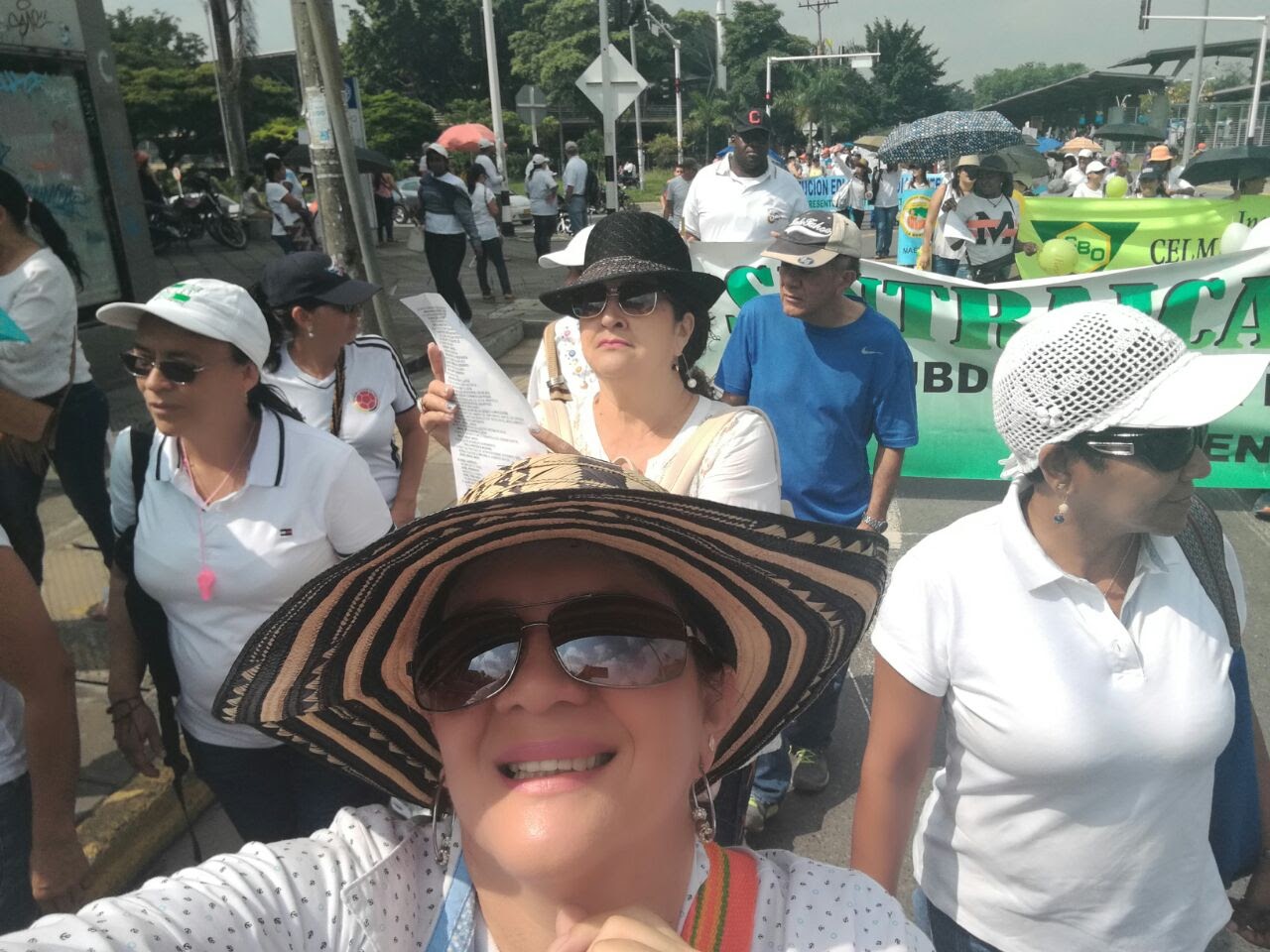
    In an update on conditions in Colombia Rev. Maria Elena Sierra Sanchez, RCWP has informed us that all of the nation’s teachers joined in a strike with parents and students on Tuesday while yesterday they were joined by 5000 indigenous people who also took to the streets for their human rights. Thus far these marchers have not been met with renewed violence and we are thankful for that. Clearly it is a time of massive protest and clamor for basic human rights for all of Colombia’s citizens. We pray for positive responses and not the refrain” the Government has no money”. It is right and just to have a living wage and to be treated justly no matter race, class or position. Two of our Roman Catholic Women Priests are teachers, or working in the school system and the toll on their lives and families for living now with no wages as strikes continue is a problem that literally hits home.
    Rev. Marina Teresa Sanchez Mejia presided at Mass with us at Good Shepherd on Tuesday. As each one shared responses to the text about Paul and Silas singing and praying in the midst of suffering, Rvda. Marina Teresa led us in prayer for Colombia and our sister priests there, and all in need of assistance at this time of turmoil and decisions that are , finally, just for all.
    Rev. Judy Lee, RCWP CoPastor Good Shepherd Inclusive Catholic Community in Fort Myers, Florida
    IMG-20170523-WA0013IMG-20170523-WA0019IMG-20170523-WA0012IMG-20170523-WA0017
    *******************************************************************************
    We are thankful to our RCWP in Cali, Maria Elena Sierra Sanchez for this testimony of what is happening in Colombia currently. We see that teachers are barely paid a living wage for teaching classes of up to 50 students, schools are literally falling apart and there are often no basic materials for the students. We also learn from Rev. Maria Elena that FECODE (the Teacher’s Union) members are protesting in the streets and that their leaders have received threats on their lives and been violently attacked. This is consistent with the experience of our Rev. Marina Teresa Sanchez Mejia also originally of Cali, but here now as her life too has been threatened for advocating for the rights of the Afro-descendents of the Playa Renaciente Community. We also see in YOUtube videos the massive protests of the people of Buenaventura where, as Rev. Maria Elena says there is now no potable water, and also unemployment is more than 60% with most of the people living in extreme poverty, We can see on Youtube that many of Afro-Colombian descent are at the forefront of this fight for human rights. Instead, On our TV’s we see the US President meeting with the President of Colombia who assures us all is well there. The Colombian Government response to these massive protests and strikes is that the Government has no money. Because there is not really freedom of the Press in Colombia we do not hear or see the truth in the USA. Rvda Maria Elena also shares that the health care system is in chaos and sorely lacking and she has had an acute infection in her arm that should have been seen two months ago. As a low paid Maestra in a primary school she can not afford high cost private health care. She asks our prayers for Colombia, especially for the poor, the students and teachers, and those of African descent and other indigenous and marginalized groups.

    I also add this important corroborating link from Rvda. Olga Lucia Alvarez, ARCWP bishop residing in Medellin and Bogota: One can translate to English using your computer’s translation system:
    Rev,. Olga Lucia also says that they can not see peace in Colombia, but do see the selective assassination of leaders!
    “Por donde mires, no se ve la PAZ en este país.

    Lo mas preocupante el asesinato selectivo de los lideres!!!”

    COLOMBIA. BUENAVENTURA: El obispo que tiene que dar misa entre guardaespaldas

    Also Rvgda. Olga Lucia cites this article on the Roman Catholic Bishops of Colombia’s Pacific Coast urging the President of Colombia to recognize and honor pacts with the people of Buenaventura and Choco. It is good to see the Church siding with the poor in this struggle.

    Iglesia católica pide al Gobierno colombiano cumplir con Buenaventura y Chocó

    We suffer with our sisters in Colombia as they witness this extreme poverty and often violent suppression of human rights. We know with them that the middle class and above there may experience another more prosperous and peaceful Colombia, but in standing with the poor this is their daily view. I was with Pastor Marina Teresa yesterday and she showed me the Youtube videos of the military suppression of the protesters. In one, a small baby was killed as the mostly Afro-Colombian descended protesting crowd in Buenaventura was held back forcefully with full military response. Our hearts are with all of our women priests in Colombia and with Marina Teresa as she weeps from knowing this violence personally and sees it so graphically on YouTube. She says it is like PTSD for her seeing this brought her own threats and persecution back and she became depressed. Yet, she was able to pray and is in church today gathering her strength again.

    In Solidarity, and love and prayers,
    Rev. Dr. Judy Lee, RCWP

  • Two Roman Catholic Women Priests Reflect on Power: Sixth Sunday of Easter, 5/21/17

    For those of us who are used to having some power in our lives-to live more than marginally, to negotiate our worlds, to work, to help others,the experience of powerlessness is a humbling and revealing experience. Aging and illness are two normative times of power loss but hopefully not power outage. And there are other times of crisis and loss and uncertainty in our world and in our private lives where powerlessness overwhelms. I know these experiences all too well lately. A friend recently reminded me as I shared my feelings: “you wrote the book on empowerment-you are not powerless now”. She was referring to a social work approach that I advanced in two texts called “The Empowerment Approach to Social Work Practice: Building the Beloved Community (Columbia University Press,1194 and 2001). I thanked her for being a part of my beloved community and for doing her best to make this community we serve truly beloved-one characterized by compassion, justice, inclusion and basic human needs not found wanting-tall order though that is. It is the same work of faith Christ asks of his followers, and the Law asks of its adherents: tzedakah and chesed, true charity and loving kindness-justice. Unless we hold onto God’s Power we can give up. I see it all around me in those I serve who struggle with issues that would sink the best of us and yet cling to faith. And so I wonder: How can we use those times of powerlessness to return to our true source of power, God’s Holy Spirit and the living Christ within us and all around us?

    Here , below, we present the reflections of Roman Catholic Woman Priest, Rev. Chava Redonnet,RCWP who serves the migrant population in New York State and has recently made a trip to Central America. Her reflections on powerlessness are beautiful and right on.

    In the readings for the sixth Sunday in Easter we read of the Holy Spirit empowering the Apostles to do some of the things Jesus did: to heal, to preach,to proclaim the Good News. Acts 8:5-8;14-17 shows Philip and Peter and John carrying on powerfully in healing and preaching. And Jesus reminds us in John 14:15-21 that we are in the living Christ and the Living Christ is in us: we are never powerless but need to tap deeply into our Power Source.
    Rev. Dr. Judy Lee, RCWP
    Co-Pastor Good Shepherd Inclusive Catholic Community, Fort Myers

    From Rev. Chava Redonnet, RCWP
    Oscar Romero Inclusive Catholic Church
    Bulletin for Sunday, May 21, 2017 6th Sunday of Easter

    Dear friends,

    A few months ago, I visited one of our elders from the nursing home in the hospital. A retired pastor, he was struggling with being on the receiving end of compassion. “I’m no longer one of the people who count,” he told me. He was grieving the loss of his power! He had gone from being a person who “mattered,” a person others listened to, with responsibilities and authority, to being one of hundreds of patients, dependent on others for the most basic tasks.

    I was thinking that might not be a bad experience for us pastors to have at the beginning of our ministries, rather than, or as well as, at the end.

    My experience these past couple of weeks, visiting Mexico, Guatemala and El Salvador, then a whirlwind trip to Boston, involved something of that sort of role-reversal. Last night driving home, somewhere between Albany and Syracuse, I realized I felt competent again. Driving in Boston had not been a pleasant experience, and I was coming home minus about half a bumper, with every last nerve-ending frazzled. When at last I was on familiar roads, I began to feel more competent and “myself” than I had felt since leaving the airport in Mexico City, fifteen days before.

    Everywhere I went in Mexico and Central America, I was accompanied by people who knew much better than I what they were doing. “Pastora, no!” they would shout. “Chava, watch out!” The first time Tonia’s sister took my hand while crossing the street – as you would with a small child – I realized I needed that. I entered buses confused, not knowing how much money to use, or what to do with it, or what the rules were. I sat in the wrong seat. I dropped my change, not knowing if what I was losing was the equivalent of a few pennies, or a few dollars. I had to have things explained to me, constantly.

    But I had people to explain things. I did not have to be afraid of police officers. I had a place to sleep at night, and money to buy food. I had identification. I was a US citizen, thus one of the powerful of the world. Even in my vulnerability, I had layers of protection.

    Have you ever thought about what it is like to lack all that? What is it like to live in a country where you don’t understand what’s being said – or how to use the things you encounter, like elevators. How much courage does it take to get through a day when you have no protection but your own wits, and maybe the company of some friends or cousins with as little knowledge of the place you are in as you?

    I just want to honor the people who do that. I want to honor their grit and perseverance, the courage they summon each day to keep on going.

    Years ago I was praying for a friend. He had just come out to me as gay, after years of close friendship. This was a time in my life when I was “open,” “tolerant,” “accepting” of the gay people in my life and likely thought I was quite progressive for that. But in prayer I received a revelation. God wasn’t tolerating my friend. God was delighting in him. God was rejoicing that he was who he was. God was dancing with joy!

    God isn’t tolerating undocumented people, either. God isn’t sympathizing with their plight. God is in there with them, putting one foot in front of the other, keeping on, day after backbreaking day. God is in the voice that whispers inside, “Keep on going, because you count! Your life matters!” God is in that thing inside that fights back, that is in the struggle.

    Maybe that’s why I think pastors should experience powerlessness. Senators and congresspeople, too, and judges and lawyers and all of those with voices of authority. We need to know in our bones that being a person that counts is not about titles and authority, but simply about being a person. We need to look at each other like God does – rejoicing, believing, encouraging, celebrating the worth and dignity, the absolute beauty of every person we encounter on this earth. We need to be in awe of each other, aware of the God in ourselves, the God who knows we are each walking around shining like the sun.

    Many thanks to Tonia, Ricardo, Simona, Laura, Lizbet, Carlos, Sherlyne, Gustavo, Alfredo, Jose Luis, Enrique, Rosita, Hermana Chebelita and everyone at Shekina for being my teachers, guides, companions and friends on this journey. Thank you for correcting my Spanish and helping me get places on time, for feeding me and driving me, and holding my hand when I crossed the street. Special thanks to Gustavo, my fellow Peregrino Migrante, and to the community of Shekina for being such a shining example of what church can be. May we support each other, encourage each other, believe in each other, as long as we have breath to offer thanks and say “Amen!” Adelante!

    Love to all, Chava

    “If you have come to help me, you are wasting your time. If you have come because your liberation is bound up with mine, then let us work together.”

    Words used by Lilla Watson, Aboriginal elder, activist and educator from Queensland, Australia.

    Oscar Romero Church An Inclusive Community of Liberation, Justice and Joy
    Worshiping in the Catholic Tradition Mass: Sundays, 11 am
    St Joseph’s House of Hospitality, 402 South Ave, Rochester NY 14620 A member community of the Federation of Christian Ministries
    DSCF1548

  • The Way, the Truth and the Life: 5th Sunday of Easter

    Today in the Gospel, John 14:1-12 Jesus once again tells us the truth and shows us the way to life. How blessed we are in often troubled and uncertain times and personal and familial situations to hold onto Jesus’ hand and not get lost. Getting lost is easy to do in hard times. In this fifth week of Easter, we are reminded that Jesus the Christ Lives and therefore with him we live, now and forever. On this Mother’s Day we are reminded that when a mother faces terrible trouble the family flounders. Yet, we ,mothers, and all of us know, that when we hold on to the Way, truth and Life, we may flounder and get lost at times, but we will be all right. We will return to life. This is for all the mothers who carry heavy loads and sometimes fall under the weight, but get up again and lead their children back to God and life by their love and faith.
    This week, a very sick parishioner, Linda M. told me ” I feel that I am getting lost”. Faced with unspeakable pain and a host of trying life problems as well,indeed she was in danger of getting lost. She is now in the hospital in crisis and I was able to be with her for three days. Today her seven children and family surround her with love on Mother’s day. But her condition is such that she is in and out of knowing it. Yet, she does know it. And she does know that God’s love surrounds her and pulls her back from death into life. Her good news was that her cancer can still be treated. Thanks be to God. But the other conditions now engulfing her must be healed first. And, she must gain the strength of spirit to fight again with Jesus by her side. In my first visit on Wednesday, I anointed her with the help of the family and we sang and prayed songs she knew and could hear with the laying on of hands. “Pass me not, Oh Gentle Savior,hear my humble cry, while on others you are calling, do not pass me by”. I reminded her that God is present, surrounding her with love and Jesus will not pass her by. She was able to give her “Amen”. Please join me and her family and loved ones in prayer for Linda, for healing of body, mind and spirit. And extend that prayer to all mothers and all who suffer with illness and other issues and still carry others. I think here of our Pastor Judy Beaumont too, and my cousin Bob’s dear wife, Barbara Robinson, such women of faith. We pray for all families and all mothers who have illness, other issues and too much to deal with-for strength, for healing, for patience and peace and most of all a renewed infusion of love and life. We are thankful for the love of God our Mother and Father and for Jesus who accompanies us on the journey, through the good days, which are many, and the bad days too. Jesus assures us in John 14 that he has not disappeared, he has prepared a place for us to be with him. That is both now and forever and with him we will never lose the Way. Amen!
    Rev. Dr. Judy Lee, RCWP,
    Co-Pastor Good Shepherd Inclusive Catholic Community, Fort Myers, Florida

    IMG_0920IMG_0923

    Below also is Rev. Deni Doulos reflections on Jesus: the truth. Amen and Amen!
    And Jesus Said, “I Tell You The Truth”

    May
    14
    (John 14:1-14)

    Every time Jesus wanted us to listen to what He had to say, He would say

    “truly I tell you“

    or

    “verily I say unto you“

    or

    “I tell you the truth”

    All of Jesus’ parables use one of these phrases, as well as many of His teachings. He wants us to ‘get it’ – that what He was saying is important to us and to our salvation.

    And Jesus performed all kinds of marvelous deeds: changing water into wine, healing the sick, restoring sight to the blind, raising the dead, making the lame walk again, driving out demons, feeding 5000 people with five loaves and two fishes, restoring the ear of the servant that Peter cut off, -things that we don’t see every day – things that people found hard to or couldn’t believe. But Bible tells us that these miracles are true -that Jesus did these things – and reminds us that He also said “I tell you the truth”.

    In this day and age, we have a hard time finding someone who will tell us the truth. Events are sensationalized, we hear lots of ‘fake news’ or ‘alternative facts’, and some people just outright lie and expect us to believe them. It is very hard or almost impossible to know what is true anymore.

    But there is one person who we can always believe – who speaks the truth to us, no matter what – and that is Jesus. “I tell you the truth” was, in fact, the essence of Jesus’ mission and ministry.

    “I tell you the truth,” Jesus says in today’s text,

    “Do not let your hearts be troubled.” (John 14:1)

    He said this to the disciples on the last night He shared a meal with them – the time we call ‘The Last Supper’. Can you think of anything more reassuring? More hopeful? More promising?

    In spite of the betrayal by Judas and denial three times by Peter that would come in that evening, and the trial Jesus would be facing, he reassured this band of followers, saying

    “Do not let your hearts be troubled.” (John 14:1)

    And He says the same thing to us!

    We, like those disciples, have our doubts, weak resolve and often wander off the correct path. Jesus told the truth about the cruelty of people to others, the hatred that tears us apart, the shortcomings that bind us together more than any ties of nationalities, ethnicity, or politics ever could. But once again, Jesus reassures us:

    “In my Father’s house there are many dwelling places. If it were not so, would I have told you that I go to prepare a place for you?” (John 14:2)

    Jesus’ “I tell you the truth“ revealed more about God, about that love and forgiveness that is offered to us; the ‘truth’ about God’s plan for salvation for each and every one of us. When Jesus told the ‘truth’ about God, it was never quite what we expected.

    For those convinced they were righteous and blessed by their piety and goodness, Jesus warned,

    “And when you pray, do not be like the hypocrites, for they love to pray standing in the synagogues and on the street corners to be seen by men. I tell you the truth, they have received their reward in full” (Matthew 6:5).

    For those who put their faith in human efforts, in the power of the sword and political might, Jesus announced before the great Temple Herod had completed,

    “I tell you the truth, not one stone here will be left on another, everyone will be thrown down” (Matthew 24:2).

    For those proud of their rigid oppressive religion, Jesus reminded them that there would be no grown-ups in heaven:

    “I tell you the truth, unless you change and become like little children, you will never enter the kingdom of heaven” (Matthew 18:3).

    For those who said God could only work in certain ways and through certain people, Jesus told the ‘truth’ about a God who could work

    wherever,

    whenever,

    and with whomever

    God wants us!

    Each and every one of us!

    No matter what!

    Jesus came to tell the ‘truth’, and this truth both surprises and sets us free – free for God to take us to places that we’ve never been before and couldn’t get to without God.

    All we have to do is follow the teachings of Jesus.

    Praise be to God!

    Delivered at In The Garden, Trinity Episcopal Church on Capitol Square, Columbus, OH; 14 May 2017

  • Thoughts On Religious Vocation: An Open Letter to Pope Francis I

    Here we present a letter to Pope Francis by Michele Madigan Somerville who writes with insightful analysis and challenges Pope Francis and all to consider both married priests and the ordination of women as Roman Catholic Clergy. This is originally published on http://www.indie.com I hope that Michele Madigan Somerville knows of our presence as over 250 validly but illicitly ordained Roman Catholic Women Priests serving all over the world and growing daily. This is the letter in its entirety and it is well worth the read.
    Thank you, Michele Madigan Somerville!
    Blessings,
    Rev. Dr. Judith Lee, RCWP
    Co-Pastor Good Shepherd Inclusive Catholic Community , Fort Myers, Florida
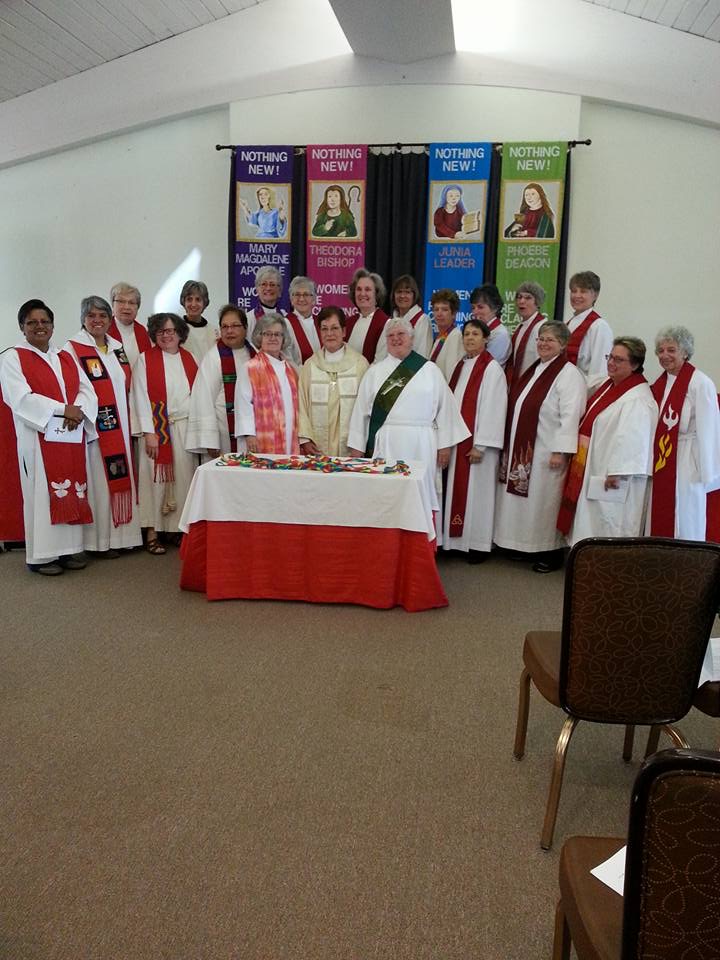
    image1-2img_0652

    Essays on Religion, Faith and Sprituality by Michele Madigan Somerville
    Friday, May 5, 2017
    Thoughts on Religious Vocations: An Open Letter to Pope Francis I

    May 5, 2017
    His Holiness, Pope Francis PP.
    00120 Via del Pellegrino
    Citta del Vaticano

    Most Holy Father:

    I write to you as a Catholic mother, wife, writer, teacher and student of my own Roman Catholic faith. I write this as “an open letter.”

    Like so many of my fellow Roman Catholics, I pray, this week, with a special focus on vocations.

    Like so many of my fellow Roman Catholics I have celebrated, lately, the possibility that you may be considering loosening the celibacy requirement for our priests. While recognizing that some who are called to the priesthood view celibacy a gift, I know that for many priests, celibacy is not a gift.

    I know that we already have married priests in our church, and that for (roughly) the first half of Church history, priests married. I know too that most of our married priests come to us from other traditions as “vir probati.” Having served as priests in their original traditions, they convert, undertake preparation for Holy Orders and are ordained into the Apostolic Succession by the Vatican.

    I come to thinking about the question of married priests with a belief that sexuality when infused with respect, commitment and love, is a gift from God. As a Catholic poet, I have long admired the sacred eroticism found in the verse of our Catholic mystic poets. Erotic love has the potential to remind us of God’s passion love for us. Sensuality, which, of course goes beyond sex, permeates Catholic life.

    As a woman married for more than thirty years, who has been blessed with three (now grown) children, and who has persevered in a marriage that has, at times, been profoundly troubled, I can attest to the power marriage can have to catalyze spiritual growth, and increase maturity, gratitude, devotion and faith. So too, has being a parent intensified my faith and belief. I have, for example, always loved, enjoyed and respected children. But motherhood increased my concern for the earth children born today will inherit, that created world Your Holiness so lyrically praised in Laudato Si !

    For these reasons, I celebrate the possibility that we might soon see more and more married priests serving on our altars.

    As a feminist Catholic, however, I feel conflicted.

    I believe that to explore the ordination of married priests casting even a glance in the direction of the many women who are called to ordination sends an excruciating message to Catholic women and the world beyond The Church.

    I know that Your Holiness has affirmed Saint John Paul II’s teaching that the door is closed on the discussion of ordaining women, but we are a Church of miracles and I continue to pray for the day girls holding their mothers’ hands at Sunday mass will no longer have cause to feel somehow unfit to answer the call to ordination.

    I believe that the tradition of upholding papal rulings of Your Holiness’s immediate predecessors and the fear of schism account for the refusal to even allow a dialogue among Catholic scholars and theologians of the question of ordaining women. I am no expert on my church but I love to read and I know that almost always the choice to silence opposition in questions of justice is a response driven by fear.

    Still, I hold out hope that a shift in the Vatican’s disposition towards married (male) priests might, in time, lead to a more expansive view of ordaining women. I hold out hope that the Divine light of a pure truth might, in time, push through the door the advance of married priests has left a bit ajar.

    I understand that increasing the number of married priests will facilitate the assigning priests to regions where Catholics currently lack access to sacraments and the celebration of Mass. That is so very necessary; ironically, in many of those priest-free communities, it is women who are keeping Catholic faith and tradition alive. Are they not fit for ordination?

    I am familiar with the argument that excluding women from the priesthood not a matter of “fitness.” Canon Law clearly requires that ordinands be “baptized men.” That same body of (Canon) law also prohibits married men from serving as priests.

    Saint John Paul II broke Canon Law as it pertains to ordination when he began to allow married priests from Eastern Rites and Episcopal traditions to become Roman Catholic priests.

    I know that arguments advanced by Pope Benedict XVI and Saint John Paul II, and promulgated via Saint Pope John Paul II’s 1994 Apostolic letter, Ordinatio Sacredotalis put an end to the debate about ordaining women. But we kept talking.

    Your Holiness has reiterated the claim that the Church lacks the authority to ordain women.

    I believe the Church does have the authority to ordain women, and that the Church not only has the authority to ordain women, but also the obligation to do so.

    I recognize that it falls to the Magisterium (the teaching Office of the Church) to distinguish, for the benefit of Catholics, between man-made (ecclesiastical) law and Divine law” (law handed down by God). The Magisterium currently holds that Divine Law prohibits the ordination of women.

    “Divine Law” can change, because we know that Divine Law has, on rare occasions throughout history, changed.

    A strong tradition whereby Supreme Pontiffs uphold teaching promulgated by their immediate predecessors exists in our church, but I believe this tradition is a poor reason for perpetuating injustice and bigotry. Certainly there is some teaching advanced by your papal predecessors which Your Holiness would refuse to uphold.

    Like so many Catholics and non-Catholics I celebrate your readiness, Your Holiness, to put God and conscience before (both civil and ecclesiastical) politics.

    A Church that refuses to ordain women, has no standing in preaching against bigotry. How can we (The Church) condemn misogyny and prejudice with so great a log in our eye? Are we not called to teach by example?

    As Rev. Martin Luther King, Jr. wrote in “Letter from Birmingham Jail,” “an unjust law is no law at all.” The Church is not a state. I believe a Church which emphatically embraces a “separate but equal” approach its most holy sacraments compromises or forfeits entirely its right to condemn sexist, “separate but equal” and discriminatory practices in our temporal, political world.

    I believe that all injustice goes against Christ.

    The law which stipulates that priests must be male is an unjust law.

    I notice that many people both within and outside of the Church do not fully see how strong the principle of the female divine is in our Church. I am thinking of the powerful legacy of our women Church doctors and saints, and our devotion to the Mary. I think these have kept many Roman Catholic feminists who might otherwise depart the church, engaged and active in Catholicism.

    We (women) are often reminded, by proponents of a male-only priesthood, that there are many ways in which women can serve in our Church. These do not much mitigate the long and deep discrimination at hand.

    It is true that strength of the presence of the Female Divine Principle has been forcefully present in Catholic scholarship, worship and art. It is true that there are many Roman Catholic women who do not object in the least to the bigotry keeps an all-male priesthood in place. However, with all due respect, Your Holiness, I have come to believe that Vatican’s failure to rigorously address the issue of women’s ordination is a sin.

    We cannot engage in oppression engaging in it. We cannot claim moral high ground on matters of social justice when we practice sexism and misogyny in our own church. The secular world needs to hear our voice of justice and peace but when it comes to discrimination against women, our fish appears to the world to rot from the head down.

    In the past year, you have said so much about the need to increase women’s leadership in the Church. I was so grateful to see so much discussion of women in Amoris Laetitia. Your Holiness has not been blind to the extent to which women’s work is already keeping churches afloat and operating. Your Holiness has taken special note, radical note, really, of the gifts of women.

    But I am not sure that any man, even one so full of devotion and love as Your Holiness, can understand how it feels to be a girl growing up in a church, asking for the first time, “Why are there no women priests?”

    I have been blessed with the opportunity to sponsor three young women in Confirmation and, truly, discussing the all-male priesthood with the confirmands in my care has been discouraging and demoralizing.

    In New York City where I live, women deliver the Eucharist to the sick, clean churches, teach in Catholic schools, minister to the sick and dying in Catholic hospitals, serve as cantors at mass, proclaim readings on altars and distribute the Eucharist at mass. Even in very conservative parishes, one sees more women than men on altars and in the pews. In recent years, I have had the great privilege to take part in masses in Europe and in Mexico where, even in very traditional Roman Catholic communities, I have seen more women than men both on the altar and in the pews.

    In one interview a few years back, Your Holiness characterized women as “the strawberries on the cake.” I confess, that I would probably find this remark charming coming from Your Holiness, were it not for the backwards and excruciating tradition of our Church to persist in declining to honor the priestly vocations of women.

    News broke this week that the president of my nation will soon enjoy an audience with Your Holiness. Donald Trump is a man who has shown profound disrespect for the poor, school children and women. How I wish our Church might have full moral authority to chastise Donald Trump for his bigotry and misogyny. How I wish there were no log in our eye.

    I believe that if the world survives the current United States president, the Vatican will , in time, ordain women.
    But When?

    When it becomes an economic necessity and the survival of the Church depends upon it. And not a moment earlier.

    I wish it were otherwise. I wish justice and not expedience might be the cause for such a shift.

    I am often asked, by non-Catholic friends about the Vatican’s reasoning for refusing to honor the vocations of women who are called to serve as priests. I answer that because they are Christ’s semblance on earth, priests must, according to Catholic teaching, be men.

    But Jesus was also a brown Palestinian Jew who came of age in the Temple. Why, then, does the Church ordain red-headed Irishmen and uncircumcised Nigerians?

    I note the claim that there were no women “apostles.” But there are places in the New Testament (Paul) where women are called apostles. Most Catholics agree that there were women disciples.

    I mention the concept of the Church as “mother,” and that priests are called “the bridegroom” of the church., that nuns are often been called “Brides of Christ.” Are not all priests, in some metaphorical senses, spouses of both Christ and the Church? Christian scripture and cosmology are rich with metaphor. The metaphor of the bridegroom, lovely as it is, assumes a taint when it is used in the service of prejudice.

    As a poet I know that poetry should expand our souls not to bind us to injustice.

    Some traditional Catholics point to the order of the priests of Melchizedek, who was called to the priesthood but not born into it (born being more the norm). The Jewish priesthood of antiquity was indeed restricted to men, but Christianity discarded much of Jewish religious in short time. Jesus of Nazareth labored on the Sabbath, ate at unclean tables and prayed with women—all of which were forbidden by Jewish law. And the Hebrew priests were not rabbis; they collected tithes and presided over the Temple. The modern-day Jewish counterpart to a Roman Catholic cleric is a “rabbi,” the word Magdalen is believed (by Christians) to have used in addressing Jesus.

    Catholics who favor a woman-free priesthood like to cite the putative absence of women at The Lord’s Supper (The Last Supper). Were women present at the last supper? Those who claim to know for certain speak dishonestly. The Gospels do not tell us that women were absent from The Lord’s Supper. As a woman who has prepared a Passover Seder every year for the last three decades, I find it hard to believe that no women were present for the blessing and breaking of the bread. Women have special obligations relative to Preparation Day and the Pesach meal. (Who cooked?)

    It seems important for those accepting the argument that women were absent from the Last Supper “on faith” to bear in mind the margin of error involved (problems of translation, the “as told to” aspects of the scriptures, etc.) in documenting this holy event, and that men shaped by their time—the Roman Empire, The Dark and Middle Ages, the Western Europe of the Inquisitions—presided over the translating and codifying of the Christian Bible.

    When, while explaining to non-Catholics the reason for our all-male clergy, I come to the Canon Code aspect of our failure to ordain women, I explain that the Canon Code—the same body of law that forbids the ordination of married men—forbids the ordaining of women.

    I tell non-Catholics who query me the truth; there is no legitimate justification for denying women Roman Catholic ordination. I tell them it goes against Jesus.

    Recently, in the United States, women held a protest dubbed “a day without women.” Women took to the streets. It was problematic. Poor women with employment outside their homes lacked the liberty to join. Teachers of children felt obliged to work that day. Women with small children, and women who take care of children—whether their own or the children of others—found themselves constrained.

    This “ Day Without Women” occurred at the beginning of the second week of Lent. The timing prompted me to wonder how a Lent without women might look?

    What if, in the name of Jesus and his Mother Mary, all Roman Catholic women and men joined forces to give up church for Lent?

    What if women and their allies decided to give up singing in church choirs, teaching in Catholic schools, attending mass, tithing, serving on altars, receiving sacraments, preparing students for sacraments, working as administrators, cleaners and secretaries in churches and working in church-sponsored ministries. What if women gave up Church for Lent? What if all Catholic, feminist women, who would, no doubt, enjoy great support among their male allies, decided, on moral grounds and in Christ’s name, to be absent from mass?

    What if every Roman Catholic feminist in the world were to give up tithing for Lent?

    The synoptic Gospels do appear to inform us that Jesus of prayed with women, travelled with women, included women in his ministry, was accompanied by women as he died on the cross, and was greeted by woman on the morning of the Resurrection.

    It is not just women who wait outside that door Saint John Paul II and Pope Benedict XVI slammed shut, Your Holiness. Jesus is standing at that door.

    I am not an expert on my church. I am a Catholic mother, wife, poet and teacher. I write to knowing that such addresses as this one are highly “unorthodox.” I recognize that Your Holiness is unlikely to read these words.
    I wish to express my gratitude for all that Your Holiness has done to bring authentic Christian teaching to our contemporary world.

    Pax Christi!

    Sincerely,
    Michele Madigan Somerville
    New York City, US

    May 5, 2017

  • Maryland Woman Ordained a Roman Catholic Priest, April 29,2017

    IMG_3136

    Ordination for Eastern Region of Roman Catholic Women Priests April 29,2017 Catonsville, MD. Way to go Marilyn! Congratulations and Blessings!

    Rev. Dr. Marilyn Rondeau was ordained on Saturday April 29th by Eastern RCWP Bishop Andrea Michele Johnson at St. John’s United Church of Christ, Maryland.

    Deacon 2016 ORDAINED PRIEST: April 29, 2017
    Marilyn E. Rondeau, Ed.D., is a native of Greenfield, Massachusetts. After college, she moved to Maryland where she spent her career in teaching and administration in parochial and public schools. Currently, she serves as director of Administrative I programs on the university level. She felt the “tug, tug, tug” toward priesthood from a very early age. When she was introduced to Living Water Inclusive Catholic Community in Baltimore, she knew that her inner voice drawing her toward priestly ministry had found a home. Marilyn received her Ed.D. and M.S. in Urban Educational Leadership from Morgan State University, a M.Th. from Global Ministries University, a B.A. in History from the College of Our Lady of the Elms, and a Certificate of Advanced Study in Education with a concentration in Guidance and Counseling from Johns Hopkins University. In ministry, she will use her service-oriented background to foster social justice that benefits the disenfranchised. Marilyn can be reached at docrondeau@aol.com

    Rev, Marilyn Rondeau writes:

    My Dear Sisters,

    April 29, the day of my ordination, was the happiest and most Spirit-filled day of my life. As I gazed out into the church that afternoon, I saw a wonderful picture of diversity and inclusion — a true expression of the Divine Presence.

    During my journey to ordination, all of you, in one way or another, lifted me up by your words and comforted me with your prayers, love and support. I am not certain that my feet are firmly touching the ground yet; I am certain that all of your are a blessing to me—you stir my heart!

    Abundant love and gratitude,

    Marilyn

  • Response to the Diocese of Charlotte, North Carolina

    This response to the diocese of Charlotte regarding the ordination of Abigail Elzroth is from Kate McElwee of the Women’s Ordiantion Conference. Org.

    Women priests are not sinful, sexism and patriarchy are.

    Kate McElwee: 607-725-1364 kmcelwee@womensordination.org
    Erin Saiz Hanna: 401-588-0457 ehanna@womensordination.org

    For Immediate Release: 5 May 2017

    The Women’s Ordination Conference (WOC) is dismayed by the comments released by David Hains, spokesperson for the Catholic Diocese of Charlotte, regarding the ordination of Abigail Eltzroth. In his statement, Hains stated: “I hope that Catholics in the diocese will understand that it would be sinful to receive a fake sacrament from a woman priest and that includes attending a fake Mass.”

    The idea that a woman who answers her vocation to share the Good News is “sinful” is an antiquated notion from the Church hierarchy who still consider women unclean and unholy. Women priests are not sinful, sexism and patriarchy are. WOC celebrates Abigail Eltzroth’s ordination, the more than two-hundred women who practice prophetic obedience by answering God’s call, and all those who worship in these communities.

    Although women are leaving the institutional Church more rapidly than any other group (Pew Research, 2015), they are finding a sacramental home in women-led eucharistic communities and home churches, where all are welcome to the table. We encourage those who find a home in these communities to follow one’s own conscience in seeking the sacraments.

    On his recent trip to Egypt, Pope Francis said: “There’s a phrase that should never be used: ‘It’s always been done that way.’ That phrase, let me tell you, is bad. We must always be changing because time changes.” The Women’s Ordination Conference and the majority of U.S. Catholics (88% according to the Shriver Report) who support women’s ordination couldn’t agree more.

    As the Roman Catholic Church marks “World Day of Prayer for Vocations” this Sunday, May 7th, WOC prays that the Church hierarchy rid itself of the sin of sexism and once and for all change with the times. It is long overdue that the Roman Catholic Church affirm women’s gifts and welcome women as equal partners in all realms of ministry and leadership.

    ###

    a64b2-d9ff49f8-9d50-4795-b40f-4f9c04386a13

  • Roman Catholic Woman Ordained to the Priesthood in North Carolina

    This well researched and well written article from John Boyle of the Asheville Citizen Times tells us of the ordination, faith and courage of Abigail Eltzroth of Asheville North Carolina.

    HURSDAY, MAY 4, 2017
    “Weaverville Woman Becomes Priest, Breaks Stained Glass Ceiling” by John Boyle, Asheville Citizen Times
    http://www.citizen-times.com/story/news/local/2017/05/04/weaverville-woman-becomes-priest-breaks-stained-glass-ceiling/101217370/

    Abigail Eltzroth ARCWP

    When it comes to role models, Mary Magdalene rises to the top for Abigail Eltzroth.
    While Jesus Christ would naturally take the No. 1 spot on that list, the woman who first discovered Christ’s empty tomb and began spreading the word of his resurrection is Eltzroth’s kind of lady — in the thick of the story, right there with the men alerting the world to the Earth-shaking good news.
    Last weekend, Eltzroth became the latest woman — and the first in the western half of North Carolina — ordained as a Catholic priest by a breakaway group called the Association of Roman Catholic Women Priests. The official Roman Catholic church, which does not allow female priests, will not recognize her new credentials, but that makes no difference to Eltzroth, a 64-year-old retired economist who moved to Weaverville a year ago.
    Eltzroth maintains she is “breaking the stained glass ceiling.”
    “I’ve been in ministry for a number of years now, and in the Catholic Church that stained glass ceiling is just always present,” Eltzroth said. “Not only is there a limitation (on women’s roles), but there’s not even an acknowledgment of what we do.”
    Bishop Bridget Mary Meehan of Sarasota, Florida, conducted the ordination ceremony, held Sunday at Jubilee!, a nondenominational church on Wall Street in downtown Asheville. Meehan is a bishop with the Association of Roman Catholic Women Priests, one of two rebel Catholic groups in the U.S. that ordain women. The other is Roman Catholic Womenpriests.
    Meehan maintains the female priest movement is on the rise, despite the church’s cold shoulder, and now includes 250 women in 10 countries.
    “The Association of Roman Catholic Women Priests is leading the church now toward living Gospel gender equality, as women priests lead inclusive communities where all are equal and all are welcome,” Meehan said in an email. “Our movement has over 65 inclusive communities in 35 states in the United States, and there are women priests and inclusive communities in South America, Europe, Africa, Asia and the United States.”
    While Eltzroth and Meehan maintain that excommunication is automatic for women ordained by their association, the Diocese of Charlotte, which oversees all official Roman Catholic parishes in the western half of North Carolina, did not confirm that Eltzroth was “officially” excommunicated.
    “That’s not something the church actively does,” said Patricia Guilfoyle, editor of the Catholic News Herald, which serves the western diocese. “It’s not like the Pope issues a statement saying, ‘This person is excommunicated.’”
    She did note that the Vatican in 2007 issued a general decree regarding the excommunication of women who attempt to receive or grant the sacrament of holy orders (becoming a priest).
    “Basically, it states that in all of these cases the people involved incur excommunication because they publicly and willfully choose to act in opposition to the authority of the Church — effectively committing an act of schism,” Guilfoyle said.
    The Charlotte diocese comprises 92 parishes and missions in 46 counties, serving an estimated 450,000 Catholics. Within a 50-mile radius of Asheville, the diocese has 19 Catholic churches or missions.
    David Hains, a spokesman for the Diocese, issued a statement in response to Eltzroth’s ordination ceremony.
    “I hope that Catholics in the diocese will understand that it would be sinful to receive a fake sacrament from a woman priest, and that includes attending a fake Mass,” he said.
    Dwindling priest numbers in U.S.

    The diocese, following Catholic teaching, maintains it follows the example of Jesus, who chose 12 men as his apostles, who were then charged with spreading the faith. In 1994, then-Pope John Paul II issued a statement that said the church has no authority to go further than what Jesus did.
    Pope Francis caused a stir last year when he created a commission to study the possibility of women being ordained as deacons in the church, but he later clarified his position and said the exclusion of women from the priesthood is settled matter.
    Eltzroth, who converted to Roman Catholicism in 2000 from the Presbyterian denomination, remains undeterred by the current Pope’s affirmation of centuries of maintaining that stained glass ceiling. Her organization began ordaining priests in 2002 in Europe and has no intention of slowing down.
    “We’re just one step ahead of him,” Eltzroth said of Pope Francis. “We’re on the cutting edge. We’re leading the church into the future.”

    She cites Biblical teachings that support leadership roles for women, and she notes the church has not always had the same policies regarding priests, including the provision that they not marry. She’s hopeful for continued evolution within the church, pointing out the church at times has supported slavery and condemned usury, the loaning of money and charging interest.
    “Open the doors to women, open the doors to married men, the whole LGBT community,” Eltzroth said, summarizing her philosophy on what the church needs to do.
    Eltzroth lived in Nebraska and Washington, D.C. for years before moving to Weaverville last year, at the invitation of her grown daughter, who lives in Asheville and told her, “This is your kind of people here.” A divorcee, Eltzroth also has a grown son, who lives in Washington, D.C.
    She and Meehan believe the Catholic Church, faced with a decades-long shortage of male priests, needs all the ordained leaders it can get. Eltzoth maintains a third “of the active priests in this diocese are foreign born, and that’s probably true throughout the country. They’re coming in from countries that have an even greater priest shortage.”
    The church has responded in many areas by closing parishes.
    On its website, the United States Conference of Catholic Bishops states that in 2016, nearly 3,500 American parishes did not have a resident pastor, compared with 549 in 1965. During that same time, the number of priests serving a diocese has dwindled from just over 35,900 to 25,760.
    The total number of priests in the U.S. declined from just over 58,600 in 1965 to almost 37,200 in 2016, according to the Center for Applied Research in the Apostolate at Georgetown University. That occurred while the number of people identifying as Catholics increased over the same time period, from 48.5 million to 74.2 million, CARA states.
    FutureChurch, an organization that espouses the “return to the practice of priesthood that welcomes both married and celibate men,” as well as acceptance of female deacons, highlights “an acute worldwide shortage of priests” on its website. Between 1975 and 2008, “the world’s Catholics increased by 64 percent, from 709.6 million to 1.17 billion, but the number of priests increased by only 1 percent, from 404,800 to 409,200,” FutureChurch stated, citing CARA statistics.
    Changing with modern world?

    While many Roman Catholics admire the church’s steadfastness and adherence to tradition in a tumultuous modern world, Meehan and Eltzroth say the church needs to evolve to survive.
    Meehan said millions of Catholics have become disaffected by the church’s conservative stances on the priesthood and other issues, and making the church more inclusive would help bring them back. She believes they are following Jesus’ example in inviting everyone to the table to receive the Eucharist (communion) and the sacraments.
    “We are leading the church into its future, which is now inclusivity and welcome for all, especially those who are on the margins — gays, lesbians, transgender, divorced,” Meehan said. “We have an open table and everyone is always welcome, just like how Jesus welcomed prostitutes, tax collectors, sinners and everyone on the margins. They were all there, at his meals.”
    Eltzroth is hopeful that the church may open the door to allow married male priests, but she doubts that in her lifetime she’ll see the Vatican give the stamp of approval to women priests.
    Having spent years in Catholic ministries, including a couple of years in a Catholic prison ministry in Saginaw, Michigan, and another stint working with American Indians on a reservation in Montana, Eltzroth believes she’s more than ready to assume the role of a priest. One moment that spurred her into the priesthood was the audacity of a male priest who approached her and suggested she should mend his laundry.
    Eltzroth went on to secure a degree from Washington Theological Union, a now-defunct Catholic seminary that was in the nation’s capital.
    “I plan to start a worship community here in Western North Carolina,” said Eltzroth, sitting at a cozy Weaverville diner, not far from where she lives and plans to found her church. “And I expect there are going to be a lot of people who would welcome an alternative to the official Roman Catholic church.”
    She initially was drawn to the Catholic church by a simple realization, one she hopes to replicate in her church.
    “The churches were crowded on Sundays,” Eltzroth said. “There were even parents in the back holding small children. I thought, ‘Yeah, I want to be part of that.’”
    She had no intention at that point of going into the ministry, but as she participated more fully in the church, she felt a calling to the seminary, which offered advanced degrees in Catholic studies, and says she was encouraged by other church members and even a pastor.
    Eltzroth emphasizes that she and her fellow female priests are not bomb-throwers looking to tear down the Catholic church.
    “We don’t want to leave the church,” she said. “We want to still continue to be an active part of the church, and lead it to be part of the future.”
    More information on the issues
    To learn more about the Association of Roman Catholic Women Priests, visit https://arcwp.org/en/
    To learn more about Bishop Bridget Mary Meehan, visit her blog: http://bridgetmarys.blogspot.com/
    To learn more about the Catholic Diocese of WNC, visit https://charlottediocese.org/
    For statistics on the Catholic Church in the U.S., visit the United States Conference of Catholic Bishops website at http://www.usccb.org/

    Also see https://romancatholicwomenpriests.org.
    Congratulations and thank you for your courage and faith, Abigail!
    Blessings to all, Rev. Dr. Judy Lee, RCWP

  • Why The Only Future Worth Living Includes Everyone: Pope Francis

    A “Revolution of Tenderness” and solidarity with all-two of the hopes of Pope Francis shared here. This is a transcript of a video of Pope Francis giving a most inspiring interview on the future and inclusion and solidarity.
    From TED.Com Ideas Worth Spreading

    Jesus the Good Shepherd

    Jesus the Good Shepherd

    [His Holiness Pope Francis Filmed in Vatican City First shown at TED2017]
    0:15
    Good evening – or, good morning, I am not sure what time it is there. Regardless of the hour, I am thrilled to be participating in your conference. I very much like its title – “The Future You” – because, while looking at tomorrow, it invites us to open a dialogue today, to look at the future through a “you.” “The Future You:” the future is made of yous, it is made of encounters, because life flows through our relations with others. Quite a few years of life have strengthened my conviction that each and everyone’s existence is deeply tied to that of others: life is not time merely passing by, life is about interactions.
    1:27
    As I meet, or lend an ear to those who are sick, to the migrants who face terrible hardships in search of a brighter future, to prison inmates who carry a hell of pain inside their hearts, and to those, many of them young, who cannot find a job, I often find myself wondering: “Why them and not me?” I, myself, was born in a family of migrants; my father, my grandparents, like many other Italians, left for Argentina and met the fate of those who are left with nothing. I could have very well ended up among today’s “discarded” people. And that’s why I always ask myself, deep in my heart: “Why them and not me?”
    2:35
    First and foremost, I would love it if this meeting could help to remind us that we all need each other, none of us is an island, an autonomous and independent “I,” separated from the other, and we can only build the future by standing together, including everyone. We don’t think about it often, but everything is connected, and we need to restore our connections to a healthy state. Even the harsh judgment I hold in my heart against my brother or my sister, the open wound that was never cured, the offense that was never forgiven, the rancor that is only going to hurt me, are all instances of a fight that I carry within me, a flare deep in my heart that needs to be extinguished before it goes up in flames, leaving only ashes behind.
    3:38
    Many of us, nowadays, seem to believe that a happy future is something impossible to achieve. While such concerns must be taken very seriously, they are not invincible. They can be overcome when we don’t lock our door to the outside world. Happiness can only be discovered as a gift of harmony between the whole and each single component. Even science – and you know it better than I do – points to an understanding of reality as a place where every element connects and interacts with everything else.
    4:27
    And this brings me to my second message. How wonderful would it be if the growth of scientific and technological innovation would come along with more equality and social inclusion. How wonderful would it be, while we discover faraway planets, to rediscover the needs of the brothers and sisters orbiting around us. How wonderful would it be if solidarity, this beautiful and, at times, inconvenient word, were not simply reduced to social work, and became, instead, the default attitude in political, economic and scientific choices, as well as in the relationships among individuals, peoples and countries. Only by educating people to a true solidarity will we be able to overcome the “culture of waste,” which doesn’t concern only food and goods but, first and foremost, the people who are cast aside by our techno-economic systems which, without even realizing it, are now putting products at their core, instead of people.
    6:08
    Solidarity is a term that many wish to erase from the dictionary. Solidarity, however, is not an automatic mechanism. It cannot be programmed or controlled. It is a free response born from the heart of each and everyone. Yes, a free response! When one realizes that life, even in the middle of so many contradictions, is a gift, that love is the source and the meaning of life, how can they withhold their urge to do good to another fellow being?
    6:50
    In order to do good, we need memory, we need courage and we need creativity. And I know that TED gathers many creative minds. Yes, love does require a creative, concrete and ingenious attitude. Good intentions and conventional formulas, so often used to appease our conscience, are not enough. Let us help each other, all together, to remember that the other is not a statistic or a number. The other has a face. The “you” is always a real presence, a person to take care of.
    7:52
    There is a parable Jesus told to help us understand the difference between those who’d rather not be bothered and those who take care of the other. I am sure you have heard it before. It is the Parable of the Good Samaritan. When Jesus was asked: “Who is my neighbor?” – namely, “Who should I take care of?” – he told this story, the story of a man who had been assaulted, robbed, beaten and abandoned along a dirt road. Upon seeing him, a priest and a Levite, two very influential people of the time, walked past him without stopping to help. After a while, a Samaritan, a very much despised ethnicity at the time, walked by. Seeing the injured man lying on the ground, he did not ignore him as if he weren’t even there. Instead, he felt compassion for this man, which compelled him to act in a very concrete manner. He poured oil and wine on the wounds of the helpless man, brought him to a hostel and paid out of his pocket for him to be assisted.
    9:26
    The story of the Good Samaritan is the story of today’s humanity. People’s paths are riddled with suffering, as everything is centered around money, and things, instead of people. And often there is this habit, by people who call themselves “respectable,” of not taking care of the others, thus leaving behind thousands of human beings, or entire populations, on the side of the road. Fortunately, there are also those who are creating a new world by taking care of the other, even out of their own pockets. Mother Teresa actually said: “One cannot love, unless it is at their own expense.”
    10:26
    We have so much to do, and we must do it together. But how can we do that with all the evil we breathe every day? Thank God, no system can nullify our desire to open up to the good, to compassion and to our capacity to react against evil, all of which stem from deep within our hearts. Now you might tell me, “Sure, these are beautiful words, but I am not the Good Samaritan, nor Mother Teresa of Calcutta.” On the contrary: we are precious, each and every one of us. Each and every one of us is irreplaceable in the eyes of God. Through the darkness of today’s conflicts, each and every one of us can become a bright candle, a reminder that light will overcome darkness, and never the other way around.
    11:27
    To Christians, the future does have a name, and its name is Hope. Feeling hopeful does not mean to be optimistically naïve and ignore the tragedy humanity is facing. Hope is the virtue of a heart that doesn’t lock itself into darkness, that doesn’t dwell on the past, does not simply get by in the present, but is able to see a tomorrow. Hope is the door that opens onto the future. Hope is a humble, hidden seed of life that, with time, will develop into a large tree. It is like some invisible yeast that allows the whole dough to grow, that brings flavor to all aspects of life. And it can do so much, because a tiny flicker of light that feeds on hope is enough to shatter the shield of darkness. A single individual is enough for hope to exist, and that individual can be you. And then there will be another “you,” and another “you,” and it turns into an “us.” And so, does hope begin when we have an “us?” No. Hope began with one “you.” When there is an “us,” there begins a revolution.
    13:16
    The third message I would like to share today is, indeed, about revolution: the revolution of tenderness. And what is tenderness? It is the love that comes close and becomes real. It is a movement that starts from our heart and reaches the eyes, the ears and the hands. Tenderness means to use our eyes to see the other, our ears to hear the other, to listen to the children, the poor, those who are afraid of the future. To listen also to the silent cry of our common home, of our sick and polluted earth. Tenderness means to use our hands and our heart to comfort the other, to take care of those in need.
    14:13
    Tenderness is the language of the young children, of those who need the other. A child’s love for mom and dad grows through their touch, their gaze, their voice, their tenderness. I like when I hear parents talk to their babies, adapting to the little child, sharing the same level of communication. This is tenderness: being on the same level as the other. God himself descended into Jesus to be on our level. This is the same path the Good Samaritan took. This is the path that Jesus himself took. He lowered himself, he lived his entire human existence practicing the real, concrete language of love.
    15:23
    Yes, tenderness is the path of choice for the strongest, most courageous men and women. Tenderness is not weakness; it is fortitude. It is the path of solidarity, the path of humility. Please, allow me to say it loud and clear: the more powerful you are, the more your actions will have an impact on people, the more responsible you are to act humbly. If you don’t, your power will ruin you, and you will ruin the other. There is a saying in Argentina: “Power is like drinking gin on an empty stomach.” You feel dizzy, you get drunk, you lose your balance, and you will end up hurting yourself and those around you, if you don’t connect your power with humility and tenderness. Through humility and concrete love, on the other hand, power – the highest, the strongest one – becomes a service, a force for good.
    16:52
    The future of humankind isn’t exclusively in the hands of politicians, of great leaders, of big companies. Yes, they do hold an enormous responsibility. But the future is, most of all, in the hands of those people who recognize the other as a “you” and themselves as part of an “us.” We all need each other. And so, please, think of me as well with tenderness, so that I can fulfill the task I have been given for the good of the other, of each and every one, of all of you, of all of us. Thank you.