Home

  • Reflections on the Sunday of Divine Mercy: the Second Sunday of Easter

    This second Sunday of Easter ( April 7 this year, 2024) is also called the Sunday of Divine Mercy. The words come from the Psalm of the day: “I thank you YHWH for your goodness, your love is
    everlasting.”(TIB) It is the word “love” here that is also translated most often as “mercy”- it is from the Hebrew word Chesed or Hesed. Chesed ,in Hebrew,refers to “all acts of loving kindness extended to others” this can range from “monetary gifts to those in need to clothing the naked,visiting the sick,comforting mourners and burying the dead, hosting guests, and showing emotional support to those in the most difficult life situations” and is mandatory, that is commanded by God in the Torah. Based on Deuteronomy 13:5 in the Hebrew Scriptures we are to ” walk after the presence of God”. And we do this by aspiring to mirror God’s attitudes and acts in our own lives. Rabbi Hama Bar Hanina , a Talmudic sage concluded: “As God is
    good to all and God’s mercy is upon all God’s creation, we are to follow God’s example”.(Levine, 1987).

    So within both Judaism and Christianity(and in the Muslim faith as well) we are to not only feel or say but show loving kindness to all, especially to those who need it most. That is what Jesus did, and that is what we are to do. In that same Psalm is the quote: “the stone that the builders rejected has become the cornerstone”. For Christians, Jesus who lived the essence of the Torah (the Law) with chesed (loving kindness) and tzedekah (“righteousness, justice and charitable aid on behalf of the poor”), who showed us how to do it in his living and his dying and his rising again,is the cornerstone of our faith and the model of life to follow in keeping God’s “law of love”.

    In the reading from ACTS 2:42-47 we see the early Christian community living God’s law of love by sharing all things in common until no one was needy. How can we do our best at that today? In what social and economic policies and what personal and other actions can this happen?

    In the complex Gospel of the day,(John 20:19-31) Jesus appears to the disciples in several ways after his death and resurrection. Moving beyond all barriers he offers “peace” first to those scared and hiding followers who thought all was lost. Then, he fills them with God’s Holy Spirit and sends them into the world to live God’s loving kindness and mercy and justice. “So I send you….” He contends with the honest and understandable doubts of Thomas and blesses all who have not seen him as Thomas did, but yet believe and follow his example. Here we remember that “Believe in me” in translation from the Aramaic means more like “love me so much that you do what I do,you follow me in your own actions”. And so we are sent, poor and weak though we often are, to rely on the power of God to do God’s work in this world. We count on God’s mercy/loving kindness to forgive our personal sins and faults but much more, to help us to remedy the sins of the world-the sins of genocide of various sorts, war, killing, allowing hunger, thirst, homelessness, treating others as if they have no dignity or worth, demeaning and creating strangers and outcasts, often the very ones Jesus came to love.

    Below,is a reflection from the Catholic Alliance for the Common Good on some places in our world where loving kindness and justice are needed from all who believe in mercy/loving kindness/justice right now:

    From Catholic Alliance for the Common Good: Christopher Hale
    “Today is Divine Mercy Sunday, the great culmination of the Easter Octave, where Christians celebrate Jesus Christ’s resurrection from dead. God’s redemption through Jesus Christ isn’t for one person and for one time, but for the entire human race—past, present, and future.

    Pope Francis sums it up well in his tweet today: “God’s mercy is forever; it never ends, it never runs out, it never gives up when faced with closed doors, and it never tires.”

    That’s why we need to step up as the People of God and stop Arkansas Governor Asa Hutchinson from his execution spree. Governor Hutchinson is attempting to execute eight persons in eleven days. Despite legal challenges, he’s already overseen the execution of one man on Thursday night.

    For his last meal, Ledell Lee declined to eat but instead chose to consume the Eucharist. I’m reminded of the words of Jesus on the cross to the Good Thief: “I promise you that you will be with me in paradise.”

    Fellow Christians, let’s stop this. Call Governor Hutchinson today at (501) 682-2345 and ask him to end the executions.

    Governor Hutchinson talks about the Bible often. You can’t hold the Bible in one hand and violate its teachings on the other hand. A simple question for the Governor: how many people would Jesus execute?

    Please call today, and let us know how it goes.

    As you know, during the next few weeks, CACG is going to take targeted actions to counter President Trump’s immoral agenda on four crucial issues:

    *Just treatment of immigration and refugees, particularly from Muslim-majority countries.
    *Protecting and improving American’s health care coverage gained under Obamacare.
    *Stopping proposed cuts to poverty and hunger programs
    *Ensuring the United States’s continued participation in the Paris Agreement and care for God’s creation.

    We don’t currently have the resources to do everything we know that we are called by God to do so. We need to have more public Masses at the White House, more prayer vigils across the country, more congressional call to actions, and more educational resources for people of faith from coast to coast. But we don’t have the money we need right now to do this.

    Every dollar we receive before midnight be matched by a group of generous donors. We’re nearly halfway towards our $15,000 goal.

    Will you support our work today? What we do is impossible without you.

    Thanks for your continued support of our work, and let us know if you have any questions!”

    Catholics in Alliance for the Common Good · 641 S Street NW, #300, Washington, DC 20001, United States

    Note: The translations of Chesed and tzedakah used are from :Eric Levine, The Ethical-Ritual in Judaism: A Review of Sources on Torah Study and Social Action” in The Jewish Social Work Forum, Yeshiva University, Vol 26, Spring 1990,pp. 41-50.

    Be blessed on this Sunday of Divine Loving Kindness as you receive God’s love into your own life everywhere you need it, and extend it out to all you know, especially those most in need of it.

    Rev. Dr. Judy Lee, RCWP
    The Good Shepherd Inclusive Catholic Community in Fort Myers, Florida
    img_0666DSCF1746


    IMG_0114

  • Rev. Maria Elena Sierra Sanchez, RCWP Reflects on First Her Holy Week as a Woman RC Priest in Colombia

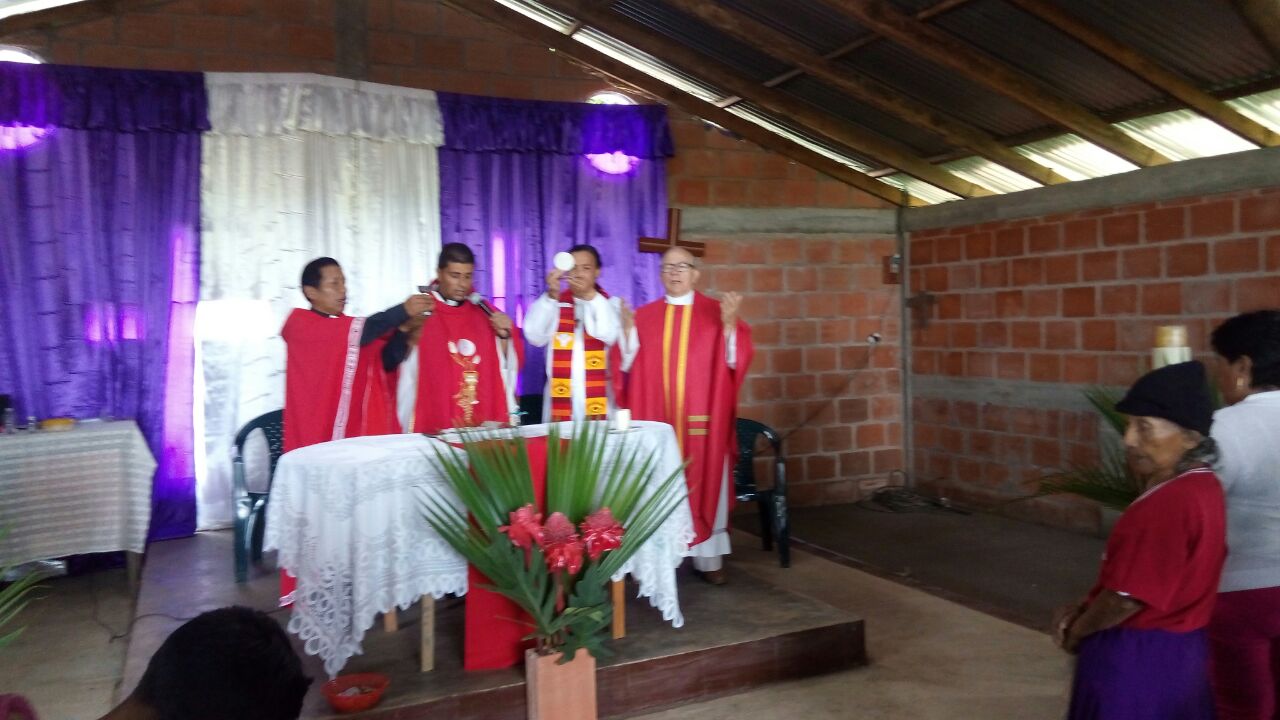
    Here we have the thankful remembrance of Rvda. Maria Elena from Cali, Colombia as she looks back on her first Holy Week as a Roman Catholic Woman Priest. She is grateful to serve humbly and simply with the poor and indigenous of her community. In this she joins the Guadalupanas, an Apostolic Catholic group and other Catholic Priests. She was ordained a Priest in the Roman Catholic tradition in Fort Myers, Florida in February 2017.(That story is also in the blog archives for February). We are so thankful for her and for her compassionate ministries in Cali and surrounding areas. Thanks be to God! (Below after each of her paragraphs I both quote and paraphrase her words in English.) Rev. Dr. Judy Lee, RCWP

    IMG-20170410-WA0020

    maria elena holy week

    Living My First Holy Week As Roman Catholic Woman Priest
    Viviendo mi primera Semana Santa como RCWP

    En primer lugar quiero dar gracias a Dios por la vida y la vocación que me ha dado, así como por la oportunidad de compartir esta Semana Santa, en medio de la gente humilde y sencilla.
    Doy gracias a la RCWP, por abrirme las puertas y por darme la oportunidad de ser “Sacerdote” para y en medio de una comunidad.
    <strong>I thank God for my vocation and my ordination to the Priesthood through Roman Catholic Women Priests. I share this week’s journey in hunmility and simplicity.
    Agradezco a los Sacerdotes Guadalupanos por permitirme vivir a su lado esta experiencia.
    I am grateful also to the Guadalupano priests who invited me to share the experience of Holy Week at their sides.

    La semana anterior a la Semana Santa, tuve la oportunidad de vivir un encuentro maravilloso con los niños, niñas y compañeros de la escuela donde laboro.
    Organicé con ayuda de algunas compañeras una cena simbólica, donde el pan, las uvas y la luz les hablaban a los niños y maestros de fraternidad, alegría, entrega y de ser Luz para el mundo, concretamente en sus familias. Cantamos, juntos hicimos la bendición y compartimos.

    In the week before Holy Week I taught the children and Staff and other companions in the school where I am Principal about Holy Week and we organized a Last Supper symbolically sharing the bread and wine and companionship. We charged the students to be light for the world.

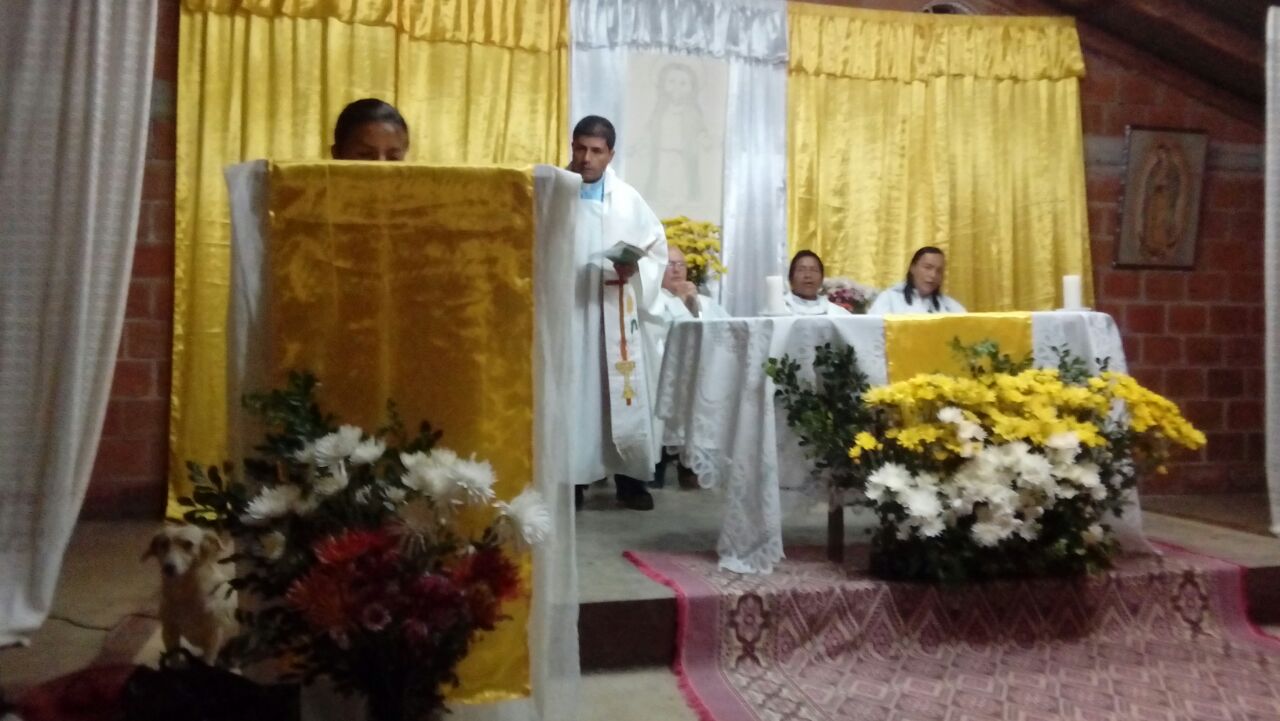
    El domingo de Ramos, muy temprano y en medio de una lluvia fuerte, me dirigí en compañía del Sacerdote Guadalupano Hugo Vásquez al resguardo indígena de Toez. Mis expectativas eran muchas y mis temores demasiados, no solo por las condiciones de la carretera y los riesgos que corría pues el departamento del Cauca, es una zona donde guerrillas, paramilitarismo, narcotráfico y delincuencia común hacen de las suyas y Toez, queda en una de las regiones más golpeadas por estos grupos. También mi cabeza se llenaba de preguntas, podrán aceptarme como Sacerdote? Podré usar mis ornamentos? …en fin mientras conducía en mi cabeza miles de cosas surgían.
    Después de 2 horas de recorrido llegamos. La gente muy amable, nos sirvieron un desayuno muy generoso y mientras comíamos comenzamos a cuadrar algunos detalles de la procesión. Yo seguía en silencio guardando mis temores.
    A las 9:30 nos dirigimos a las afueras del pueblo para iniciar la procesión, tímidamente saque mis ornamentos y ante la mirada de admiración y el silencio me reviste sin decir nada. Hicimos el recorrido de la procesión.

    Very early in the morning of Palm Sunday in the pouring rain Father Hugo Vasquez, Guadalupana, and I traveled to visit the indigenous people of Toez. The roads to the interior were horrific and the fear of violence from para military groups and others as well as worrying whether the people would accept me as a woman priest made me a little anxious. However when we arrived my fears were set to rest. We were treated to a big breakfast and as I timidly vested,I was warmly received as a priest.

    Al llegar a la capilla uno de los Sacerdotes me dio el micrófono y me pidió que me presentara, dije mi nombre, y luego sin saber ni como comencé a hablar de la RCWP, y del sacerdocio de la mujer. Les dije que allí estaba con ellos en representación de una gran familia (RCWP), que compartía el mensaje de Jesús con los humildes y sencillos, que les agradecía por recibirme y les pedí que oraran mucho por la familia espiritual que Dios me había dado, que no se extrañaran que en la Eucaristía siempre diría el nombre de mi Obispo (Andrea) que era también una mujer… se escuchó un emotivo aplauso, e inició la Eucaristía.

    Before the EucharistI was asked to speak and tell them about RCWP and women in the Roman Catholic Priesthood. I told them that I experienced RCWP as a big accepting family that ordained women in the priesthood (although the traditional RC church is not yet doing this) and that priests of RCWP shared the message of Jesus in many lands with humility and simplicity. When I told them that my Bishop Andrea was also a woman there was an emotional outbreak of applause. I thanked them for welcoming me to share the Eucharist with them. And I began the opening presiding with the Eucharistic prayer.

    Después de la Eucaristía la gente comenzó a llamarme Madre y mis miedos se fueron disipando, me llevaron a un sencillo cuarto donde me hospedaría y se organizaron para ofrecernos alimentación.
    Hicimos visitas domiciliarias, compartimos con la gente y organizamos junto a la comunidad la capilla para cada celebración. El miércoles nos dirigimos a una vereda para celebrar, al terminar la Misa, el Padre que me acompañaba dijo a los asistentes que estaba dispuesto para confesar, yo me quite los ornamentos y comencé a recoger y guardar las cosas, pero una mujer tímidamente se me acerco y me dijo: “yo me confieso pero con usted, quiero hablar cosas que solo una mujer entiende”, sentí la grandeza de mi Sacerdocio y la gran responsabilidad que tenía. Fue algo maravilloso.

    After the Eucharist the people began to call me Madre, Mother, and my fears were further dispelled. They gave me a small simple room and offered us a meal. Fr. Hugo and I visited the homes of the people and got their input into the celebrations ahead. They planned and organized with us. People wanted to have confession and Father Hugo began to prepare for this but one woman timidly said to me: “I want to confess with you , I want to speak of things a woman would understand.” I felt the magnitude of my priesthood and the great responsibility of it. It was something wonderful and humbling to experience.

    En la tarde regresamos a Toez y en la noche celebramos una Eucaristía de sanación, cuando se pidió hacer filas para imponer las manos yo me quedé en el altar pero una mujer se me acercó y me dijo: “las mujeres queremos que Usted nos imponga las manos”. Nuevamente Dios me hacía sentir que a través de mí, de mi condición de mujer se hacía presente para unas mujeres tradicionalmente marginadas, excluidas y maltratadas (La cultura Nasa es muy machista)

    That night we had a Healing Mass and the imposition of hands but I was about to leave that to Father Hugo when a woman approached me: She said “the women want you to impose hands on us.” It was a new feeling for me that God was using me as a woman to be present to women who were traditionally excluded, marginalized and abused for the Nasa culture is heavily machista-the power is in the man only.

    La noche de la Vigilia Pascual, fue algo maravilloso. No solo llevé el Cirio Pascual, símbolo de Jesús Resucitado sino que se me pidió hacer la homilía. La figura de María Magdalena como primer testigo de la resurrección y portadora del mensaje del Resucitado fueron suficientes para llevar el mensaje.

    On Holy Saturday,I carried the large Paschal candle and also was asked to give the homily at the Easter Vigil. I spoke about Mary Magdalene as the first witness to the Resurrection and the first apostle who carried the message of Jesus’resurrection. This experience too was simply wonderful.


    El domingo celebré la Eucaristía de Pascua y los demás sacerdotes concelebraron. Fue un cierre con broche de oro. Después de la Misa, la gente llegó con bolsas del fruto de la tierra, naranjas, aguacates, etc como muestra de cariño, me llamaron Hermana y me pidieron no olvidarme de ellos, prometieron no olvidarme y que seguirían orando por mi familia espiritual, (la RCWP) Espero poder concretar la solicitud que me hicieron de acompañar pastoralmente una vereda.
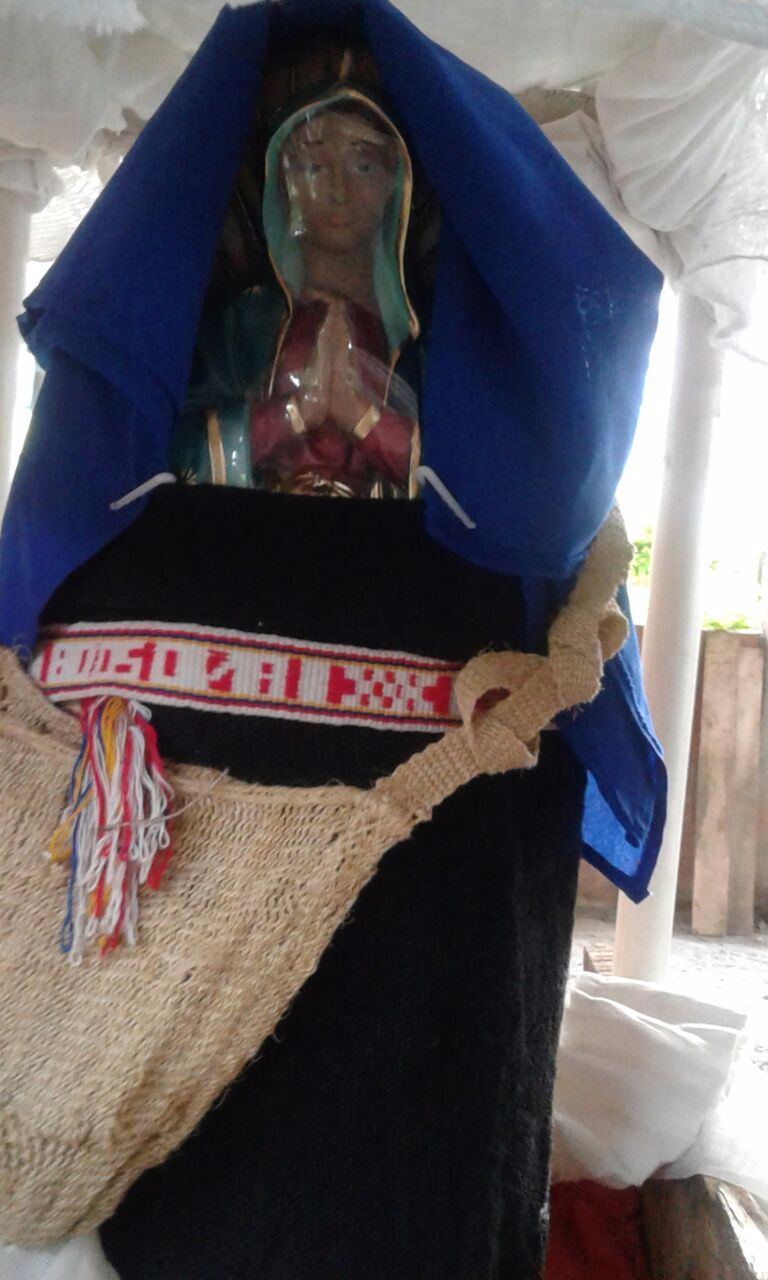
    Comparto algunas otras fotos como la imagen de la Virgen de Guadalupe, organizada con los atuendos Nasa para la procesión de la Soledad y algunos momentos de la celebración del Jueves Santo.

    IMG-20170416-WA0033

    On Easter Sunday I concelebrated with Fr. Hugo and the other priests. This was a golden finish to the most wonderful Holy Week. Afterward the people arrived with bags of fruits and vegetables, oranges, avocados etc. all a beautiful demonstration of their deep caring. They asked me not to forget them and said they would keep praying for my spiritual family RCWP. I hope to be able to respond to their inquiry about ‘pastoring’ them on their path. I will share other photos including their Virgin of Guadalupe.

    IMG-20170415-WA0015

    Me perdonan si me he alargado mucho pero siento que debo compartir con Ustedes esto que para mí es una bendición. A Judy L, Judy B y Marina Teresa no tengo palabras para agradecerles su paciencia durante el proceso de discernimiento, solo mi oración y que están bien metidas en mi corazón.
    A mi Obispo Andrea y toda la familia RCWP, muchas bendiciones… Dios me llamó pero ustedes me mostraron el camino, lo recorrieron conmigo y me abrieron las puertas y siguen en la distancia pero en la cercanía de la oración y de los mensajes acompañándome. Hoy me siento cansada físicamente pero mi alma y mi corazón están llenos de alegría pues solo fui la “sierva que hizo lo que tenía que hacer”.
    Bendiciones para toda la familia espiritual que Dios me ha dado.
    Con inmenso amor y gratitud

    Forgive me for being lengthy but this was such a blessing for me that I wanted to share it! To JudyL and Judy B and Marina Teresa I don’t have words to express thanks for their patience during my time of discernment and for their prayers well settled in my heart. And to my Bishop Andrea Johnson and all the family of RCWP many blessings. God called me, but they showed me the way and are walking with me and opened doors, they are near in prayerand their words accompany me.Today I am resting for my heart and soul are full with joy and blessings. I think here she is quoting the early Priest Ludmila Javarova: I only knew I had to serve”. Blessings for all the spiritual family that God has given me, with immense love and thanksgiving,

    Rvda.María Elena S

  • Jesus is Risen: He is Risen Indeed!

    Easter is the most glorious and joyful celebration of the church year and the bond that unites Christians throughout the world. In many churches today people greet each other saying “He is risen” and the response is “He is risen, indeed!” Yesterday in the CVS Pharmacy a cashier and I were talking and on parting he said: “He is risen” and I responded in kind. We shared a great joy although we did not know each other. “But how?”, one of my former Sunday School teens asked? Before I answered the class debated as to whether it was a spiritual resurrection, a vision or dream of those who saw him, or did he raise up from the grave in his actual physical body? And was that the same or different than his natural body? After listening to them I answered: “He is risen in every way-He is alive and with us now and because He lives, we live now and forever”. While that may not satisfy those who seek “foolproof” scientific understanding of everything, it satisfied them and it satisfies me.

    There is a song we used to sing in the Black Catholic church at St. Michael Parish in Hartford, Connecticut (written by Gloria and William Gaither with a version by Wanda Jackson): “Because He lives/ I can face tomorrow; because He lives/ all fears are gone…How sweet to hold a newborn baby/ but greater still the calm assurance/ this child can face uncertain days/ because He lives.” The hymn spoke to me then in the late 1980’s and I can still see our wonderful people’s priest Fr. Al Jaenicke singing along with the beautiful Choir, and it speaks to me even more today. Perhaps for me and for the world it is a fearful and uncertain time. But, dearest brother’s and sisters: because he lives we can face tomorrow! More, we can stand for justice and peace and the love of Christ with all we have to make a difference in this world.

    Pope Francis said in Urbi et Orbi (City and World) today: “The Good Shepherd is risen from the dead and he will shepherd his people throughout the world…” He named all of the contemporary sufferings from war and terrorism to famine in parts of Africa and slave trafficking and the plight of refugees, the ravages of illness and poverty and more-“The Shepherd lives to care for us and guide us. Jesus, the Good Shepherd Lives” and still cares for the flock and all in need of his compassion. Amen!

    Alleluia, He is risen! Aleluya,Resucito! (Alleluia, I rise!) as Rvda. Marina Teresa said to me this morning. And I replied, me too! Amen!

    Last night at the Easter Vigil when we stood in darkness until the Paschal(Easter) Candle was lit from the fire and each of our candles were lit from its flame we remembered the tombs we have locked ourselves in or have been locked in. When the light came the tombs were empty of darkness and we had risen alive with Jesus Christ. Similarly for those gathered at Easter Sunrise/Son Rise Services this morning the sun finally pierced the darkness and we felt and saw the magnificent life all around us and within us. Today, Easter Sunday we worship bathed in light and surrounded by sweet smelling lilies and joyful people: Jesus is Risen-He is risen, indeed!
    photo 3

    IMG_0794

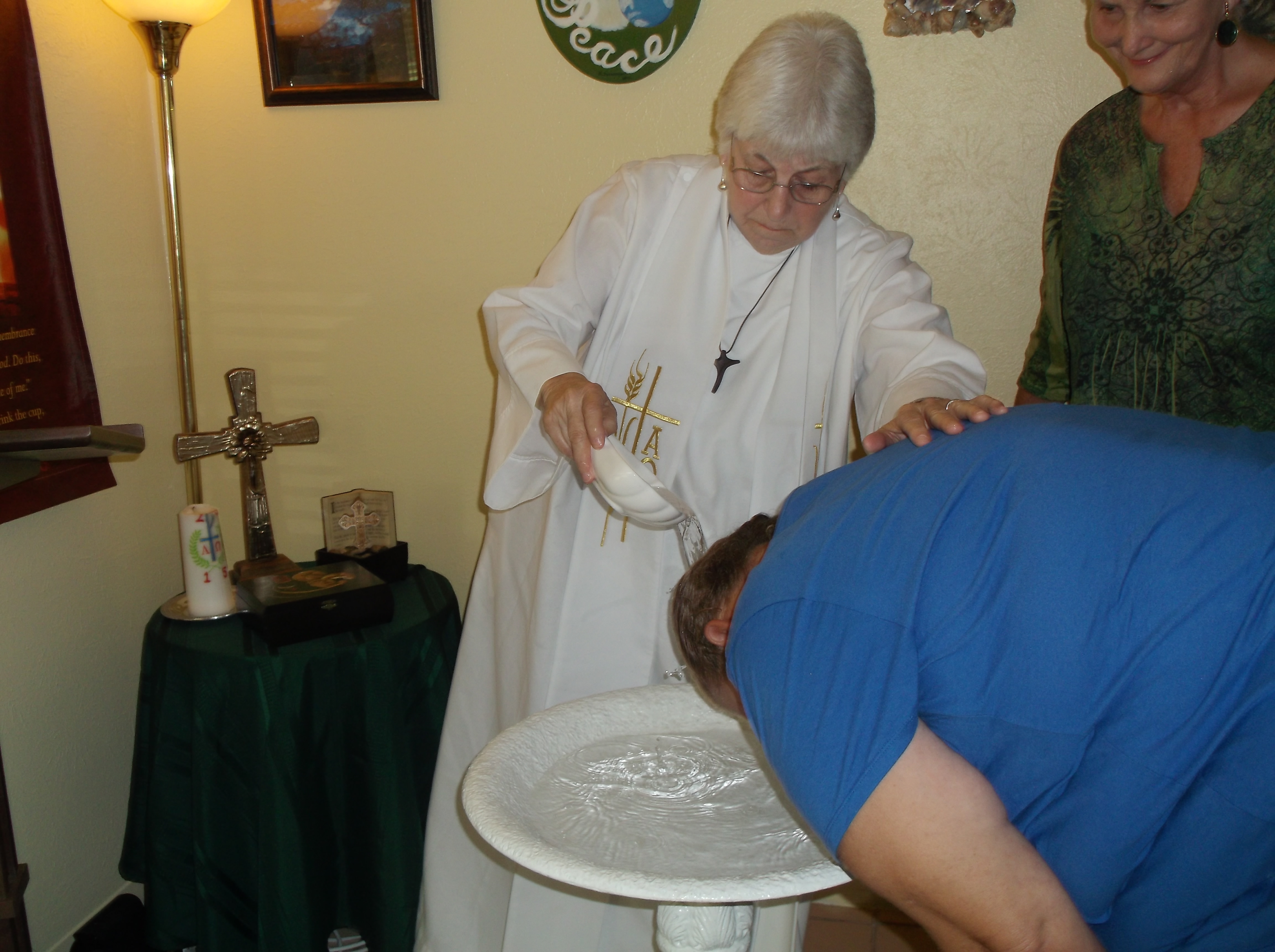
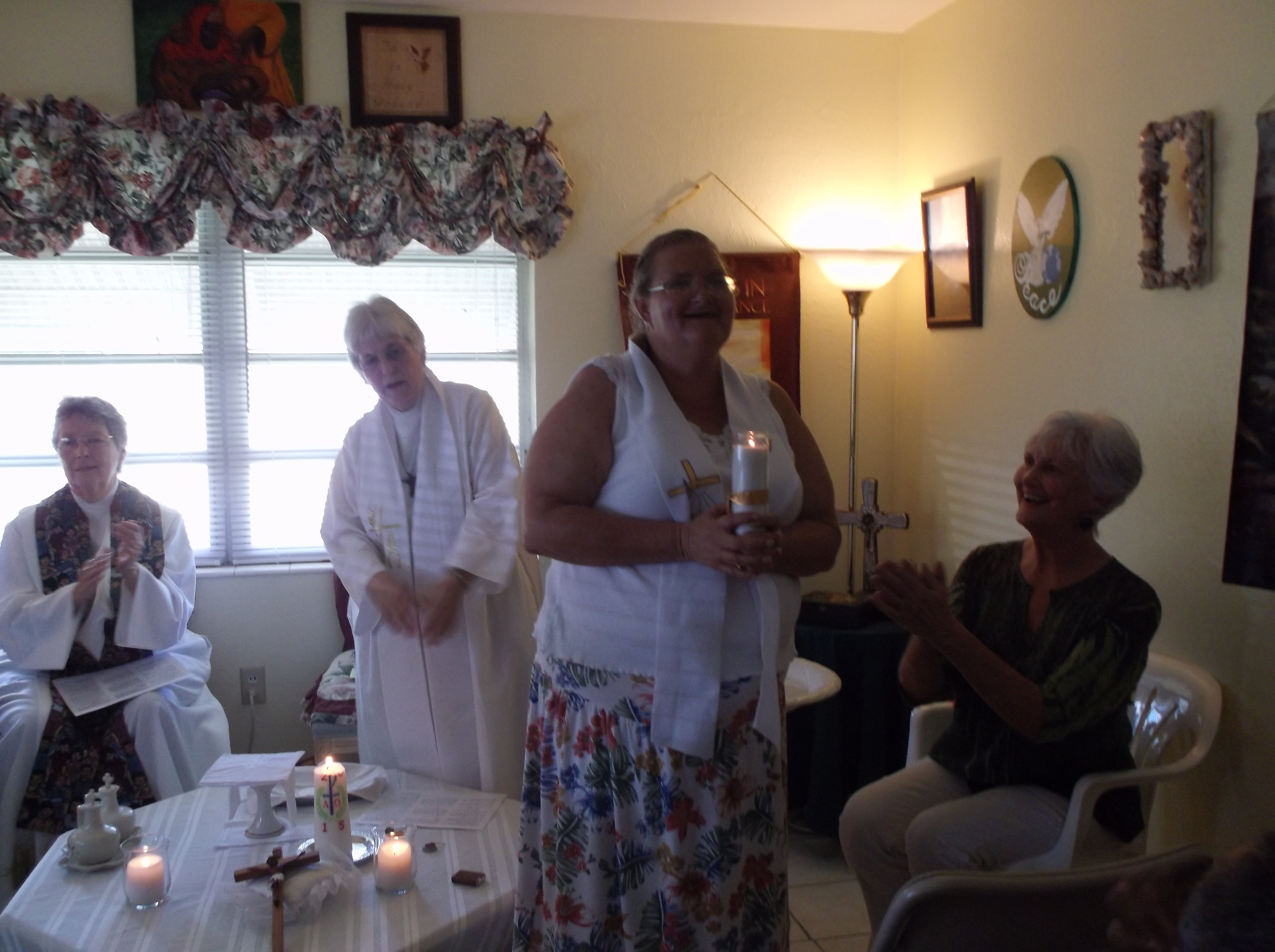
    At Easter the church also receives those who have prepared and want to follow Christ and are reborn to “Live Jesus” as the Salesians say. They are baptized and also receive Confirmation and Holy Communion-they are welcomed into the Body of Christ. They receive the light of faith. The water of Baptism symbolizes dying with Christ and being raised with Christ-here we share again some of those joyous moments with our Good Shepherd Inclusive Catholic Community in Fort Myers:

    DSCF0822
    DSCF0826

    IMG_0129


    Thanks be to God for new life in the Living Christ!

    IMG_0006

    IMG_0080

    We ARE AN EASTER PEOPLE-EASTER BLESSINGS TO YOU ALL!

  • What’s ‘good’ about Good Friday?

    It does not seem that Jesus’life on earth should end with the violence and horror of Good Friday, with betrayal and denial and pain and extreme suffering in the midst of crazy politics, religious and secular, and at the hands of evil folks. Jesus was the ultimate good- loving, inclusive, and full of surprises and courage and wisdom. He took on the religious of his day as well as the powerful and he sided with the powerless and outcast, showing us what we ought to be and to do for justice and peace and for our fellow human beings. How and why on earth could such a God-Man come to such an end.? Well, we know the story doesn’t end with the horrific death but with resurrection. But to go through Good Friday to get there seems outrageous and awful for those he loved and those who loved him. Feel his pain. See his mother and Mary of Magdala lingering at the cross and at the grave. Feel the grief. Feel the fear of the disciples, some hiding in the crowd. How could it have been that way? And yet why not? We too feel pain and suffering, fear and tragic loss and, yes, grief. This is the lot of the human race and Jesus became a full fledged member to show us the way to live as God wants us to live, and to ultimately save us from ourselves. And yet also feel the victory of the Cross. He completed his Mission, he stayed with it until the horrific end and he did what he came to do. The words from the Cross” Eli, Eli lama sabachtani” have been translated as “My God, my God, why have you forsaken me?” Indeed we can identify with that feeling of desolation. But Aramaic scholar Rocco Errico says that the translation is more: “Oh Sustainer, oh Sustainer, I have finished it”. It is a victory cry. Feel that too, feel it deeply. Live it so at the end that comes for all of us you can claim it-“I have done what You called me to do”. Jesus also taught us that when we stand up to the powers that be for justice and right, we can be killed. To wit, Martin Luther King, Jr., Malcolm X, Msgr. Oscar Romero, Jean Donovan, Maura Clark and a host of others. And in their wake the world changes,the sins of hatred are replaced by the seeds of love, but oh the loss and tragedy. The tragedy and the victory of a life cut short but lived according to God’s wishes- oh that we too will live for love and justice and peace, until the end.

    All of us live Good Fridays in our lives. We experience violence and loss, hope dying and people dying and suffering, people who enter our lives for a short while and leave us missing them forever. Some communities and individuals live with fear and terror and horror daily. Some live in war zones ranging from the Middle East to the streets of inner city Chicago or New York, Boston or Fort Myers. Mothers of slain children have united here in Fort Myers to find a way for peace in the land of gang wars and community fear and compliance. They know what Mary knew. And there are those who live with the violence of diseases like cancer and a host of others. We, Pastor Judy Beaumont and I, are now are living with the scepter of cancer as Pastor Judy B. fights the possibility of AML with various treatments and offers up her suffering as Christ did. We see many others living with this struggle as we attend Cancer Centers in Fort Myers, Tampa (Moffitt) and Sarasota. We somehow know one another and we know the struggle. Some still are strong and some are weak. All are facing a similar enemy. And sometimes it is almost a friend as it opens other doors to loving and being and serving. This is a Good Friday experience. I asked her today how we get to Easter Sunday from Good Friday? She said that they were inseparably connected. And they are for all of us, who experience suffering and pain and uncertainty and life and resurrection together. It was from the debilitating results of my rare stomach cancer(now four years ago) that a young man grew his life. I could not take care of my aviary and some other chores and I asked a young man whose mother attended our church to help me. A good looking youth in his early twenties, his young life had been led mostly in his room as a host of life events added up to that isolation and misery for him. I had reached out to him before but would have never thought of asking him to help with the chores if I had not been knocked down pretty low. And clearly it was a God-thing for he had the courage to say ‘yes’. In coming to help me with the chores four times a week we got to form a mutual understanding and bond and to talk. Over the four years his life has turned around- he lives! Out of near death, his and mine, came life. Good Friday and Easter, connected. Pastor Judy is right and we learned much from our congregation of those who had experienced the violence of racism and classism and homelessness , the streets, addictions, mental illness, physical illnesses, multi layers of injustice and poverty and difference and being on the outside. They knew Good Friday well, and they know resurrection well. Through this same Christ and the hands and hearts of those who love Him, they are now housed, redeemed by God and whole. They still suffer with much but they know well that Good Friday often precedes and sometimes coexists with resurrection. And so we live! Because He lives we live, now and forever. Death is not to be feared,we will live on with our loving God, but life here and now is precious and we hold on and keep on loving and serving until it is time to lay the battle and the precious joy of life down. We live!

    Below is a picture from our last Good Friday as a congregation, before we entered our semi-retirement as priests due to dealing with illness. This Holy Week we miss our church and our roles as priests terribly, but we still enact our calling in our lives.This very day we spoke with the young man who was our Christ in the picture below about his struggles with serious health issues and living on his own for the first time- a time of joy and also great difficulty. He asked my prayers and also got my best effort at pastoral counseling. He too lives after near death four years ago-he lives and is learning to embrace life!
    IMG_0727

    This(above) is Quayschaun and some of the Good Friday faithful ready to walk through the streets of Fort Myers enacting the Stations of the Cross. On our cross are the petitions of the community. The names of loved ones filled the petitions with special prayers for those still living outside and those who died of violence in our community like 5 year old Andrew Faust and our own Mr. Harry Gary’s nephews. (Below Mr. Gary and Pastor Judy Lee).
    IMG_0235

    The Catholic Alliance For Common Good also has a beautiful meditation for this day-this is a letter I received:
    What is ‘good ‘ about Good Friday?

    “In an increasingly diverse Christian community, there is much ambivalence toward Good Friday. Many argue correctly that Easter—not Good Friday—is the centerpiece of the Christian story.​ ​

    Augustine puts it best: “We are Easter people, and ‘alleluia’ is our song!”

    Clearly what happened on that hill outside Jerusalem was nothing short of horrible. Jesus, falsely accused of heresy, was put to death in the most brutal of ways: crucifixion, the greatest tool of Caesar’s state-sponsored terrorism.

    But the reality of Good Friday isn’t limited to the historical event in first-century Palestine. The cross has cosmic implications for people of all generations.

    In Jesus, God comes down into the fullness of human dysfunction: its bigotry, terrorism, disloyalty, brokenness and sin. In Jesus Christ, God wears the body of anyone who is lost and broken.

    As I argue in my TIME essay, this is what’s so good about this day: God is willing to get caught in the chaos of our world, to take on our brokenness and to transform it. By loving us through the life and death of Jesus, God reimagined the world and the possibilities for it.

    Have us a blessed Good Friday. Let us keep each other in prayer during these sacred days.” Christopher Hale CACG

    Amen-and now to experience the grave with the hope of resurrection still in our hearts.

    Rev. Dr. Judy Lee, RCWP
    Good Shepherd Inclusive Catholic Community

  • “I have given you a model to follow” Holy Thursday

    On Holy Thursday the Roman Catholic Church and many others have a two part celebration: first there is the washing of feet, then the celebration of Holy Communion after which the blessed bread is placed in repose until Easter. The Gospel is John 13:1-15 and it is where Jesus washes the feet of the disciples and says he is giving them, and us, a model of serving one another. (John 13: 15) For all who participate it is a most wonderful spiritual and communal experience and a time of deep reflection on one’s own life and on the Christ who gave us this model, not only then but throughout his ministry and who gave us his very self.
    We may meditate on the following pictures and homily by Rev. Beverly Bingle, RCWP who discusses yet another meaning of Jesus’washing the disciple’s feet.

    From Saint Mother Teresa of Calcutta

    In each of our lives Jesus comes as the Bread of Life–to be eaten, to be consumed by us. This is how He loves us.

    Then Jesus comes in our human life as the hungry one, the other, hoping to be fed with the Bread of our life, our hearts by loving, and our hands by serving.

    In loving and serving, we prove that we have been created in the likeness of God, for God is Love and when we love we are like God.

    –Blessed Mother Teresa of Calcutta, “Jesus Christ: He Wants to Love With Our Hearts and Serve With Our Hands,” 1997.

    IMG_0055 (1)

    Below: Rev. Roy Bourgeois and Rev. Janice Sevre-Dusynska ARCWP and Rev. Jane Via,RCWP wash the feet of those attending a rally for the ordination of women priests last Holy Thursday in Washington, DC.
    c535b-embassy810884580_10152704410203393_983474624_n

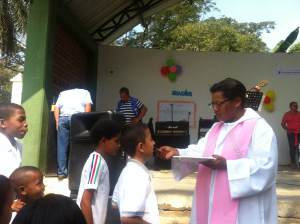
    Above Rev. Marina Teresa Sanchez Mejia blessing the bread for the Eucharist

    Dando la Eucaristía a los niños de Colegio Educativo Navarro
    Below Rev. Marina Teresa, RCWP serving Holy Communion to a young boy

    Rev. Beverly Bingle’s Homily

    Lent is over, and the Triduum begins.
    Over the next three days,
    you and I will give witness to Jesus’ commitment
    to live in love and truth,
    faithful to God’s will,
    even at the cost of his life.
    The commitment transforms him,
    as it transforms us
    when we ground ourselves
    in God’s unconditional love
    and Jesus’ prophetic example.
    _________________________________
    Tonight we begin the Triduum
    by following Jesus’ example
    with a ritual washing of each other’s hands.
    Jesus’ simple action, as told in John’s gospel,
    lends itself to several interpretations.
    It’s very often interpreted
    as signifying that Jesus will suffer a humiliating death
    on behalf of all humanity.
    A related interpretation
    reads the washing of dirty, smelly feet
    as the act of a slave,
    showing Jesus’ humble nature.
    Another interpretation
    looks at the meaning of Jesus’ actions
    in their cultural context.
    In biblical times
    people looked at hands and feet
    as a zone of the human body
    that symbolized human activity.
    To wash the feet or hands
    was to wash away
    all the offensive deeds done by those hands and feet,
    so the washing was equal to forgiveness.
    When Jesus tells his disciples to repeat his action for each other,
    he is not telling them to go around washing everybody’s feet
    but to forgive each other as he forgives them.
    _________________________________
    Another significant message in this Holy Thursday gospel
    comes from the meal
    that Jesus has called his disciples to share.
    In the Middle East
    unrelated people rarely, if ever, eat together,
    but people saw Jesus regularly eating with others—
    people who were not his relatives,
    people who opposed him,
    people who were strangers and aliens in the land.
    Sharing a meal with someone who was not a blood relative
    transformed that person into a family member,
    one who became connected like family,
    one committed to the giving of oneself
    for the others at the table.
    _________________________________
    So we gather here in this holy space.
    Some of us are relatives—
    spouses, parents and children, brothers and sisters.
    As a group, though,
    we are just like those first followers of Jesus—
    not relatives in the usual sense of the word
    but children of the one God
    invited by our brother Jesus
    to forgive one another
    by washing each other’s hands,
    welcomed into the family
    through our sharing of the meal.
    _________________________________
    Forgiven and fed,
    we will go forth
    ready to practice God’s love
    in our world
    for our time.
    Amen!


    Holy Spirit Catholic Community
    Saturdays at 4:30 p.m./Sundays at 5:30 p.m.
    Holy Thursday, April 13, 5:30 p.m. Mass of the Lord’s Supper
    Easter Mass of the Resurrection, Saturday, April 15, 5:30 p.m.
    at 3925 West Central Avenue
    Toledo, OH 43606
    (Washington Church)

    http://www.holyspirittoledo.org

    Rev. Dr. Bev Bingle, Pastor
    Mailing address: 3156 Doyle Street, Toledo, OH 43608-2006

    A BLESSED HOLY THURSDAY TO YOU ALL!

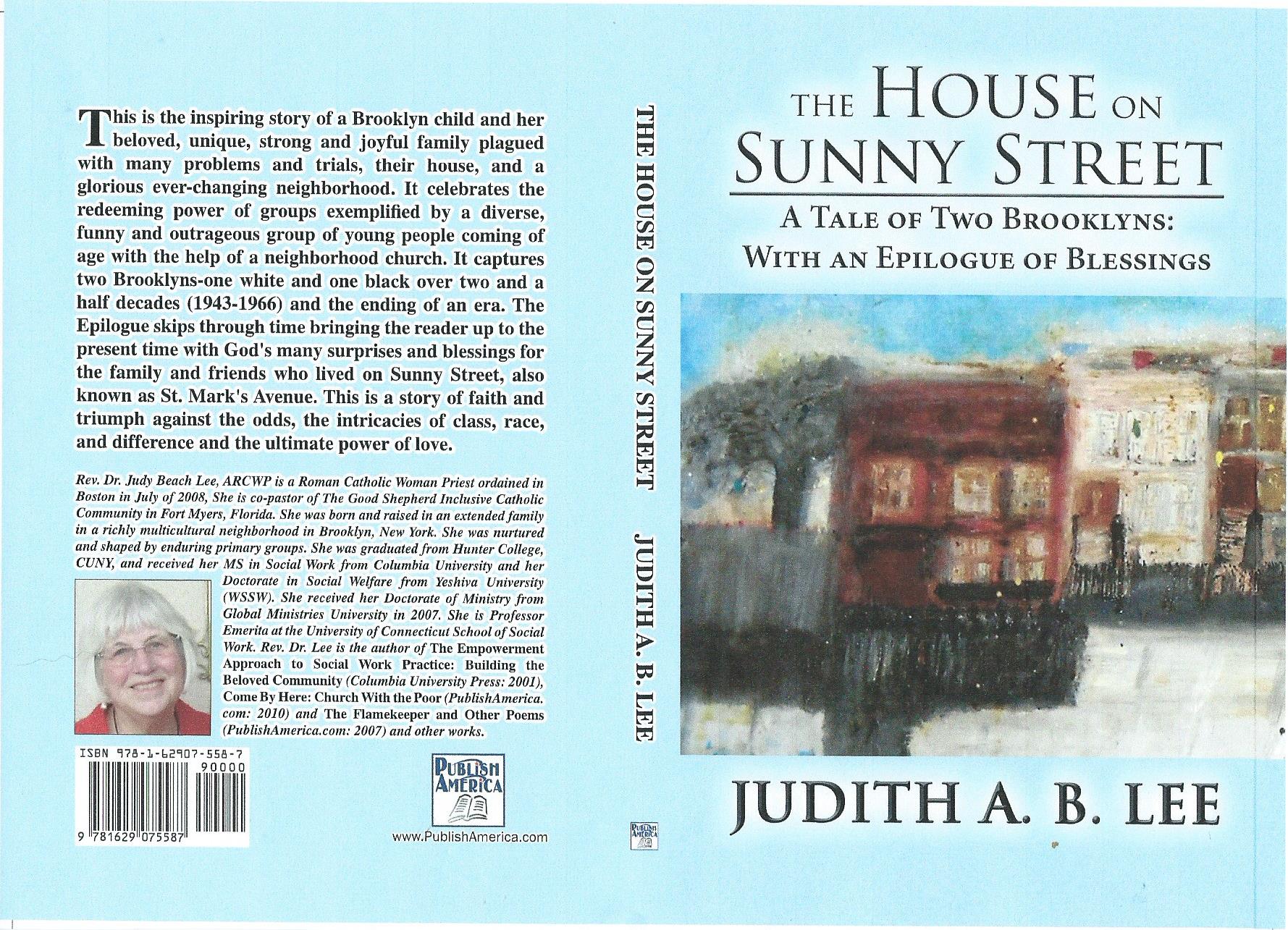
  • Another Chance Before Changes in Availability: “The House on Sunny Street:My Two Brooklyns with an Epilogue of Blessings” By Rev. Dr. Judy Lee,RCWP

    If you are curious about the making of a woman Roman Catholic Priest and a Pastor to the poor and homeless, or if you have an historical interest in Brooklyn, New York here is another chance at getting Pastor Judy’s autobiographical historical novel:
    The House on Sunny Street by Rev. Dr. Judy Lee-Check it out! There may be some changes in availability soon as publisher changes so get it now.

    ImageCover.full (1)

    I am excited to share this autobiographical and historical novel with you. You can go to AmericaStarBooks.com/bookstore or to Amazon.com to get it. It is available in paper and electronic forms. If you have ever wondered what makes people tick, what adds up to a human life, and what contributes to the life of a woman priest this book may have some answers for you. If you like books about Brooklyn, New York, or inner city life anywhere this is your book. If you know the power of groups and the power of faith, this book is for you. If you like stories about real people who overcame some serious odds and kept on keeping on you will not be disappointed. If you like to read about complex lives written so all can “get it” and laugh, cry, and cheer with the protagonists this is for you. If you want to know a neighborhood where people of all races and classes interact in positive and life giving ways take a look. If you believe in inclusion, justice and love you will enjoy this read!

    I hope you will check it out! If you do, please feel free to share your comments here. I welcome your responses.

    Keep on believin’

    Rev. Dr. Judy Lee,RCWP
    Co-Pastor Good Shepherd Inclusive Catholic Community, Fort Myers, Florida

  • Palm Sunday Reflections By Women Priests 4/9/17

    As we enter Holy Week with the celebration of Palm Sunday Pastor Judy Beaumont and I are thankful to worship this day of victory with an ominous foreshadowing together but sad and nostalgic for we miss presiding and being the celebrants for our Good Shepherd Community. Despite her difficult illness that demands so much of our attention,we are able to pastor our flock on some levels but not hold regular Mass and Services. We envision our people in various constellations in other churches this morning and we are thankful for that, but we miss them. And this puts us in tune with Jesus as he enjoyed his people, and struggled with them for life and understanding and as he had to leave them and continue in his own suffering until Easter Sunday. Palm Sunday reminds us once again that every moment of joy is temporal and Holy Week shows us that even as Jesus had to say his goodbyes on Holy Thursday he used it to show us once again how to serve one another. And even from the Cross he could love and teach and experience a different kind of victory. And oh, how glorious is the resurrection after all of that!
    I will present some very challenging reflections of three Roman Catholic Women Priests,myself included, and one Episcopal woman Priest who has served the homeless. One of the benefits of “semi-retirement” is that we can enjoy the reflections of others and take the time to learn from them. Today Pastor Judy B and I , through the miracle of telecommunications, experienced the Papal Nuncio’s homily at The National Shrine of the Immaculate Conception and also the Pope’s Palm Sunday Mass. Watching the huge and diverse crowds of worshipers did our hearts good! The gathering of young people for youth Sunday at the Vatican also lifted our hearts, especially as the Polish youth gave the Panamanian youth the large worn wooden cross to continue its journey to Panama where the next world youth Sunday will be in 2018. We join Pope Francis in saying that if the cross is not passed on to young people the church will wither and die. Both Pope Francis and Archbishop Christophe Pierre said strongly that walking with Christ this week means to walk with the poor, and those in the throes of turmoil, terror,sickness, war and oppression. While we celebrate the church from the bottom up it is good to hear the message of Jesus from the top down at times like this as well. And the terrorist Isis bombings in the Coptic Christian churches in Egypt today breaks our hearts and calls us to prayer.

    From Rev. Deniray Mueller, denidoulos blog

    A very large crowd spread their cloaks on the road, and others cut branches from the trees and spread them on the road. The crowds that went ahead of him and that followed were shouting, “Hosanna to the Son of David! Blessed is the one who comes in the name of the Lord! Hosanna in the highest heaven!” When he entered Jerusalem, the whole city was in turmoil, asking, “Who is this?” The crowds were saying, “This is the prophet Jesus from Nazareth in Galilee.” (Matthew 21:8-11)

    We celebrate Palm Sunday today – the day that Jesus made a triumphal entrance into Jerusalem. . . and the beginning of a week that brought denial, betrayal, a trial, crucifixion and finally, resurrection.

    This coming “holy week” is the culmination of Jesus’ life – the reason He came as God’s son. We experience a wide range of emotions as we move through the week.

    It is the time of the Jewish Passover – a time when people came home to celebrate with their families. It was a holiday then, and still is today, a time to be with family and celebrate with the Passover meal.

    If you use your imagination for just a moment, you can feel the press of the people as they gather along the road from Bethany to Jerusalem. You can smell the dust, and the donkeys, you can hear the crowd. You can see the brightly colored holiday clothes of festive pilgrims gathering in Jerusalem.

    You can feel the excitement in the air; you may find yourself climbing a tree to break down a palm branch, and then straining to see through all the other waving branches. Off in the distance, a muffled roar, indistinguishable words, then a cheer, and then a chant: “Hosanna! Hosanna! Hosanna!” You may even find yourself shouting

    “Hosanna to the Son of David! Blessed is he who comes in the name of the Lord! Hosanna in the highest!” (Matthew 21:9)

    Soon the road was jammed with pilgrims and locals alike. They joined the disciples in laying their cloaks across the path to show Jesus honor. They broke branches from the palm trees and waved them in the air, and spread them on the road. While the cloaks and the palm branches make this a procession fit for a king, the cheers of the people were even more significant.

    “Hosanna! Blessed is he who comes in the name of the Lord! Hosanna in the highest!” (Matthew 21:9)

    It was a great celebration!! People were happy and joyful, celebrating life.

    But it was also the last week of Jesus’ life.

    In the jubilation of Palm Sunday, we forget that in a few short days Jesus will be betrayed, arrested, tried, abandoned, whipped, spit upon, slapped, scourged, tortured with a crown of thorns, mocked, ridiculed, and ultimately nailed on a cross. And the same crowds that had sung “Hosannas” at his arrival, would shout “Crucify Him!” – and ask Pilate to release Barabbas and put Jesus to death.

    Their love for the Lord was shallow and based entirely on their hope of what exciting things he could do for them. In their confusion, and anger, and fear, those who on Sunday had welcomed Jesus as their new messiah, by Friday had turned on him, disappointed in Jesus and their continued lives under the Roman rule. So tired of all they could not control, they cried out for vengeance they could control. If Jesus would not be their king and free them, then they might as well get rid of Him.

    Jesus knew that the end of his earthly ministry was near. It was time to do what he had come to do. It was now or never; he was ready to be obedient to God, and to accomplish the purpose set out for him. The road on Palm Sunday was not a road to freedom. It was the road to sacrifice. It was not the road to power, it was the road to humility and humiliation. It was not the road to fame, it was the road to death. It was not the road the crowd thought; it was the road God had planned.

    None of us knows just how long each of our lives will be, how much time we have left. Every time we learn of someone who dies young, we are reminded of that.

    None of us can know all that the future holds. We don’t know how long we will be on this earth. But we can know that God has a purpose for us. He calls us to love him and love others with the kind of love that He showed us when he sacrificed His only Son. He calls us to speak out the truth, to reach out our hands, to hold out our hearts.

    And he calls us to do that now. When we think we are not ready to make a commitment, that is the best time to do it. God doesn’t expect us to be perfect. He just wants us to try. . . try a little each and every day.

    And that day is now.

    We don’t know how many more days there will be. We cannot afford to miss even one.

    It is time to try to live our lives in the way Jesus taught. We are to

    “Love one another as we love ourselves” (John 13:34-35)

    Jesus gave his life for us; we can do no less to honor Him.

    Let us pray:

    Creator who loves us dearly, thank you for sending Jesus to be our redeemer. No matter how, or where or when we worship you, we want to do it to honor you and not ourselves. May we reflect Jesus’ passion and share in your grace. In the name of the Son of David we pray. Amen.

    Delivered at In The Garden, Trinity Episcopal Church on Capitol Square, Columbus, OH; 9 April 2017

    rev deniray | 04/09/2017 at 5:40 am | Tags: Holy Week, John 13:34-35, Matthew 21:8-11, Palm Sunday, Passover | Categories: Sermons | URL: http://wp.me/p3CZwj-zA

    From Rev. Beverly Bingle, RCWP

    Homily for the Mass

    Jesus spent his life doing what real leaders do.
    He poured his life
    into working for the poor and despised and vulnerable.
    He spoke truth to power.
    He went about doing good.
    Because he did not hide
    from the consequences of doing good,
    he was tortured and killed.
    In both life and death, Jesus reflects
    what God’s power and God’s love really are:
    giving oneself to others.
    ________________________________________
    In today’s reading from the Hebrew scriptures
    we heard about Isaiah’s Suffering Servant
    and the true leadership that requires
    speaking the word that will rouse the weary,
    trusting in God,
    and going forward regardless of the consequences.
    ________________________________________
    And we heard from Paul
    how the divine presence in Jesus
    moved him to humility and obedience
    throughout life and unto death,
    ready and willing to pour himself out for others.
    ________________________________________
    The Gospel accounts of the events
    leading up to and including the death of Jesus
    are full of references to the Hebrew Scriptures.
    Like the infancy narratives,
    these passion narratives
    either quote directly or echo
    the Hebrew Scriptures in almost every verse.
    The message is simple,
    shared by Christians and Jews and Muslims
    and people of good will the world over:
    we are one people with one God,
    called to love God and love one another,
    no matter what happens to us.
    ________________________________________
    But we know that the way of Jesus
    has been rejected and condemned throughout history,
    even by those who claim to follow him.
    Just think of our crusades, our inquisition, our slaves, our wars.
    And it still goes on.
    All over our country, from Ferguson to Chicago,
    from California to North Carolina,
    from coal country to central Toledo,
    people are afraid that if they really follow Jesus,
    they will lose their white privilege
    or political power
    or tax loopholes.
    They would have to share resources
    and act out of concern for other people’s rights
    to life, liberty, and the pursuit of happiness.
    ________________________________________
    Holy Week asks us pointed questions:
    Do we act with justice?
    Love our neighbors?
    Go about doing good?
    No matter what it costs us?
    If we can say yes, we try,
    then we’re on the right path.
    Thanks be to God!

    Public Domain


    Holy Spirit Catholic Community
    Saturdays at 4:30 p.m./Sundays at 5:30 p.m.
    Holy Thursday, April 13, 5:30 p.m. Mass of the Lord’s Supper
    Easter Mass of the Resurrection, Saturday, April 15, 5:30 p.m.
    at 3925 West Central Avenue
    Toledo, OH 43606
    (Washington Church)

    http://www.holyspirittoledo.org

    Rev. Dr. Bev Bingle, Pastor
    Mailing address: 3156 Doyle Street, Toledo, OH 43608-2006

    Rev.Judy’s Palm Sunday Homily 2014

    Churches all over the world will be adorned in palm branches this Sunday commemorating the joyful entry of Jesus into Jerusalem seated on the back of a donkey. In our church as in many Roman Catholic and other churches, people will gather outside in a procession to the church carrying palms and singing Hosanna, Hosanna in the Highest, as was done for the first time by the crowd welcoming Jesus into Jerusalem.

    The Gospel of Matthew (21:1-11) will be read and we will see Jesus enacting the prophecy about the coming of Zion’s ruler in Zechariah 9:9-10. “Rejoice in heart and soul….Shout with gladness daughter of Jerusalem! Look! Your ruler comes to you: victorious and triumphant, humble, riding on a donkey, on a colt, the foal of a donkey.”(TIB) The NAB translation of this verse read: “Shout for joy…See, your king shall come to you; a just savior he is, meek and riding on the foal of an ass”. The Peshitta (Near Eastern translation from Jesus’ Aramaic) reads “…he is righteous and a Savior, lowly and riding…upon a colt, the foal of an ass”. The fulfillment of this prophecy about the Messiah is why Jesus sent his disciples to get the colt he would ride on into Jerusalem. To ride on a donkey in that age was more a sign of humiliation than royalty, for only the poor rode on donkeys. Royalty rode on fine horses or in transport pulled by powerful steeds. So, here is Jesus the king of the poor and outcast, for he had loved them, healed them, taught them and won their hearts, now welcomed by them with great joy. They spread their cloaks on the ground before him and shouted “Hosanna” which means “Save” in Hebrew but is a song of praise. Matthew’s Gospel says “the whole city was stirred up” at his arrival.

    The account of Jesus triumphal entry into Jerusalem is in all four Gospels. John’s Gospel (Ch 12) adds that the people recalled the raising of Lazarus and thronged around him. “Look, the whole world has gone after him! (12:19b). In Luke’s (Ch 19) account Jesus was asked by the Pharisees to quiet his disciples. He said that if they were quiet even the stones would cry out! This was a time of acclamation and joy, the universe itself was in accord. I think that the joyful shouts of acclamation filled Jesus’ heart and even for a short while he knew that despite what lied ahead, and he had already predicted that, he had accomplished his mission, the ordinary, the poor, the sick and the outcast along with his other disciples, men and women and children, knew who he was and would carry on his work. This deep knowledge and his always close Abba, Amma God (Papa, Mama) gave him the strength to face what was ahead of him.

    And, then as he drew close to Jerusalem, Jesus wept for Jerusalem and the people as they did not accept the prophets before him, or him-“you did not recognize the time of God’s coming to you”- and destruction not peace would come to them. The oppressors would win after all in Jerusalem and for this, he wept. Then, he entered the Temple and further enraged the authorities by throwing out the money changers and the sellers of animals, doves and others, for sacrifice. In essence, He set those birds and animals free and put the place where God was supposed to live back into God- perspective. God doesn’t want any form of animal or living sacrifice, God wants lives and hearts full of justice and love for everyone. This is to be a house of prayer! The ensuing parable of the tenants in the vineyard (Matt 21: 33-45) where the owner has to send his son because the others collecting the debt were killed and the son is also killed but the vineyard is given to other tenants, tells us what will happen next.

    On Palm Sunday I like to savor the victory with Jesus. Jesus joy was short lived because his work was not done-he kept on going with his actions and his teaching. I think the strength of the Heartfelt Hosannas propelled him on. I also think that it may well have been a different crowd that shouted “crucify him” while his loyal group of lowly folks, lowly like him, were overwhelmed by the greater powerful interests of the religious establishment and the Roman Oppressors.

    The Roman Catholic Liturgy really rushes Jesus’ moments of victory as once the palms are placed down, the entire Passion is read for the Gospel. Yes, Jesus will be killed in a brutal and slow tortuous way. But even there he will make a statement of victory. When we rely on the English translations from the Greek alone we may miss this shout of victory from the Cross. In Matthew 27:46 we have Jesus saying the Aramaic words “Eli, Eli, L’mana Sabachtani.” In English that is translated “My God, My God, why hast thou forsaken me?” It is phrased as a question and is taken to mean the abandonment of God. But Aramaic scholar Rocco Errico (Let There Be Light, pp. 12-13) points out, it can also be understood as a declaration: “O God! O God To what (a purpose) You have kept me!” or “O Sustainer, O Sustainer! To what a purpose you have left me.” “Left” does not mean abandoned but it means spared to fulfill an end or destiny”. God never forsook or abandoned Jesus, and God will never forsake us. It is a cry of “I have accomplished it” (Like the “it is finished” in other accounts). The Lamsa version of the Aramaic translates, “for this was my destiny!” In other words, in addition to the words of forgiveness and inclusion (for the thief) from the Cross we have a sense of completion of Jesus’ work -only to be topped by the resurrection! And that indeed is the conclusion of Holy week-rising from the dead!

    Amen to the Victory of Palm Sunday and the Victory of the Cross-God is with us until the end, and will raise us up! Amen!!!

    Rev. Dr. Judy Lee, RCWP

    Palm Sunday 2015 at the Good Shepherd Inclusive Catholic Community
    First there was the Procession all around the church building carrying Palms and shouting Hosanna>.Inside of the church all heads were bowed as the priests venerated the altar. Then Cyrillia Rismay led us in singing “Enter Into Jerusalem” , a popular hymn in her country of St. Lucia. It begins:
    “Let us go to God’s house

    With the healthy and the sick

    The worker and the weak;

    Let us go to God”s house

    Enter into Jerusalem.

    Let us go to God’s house

    Swaying with the breeze

    With the God who reigns in peace,

    Let us go to God’s house.

    We will celebrate,

    We will celebrate,

    We will celebrate, O Israel….”

    And celebrate we did, even as we read the Passion in several parts and felt every blow and insult hurled at Jesus. This is a Congregation that has been to the Cross in every day life. For us, Jesus triumphs not only on the ride into Jerusalem but on the Cross. He cries out through the pain that he forgives and that he completed his work. That is a wonderful thing to feel as life ends. We are blessed to know that he will rise in three days. But we can wait and be with him in his dying and burial because of the triumph of the Cross.

    Rev. Chava Redonnet’s Reflection

    On Palm Sunday I think of something Dom Helder Camara of Brazil said once,
    that he imagined himself in the Triumphal Procession into Jerusalem… and he
    was the donkey. That’s a lovely image for us as church: to be God-bearers
    for each other, bringers of love. We don’t have to be perfect, we don’t
    have to get everything right: we can be humble bearers of the love of God.
    I guess I was a God-bearer for a man I met this week who remembered the
    joy of community from the past, too, because it gave him so much
    joy to learn that I was there, too. He ended his recitation of what we’d
    done on those marches, holding out his arms to me and saying joyfully, “And
    YOU were there, TOO!”Another day this week, I met a different man. This other man had cut
    himself off from everyone in his life. Everyone he was related to, he spoke
    of with anger and disgust. When I asked about God, he said, “There is no
    God!” I listened to his litany of anger and rejection, and finally said,
    “Sounds like a lonely life.” Tears filled his eyes. This man seemed to me
    like a cell without water, unable to connect with anyone around him, not
    even God. He didn’t want prayer but I told him I would send good energy his
    way. He liked that. Maybe that’s a little crack of openness to love in his
    soul. I hope so.Lastly, a story from our Sunday Mass at St Romero’s last week. We were a
    very small group. Just as we were about to share Communion, he left the
    room, using his telephone. I was surprised but went on, serving communion
    and praying, then just waiting for him. Finally he came back. “I just
    remembered,” he said. “Jesus said if you’re mad at someone you need to
    reconcile before you come to the altar. So I had to call someone and
    apologize before I came to communion.”Look for God wherever you are, this week! May we all be God-bearers for
    each other, carriers of love and hope. Have a blessed Holy Week.
    Blessings and love to all,
    Chava

    Oscar Romero Church
    An Inclusive Community of Liberation, Justice and Joy
    Worshiping in the Catholic Tradition
    Mass: Sundays, 11 am
    St Joseph’s House of Hospitality
    402 South Ave, Rochester NY 14620

    HAVE A BLESSED PALM SUNDAY!

  • I Was Blind And Now I See: RC Women Priests Reflect on the Fourth Sunday of Lent 3/26/17

    In today’s Gospel Jesus heals a man blind from birth and the religious leaders of the day want to deny that and find fault with it and with him. (John 9:1-41) When the leaders cross examine the man trying to prove that Jesus is a sinner who heals on the Sabbath,  in desperation the man says: “…One thing I do know is that I was blind and now I see”. He knows what happened to him because of his encounter with Jesus: his whole life was changed. He fully believes in Jesus, case closed. So the account is about a miracle, similar to healing the two blind men in Matthew 9:27-31. Miracles were a great way to show the people who he was and help them to listen to his teachings. And often he was moved, his heart was filled with empathy for those who suffered physical and mental illnesses. His loving, caring turned to doing something about it. Both miracles and teaching were means Jesus used to reach the people with God’s love, justice and inclusion.   In this passage from John’s Gospel Jesus also goes on to the metaphoric level of speech showing that the Pharisees are the blind men for they can not see, understand or accept, what Jesus is teaching and who Jesus is. The man cured of blindness has no trouble with this. The religious leaders, here the Pharisees, think they know it all and can not see beyond what they “know”.  In the Aramaic “light “means true teachings and to live in darkness means to live in (self) deception, a place where ”alternate facts” exist and mean nothing but are firmly believed. To see, the Pharisees would have to accept that they were blind-did not see, and since they can’t do this their blindness is sin-a breaking of the very law they claim to know/see.

    The author of several delightful series set in Botswana, Scotland, Portugal and elsewhere, gently teaching and unmasking human nature, Alexander McCall Smith, ponders the nature of truth, belief and facts in his newest installment of the Scotland Street Series, The Bertie Project.   His character Stuart is a totally truthful and thoroughly oppressed married man whose wife could be hated by feminists and most men alike. As Stuart struggles with guilt over having finally met someone who can love him he ruminates on “those who are not interested in facts as determined by empirical observation”. “…Änd on the coat tails of those who ignored the facts there traveled all sorts of sinister enthusiasms and social infections: arrogance,intolerance,indifference to need. After all, even the facts of gross injustice could be rejected if  one were in full denial mode, as things you did not want to see simply did not need  to be seen….” Finally he can not talk himself out of the wrongness of his actions and concludes: “the problem with being brought up to do the right  thing was that it ruined your fun. Forever…Guilt…”.  Once we see, we see, there is no going back. I remember a very special High School teacher who taught us, a group of working class girls, to see the world from a broader view by having us read and quote from The New York Times and not only the Daily News or Daily Mirror for starters. This was echoed by my church Pastors who opened our eyes to social justice issues and led us in taking actions toward racial and class equality. (Our Pastors were jailed in actions led by Dr. Martin Luther King, Jr.)  I remember having to question things I learned to that point, and fighting for what I thought was right , indeed a narrow view of the Gospel,only to find that I had not seen at all. I have been forever thankful that my eyes were opened early on. And yet the call to live the Gospel of love and justice is often not fun, it is hard work that is never done.

    When John the Baptist is in jail his world is falling down around him. He begins to question the Jesus whose way he prepared as a herald and, in a way, a predecessor. Yet, the news of Jesus’ actions reached him in prison and John sent his disciples to ask Jesus “Äre you the one who was to come…?”Jesus answered “Go back and report to John what you hear and see: The blind receive sight,the lame walk,those who have leprosy are cured,the deaf hear, the dead are raised, and the good news is preached to the poor”….”(Matthew 11:2-4). In other words, Jesus says- we are known by what we do-not what we say or aspire to do, but by the miracles we help work in the every day life of the poor, the sick, the outcast,the stranger  and the different. We most likely will not work the miracles of Jesus but we can do something to alleviate pain and poverty and we can love the unloved all around us, if we can only see them. And so we pray”Give us eyes to see and hands to serve and courage to stand up for what is right.”

    The Health Care struggle here in the USA is a good example of overlooking the people we may not see or want to see. Today we are thankful that millions of economically struggling working Americans will still have health care, but we pray that  this remains affordable and that the next health care reform  will mean the poorest are still covered and that health care will include the working poor who do not qualify for either Medicaid or ACA Insurance-those who fall through the cracks like Millie a mother of two who cleans offices and makes very little and Javier a grandfather, and head of a family of seven, who works in  basic landscaping but can not qualify for either level of insurance.   May all of us see who is left out of the dream for a good life everywhere and act accordingly as the body of Christ here on earth.

    Give us eyes to see….and hearts to love.

    Rev. Dr. Judy Lee, RCWP
    IMG_0002

    And now Rev. Dr. Beverly Bingle continues this theme:

    Still another transfiguration this week,
    the third of four in this Lenten season.
    Two weeks ago the disciples gained insight
    into Jesus’ closeness to God
    through the law and the prophets.
    Last week Jesus and the Samaritan woman at the well
    both gained insight through their theological discussion.
    This week the man-born-blind gains both eyesight and insight.
    ___________________________________
    The Greek word for this man is “anthropos,”
    the generic word for a human being
    without telling gender, ethnicity, or historical context.
    The man-born-blind—the one-who-saw—is everyone.
    It’s us.
    So when we hear this Gospel,
    we are challenged to figure out the part we have been playing
    AND
    the part we want to play.
    We may be bound by our unshakeable convictions.
    We may be the ones who wonder what God is up to.
    We may choose to let authorities give us the answers.
    No matter what our role has been,
    we are invited to be anthropos,
    people who realize we have been blind
    BUT who are now ready to see.
    ___________________________________
    Last month Pope Francis said
    that Christians don’t live outside the world;
    we live in the world.
    Francis said that Christians have to know
    how to recognize the signs of evil, selfishness, and sin
    in their own life
    and in what surrounds them.
    Part of the transformation for the man-born-blind
    is recognizing the politics of the Pharisees
    who blind themselves to the truth
    so they can keep their power and wealth and control
    over the people.
    ___________________________________
    We don’t have to look far to see
    how this story speaks to the signs of our times.
    The big picture for us is that America is being transformed.
    Programs that support the principles of Catholic Social Teaching
    are threatened by that budget sent to Congress this month.
    It ignores the rights and dignity of the human person.
    It is blind to the preferential option for the poor.
    It is blind to the command to feed the hungry, clothe the naked,
    shelter the homeless, and welcome the stranger.
    It is deaf to the call for peace and justice.
    It would cut 62 agencies and programs
    to fund expansion of our military,
    already 1,000 times more lethal
    than all the other militaries in the world together.
    ___________________________________
    Here in Toledo we would see drastic cuts
    to programs to shelter the homeless, like Family House;
    Meals on Wheels for seniors and people with disabilities;
    weatherization assistance;
    low-income home energy assistance;
    UStogether and its support for refugee families;
    school breakfasts and lunches;
    PBS and NPR.
    ___________________________________
    And there’s more than the budget
    to threaten our Christian values.
    Already we see Muslims vilified
    and immigrants and refugees turned away.
    Environmental protections are being wiped out,
    allowing unrestrained dumping of pollutants.
    The proposed health insurance proposal
    would make health care unaffordable or unavailable
    to millions of people.
    Truth and civility and respect have been replaced
    with unfounded accusations, insults, and crude language.
    In short, our country is abandoning its commitment
    to the common good.
    ___________________________________
    One good thing is
    that it’s not only our country that’s being transformed.
    We—each of us individually, and all of us together—are changing.
    How blind we have been!
    We were stumbling along in the dark.
    Like the man-born-blind,
    we didn’t see the damage that could be done.
    We thought it couldn’t happen here.
    Now, thanks to Donald Trump, our eyes are opened.
    We are being transformed.
    ___________________________________
    The transfiguration is everywhere we look.
    Across the country
    ordinary citizens are showing up at their senators’ offices.
    We’re asking for town hall meetings.
    We’re making phone calls and sending emails
    about the issues we care about.
    We’re writing postcards to Congress and letters to the editor.
    We are following the political news
    on TV and radio and in the paper.
    We’re talking about it, and we’re taking action.
    ___________________________________
    This is the “faithful citizenship” that the U.S. Bishops called us to
    10 years ago when they said
    that responsible citizenship is a virtue;
    when they said participation in political life
    is a moral obligation
    rooted in our baptismal commitment to follow Jesus;
    when they said that all of us
    must actively participate in promoting the common good.
    So we continue to work for the change
    that will transform each and every one of us
    to be able to read the signs of our times
    and put our faith into action.
    ___________________________________
    We’re halfway through Lent, symbolized in the pink around us.
    Light is dawning.
    With the man-born-blind,
    with all who follow Jesus,
    we are called to live as children of the light.
    Amen!
    Public Domain


    Holy Spirit Catholic Community
    Saturdays at 4:30 p.m./Sundays at 5:30 p.m.
    at 3925 West Central Avenue
    Toledo, OH 43606
    (Washington Church)

    www.holyspirittoledo.org

    Rev. Dr. Bev Bingle, Pastor
    Mailing address: 3156 Doyle Street, Toledo, OH 43608-2006
    419-727-1774

    __._,_.___


  • More Butter Less Guns

    IMG_0238DSCF0542

    Pictures From Good Shepherd Ministries, Fort Myers, Florida

    REFLECTION by Rev. Deniray Mueller deni doulos blog 

    LESS BUTTER, MORE GUNS – Are these Christian Priorities?
    by rev deniray
    As Christians, we will be judged by how we support the care of God’s creation; Jesus repeatedly taught us to work for peace and to care for the people of the earth.

    How we allot and spend our combined resources – our budgets – are moral documents, reflecting our values. The proposed state and federal budgets reflect few of the religious values that our Savior taught, or for which our churches proclaim they stand.

    At the federal level, the proposed budget eliminates school lunches and HeadStart programs, funding for programs for the elderly such as ‘Meals on Wheels’, and drastically reduces money for environmental protection a clean-up. Also significantly reduced is funding for foreign aid and diplomacy, and for Medicaid which provides healthcare for some 30% of our neediest poor and elderly.

    The billions of dollars removed from Medicaid will be transferred, instead, to a 10% increase in military spending (the U.S. already spend more than any other nation on earth on armaments) to a Pentagon renown for waste and fraud. Some of this money will also go for tax cuts for the wealthiest citizens in our nation.

    At the state level, the proposed budget only has a 1.9% increase over the current budget. Funding for education (early education, primary, vocational and college) programs has not been increased to meet the 2.7% rate of inflation. School districts will be penalized for a decrease in enrollment, although classroom costs will not change. Severe decreases in funding for vocational training for those students who are not college-bound practically eliminates the possibility that students graduating can obtain training to become productive citizens.

    In the Ohio budget, tax cuts proposals include benefits for the upper socio-economic class, while significantly increasing sales tax and local income taxes, which negatively impact those with lower incomes.

    The Ohio Department of Aging, which provides services to the elderly, receives no additional monies, although the percentage of elderly Ohioans living on fixed incomes and in need of these services is rapidly increasing. With the decrease in or elimination of Medicaid funding at the federal level, essential preventive healthcare measures and addressing the critical opioid addiction problem in Ohio will go unfunded. No additional funding for non-physical healthcare, will lead to more and more crises for the homeless and those suffering from addiction and mental illness.

    As stewards of God’s creation (Genesis 1:28), elimination of major portions of the Environmental Protection Agency should cause great concern. As the effects of global warming becomes more apparent, we need to take additional measures to ensure the quality of our air and water and earth, rather than ignore this growing world crisis.

    Yet money for border walls to separate us from one another and for life-killing weaponry is being proposed!

    Is this really what we as a nation stand for?

    when I was hungry, you canceled my food stamps;
    when I was thirsty, you diverted lead & coal into my water;
    when I was sick, you tripled my insurance rates;
    when I was in prison, you enslaved me to corporations;
    when I was a stranger with brown skin you deported me;
    from the lonely you took away social programs;
    from the elderly, you took away meals & medicine;
    from the workers, you took away legal protections;
    from the young, you took away school funding;
    from the victims, you took away shelter;
    instead of diversity, you encourage intolerance;
    instead of caring, you encourage isolation;
    instead of equity, you encourage military excess.
    It is our obligation, as people of faith, to do everything within our power to call our senators and representatives to account for their votes on these budget decisions. There are many things individuals can do: make telephone calls, visit legislative offices, write letters and send emails to elected officials, and write letters to the editors of your local papers.

    Yet, is this enough?

    Perhaps more importantly, what are we- the members of Saint John'<uls – going to do to provide leadership to our city and state reflecting our priorities? Jesus’ voice must be our voice. We, as a church, can have an important influence. What are we going to do?
    We should hold the clergy responsible for talking and preaching about these issues, reminding us that we are responsible for the world we live in, and we need to be vigilant to see that no one is left behind.

    This is DSCF0777not politics! – it is caring for our world and the people in it.

    Written for Crossroads, Saint John’s Episcopal Church in Worthington and Parts Adjacent, Worthington, OH; 19 March 2017

    rev deniray | 03/20/2017 at 11:49 am | Tags: budgets as moral documents, Environmental Protection Agency, Genesis 1:28, HeadStart, increasing sales and income tax, industrial military complex, Meals on Wheels, Medicaid, Ohio Department of Aging, Oho 2018-2019 Operating Budget, schoool lunch programs, U.S. federal budget, U.S. foreign aid and diplomacy, vocational training | Categories: Articles of Interest | URL: http://wp.me/p3CZwj-zw


    IMG_0008

    IMG_0116

    Jesus said; “Come you who are blessed by God;take your inheritance,the kingdom prepared for you since the creation of the world.  For I was hungry and you gave me something to eat, I was thirsty and you gave me something to drink, I was a stranger and you invited me in,I needed clothes and you clothed me, I was sick and you looked after me….whatever you did for one of the least of these my brothers and sisters of mine, you did for me”.Matthew 25: 34-36; 40 .

    May the blessings of our Lord be upon you as you live the Gospel’

    Rev. Dr. Judy Lee, RCWP

  • Give Me This Living Water: RC Women Priests Reflect on the third Sunday in Lent

    Today the Gospel is John 4:4-42 a powerful passage generally titled “The woman at the well” but this is more than a story of a woman at a well. It is a story of a woman, yes, of a woman from a despised culture, a Samaritan woman; of a woman who sinned, yes; of Jesus who against his religion interacted with this woman and offered her himself as the living water; of a woman once despised who, encountering Jesus,the Christ, evangelized her community and brought them to Jesus and of the relationships between cultures and religions and nations and those who usually despise one another. In this passage Jesus in dialogue embraces the woman and the people she represents who have intermarried and mingled Judaism with other notions of God. She is able to hold forth in a good dialogue with Jesus and each sharpen their thinking as the dialogue continues. She literally runs to share Jesus with others. Her people flock to him and see and believe for themselves. Jesus restores to her the God who loves, accepts and includes all people, the God we all thirst after.

    There are many levels of meaning here, a despised woman is invited to dialogue with Jesus- Wow! Score one for Jesus and another for the worth of women in general and this woman. As a result of the dialogue Jesus and the woman move toward each other, Jesus reaches out to the Samaritans and they in turn respond and are blessed with life. This is dry season here and brush fires and wild fires frighten and dispossess many people. Yesterday a mobile home park where many poor people live coulld have burned to the ground, were it not for quick intervention of Fire personnel with water. Water gives live, puts out death and quenches our thirst. Jesus Christ and his Abba God brings us to life, saves us from our dryness and death–Thanks be to God! May we as individuals receive this living water this lenten season and may all who do not have dialogue with one another, individuals, families, communities and nations reach out to one another in love no matter how hard that may be.

    On another level the woman IS Samaria and Rev. Beverly Bingle helps us to understand the meanings in that outreach by Jesus. May we life in the hope described in the passage from Romans 5:1-2,5-8 as we contemplate God speaking to us today.

    Rev. Dr. Judy Lee, RCWP

    Rev Dr. Beverly BIngle’s Homily:

    > Another transfiguration this week.
    > Last week the disciples saw the change in Jesus
    > and his closeness to God
    > through their law and their prophets.
    > This week the transfiguration comes through dialogue.
    > The meeting at the well shows both the woman and Jesus
    > transformed from their exclusive native religions
    > to allow both to embrace one faith in one inclusive God.
    > The woman learns to give up
    > worshiping the multiple gods in her Samaritan tradition.
    > Jesus learns how to give up
    > his Jewish attachment
    > to Jerusalem as the only proper place to worship God.
    > She stays a Samaritan, and he stays a Jew,
    > but they are both transformed.
    > _____________________________________________
    > Did this really story happen?
    > Fr. Raymond Brown doesn’t go very far towards a yes on that.
    > He writes that “It is not at all impossible
    > that even in the conversation
    > we have echoes of a historical tradition
    > of an incident in Jesus’ ministry.”
    > Most scholars doubt that this gospel story ever took place.
    > They think the point is to explain
    > how the hated Samaritans came to be included
    > in the Jesus movement.
    > _____________________________________________
    > There was a long history of dissension among the tribes of Israel,
    > nearly a thousand years of it between Samaritans and Jews. When the
    > city of Samaria fell to the Assyrians,
    > many of them were led off into captivity,
    > but some were left behind.
    > Both Israel and Samaria failed to keep to the way of Yahweh.
    > When the Jews came out of Babylon nearly 400 years later,
    > the Samaritans tried to welcome them back,
    > but the returning exiles despised the Samaritans
    > because they had intermarried with the Assyrians.
    > By the time Jesus came around,
    > there had been over 500 more years of hate
    > between the Jews and the Samaritans.
    > Scripture scholar John Pilch says
    > that some knowledge of Mediterranean culture
    > helps to focus on the shocking pieces in the dialogue.
    > For one thing, the well was a space open to both men and women
    > but not at the same time.
    > Women came only in morning or evening…
    > but this woman is there at noon.
    > Also, it was very questionable for a man
    > to speak to an unchaperoned woman in a public place.
    > And it was scandalous for a woman to talk with a man in public,
    > but this woman talks with Jesus
    > and then heads off to the marketplace,
    > a place reserved for men, where she talks to the men there.
    > _____________________________________________
    > The improper details of the story let us know
    > that something extraordinary is going on,
    > and other details give us clues about their meaning.
    > It’s significant that Jesus and the woman meet at Jacob’s well,
    > a place whose tradition is shared by Samaritans and Jews.
    > Those five husbands and the one she’s living with now
    > refer to the many gods that Samaria had historically worshiped
    > along with the God of Israel.
    > They discuss the question of whether worshiping God
    > is proper to Jerusalem or to Shechem…
    > and Jesus’ insight is no.
    > Not exclusively in those places
    > but anywhere and everywhere, in Spirit and truth.
    > They’re talking theology.
    > Through their mutual acceptance of the other,
    > the walls, boundaries, hostilities, and hatreds
    > which had long separated Samaritans and Jews
    > melt away and disappear.
    > _____________________________________________
    > And what about us?
    > Think about the 400 years of hate
    > between Catholics and Protestants in Northern Ireland,
    > or the 1,400 years of hate
    > between Sunnis and Shiites in the Middle East.
    > Think about the 482 years we Christians spent hating each other
    > from Martin Luther’s posting of the 95 theses in 1517
    > to the 1999 Lutheran-Catholic Declaration
    > reconciling our differences on that “justification by faith”
    > that Paul talks about in today’s second reading.
    > How often do we just talk at one another!
    > Genuine conversation is hard work,
    > but it opens up encounter with the other
    > and brings life-giving transformation.
    > _____________________________________________
    > This past Tuesday our Muslim neighbors
    > at Masjid Saad Foundation up on Alexis Road
    > opened their doors in gracious hospitality
    > to help us Christians begin to understand Islam.
    > We talked about having very different perspectives,
    > different contexts, different rituals, different readings—
    > and all converging on faith in one God
    > that has to lead to action in the world.
    > We agreed that God—by whatever name—is everywhere.
    > And we agreed that our traditions converge
    > on the need to put our love for God and neighbor into action.
    > We’ll be meeting again on the next four Tuesdays
    > to continue the conversation.
    > _____________________________________________
    > We have much in common.
    > We share a thirst for meaning,
    > sometimes feeling abandoned by God
    > in the desert of our lives.
    > We share a thirst for freedom—
    > the need to leap out of the slavery of our Egypts
    > into the promised land.
    > We share a thirst for truth—
    > looking to get away from the polluted water
    > of outmoded parts of our traditions
    > to drink from fresh, clean springs.
    > We share a thirst for justice—
    > to stand in right relationship with one another
    > and with all of creation.
    > Above all, we share a thirst for love—
    > the burning desire
    > for a world that follows the Great Commandment—
    > love God and love your neighbor as yourself.
    > _____________________________________________
    > Psalm 95 tells us, “Harden not your hearts.”
    > We must not live our life against any person,
    > against any religion,
    > against God.
    > We must live in peace with all.
    > Amen!
    >
    >

    > —
    > Holy Spirit Catholic Community
    > Saturdays at 4:30 p.m./Sundays at 5:30 p.m.
    > at 3925 West Central Avenue
    > Toledo, OH 43606
    > (Washington Church)
    >
    > http://www.holyspirittoledo.org
    >
    > Rev. Dr. Bev Bingle, Pastor
    > Mailing address: 3156 Doyle Street, Toledo, OH 43608-2006