Home

  • RC Woman Priest of Migrant Workers, Rev. Chava, Reflects on Christ The King

    We thank Rev. Chava Reddonet for this beautiful reflection.

    PLEASE  JOIN US in GIVING- CONSIDER SUPPORTING THE DREAMS OF THIS CHURCH THAT SERVES THE LEAST OF THESE WITH DIGNITY AND JOY so that LOVE WINS as Rev. Chava says.  Just click here to contribute: 

    http://www.oscarromerochurch.myevent.com

    Many thanks and blessings,

    Rev. Dr. Judy Lee, RCWP


    Oscar Romero Inclusive Catholic Church
    Bulletin for Sunday, November 22, 2015

    Feast of Christ the King
    Dear friends,

    This week there was a short video on facebook of a father and son being interviewed in Paris after the bombings there. The little boy, about four years old, told the interviewer that now they were going to have to move. His dad said, no, this is our home. We’re staying. “But Daddy,” the little boy said, “There are bad guys! They have guns!”

    “There are bad guys everywhere,” his father answered. “And they may have guns, but we have flowers.”  The father showed the boy how people were placing flowers and candles in memory of the people who died. And the boy said that he felt better.

    Isn’t that pretty much what God does in the face of evil? Foolish, lovely things that would seem to have no power, but that give hope and that do, in fact, have the power to change us.

    This weekend we celebrate the feast of Christ the King… the king who was born in a stable, little and powerless, no money, in a backwater country occupied by Rome… who became a refugee soon after birth… who grew up poor and unnoticed, and finally at the age of thirty started walking around telling people that the Kindom of God is at hand, talking about forgiveness and being light for the world… and then they killed him. THAT’s our king, killed like a criminal. That’s who we follow. And in rising from that death he showed us that death is not the end of the story – so there is nothing to fear. Love wins.

    At St Romero’s the dream of a building, of Oscar Romero House of Hospitality, is like that, I think. One of God’s foolish lights. At the Rural and Migrant Ministries dinner, Gail Mott said to me, “What if one of the things you do at the house is pottery? You could do it in the barn.” I looked at her. I couldn’t believe she’d said that. “Gail,” I asked –“When you said that —- did you know I was a potter?” “No!” she said. It felt like electricity was running all through us. I have a degree in Studio Art and my concentration was pottery, and that was a dream of mine but I’d long forgotten it. What if —– what if our house was  — yes, a refuge, a place for celebrating Mass, and having suppers and English classes, and welcoming people — but what if it was also about abundant life? About exploring one’s creativity? About joy?

    What if it was a place where the learning goes both ways? We could teach each other English and Spanish. We could share whatever we know how to do. I’ll show you how I make bread, and you show me how you make tamales. Our tag line as a church is “An Inclusive Church of Liberation, Justice and Joy.” Imagine if we were as much about joy as about justice. If we were about abundant life, for all of us. Imagine.

    Scary things are happening in the world. Let’s increase the light, the foolish, beautiful loving light.

    Love to all , Chava

    “If you have come to help me, you are wasting your time. If you have come because your liberation is bound up with mine, then let us work together.”

    Words used by Lilla Watson, Aboriginal elder, activist and educator from Queensland, Australia.


    Oscar Romero Church  An Inclusive Community of Liberation, Justice and Joy
    Worshiping in Catholic Tradition   Mass: Sundays, 11 am
    St Joseph’s House of Hospitality, 402 South Ave, Rochester NY 14620
    A member community of the Federation of Christian Ministries

  • The King Who Bore Witness to the Truth: RCWP, Rev. Judy’s Homily For the Last Sunday in Ordinary Time-11/22/15

    The King Who Bore Witness to the Truth:  RCWP, Rev. Judy’s Homily For the Last Sunday in Ordinary Time-11/22/15

    “….You say I am a king. I was born and came into the world for one purpose-to bear witness to the truth….” John 18: 32

    It is not often that we would associate power with truth in world leaders no matter if they are kings, queens, or presidents, chiefs,governors, mayors or religious leaders. Rather there is a distrust of leaders and of politicians,and their words. Some of the current campaigns for  Presidential candidacy in the USA are more of a side show than a seeking for truth on critical issues.  Indeed speakers in debates are “fact checked” for accuracy later and are often caught missing the mark. I think we desperately want to trust our leaders and we want them to stand for justice and the human dignity and worth of all of their people. We are not optimistic that this will happen, however.

    Jesus spoke of himself as a servant and as a shepherd. He said that his kingdom, his realm, was not of this world ( John 18:36). He never intended to lead the oppressed Jewish people to a bloodbath victory against the Roman conquerers, as much as the people wanted that kind of a king.  He was about something else-truth- to reveal God’s love, justice, compassion and inclusion to the world and to take on the religious leaders who hypocritically perverted the truth with legalisms and, sometimes greed, taking advantage of the widows and children that the Law asked them to care for (Mark 12:40). Jesus wanted the religious leaders to live up to the Law with its chesed (Hebrew word)-loving kindness- for the poor and those in need. Jesus came to establish the reign of God on earth,not to reign.  He led by example, serving and healing the outcast and recognizing that the poor were fortunate to have God’s blessing.  Our people, a church of and with the poor, have no trouble in accepting King Jesus-on Palm Sunday they sing with meaning for their lives now, “Ride on, King Jesus, ride on…see his mercy and his love, ride on Jesus,ride.” Indeed only the rarest and best of world leaders would see themselves reigning in humility as servants or shepherds, as shepherd-kings and servant-kings, and as witnesses for truth instead of power brokers.

    A few years back The Lion King was a popular Disney movie, adults enjoyed it as well as children. There was something Christ-like in a new young lion king, Simba, who was born to save his community, pride, of lions and did. But when Simba was a young cub, he had typical childish views of power.  He sang “I Just Can’t Wait to be King”: “I’m gonna be the mane event like no king was before. I’m brushing up on looking down. I’m working on my roar!” He saw power as dominance. He needed to learn that a “real” king would love,assist, and care for the community. Would that all of the world’s leaders would learn that basic lesson.

    Jesus redefined what it meant to be a king. As the prophet Daniel saw in his dream (Daniel 7:13-14) The Chosen One would come to gather all people, of all nations, races and languages under God’s reign. And in Revelation(1:5-8) we learn that Christ has made us a “kingdom of priests”, all of us, to serve our God and our Creator.  Let us then accept our royal calling as Jesus accepted his, no matter what it cost him, and follow King Jesus,  servant leader, shepherd leader and priest leader for the reign of God’s love and justice, and work endlessly to establish God’s reign and healing in this broken world.

    Rev. Dr. Judith Lee, RCWP

    Co-Pastor, Good Shepherd Inclusive Catholic Community, Fort Myers, Florida


  • RE-JESUSING THE CATHOLIC CHURCH

    Re-Jesusing the Catholic Church

    “To be believable the church has to be poor” Pope Francis

    An excellent article from the Bostonglobe.com, November 20,2015, by Garry Wills. I love the artwork by Doriano Strologo where Pope Francis is pruning the tree, in this case removing the dead outgrowths of the church that have nothing to do with the Cross and the teachings of Jesus.  Rev. Dr. Judy Lee, RCWP

    DORIANO STROLOGO FOR THE BOSTON GLOBE

    How can a church whose officialdom is worldly and….

    By Garry Wills NOVEMBER 19, 2015

    DORIANO STROLOGO FOR THE BOSTON GLOBE
    How can a church whose officialdom is worldly and corrupt present Jesus to the world? Pope Francis thinks it cannot. He once told people at the morning Mass in his small chapel, “To be believable, the Church has to be poor.” He has spoken of personal revulsion at seeing a priest drive an expensive car. When he spoke of money as “the devil’s dung” (he was quoting a church father, Saint Basil), some took this as an attack on Western capitalism. But it was a more general message, part of his apology in Bolivia for the church’s role in colonialism. And when Francis looks around the Vatican, he finds the same devil-stench. In one of his earlier interviews as pope, he said, “The Curia is Vatican-centric. It sees and looks after the interests of the Vatican, which are still, for the most part, temporal interests.” He said to assembled Cardinals that some approach the Vatican as if it were a royal court, with all the marks of such courts — “intrigue, gossip, cliques, favoritism, and partiality.’’

    That list of sins could be taken as a table of contents for the scandalous activities recorded in Gianluigi Nuzzi’s new book, “Merchants in the Temple,’’ a title taken from the Bible account of Jesus driving money lenders from the Temple court. Nuzzi is the journalist who received the “Vatileaks” from the papal butler, revealing the scheming and profiteering that occurred during Benedict XVI’s papacy. He demonstrates an equal access to secret documents and conversations in the papacy of Francis, which show a concerted resistance to papal efforts to make the Vatican bear at least some resemblance to Jesus, however remote.
    The official church is wealthy and poor because it always overspends itself. It lives on display, favoritism, and unaccountability. Its 14 personnel agencies create honorary posts for clients who will be subservient to their patrons. This is as true of the Vatican State Department as of the Vatican banks. We know of the scandalous and money-laundering Institute for the Works of Religions — commonly called the Vatican Bank. But another money manager is equally unaccountable — the Administration of the Patrimony of the Holy See.

    In what is called Peter’s Pence, Catholics from around the world send money to be spent on the poor. But four-fifths of that money is spent on maintenance of the bloated Vatican itself. The official church owns large amounts of real estate inside and outside Italy, but these holdings drain as much wealth as they collect, because so many of them are given at low or no rent to prelates and their flunkies, who redecorate them to their refined tastes, using Vatican money to do it.

    Francis, who handled financial scandal in the diocese he took over in Buenos Aires, knew that he could not get control of the Vatican unless he had a true audit of where all the money was going. So he set up a special body to find this out – COSEA (Commission on Organization of the Economic Administration of the Holy See). This commission hired outside auditors, internationally recognized experts, to go over the money in all the papal departments (dicasteries). But faced with this demand for records from lay experts, the skilled ecclesiastical maneuverers in the departments reported sluggishly, incompletely, or not at all. COSEA’s frustrations over this may be why their members leaked tapes of their meetings to Nuzzi and others. Indeed two of them (a monsignor and a lay woman) were arrested in early November by Vatican gendarmes for leaking — though these leaks are on the pope’s side, unlike the earlier leaks.

    Controversy about the official church has normally centered on doctrinal disputes, over things like contraception and abortion. These are seen as struggles for the mind of the church. Francis is more interested in the soul of the church. Does the church really speak from prelates’ posh apartments in Rome and from bishops’ palaces around the world? In our trips to Rome, my wife has given up entering Saint Peter’s, since she cannot find anything like Jesus in that riot of celebration of the great papal families, with monstrous large statues of past pontiffs in all their ecclesiastical regalia. Jesus did not wear expensive chasubles and jeweled mitres (or any ecclesiastical garments). What Francis is engaged in is less a matter of theological dispute than a re-Jesusing of the church. If he fails, we have failed Jesus.

    Garry Wills, a professor of history at Northwestern University, is the author of “The Future of the Catholic Church With Pope Francis.”

  • Bad News or Good News: Two RCWP Homilies for 33rd Sunday in OT- 11/15/15

    This Sunday we hear what initially sounds like very bad news from the book of Daniel(12:1-3) and from Jesus in Mark 13:24-32. The great suffering and frightening,often cataclysmic, signs of the times are as real to us today as they were in the times of Daniel and later,in the times of Jesus the Christ. Daniel and Jesus both spoke to the faithful  in secret messages to give them hope and get them through the bad times. (See Rev. Bingle’s definition of apocalyptic writing below). They did it with what the poet Walt Whitman called “faint indirection”, veiled messages, with the use of poetry, symbols and hidden meanings due to the times of persecution they lived in.  The references in Daniel’s work related to the times in which he lived and told of earlier times where the faithful overcame terrible times. An argument can be made that although we do not all face religious or national persecution, a world armed with nuclear arsenals and leaders with short fuses is a much more scary place to live. A world where total greed determines the waste of resources needed for clean air and water and stable climate may indeed perish. Even the violence of our day is more frightening-war and violence is no longer just person to person but modern weapons can wipe out hundreds with one tiny effort. In my time street gangs inhabited ghettos like they do today. But zip guns that were handmade and killed a rival gang member or innocent bystander killed one by one. Automatic machine guns used by gang members and unbalanced killers today are a lot more lethal. Yet the people of Daniel’s day faced the kind of  raw and senseless persecution that the Syrian Christians and others face today. Daniel wrote to get them through it. .

    Daniel talks about a time of unspeakable great suffering in the life of the Hebrew people. But the good news is the first news of resurrection in the Hebrew Scriptures. God’s faithful will be rescued and “some who lie sleeping(dead) will rise up, some to life everlasting.” Moreover, “the wise will shine like the bright heavens,and the leaders of justice like the stars forevermore”. The author of Daniel, a pious Jew, wrote during the persecution of Antiochus Epiphanes 167-164 Before Christ, Before the Common Era. To encourage his fellow sufferers he retold the stories of Daniel that were written down and took place earlier during the reign of Nebuchadnezzar and the days before and after the Persian conquest.  According to Lamsa (Idioms in the Bible Explained) the “four great beasts” in Daniel 7 and 8 are the four great imperial powers: the Chaldean Empire, The Persian Empire (the Ram);the Grecian Empire (and Alexander the Great-the he goat) and the Roman Empire. The “Ancient of Days” is the Messiah. The people hearing the stories would have known what and who the code names  stood for and basically gotten the message: faithful and loyal Jews will have victory over their enemies even as Daniel and his friends had victory over Nebuchadnezzar. The Messiah will come. But even more than this, death is not for ever, some shall rise again, and those who lead in justice will shine among the the living and the risen. And that message is clear, for then and for now: if the people of God fight for justice they will prevail and shine brighter than the stars.  Yes, times are hard. Yes, maybe worse than ever. But FIGHT, fight for JUSTICE, and you will prevail. No, no one person or group will change the direction of the world, but each one fighting for justice combined with the next one will make a mighty effort that may turn things around. As Rev. Beverly Bingle noted, all is interconnected, a group fighting for trees to live, is fighting for the poor to be employed as well, and so on.  The perspective is ecological, all in creation is dependent and interdependent upon other things-nothing is isolated. So an impact for justice in one place has a ripple effect that can be astronomical. Don’t give up, says Daniel, fight for what is right and keep on keeping on.

    But what of great personal suffering? what does Daniel, and Jesus in Mark 13 have to tell us about that? In the last few months we have been walking with a family who has had difficulty upon difficulty and tragedy upon tragedy. After barely recovering from several hospitalizations and difficult diagnoses, as I write this both parents are in the hospital, different hospitals at that , for life threatening illnesses. The grandmother and extended family are caring for the children and the children are caring for each other. The stress of losing a job due to this recurrent illness, having a car repossessed and the threatened loss of their home certainly has contributed to the onslaught of ill health, but the onslaught just seems so endless. At the same time young relatives are shot and struck down by gang warfare. Their only peace in the midst of this is that our church has pledged to walk with them and not to let them become either “carless” or homeless. ( A car has been donated to them and the rent and utility bills have been supplemented). And members from our church are on a community task force to analyze the causes of gang violence and suggest remedies. Life hits hard yet God provides and is always there.

    As Jesus says in Mark 13:29 when the green fig tree begins to bear fruit, “the Promised One is near, right at the door”. As each of us ripens in faith and wisdom and begin to bear fruit for God’s kin(g)dom, that is love and justice translated into everyday life, God is very near. Love in families and between friends and in church communities makes all the difference.  In my extended family there is a young couple with two beautiful children.They have strong and active faith in Christ and the support of marvelous parents and siblings who love them and the children completely. Recently the young mother was diagnosed with a brain tumor. Her response was noteworthy and amazing: to be thankful for her life and all of the love in her life, and to remain strong in her faith. She has blogged each day of her faith journey. The tumor was removed surgically and most of it is out. They now await news of the biopsy. Wendi Lee’s faith is strong as they wait. She is an inspiration. She has complete trust in our loving God. One can marvel at her mature faith and know “The Promised One is near”.

    One of our church elders and one of my dearest friends faced the knowledge of blood clots in dangerous locations last week. Another lives with dialysis three times a week and directs her attention to others. Another faces the decline of her beloved husband with end stage cancer whose faith and fight have kept him going for years beyond expectations. And another faces breast cancer with devout faith, no family to help but the wealth of a few faithful friends. Another faced the loss of a parent and an only sibling within months. These are the personal cataclysms that require faith in the resurrection and that the Promised One be near.  For each, faith and love keep them going.  For another dear woman, after facing cancer and treatments as difficult as the diagnosis, she is having terrible dental issues and must attend to having teeth pulled in the midst of cancer treatment. Today her tears just could not stop as she shared her literal and other pain with me. Her dental work is not fully covered and she worried that she could not afford it. she also cannot afford the supplements she feels will help save her life. She cried again when she learned that “we have her back” all she needs we will assist with. I explained to her that “this is the good news in the midst of suffering: God has got your back. God has provided people and resources to help you”.  Whether in times of cataclysmic suffering throughout the world, specific suffering of persecuted peoples, or seemingly endless suffering in the lives of individuals and families-the just will rise again to “life everlasting” beginning now and lasting forever, and the Promised One is near. God has not forsaken you. This is the Good News in the midst of bad news. And it changes everything.

    Rev. Dr. Judy Lee, RCWP-USA-East

    Co-Pastor, the Good Shepherd Inclusive Catholic Community in fort Myers, Florida website: goodshepmin.org

    The love of friends and family and church is evidence that the Promised One is near-no matter whatIMG_0083DSCF0680DSCF1013IMG_0081
    DSCF0998

    Rev. Beverly Bingle’s Homily

    What’s all this end-of-the-world stuff about?
    Our first reading gave us Daniel’s vision of the end-times.
    Then we heard the passage
    that’s referred to as Mark’s “Eschatological Discourse,”
    presented as if Jesus is teaching it.
    _________________________________
    It helps to know that this kind of apocalyptic writing
    was a common way of talking about change and renewal
    in ancient times.
    The Greek word apocalypse means “uncovering.”
    It’s a lifting of the veil, a revelation.
    As if the events haven’t happened yet,
    the apocalyptic writer recounts historical events
    up to the moment of writing,
    then vaguely writes about future cosmic events
    and how God will reward the just
    and condemn the unjust.
    _____________________________________
    Scholars say that it’s highly improbable
    that Jesus ever used apocalyptic images
    in the way Mark puts them together.
    Mark frames Jesus’ message about the reign of God
    in apocalyptic language to encourage his own community
    to stay alert and follow the Way,
    At the start of this chapter, Mark had Jesus describe
    the “tribulation” that starts today‘s reading,
    citing events that have already happened.
    Mark has Jesus say that the Temple will fall,
    not one stone left on another.
    The disciples think it will last forever.
    It’s too big to fail.
    But Jesus sees it differently.
    He sees the foundation cracking and the facade crumbling.
    It’s not God’s dwelling place; it’s a den of thieves.
    It needs change, not repair.
    _________________________________________
    Over time our institutional church has ignored the message
    that Jesus was trying to communicate.
    We were taught a literal interpretation
    telling us that we can earn after-life in heaven
    if we unquestioningly obey church rules and church rulers.
    We can see the dangers of that approach
    in the wrongs committed in the name of our Church
    throughout history—the massacres of the Crusades,
    the silencing of Galileo and Pierre Teilhard de Chardin,
    to name some of the more notorious of the past,
    and in recent times the expulsion of progressive priests,
    the suppression of theologians,
    the Vatican investigation of the U.S. religious sisters,
    clergy sex abuse, and the coverup by church officials.
    ___________________________________
    It seems that Pope Francis was trying to teach Jesus’ real message
    last Tuesday in Florence,
    looking at the Temple that is our church
    and saying that “Catholicism can and must change.”
    Francis said that it’s not useful
    to look for solutions in conservatism or fundamentalism.
    He said it’s not useful
    to try to restore “obsolete conduct”
    or forms that are no longer “culturally significant.”
    He said that doctrine is not a closed system;
    it generates questions and doubts.
    He called for open and honest dialogue.
    He called for a church which is poor and is for the poor.
    He said that “We are not living an era of change
    but a change of era.”
    ________________________________________
    Whenever a new way of thinking takes over,
    it overturns the established order.
    For people used to the old way, it feels like the world is ending—a
    cosmic collapse.
    Today we’re experiencing a new reality
    in the global spread of communication, technology, and trade.
    In Paul’s letter to the Hebrews Jesus is the new reality of his time.
    The old order had passed away.
    In our time the old order of Roman Catholicism is passing away.
    As Francis says, we’re entering a new era,
    a time of transition in our church and in our world
    that is troubling and challenging…
    and at the same time promising.
    ___________________________________________
    Winter is upon us,
    but even now the buds are forming for next year’s sprouts.
    Just as the signs of nature are clear,
    so are the signs of this new era.
    Our scriptures, ancient wisdom that they are, show us the way:
    we must watch and listen and,
    as the book of Daniel tells us,
    lead the way to justice.
    _________________________________________
    Our local “Tree Toledo” project
    to mitigate climate change by planting trees
    takes another step this week and next
    with the planting of 2,000 more oak seedlings
    in the Metroparks.
    It might seem like we’re just another bunch of tree-huggers,
    but a closer look shows that we’re
    making a more just world for future generations,
    those grandchildren and great-grandchildren
    who will breathe the oxygen
    given off by the trees we’re planting.
    We’re working to keep them from suffering the climate catastrophes
    that are even now disrupting lives
    and killing people around the world.
    ____________________________________________
    In the old world, the light seemed to focus
    on those who worked for their own good
    without thought or concern for the common good.
    The old world rewarded those who profited on the backs of others.
    This new world is different.
    In this new world, the ones who will shine like the stars
    are those who do justice.
    Ohio citizens are there, shining in their vote
    for an end of gerrymandering of state legislative districts.
    The students and faculty and even the football team
    at the University of Missouri are there,
    shining in their insistence on an end to racial injustice.
    The MultiFaith Council of Northwest Ohio is there,
    shining in its work for religious tolerance
    and building a more compassionate community.
    We’re there, too, shining, with our Tree Toledo effort
    and our pleas for divestment from fossil fuels
    and our parish community contributions
    to programs that give the poor a hand up.
    The old world is passing away.
    The reign of God is at hand, here, among us and within us.


    Holy Spirit Catholic Community
    Saturdays at 4:30 p.m.
    Sundays at 5:30 p.m.
    at 3925 West Central Avenue (Washington Church)

    www.holyspirittoledo.org

    Rev. Dr. Bev Bingle, Pastor
    Mailing address: 3156 Doyle Street, Toledo, OH 43608-2006
    419-727-1774

  • Roman Catholic Woman Priest Sister Letitia Rawles To Celebrate first Public Liturgy-Nearly 5000 in Support

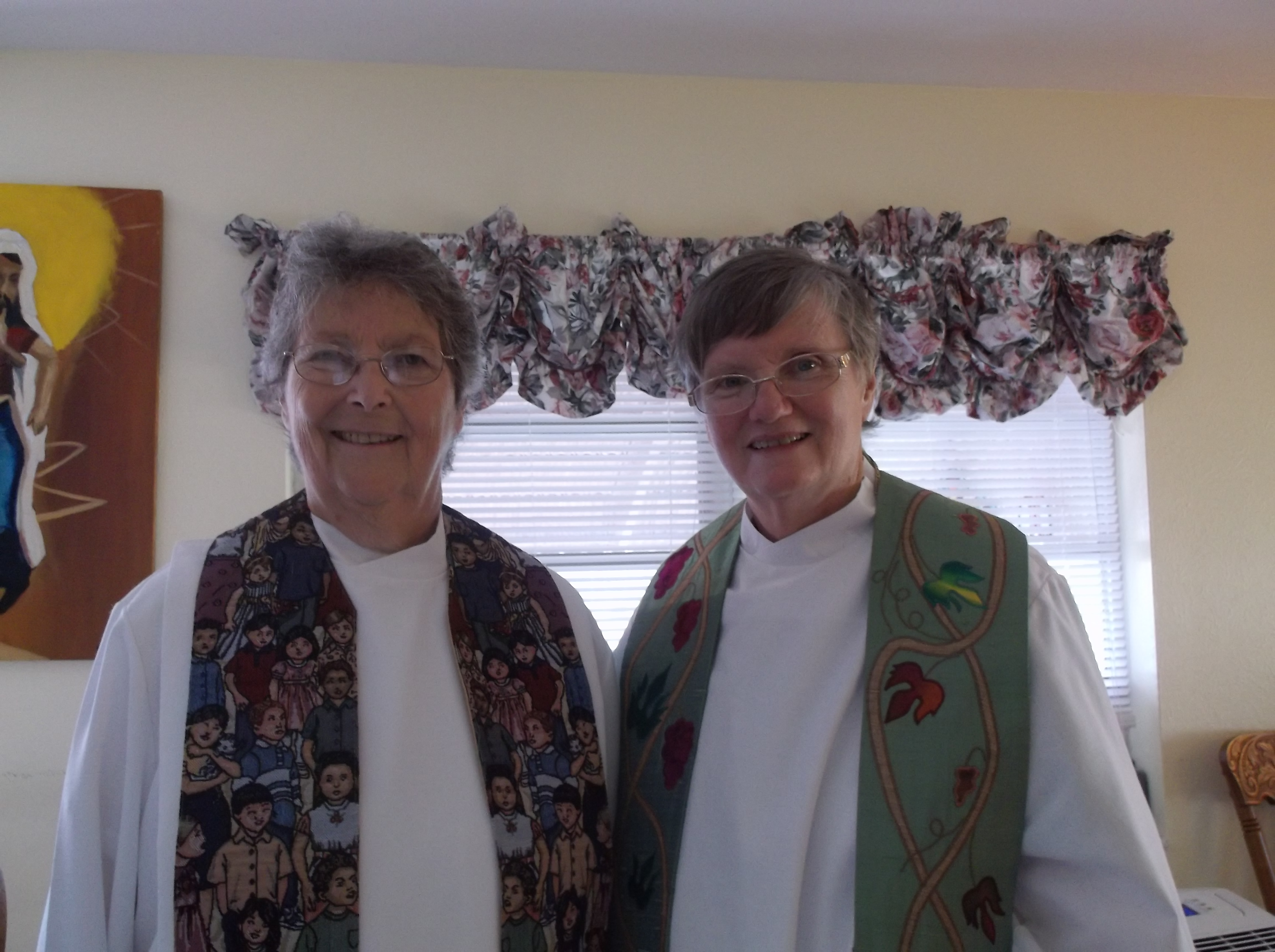
    DSCF0935Rev. Letitia Rawles with Rev. Judy Beaumont  at Good Shepherd Inclusive Catholic Community in fort Myers, Florida

    About FIFTY more signatures are needed to top 5000 signatures: please sign. 

    Excommunicated Nun Celebrates First Public Liturgy: 5,000 Sign Petition in Support
    From: Bridgetmarysblog

    http://action.groundswell-mvmt.org/petitions/pope-francis-reinstate-fired-nun

    November 12, 2015

    On Friday, November 13, Sister Letetia “Tish” Rawles will celebrate her first public liturgy as a Roman Catholic Woman Priest at 3 p.m. in the chapel at Atria Northgate, 9191 Round Top Rd., Cincinnati, OH 45251. Ordained in April of this year with the Association of Roman Catholic Women Priests, Sister Tish served her community faithfully, offering the sacraments to the sick and dying. Sister Tish served as a “catacomb priest” in order to allow herself to remain a member of the Sisters of the Precious Blood. In late October, her ordination was discovered, and she was dismissed from her Congregation.

    Since her dismissal, over 5,000 people have signed an online petition in support of Sister Tish, asking Pope Francis to overturn her excommunication and the excommunications of all women priests and their supporters. The petition represents people of faith and good will from all over the globe, including signatories from Africa, Europe, and South America. Over 1,000 clergy and faith leaders, including Catholic priests and over 150 Catholic sisters, have signed the petition.

    In response to the petition, Sister Tish stated: “The theme of my first liturgy will be ‘Gratitude and New Beginnings’. l enter this Eucharist grateful for all who signed the petition and the new beginnings that my public priestly ministry will offer.”

    The Association of Roman Catholic Women Priests and Roman Catholic Womenpriests-USA will deliver this petition to Pope Francis as part of the Church’s Holy Year of Mercy. It is our hope that the reform-minded pontiff, who has called for an open Church, “not a closed system,” will end gender-exclusive ordination and overturn all excommunications.

  • Pope Francis’ Favorite Painting-The White Crucifixion by Marc Chagall A Post Modern Meditation

    This beautiful Chagall is said to be Pope Francis’ favorite painting. One can easily see what he sees in it: the Jewish identity of the suffering Jesus, the suffering of the Jewish people during Hitler’s rise to power as it was painted in 1938 after KristalKnacht, and the suffering of many oppressed peoples crucified on the cross with Jesus. Today we can see the Syrians fleeing persecution-both the Christians and Muslims who are not the same as their terrorist persecutors ,those of all other religions and all people of difference from fundamentalist norms and rules. I can see refugees fleeing in lifeboats and the image of the 5 year old Syrian boy washed ashore, as well as those of many other countries, including the Central Americans coming to the USA through Mexico with “Coyotes”-those who lead them to alleged freedom(if they survive) for huge amounts of money. I can see all who still fight discrimination and hate crimes, including the Jewish people, and Muslims and the LGBTQ community.  I can also see those fleeing, shot and killed by random gang and drug-fueled gunfire in our Good Shepherd Community in Fort Myers where there have been over ten shootings in one month, and those workers without a job in the age of the technological dominance . It is indeed a meditation for our time.

    I thank our Western Region RCWP Priest Rev.Dr. Kathleen Kunster for sending this to us. Please join me in this meditation with your own images.

    Rev. Dr. Judy Lee, RCWP

    Co-Pastor Good Shepherd Inclusive Catholic Community in Fort Myers, Florida

    The 1938 painting White Crucifixion represents a critical turning point for the artist Marc Chagall: it was the first of an important series of compositions that feature the image of Christ as a Jewish martyr and dramatically call attention to the persecution and suffering of European Jews in the 1930s.

    In White Crucifixion, his first and largest work on the subject, Chagall stressed the Jewish identity of Jesus in several ways: he replaced his traditional loincloth with a prayer shawl, his crown of thorns with a headcloth, and the mourning angels that customarily surround him with three biblical patriarchs and a matriarch, clad in traditional Jewish garments. At either side of the cross, Chagall illustrated the devastation of pogroms: On the left, a village is pillaged and burned, forcing refugees to flee by boat and the three bearded figures below them—one of whom clutches the Torah— to escape on foot. On the right, a synagogue and its Torah ark go up in flames, while below a mother comforts her child. By linking the martyred Jesus with the persecuted Jews and the Crucifixion with contemporary events, Chagall’s painting passionately identifies the Nazis with Christ’s tormentors and warns of the moral implications of their actions.

    — Entry, The Essential Guide, 2013, p.277.

    Exhibition, Publication and Ownership Histories

    C2015 Artists Rights Society(ARS) New York/ADAGP,Paris

    For further thoughts one may also see: http://www.firstthings.com/article/2014/04/the-christ-of-marc-chagall

    Explanations of the Jewish and Christian Symbols in Chagall’s “Work by David Lyle Jeffrey, April 2014

  • Lessons in Giving: Two Roman Catholic Women Priests Reflect On Widows Mites

    Today we learn about two widows who gave all they had , gave out of their poverty. The widow of Zarephath ( I Kings 17: 10-16) gave the prophet Elijah her last bit of food, and Jesus noted that the widow in the temple gave all she had while the well placed religious leaders made profit on the backs of such widows and prayed aloud a lot to cover their tracks (Mark 12:38-44).  We learn about a God who secures justice for the oppressed and gives food to the hungry, loves the just and protects strangers and widows and children( Psalm 146:7-10) and about Christ who gave all he had (Hebrews 9:24-28).   This gives us pause to stop and look at our own giving and our own attitudes toward giving.  Rev. Dr.Beverly Bingle RCWP, Ohio and Rev. Dr. Judy Lee, RCWP, Florida share their homilies.

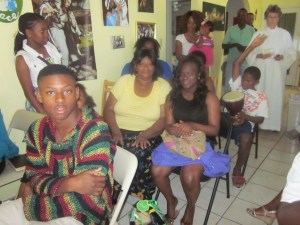
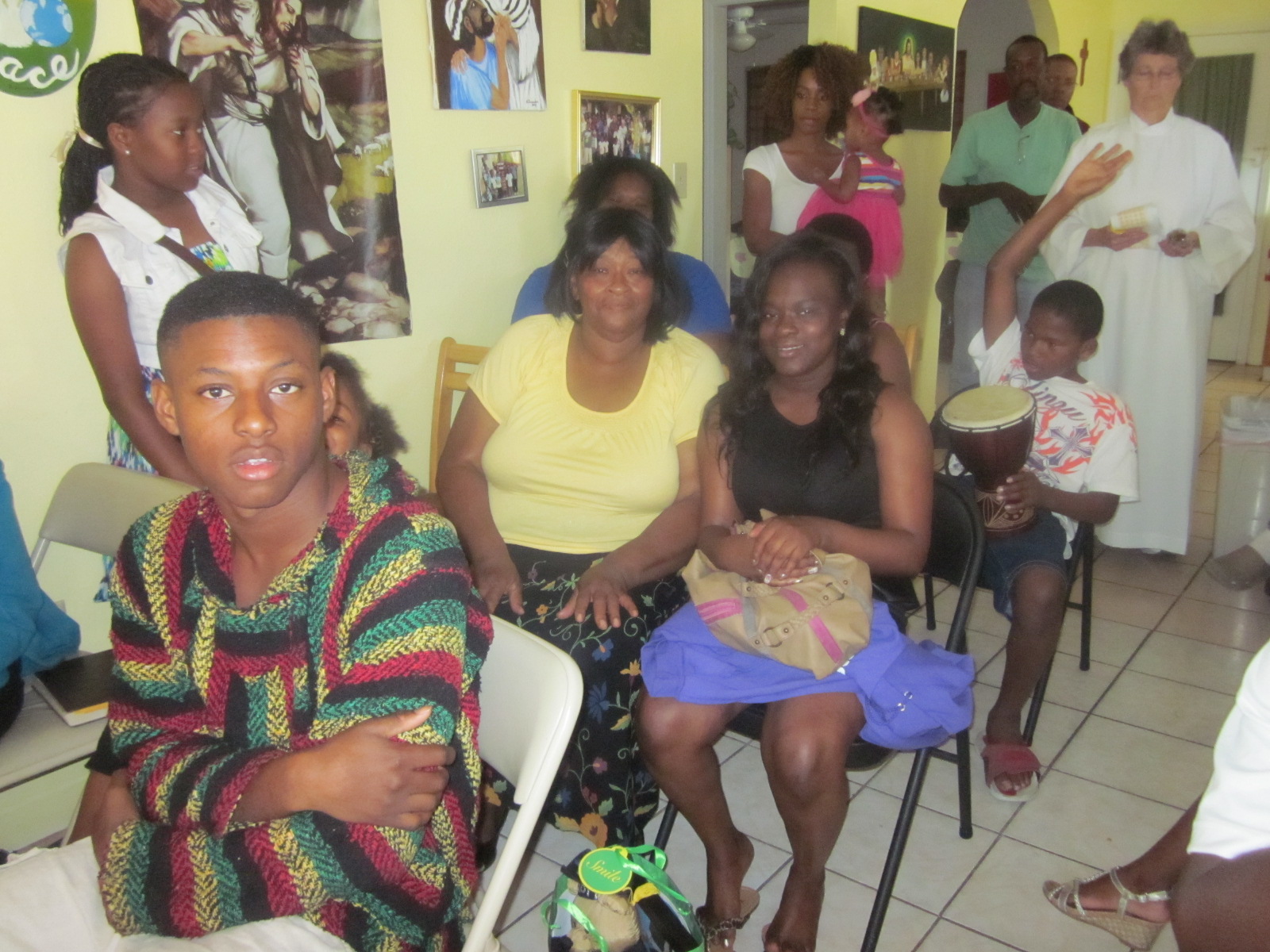
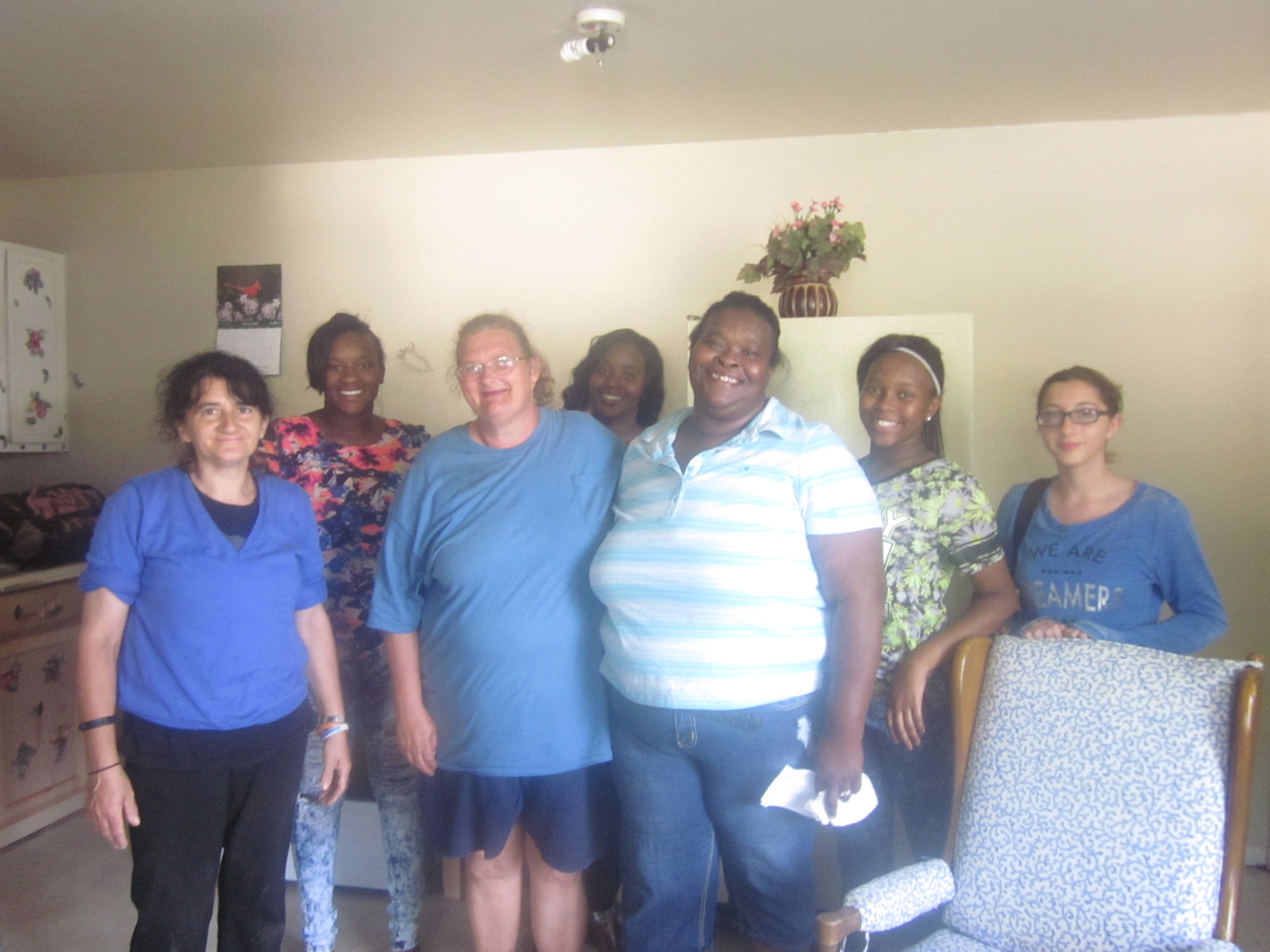
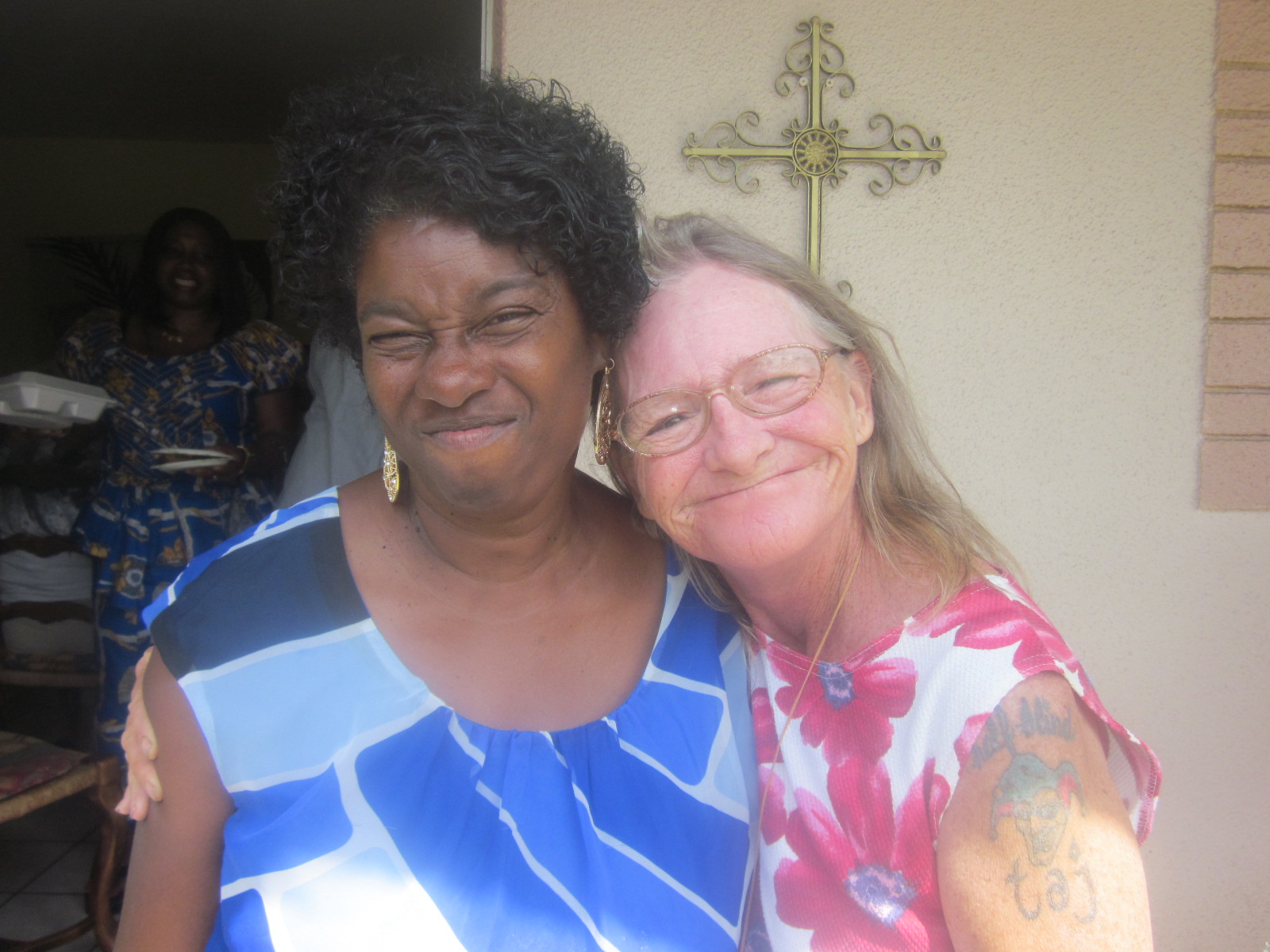
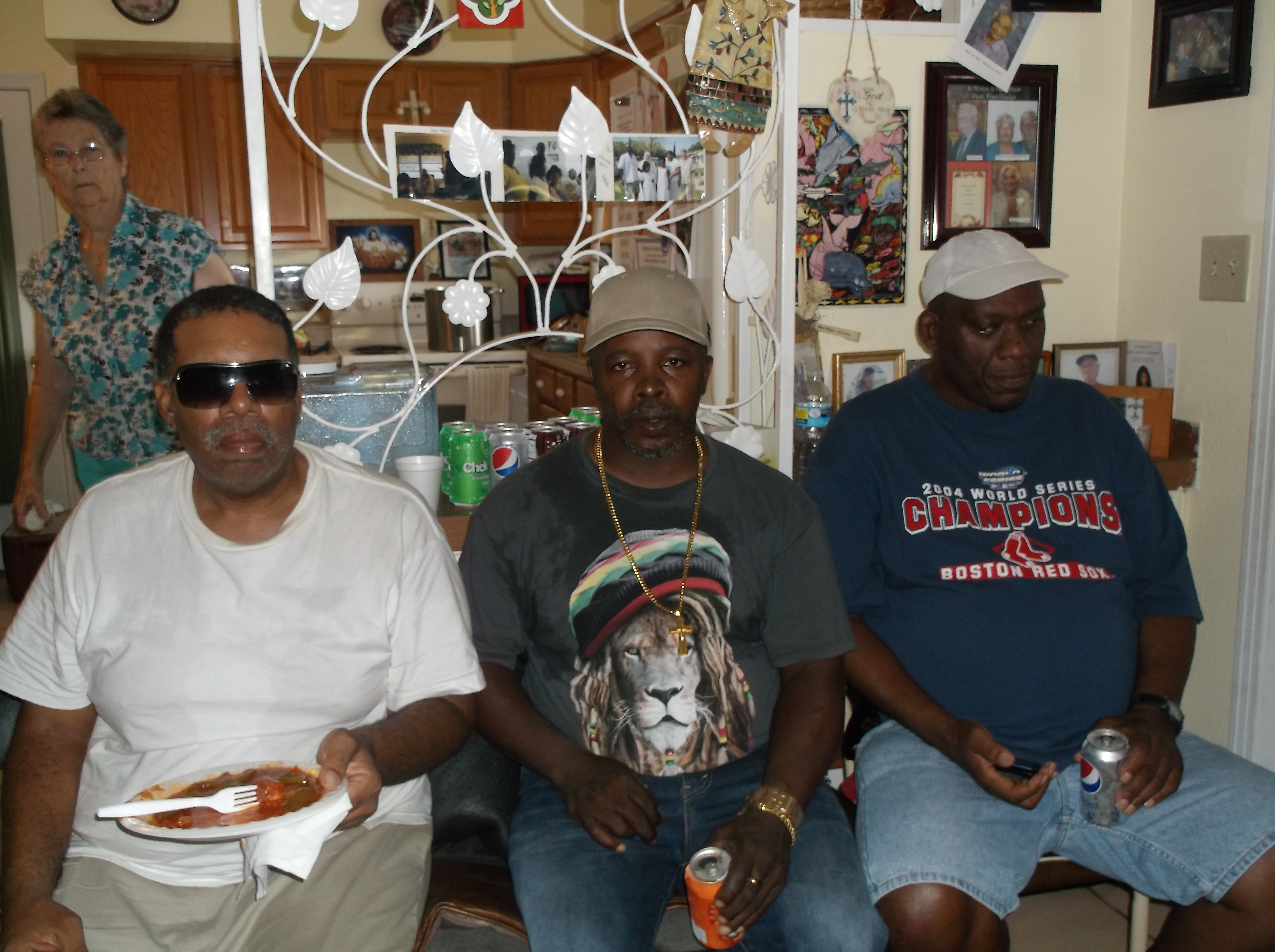
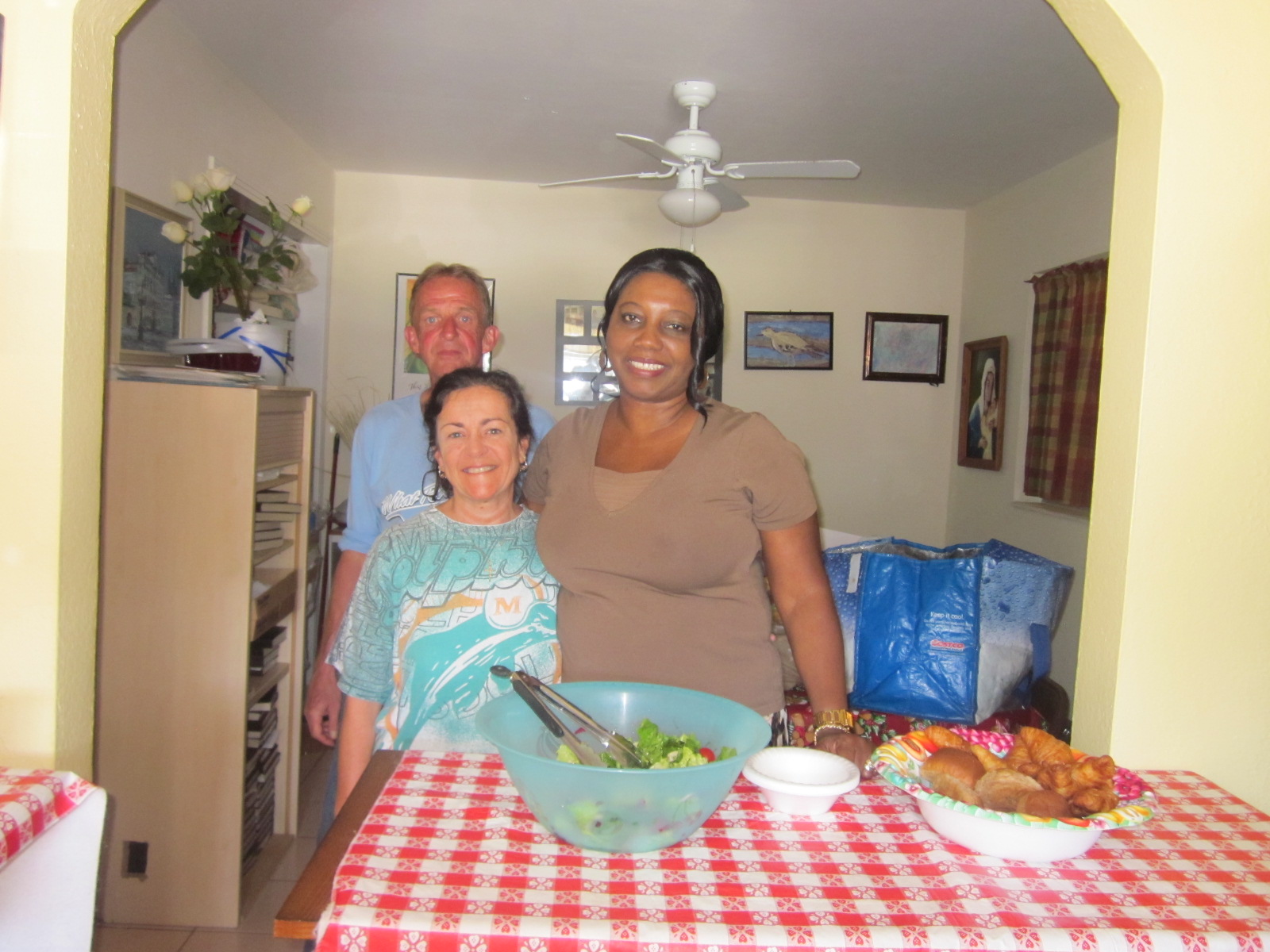
    The first widow and her child are starving but give their last bit of food to Elijah when he asks. He promises her an unending supply of flour and oil and she seems to trust his word. But she also may see that he is hungry too and feeds him. How moving is this?  And the widow who Jesus sees giving to the Treasury in the Temple also gives all she has. Wow! And yet I have been so moved many times in our lives and ministry with the poor. There may be some stingy and self-centered poor folks out there, but more often than not we witness the poor giving again and again. When a poor neighborhood or community is truly a community no one need go hungry. A big pot of stew can feed neighbors and even strangers as well as family. Phones and resources, including, funds, cars, clothes are lent as needed. I think of Ruby who is now very ill. She always shared her food with others, especially the homeless as she had been homeless. She would tell the story of “stone soup”.This is a well known tale of poor folks,initially hobos,  beginning a pot of soup with only water and a stone and how other neighbors contributed the rest of the ingredients, potatoes, carrots, scraps of meat, etc. until there was a hearty stew to share.  And Roger, who remains so thankful for our help in getting an income and an apartment seven years ago that he still gives to Good Shepherd regularly from “Roger’s Foundation.” These small but regular donations have helped many other homeless and hungry people. He also uses the car that we made available to him at a low price to take people to Doctor’s appointments and to church. He never asks for anything back. If someone gives something he is likely to use it for Roger’s Foundation donations. And there was Gilbert who brought us half of his disability check one Christmas, saying he is still thankful for his Senior Housing. We did not want to accept it but he insisted.  Eddie lived in our hospitality center at the church for over two years before he was granted a well deserved Disability settlement. He not only payed us back “rent” but has donated over four thousand dollars to the church. This is the widowers mite. IMG_0143IMG_0055Lili shops at yard sales and brings her treasures to the church to give to others. And Lauretta, carries heavy produce and canned goods on the bus to our Tuesday ministry to share with the others. Above is Lauretta with Donnie, and Lili and Linda and their girls helping Brenda move in to her new apartment. Below, in the middle of three men is Eddie.  Then we have Pearl and Lisa who regularly cook for and serve our people. On my right seated on my right in the last picture is Roger. 

    tues min 91 004IMG_0032IMG_0036

    In our Good Shepherd church we have a sort of reverse offering. People put what they can in the plate and we are thankful for anything given. We are grateful to for those attending regularly who are of better means who give regularly- about 5 or six people. (And we are overwhelmed by the caring of those people who donate regularly although they do not even live in Florida). But we say on Sundays that money is not needed:-we ask that everyone touch the plate in a symbolic gesture of putting your heart in the plate. We explain that giving one’s heart and one’s self to God is the most precious gift they can give, and everyone can give it. I love watching people as they very seriously do this. If anyone has need they can ask us after church and we will share from the offering and other funds.

    Yet, as Jesus often does, he goes farther in his teaching on giving. He comments on giving all, not just from one’s surplus and praises the poor widow for giving her all.   He accuses some of the religious leaders who love to pray aloud of exploiting widows and using prayer as a cover-up. There are many who give to the church and other charities out  of compassion and generosity. We are often in awe of such giving. Some of the givers are well off and some have more than enough, and some are poor. But, alas, as anyone who has to ask for funding knows- some who have a lot may give very little and some who have very little may give completely.  That generosity of heart is what Jesus is talking about in today’s Gospel. It applies not only to money, but to time and sharing of goods and resources, talents and skills. Jesus is asking for wholehearted giving. Give all you can-even if it is a smile, a word of encouragement or affirmation or used items in good shape that someone else can use. And yes, share your money so someone else can live. Jesus told the parable of the man who saved everything in a barn and then, instead of sharing his huge gain, he built a bigger barn for savings when the first was full. Jesus , like Elijah here, is saying give it away and God will provide, but many have trouble with this.

    Jesus was also speaking about cheating  the poor-about usury as there were strong Mosaic laws against this also providing for debt easement not saddling people with debt. I cannot believe how current this teaching is. I can give example after example of poor people , with “low credit ratings” being charged interest in amounts that are nothing less than astronomical and immoral . One family who attends regularly and gives much service to the church needed a vehicle for work. The car they bought from a local car dealer with the help of the church passed an initial mechanic’s inspection.  But,it was in such bad internal shape that it only lasted six months. They went to a bigger car dealer,Carmax, who sold them a car well above what it was worth recommending Santander Bank for a loan for those with with poor credit. Santander worked out a deal where they would pay three times what the overpriced car was worth in interest over the life of the loan,  over thirty-five thousand dollars. And in the first month they raised the monthly fee to five hundred dollars monthly. The family had to choose between housing and a car. Their rent too was well above market rate.  It was obvious that this family could not pay these payments from the start. Hence the car was repossessed and they now have high payments for a car they do not have and a worse credit history.  Someone in the church has now given them a car and when the wage earner returns to good health it will be used for work.  The Psalm says God loves poor and the just but thwarts the wicked.  Jesus is very strong on condemning those who exploit the poor. God forgive me for hoping those who take advantage of the poor will get a taste of their own medicine.  I know how stressed and struggling this family is.  I am feeling some of Jesus’righteous indignation here about the “car loan”.  And I am praying for blessings on the generous and compassionate givers, of their money, their goods and mainly, themselves. Blessed are the poor, and those who give so the poor may live. Amen.

    Rev. Dr. Judy Lee,RCWP

    CoPastor with Rev. Judy Beaumont RCWP

    Good Shepherd Inclusive Catholic Community, Fort Myers, Florida

    goodshepmin. org  our website

    And now for word from the church in Ohio-Rev. Beverly Bingle’s Homily

    Jesus is not sitting in a quiet corner of the Temple
    praying with his eyes closed.
    He’s looking around, eyes wide open.
    He sees the officials of his religion—the Scribes—
    parading around in long robes.
    He sees them strutting in to take the best seats.
    He hears them demanding to be addressed with titles of respect,
    setting themselves apart and above the rest of God’s people.
    He hears them reciting long prayers
    to show off and draw attention to themselves.
    And he sees them taking advantage of widows and orphans.
    Jesus sees what they’re doing… and what they’re not doing.
    They recite the Shema, often.
    They know about love of neighbor, but they don’t practice it.
    They say one thing… and do another.
    For them, love of self has replaced the love of God.
    ________________________________________
    We get used to the way things are.
    It seems like they’ve always been that way,
    and we tend not to see them as clearly.
    We take it for granted that that’s the way things are supposed to be.
    Jesus notices the gap
    between what is preached and what is practiced,
    and he points it out: his is the voice of a prophet.
    ___________________________________________
    If we’re paying attention days,
    we see some of the leaders of our institutional church
    behaving like those Scribes.
    We see some of them living in luxury
    while cutting programs for the poor.
    Ten of the 34 active archbishops in the United States
    live in buildings worth more than $1 million.
    New York’s Cardinal Timothy Dolan, for example,
    leads the pack with a $30 million mansion.
    Archbishop Leonard Blair of Hartford, Connecticut, is on the list,
    with almost 9,000 square feet in his $1.85 million mansion.
    That’s not counting hundreds of retired and active Catholic bishops
    in smaller cities with similarly lavish lifestyles.
    _____________________________________
    In the first reading we saw a widow, poorest of the poor,
    with a son to support, facing starvation.
    Elijah the prophet asks from her
    the very bread that is the last food she has
    for her son and herself.
    Like the poor among us today, she shares what she has.
    And in the gospel there’s another widow.
    Jesus notices the two cents she drops in the collection.
    The pittance she offers is all she has.
    It’s not extra.
    And Jesus teaches
    that her pennies count more
    than all the pomp and ceremony and lip service
    from the wealthy.
    _______________________________________
    Ruby Payne, author of Bridges out of Poverty,
    talks about the generosity of poor people
    who give what they have to friends, family, church, neighbors.
    Others have shared with them in their time of need,
    so they share what they have
    when someone else is in need.
    They’ll use their rent money to bail a neighbor out of jail.
    They’ll skip work for a day to take care of a grandchild.
    And like the widow in today‘s gospel,
    they’ll drop the bit that’s left over at the end of the week
    into the collection basket at church.
    The poor give away things they can’t live without.
    To help others, they do things they really don’t want to do.
    They seem to us to be foolish, giving away things they really need.
    _____________________________________________
    Violet will be giving birth to a daughter in the next week or so.
    She showed up several months ago at Claver House,
    exhausted and sick.
    She ate.
    She found a change of clothes on the “free table”
    and washed up in the bathroom.
    She was told about Sparrows’ Nest women’s homeless shelter.
    She was told about Heartbeat.
    She was told about the food pantry.
    In a couple of weeks she started looking better.
    She had a place to live.
    She had seen a doctor for pre-natal care.
    She had a crib and baby stuff.
    All those goods and services
    came from generous people who noticed.
    ______________________________________________
    Toledo is full of generous people.
    You can’t help but notice them.
    There’s the teacher, just retired,
    who has donated a classroom full of supplies
    to the Padua Center.
    There’s the nursing home resident
    who spends her time phoning people
    who don’t have anyone to talk with.
    Big things and little things, time and skills and money.
    There’s all the volunteers in soup kitchens and pantries,
    going out of the way to drive someone home when it’s raining,
    the runners and walkers in marathons,
    the generous folks
    who help a neighbor or a family member or a stranger.
    We see it all over—people in the habit of giving
    without counting the cost.
    _________________________________________
    Whenever we notice someone speaking out against injustice
    or stepping up to fill a need,
    we’re inspired by their virtue.
    We don’t have to wonder how they got that way.
    We know that those big acts of love happen
    because they have practiced doing little acts of kindness,
    time and again, over and over,
    making generosity a habit.
    It’s the way they live:
    like the widows in today‘s readings,
    a piece of bread, a few coins,
    given freely and joyfully,
    given even when it’s all you have.


    Holy Spirit Catholic Community
    Saturdays at 4:30 p.m.
    Sundays at 5:30 p.m.
    at 3925 West Central Avenue (Washington Church)

    www.holyspirittoledo.org

    Rev. Dr. Bev Bingle, Pastor
    Mailing address: 3156 Doyle Street, Toledo, OH 43608-2006
    419-727-1774
     

  • Statement From Twelve Priests on Women’s Equality in the Church

    This welcome statement is by Fr.Tony Flannery-tonyflannery.com;

    Tony Flannery
    Tony Flannery (born 1947) is a member of the Redemptorist congregation, a native of Attymon, near Athenry in County Galway, Ireland.

    Tony joined the Redemptorists at the age of seventeen in 1964, and was ordained a priest ten years later, in 1974

    Read More

    Statement from Twelve Priests on Womens Equality in Church

     NOV 01

    Priests call for open discussion on the need for equality of Women in all aspects of Church life, including Ministry.

    There is neither Jew nor Gentile, neither slave nor free, nor is there male and female, for you are all one in Christ Jesus. (Gal. 3, 28)

    In the Catholic Church women, despite being equal to men by virtue of their Baptism, are excluded from all positions of decision making, and from ordained ministry. In 1994 Pope John Paul II declared that the exclusion of women from priesthood could not even be discussed in the Church. Pope Benedict reaffirmed, and even strengthened this teaching by insisting that it was definitive and that all Catholics were required to give assent to this view. Pope Francis has said that Pope John Paul II had reflected at length on this matter, had declared that women could never be priests and that, therefore, no further discussion on the ordination of women to ministry is possible. In reality, Pope John Paul II did not encourage or facilitate debate on the ordination of women to priesthood or diaconate before he made his decision. Furthermore, there was virtually no discussion on the complex cultural factors which excluded women from leadership roles in many societies until recently.
    We, the undersigned, believe that this situation is very damaging, that it alienates both women and men from the church because they are scandalised by the unwillingness of Church leaders to open the debate on the role of women in our church. This alienation will continue and accelerate.
    We are aware that there are many women who are deeply hurt and saddened by this teaching. We also believe that the example given by the Church in discriminating against women encourages and reinforces abuse and violence against women in many cultures and societies. It is also necessary to remember that women form the bulk of the congregation at Sunday Mass and have been more active in the life of the local churches than many men, mirroring the fidelity of the women who followed Jesus to the end, to his death on Calvary. The command of Jesus “Go, teach all nations” was addressed to all his followers, and by failing to accept the full equality of women, the church is not fulfilling this commission.
    The strict prohibition on discussing the question has failed to silence the majority of the Catholic faithful. Survey after survey indicates that a great many people are in favour of full equality for women in the Church. But it has managed to silence priests and bishops, because the sanctions being imposed on those who dare to raise the question are swift and severe.

    We believe that we can no longer remain silent because to do so colludes with the systemic oppression of women within the Catholic Church. So, in the spirit of Pope Francis constant encouragement of dialogue, we are calling for free and open discussion concerning the full equality of women in all facets of Church life, including all forms of ministry. If this were to happen, the credibility of the Catholic Church would gain strength, especially when it addresses women’s issues.

    Signed: Frs:
    Eamonn McCarthy
    Kevin Hegarty
    Roy Donovan
    Padraig Standun
    Adrian Egan
    Benny Bohan
    Sean McDonagh
    John D. Kirwin
    Des Quinn
    Donagh O’Meara
    Tony Conry
    Tony Flannery

  • Forever Friends: Reclaiming the Middle of My Life

    I have begun to see my life in times and places, roles and functions,and relationships, in periods of time- as the beginning, the middle and the end. The beginning was my first 43 years in New York. A time of firsts, first loves, first jobs, first careers. A time of family and relationships that remain strong. The middle was my fourteen years in Connecticut, a time of productivity, changes, and great learning and special relationships.  I wrote my first major text The Empowerment Approach to Social Work Practice while there and revised it in Florida adding “Building the Beloved Community” to the title. It is still going fairly strong in the field. And now, I am in Florida, and have been for 17 years. It is a time of amazing growth and consolidation, of new and old callings fulfilled and of pulling it all together, if that is possible.  And in that spirit I realized that I need to reclaim the middle most of all at this time.

    When I was a Masters of Social Work student  at Columbia University, in the beginning and not the middle of my life, I had a most gifted teacher, William Schwartz, Bill, as he preferred to be known was a brilliant thinker, writer and teacher. Students hung on his every word. One of the things he asked us to do was to pay attention to the beginnings and end of encounters with people in groups or as individuals. He said the middle was not as important. When we wrote Process Recordings for his class, he wanted a verbatim account of all of it, but focused more on the skills of contracting at the beginning and where it stood as the encounter ended, how we wound it up. I have kept up with some of my Columbia friends , but most are gone now, along with Bill. My dear friend Dr. Alex Gitterman, whom I met at Colombia in the early 70’s, and I have kept up over the years. and he is still teaching at UConn and carrying on and developing the tradition we learned and elaborated on so long ago with Bill as our mentor.  I am so thankful that he is a part of my beginnings and the middle and the now.

    But now, as I look back and continue to move forward with my life, I will do what I did respectfully several times with Bill, say that I think he was wrong. This was never easy to do as he was so brilliant everything sounded right and he certainly was sure about it. But as I grew older in life and in the profession I developed my own wisdom and tested it out. Middles are important, dear Bill. They are the heart of the “work phase” and though quite messy very often, they are filled with what you call “real” emotions and events. They are worth staying with in practice and in life. I know that Bill would agree with that, despite his emphasis on beginnings and ends. But I guess I learned his lessons too well because I recently took stock of my life and the relationships that were important to me and also my self identity and I saw that I worked hard at maintaining early relationships and held on tight to what is here for me now, in what i call an ending phase of life, although I expect it has a while to go.  And somehow, unintentionally, I let the middle drop out of my  grasp. Yet, I am blessed because I did not let go completely and neither did my beloved friends of those middle years, many of whom were connected to the University of Connecticut School of Social Work where I was a Professor of Social Work for fourteen years.

    I did take my “middles” with me of course as Judy Beaumont and I met while we both served the homeless community in Hartford in 1987 and we have been living and serving together for 25 years now. Both Judy and I had things to leave behind in our professional worlds, we were each ready to move on and so the move to Florida in 1998 opened new doors for us. But the goodness we left behind in our work and in our relationships were put on a “back burner” as we coped and adapted in Fort Myers.

    I realize now that I was in a process of laying one profession down to pick up another. In the end I have kept both as being a priest and a pastor demands all of the social work and counseling skills I ever taught or used. Both professions demand your all although “pastoring” is truly more 24-7. Yes, I got up at 2 AM the other day to comfort a woman who was in the hospital and quite scared of a blood transfusion. And of those dear people from the middle of my life, when I was ordained in Boston in 2008, I was delighted to look up in that beautiful liturgical ceremony and see Ruth Martin,her daughter, also my student, Valerie Martin, and Jean Low and her mother,Ruth Low, and Nelly Rojas Schwan and others from my St. Michael parish in Hartford, reaching out to bless me in the laying on of hands. Thanks be to God that we were able to pick up our special relationships from there. It was Nelly who helped me in my role as Program Coordinator for those candidates coming to the Roman Catholic Women Priests from South America, Colombia in particular. She helped with support and also translation and was there beside me as I preached my first sermon in Spanish in Bogota, Colombia.Since then all of us and dear Virginia Starkie who facilitated my work as a Professor in so many ways and Gail Bourdon, then a religious Sister and my student and friend and then co-worker in work with the homeless women and children at My Sister’s Place have kept in touch, but not very well, alas- not as well as we would have liked but we held on to one another as we each scaled life’s vicissitudes.  I was there to “MC” and to read a poem I wrote for Ruth at her retirement as Associate Dean of the School of Social Work. We also visited when she still had a home in Tampa, but I had not seen her since she established a magnificent home in Hartford’s Historical District with her daughters, Valerie, Sonia and Maxine all talented and accomplished women. Ruth, or Dr. Ruth as we call her, wrote a wonderful review of my book 1185 St. Mark’s  in its original version. (It is now expanded and called The House on Sunny Street….). Jean and her Mom exchanged happy visits with us in Connecticut and Florida. The loss of Ruth Low was a very hard one indeed. When Jean started “RV-ing” she made it here as well. I was delighted when she and her cousin Bob Low came in  March of this year and stayed for a good while as the RV was repaired. I knew then that the middles were also in the now. I purposed to get back to Connecticut to see all of our friends there as soon as possible. Nelly’s loss of her beloved husband Hubert quite suddenly in July, prompted me to find a way to do this.

    I realize now that I was too eager to put the political struggles of Academia behind me-to get away from the unpleasant difficulties that develop when everyone is right about something and no one is right about all of it, but some see only one path and believe all should walk on it. While at UConn Carel Germain, a gentle and elegant human being and thinker and theoretician of the best quality, was my motivating force. She “brought me aboard” and we stood side by side and loved our time together. She was my dearest friend and a mentor. I could tolerate the political fray while she was there. When she retired then passed on, I think I just gave up the struggle.  I developed no patience with this process that repeated itself in every institution. ( I was also at Colombia and NYU and later at Florida Gulf Coast University.  My academic career was a good one, productive and exciting for the most part and it spanned 27 years. I loved the students and teaching and writing, but hated the “politics”.). And so, I know now, that I precipitously laid down Social Work education with a loud thud when I ran out of energy for “academia” when I was 55 ! I wanted to continue my social work practice as I had always done, I wanted to expand it, and I was drawn to a spiritual level of being and working with,ministering to and with people that was pastoral.  I first felt this call to being a pastor as a child, and I never could leave God and faith out of helping others as i was originally taught in social work. (It is a bit better now on that score with the work of Edward Canda and others). It was in 1982 while I taught at NYU that I also began my “voluntary” work in the NYC Shelters for women. I put voluntary in quotes as I strongly felt called by God to work with the homeless on any level possible. I found myself praying with women who clutched worn Bibles and rosaries in their shelter beds as well as offering all of the social work services possible.  This has continued to the present time and it is no wonder to me that now I include the Sacramental level of serving as a Roman Catholic validly ordained, and excommunicated, priest. Our Good Shepherd Ministry where Judy Beaumont and I are both ordained co-pastors has roots that go way back to the beginnings and middles of both of our lives.

    I have been in Florida for seventeen years now and somehow despite the varied directions we have moved in those dear ones from “the middle” have come through for me and stuck with me over the time and distance. My recent visit to Connecticut on my way to the Priestly Retreat in Stony Point, New York was a very important one for me as it helped me to put the middles back in my life. I was truly warmed by the rekindled flames of relationships and the chance to put my time at UConn into perspective. It was very good to meet with Dr. Nina Heller now the Dean at UConn. We talked about issues then that are non issues now. We laughed about a good deal and she reminded me that it was I who “brought her abroad”. I said that was indeed one of the best things I had done while there. As I talked with Nina and Alex and walked through the halls where I taught for 14 years meeting some of my old colleagues and the new Doctoral students I had the same feeling of remembering who I am that I had at the IASWG (Group Work) Conference in 2013.  Then I gave a keynote honoring the life of Dr. Katy Papell, my first in many years, while i used to give the keynote frequently, especially to tell about Jane Addams and her influence on the profession and on me. In that time some like joe Lassner of Chicago and Jim Garland of Boston, called me “Our Jane Addams in modern times”-but these are post-modern times now.  I was so happy to be able to do that for Katy who passed over a year later. And I was thoroughly moved by the reception I had as “one of the greats” according to introductions and the many that greeted me afterward. I had not thought of myself that way. One doesn’t in the midst of things. But with grace I accepted that my time and leadership in IASWG had been good. And, I missed the group, many of whom were now gone. Alex stood with me then too and we missed our colleagues and friends together. Alex has been a friend from the beginnings until now and I am so grateful for this continuity and love.  Here are the pictures of reclaiming my “middles”,  my place in the profession of Social Work, and a part of myself laid aside and now taken up again with this visit to Connecticut. .

    DSCF0984Alex and I standing together once again.  DSCF0985Alex and I and Jean, who made this visit possible with her caring and hospitality and facilitating and driving us from place to place. 

    We loved visiting with Jean and her Bonnie

    DSCF1019DSCF1018 

    Judy Beaumont and her friend,peace activist colleague and former Co-Worker at My Sister’s Place,  Jackie Allen, meet outside of the Catholic Worker House in Hartford. This House is a cross between a Dorothy Day Worker House and a Settlement House.  Jackie and her family live there and so do others and some of the poor folks who have knocked on the door. Our sister Priest from Colombia, Marina Teresa Sanchez Mejia was especially happy to visit the Worker House and see St. Michael Parish in the North End where Father Al Jaenicke, of truly blessed memory especially on All Saints Day, inspired our ministry with the poor and African Americans. Marina Teresa who is dedicated to the Afro-Clombiano Community in Cali was also happy to meet with Dr. Ruth Martin, leader and elder in the black community in Hartford.  DSCF0987 DSCF0992DSCF0988

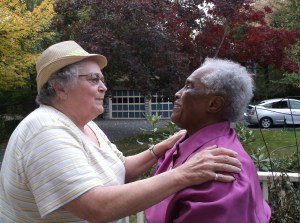
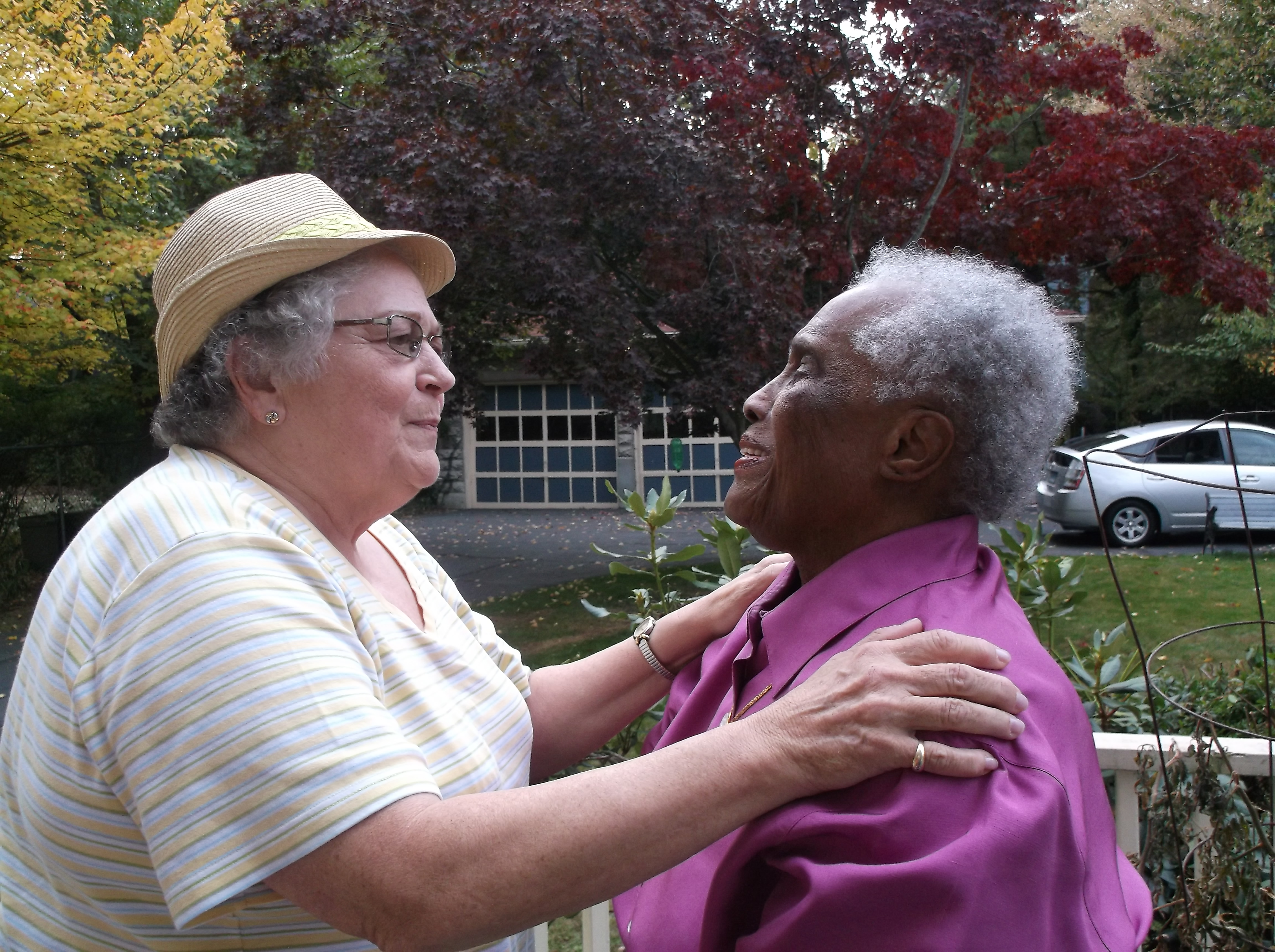
    Here Jean and Ruth greet and embrace. Then we see Dr. Ruth with her daughter Valerie,also a social worker, and Marina Teresa.  DSCF0998 DSCF1003 DSCF1004

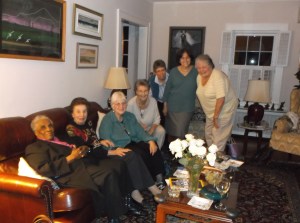
    Here is Virginia Starkie with Dr. Ruth. Virginia , our wonderful support staff, was one we could not have done without. She just retired two years ago and is now 88DSCF1007 DSCF1010 DSCF1013We met for dinner at the home of Dr. Nelly Rojas Schwan (standing next to Rvda. Marina Teresa with Judy B., Dr. Gail Bourdon, Virginia and Dr. Ruth and Jean seated).

    We are blessed to be at the table together in a eucharistic moment, one of thanksgiving and praise to God who brought us all together again after many years. I was honored to bless the food for the strength of our bodies and our friendships for the strength of our souls. I believe that we all left there with a renewed spirit of love, compassion and service.

    DSCF1017  With love and gratitude for the middle in the now,

    Rev. Dr. Judy Lee, RCWP

  • Rev. Letitia Rawles Shares Thoughts on Her Excommunication With NCR

    Friday, October 30, 2015

    http://ncronline.org/blogs/ncr-today/cincinnati-nun-excommunicated-after-admitting-illegal-priestly-ordination
    “A nun in Cincinnati was excommunicated and dismissed from the Sisters of the Precious Blood after admitting she was secretly ordained as a priest this spring.
    Sr. Letitia “Tish” Rawles was serving as a “catacomb” priest in order to not cause trouble for her religious order.
    “A catacomb priest is a priest who functions privately in service of a specific community,” said Bishop Bridget Mary Meehan of the Association of Roman Catholic Women Priests (ARCWP). Rawles’ specific community is the Atria Northgate Assisted Living Facility in Cincinnati, where she ministers to the sick and dying. She is seriously ill with multiple sclerosis, late stage liver disease, and diabetes. She has been a nun for 47 years.
    Rawles knows what she would choose if there was an option on returning to her order.
    “If I could stay in the order and also be a priest, I would definitely want to go back,” she said. “If it’s choosing between being a nun and being a priest, then I am a priest.”
    An online petition is currently underway which the ARCWP hope will send a message to Pope Francis to allow Rawles to continue as a Sister of the Precious Blood and overturn her excommunication and others in the Year of Mercy.
    Sr. Joyce Lehman, president of the Sisters of the Precious Blood, said in a press release that they are holding Sr. Rawles and all involved in prayer. Lehman noted a decree by Cardinal William Levada, former prefect of the Congregation of the Doctrine of Faith, in 2007, “both the one who attempts to confer a sacred order on a woman or a woman who attempts to receive the sacred order incur an excommunication.”
    “This defection from the Catholic faith calls for an ipso facto dismissal from a religious congregation. Therefore, by her own actions, she has excommunicated herself and separated herself from the Sisters of the Precious Blood,” said Lehman in the press release. “She no longer has the right or privilege of wearing the ring and insignia or presenting herself as a Sister of the Precious Blood.”
    Rawles told NCR she feels a mixture of things now that this secret is out.
    “In one sense I feel a freedom now to really practice and do priestly things that I had to do in secret,” she said. “But I also feel a loss of community. I love the Sisters of the Precious Blood. I know they feel I deceived them because I didn’t tell them, but I didn’t tell them to protect them. That’s why I went catacomb status. Now I can be more in public.”
    Being a priest is not something new for Rawles. She said she’s always wanted to be a priest and always had a calling to help other people. Rawles believes she was able to help a lot of people as a nun, both in the Sisters of the Precious Blood for 25 years and her previous 22 years with the Sisters of the Incarnate Word.
    But she also felt she needed to go into something deeper, which turned out to be priesthood. Some of her ministry includes helping the sick and dying, giving last rites, funeral services, prayer services and presiding at home liturgies.
    Rawles doesn’t know what her next step may be, but she does know the religious community is putting together a financial package because of her major medical issues.”
    [Elizabeth A. Elliott, is an NCR Bertelsen intern. Contact her at eelliott@ncronline.org.]

    “Cincinnati Nun Excommunicated After admitting Illegal Priestly Ordination”, by Elizabeth A. Elliott, National Catholic Reporter

    DSCF0963DSCF0935
    PLEASE SIGN THE PETITION TO REINSTATE TISH (See earlier blog)
    It is only just with so many years of selfless dedicated service that a financial package should be given, but it is our concern that it be enough and that she be able to remain at Atria Assisted Living or get an equal level of care.
    Rev. Dr. Judith Lee, RCWP-USA-East