Home

  • The Catholic Church of the Beatitudes: Roman Catholic Women Priest Pastors

    We are pleased to share a 2/1/2016 article about the Catholic Church Of the Beatitudes in Santa Barbara, California and thoughts on Pope Francis’ Year of Mercy  from the Santa Barbara NOOZHAWK by Francie Monk. Rev. Suzanne Dunn and Rev Jeanette Bertalan Love are the Pastors and Cindy Yashimoto is the Deacon.

    May God richly bless the work of this church.

    Love and prayers,

    Rev. Dr.  Judy Lee, RCWP

    Catholic Church of the Beatitudes: Imagining the Holy Year of Mercy

    By Francie Monk for the Catholic Church of the Beatitudes |

    When Jorge Mario Bergoglio becamePope Francis on March 13, 2013, a pair of feelings stirred in me — hope and skepticism. Both felt like one authentic reaction.

    When I heard he was interested in the poor, the hungry and marginalized, I blithely remarked: “Isn’t that entrance-level gospel work?” I admit, this was an embarrassing ignorance on my part. For decades I’d been used to a different message coming from Rome.

    But now, the entire world has witnessed that Pope Francis’ compassion for the suffering of our brothers and sisters the world over is not work for him.

    Rather, it is his total immersion in the mind of Christ, his being in Christ, his joy in Christ. It has been a constant invitation and call to all of us trying to be faithful to the gospel.

    …may the church echo the word of God that resounds strong and clear as a message and a sign of pardon, strength, aid and love. May she never tire of extending mercy and be ever patient in offering compassion and comfort. May the Church become the voice of every man and woman, and repeat confidently without end: “be mindful of your mercy, O Lord, and your steadfast love, for they have been from old” (Psalms 25:6).

    The Catholic Church of the Beatitudes has always answered the call to live the gospel with dedication and joy. We have varied and active ministries inside, as well as outside the Beatitudes, that we support.

    If it’s a corporal work of mercy, we do it. If it’s social justice, we address it. If it’s controversial, we consider it with open minds.

    We take care in our community, serving the homeless, fighting for the rights of the mentally ill and marginalized, standing vigil at Vandenberg Air Force Base against nuclear annihilation, and supporting the creative life of formerly incarcerated men and women.

    We take care of each other in times of sickness, grief and changing life circumstances. We celebrate the gifts and accomplishments of each other and work to see that others in the Santa Barbara community receive the same consideration.

    This year, Pope Francis has presented the official Bull of Indiction of the Extraordinary Jubilee of Mercy ​— “a special time for the Church, when the witness of believers might grow stronger and more effective.” Apparently, it isn’t business as usual like yesteryear.

    So I have to ask myself, if the Beatitudes community has been actively engaged in gospel work, then what is the meaning of a Holy Year of Mercy for us? What will make this year different from what we have been doing?

    It seems like keen discernment is what is required as we define the scope of mercy. The pope makes it clear when he says, “We must always consider the person. Here we enter into the mystery of the human being. In life, God accompanies persons, and we must accompany them, starting from their situation. It is necessary to accompany them with mercy.”

    I interpret this to mean that mercy is not a smorgasbord — no room for mercy-lite. He means absolutely everyone.

    It is easy to stumble here if you are trying to practice rigorous honesty. It is here and now that we must ask ourselves different questions — perhaps even difficult ones.

    “How far are we willing to go to be merciful,” is a good starting place.

    Pope Francis asks us to contemplate the idea of a Holy door.

    “… a Door of Mercy through which anyone who enters will experience the love of God who consoles, pardons and instills hope,” he says.

    It makes me think of all the doors in my mind that are only partially open, and some that are closed altogether.

    Before crossing the threshold of mercy, it’s important to examine who is shut out, who is forgotten, who is too difficult or who not deserving at all. Mercy has hidden depths when we care to wander there.

    At the first Beatitudes community meeting in this Holy Year of Mercy, the question of what mercy would look like for us was raised. One woman, well known for her thoughtful responses, mentioned softly, “Maybe we could offer forgiveness to someone who has harmed our community.”

    I silently struggled with that. (Could I really do it? No, yes, no … is how it went).

    Then I realized I am part of a community that never shies away from difficult issues and is more than willing to tread further together into unknown territory.

    Pope Francis stresses that our own lifestyles contribute to much of the suffering of people in the world. The Beatitudes has started looking for ways to reduce our carbon footprint.

    We are looking for ways to answer where it is we can simplify our lives and use of material goods, and we are aware of our responsibility to those who suffer the effects of consumerism and its excessiveness.

    When it comes to mercy and all its nuanced meanings, the Beatitudes community has committed to keeping the doors wide open and will continue to ask probing questions, challenging ourselves to go deeper to find newer meanings that we haven’t imagined.

    As a community, the Beatitudes give special attention to Pope Francis’ reminder: “.. God has chosen our time as a special moment in history for emphasizing this aspect of God’s plan.”

    As a contemplative community, shepherded by two Roman Catholic women priests, the Beatitudes will continue to act with the same courage and faithfulness that has always enlivened us. We are, after all, in the words of Francis: “… the flock that has a flair for finding new paths.”

    — Francie Monk is a member of and co-chair for the Safe Parking Outreach for Women program through the the Catholic Church of the Beatitudes, which celebrates Mass at 4:30 p.m. Saturdays at First Congregational Church of Santa Barbara, 2101 State St. Click here for more information, or call 805.252.4105.Click here for previous columns.

  • Two Homilies From Roman Catholic Women Priests: Rev. Roberta and Rev. Beverly for the 4th Sunday in OT


    For Sunday January 31, 2016 (the 4th Sunday in Ordinary time) we present two homilies by Roman Catholic Women Priests, Roberta Meehan of Arizona and Beverly Bingle of Ohio. Rev. Roberta presents God’s abiding love, refuge and deliverance to us and Rev. Beverly focuses on how the religious can hold on to the “same old same old” and close the door on new and refreshing views of  God and the Gospel. In the Gospel (Luke 4:21-30) Jesus is rejected in his hometown and says that “a prophet is without honor/not accepted in his own country”. He points out that in the times of the prophets Elijah and Elisha, strangers and foreigners received their words and healing actions more than their own people. He knows the same is about to happen to him and it does, so we too are included as God’s beloved children, a theme Rev. Roberta expands upon.

    As a Pastor serving the poor I am often impatient lately. And, I am happy to review the qualities of love in I Corinthians 13. I am impatient because the “system” breaks the back of the poor and, in many towns including this one, offers little in return. Today I have a family of seven who are homeless. They were living in a rented van but had to return it. The lead sheltering agency in this town has only ONE unit for families. I was told that there are 24 on the waiting list. In a nearby town they can be third on a list where there are seven family units. But tonight they would be in the street if we were not able to put them in a Motel for a while. We did so, but will run out of money to pay for their two rooms before they get the one room apartment that they can afford. The family left their little dog tied up outside in the cold to get inside where no pets were permitted. I lost patience on behalf of the tiny dog. We are working it out. The little dog is now inside.

    I wait for the God promises,especially the deliverance of the poor. I want to bear all things and hope all things, but it ain’t easy! So pray for us as we minister with less than elegant love.

    I enjoyed both of these homilies and am pleased to present them here.


    Rev. Roberta Meehan’s Homily

    Fourth Sunday of Ordinary Time / Fourth Sunday after Epiphany – Cycle C — 31 January 2016


    Jeremiah 1:4-5, 17-19

    Psalm 71:1-6, 15-17

    1 Corinthians 12:31-13:13

    Luke 4:21-30


    Again today the key for one of our themes can be found in the Psalm. Look at these lines: “In you, Lord, I take refuge. On you I depend since birth.” When you hear that, do you see yourself as a child – or maybe as a young adult – fleeing to a God who has outstretched arms, ready to gather you up and love you infinitely? But, you say, you are not a child or even a young adult. Neither am I. Does that stop any one of us from longing for the loving arms of our God? I think not.


    I remember back in 1997. I was 53 at the time and I was visiting my mother. I curled up in the bed in her guest room and was thinking about going to sleep. She appeared at the bedroom door with a fuzzy teddy bear in hand. She pulled the blanket up a bit around me and handed me the teddy bear. Recall, I was 53 at the time and my mother was 83. But, what I felt was what this Psalm is talking about. “I take refuge. On you I depend.” Is this not what we think when we flee to our God? We see our God’s outstretched arms ready for us – perhaps with a fuzzy teddy bear.


    Now, how does that relate to the rest of our readings? Think about it! In the Lord I take refuge is our theme. Shift back to the reading from Jeremiah. “They will fight against you but not prevail over you, for I am with you to deliver you, says the Lord.” And thus ends today’s reading from Jeremiah. Listen to that! Hear that! “I am with you to deliver you!” Can you not relate with me as I snuggled up in bed with the fuzzy teddy bear my mother brought me? Is that not exactly what is happening here when the Lord comforts people by saying, “Do not worry. No one is going to hurt you. I will protect you.”? Our God will protect us! We have been told! So when we re-read that passage from Jeremiah, we see how staunchly our God says, “I am with you.” If God is with us, how can we lose?


    So many homilies on these readings center on the reading from 1 Corinthians. Clearly 1 Corinthians 13 is a theophonic summary of the entire message of Jesus as found throughout the New Testament. It is one of the most famous passages in the entire New Testament. The ending is profound – “And the greatest of these is love.” I have used this passage often with dying patients and their families. It ranks right up there with Psalm 23 – The Lord is my Shepherd. I love this chapter from Corinthians and perhaps I relate more to it than I do to Psalm 23.


    But the question becomes, how does this reading relate to our theme of taking refuge in the Lord? Examine the passage again. The message seems to be about OUR reception and OUR action regarding the gifts of God. Certainly that is true. Let us look at two key sentences from this passage. “Strive eagerly for the greatest spiritual gifts.” And, “Love is all that counts with great gifts – prophecy, faith, angelic tongues.” [Slightly paraphrased.]


    If we carefully re-read this powerful passage, however, we see that everything culminates in the ending – “And the greatest of these is love.” We are called to love and to love absolutely. We are told this specifically here but we also know this from numerous other scriptural passages. But, how can we love if we have not been shown love? This is a profound question and we have a very explicit answer – right here in today’s readings.


    Our God has said, “I am with you and will deliver you.” Our God has said that we will be protected. Time after time we hear messages like this – messages from our God. How can anyone – including our God! – send these messages without an underlying love? Of course, that is not possible. Our God loves us absolutely. This fulfills the message from 1 Corinthians 13 – And the greatest of these is love. So, we can turn this whole passage around and know that this is God, speaking from the God-self. Our God loves us and will protect us and is with us and will deliver us. Our God will let no harm come to us.


    So, if we can see the continuity between the Psalm and the first two readings, what do we do with this gospel? Truly, it is confusing. Not the gospel itself but how it fits into the total picture.


    Luke includes this story as part of Jesus’ early ministry in Galilee. The same story in Mark’s gospel marks the beginning of Jesus’ ministry. The transposition is irrelevant. What is important is that Jesus told the listeners in the synagogue (and thus told us) that Scripture had been fulfilled. What Jesus says here actually initiates the fulfillment of the Old Testament prophesies. That is critical. Even more critical to our theme is what the members of the synagogue said about Jesus. They were amazed at his knowledge and they commented amongst themselves about how everyone knew his family. This took place in Nazareth where Jesus had grown up. The group also mentioned events connected with Jesus that had taken place in Capernaum. (Jesus lived – legal residence! – in Capernaum during the time of his ministry.)


    Then, suddenly, the people (…(R)ose up and drove him out or town.) Jesus had said that “No prophet is accepted in his own native place.” Indeed! That is what happened. They heard him in the synagogue, they were impressed, and then they turned on him.


    How does that fit into our theme of taking refuge in the Lord? Jesus took refuge in God! Jesus never doubted that God was with him. His whole mission was to bring people to God and to demonstrate that he was indeed the fulfillment of the Old Testament prophesies.


    Even when we are driven out of town (as was Jesus), our God is our refuge. regardless of whether our problem is with the love of God or with our being driven out of town – or anywhere in between. Our God is our refuge. It is as simple as that and that is all there is. We turn to our God who will always be our refuge. And sometimes our God will have a fuzzy teddy bear for us – along with warm and loving outstretched arms.
    — Roberta M Meehan, D.Min.


    Rev. Beverly Bingle’s Homily

    What is it that makes Jesus’ neighbors so mad at him

    that they want to throw him over the hill?
    Some are truly amazed at the truth of his insights into the scripture,
    but others complain
    that he isn’t working those miracles for them
    like he did in Capernaum.
    He responds by telling them that miracles require faith,
    and he gives them two examples, neither of them Jews.
    His friends and neighbors recognize the truth of what Jesus says,
    knowing that those despised foreigners,
    the Canaanites and the Syrians,
    have the deep faith they themselves lack.
    They reject his message.
    But he knew his mission,
    so he stood up, told the truth,
    and went on his way doing what he was called to do.
    _____________________________________________
    Religion can bring out the worst in people.
    They think their dogma and their ritual makes them better.
    They exclude people
    and begin to think that God wants them
    to hate the “other”
    and kill the “foreigner.”
    _____________________________________________
    It still happens.
    Just as the citizens of Nazareth forgot the commands of the Torah
    to “love the alien as yourself;
    for you too were once aliens in the land of Egypt,”
    people today can forget the Great Commandment of love.
    Religion can get distorted into fanaticism and bigotry.
    _____________________________________________
    On the other hand,
    we know that religion can also bring out the best in people,
    helping them to become more tolerant and loving.
    We each have to ask ourselves what religion brings out in us.
    Our first reading, that stirring passage from Jeremiah,
    tells us that God has a mission for each one of us
    that is only ours to do.
    Jeremiah also tells us that It won’t be easy
    but that we will bear fruit.
    _____________________________________________
    We are fortunate here in Northwest Ohio
    to be able to see the good that religion can bring out in others.
    We are blessed with many prophets among us.
    Some of you know Paul and Kathleen from Liberty Center,
    who have left the snowy north for the winter,
    but not to vacation.
    They are trekking through the southwestern desert
    to leave caches of water and food
    for desperate refugees from South American terrorism
    who cross into the United States at the risk of their lives.
    And some of you know Sandy and Lin in West Toledo,
    adopting and fostering so many special needs kids
    that I’ve lost count.
    And there’s Sister Ginny
    putting together an alternative to suspension for school kids
    at the Padua Center.
    And Marcia and Rose and hundreds of others
    lobbying to get the lead poisoning
    out of the homes of the poorest kids among us.
    And Karen Shepler bringing our community together
    in an ongoing dialogue to combat racism.
    And Woody and Judy creating a way for followers of every faith
    to work together as a community of justice and peace.
    And, there’s our own Tree Toledo,
    scores of people planting trees
    so future generations will have breathable air.
    And then there’s you,
    prophets anointed by God
    to bear the good news everywhere you go.
    You’re out there in the food pantries and the soup kitchens,
    visiting people in the hospitals and nursing homes
    and at home and at Hospice.
    You’re at the funeral home
    comforting your friends when they lose a loved one,
    tutoring and coaching and cheering for your grandkids,
    donating to Rahab’s Heart and disaster relief,
    racing for the cure,
    and praying in the quiet of the morning
    and the still of the night.
    _____________________________________________
    Like Jeremiah, like Jesus, you
    have been anointed by God to prophesy to the nations.
    You look at the world and speak out,
    sometimes with words but more often with action,
    and with that patient, kind love that Paul preached about.
    Sometimes you suffer rejection for standing up and speaking out.
    The rejection can take different forms;
    it can be personal or situational or social or cultural.
    You could be passed over for promotion or fired,
    you could be bullied or beat up,
    betrayed by the people you trust the most,
    or just plain ignored
    when you try to do what’s right
    or speak up about something that’s wrong.
    But you do it anyway.
    _____________________________________________
    God has given each of us,
    as the poet Mary Oliver describes it,
    this “one wild and precious life”
    and charged each of us with a unique mission.
    It’s unique because we each have different gifts to bring to it;
    but it’s the same for all of us:
    we are all sent to love:
    love God,
    love neighbor,
    love one another.
    Amen!


    Holy Spirit Catholic Community
    Saturdays at 4:30 p.m.
    Sundays at 5:30 p.m.
    at 3925 West Central Avenue (Washington Church)

    www.holyspirittoledo.org

    Rev. Dr. Bev Bingle, Pastor
    Mailing address: 3156 Doyle Street, Toledo, OH 43608-2006

    Teach Me Your Way, My God…..Teach Me to Love

    Love and blessings,

    Rev. Dr. Judy Lee, RCWP

    Co-Pastor Good Shepherd Inclusive Catholic Community Fort Myers, Fl


  • Letters of ExCommunication:What Will Separate Us From the Love of Christ?

    On January 13th, 2016 the National Catholic Reporter briefly told the story of a letter of excommunication sent to a Roman Catholic woman in Kansas who was newly ordained to the priesthood. I share this story below noting that it is not unlike the stories of many of the over 200 ordained Roman Catholic Women worldwide who continue in their sacramental ministries and works of mercy regardless of such mean spirited and meaningless communications, for we reject the church’s “excommunication” penalty for following God’s calling and conscience. We also congratulate Rev. Georgia Walker whose life has been dedicated to peace and justice action on her Priestly Ordination.  After Rev. Walker’s story I will share my own responses to Bishop Frank Dewane who sent me not one but two letters in 2008 when I was ordained a  priest by the Roman Catholic Women Priests.

    But,first, the words of the Scriptures that set us on solid ground in the face of man-made rules and clarify our rejection of the church’s so called self- excommunication:

    Romans 8: 14-19:

    “Those who are led by the Spirit of God are the children of God. For the Spirit that God has given you does not enslave you and trap you in fear;instead,through the Spirit God has adopted you as children, and by that Spirit we cry out “Abba”! God’s Spirit joins with our spirit to declare that we are God’s children. And if we are children,we are heirs as well: heirs of God and coheirs with Christ sharing in Christ’s suffering, and sharing in Christ’s glory. Indeed I consider the sufferings of the present to be nothing compared with the glory that will be revealed in us. All creation eagerly awaits the revelation of the children of God”.

    We, women and men and all people led by the Spirit are children of God, (not only sons of God but daughters of God) we are co-heirs of God, and called according to God’s purposes.

    And (Romans 8:28) ” We know that God makes everything work together for the good of those who love God and have been called according to God’s purpose”.

    Romans 8:33-39.

    “Who will bring a charge against God’s chosen ones? Since God is the One who justifies,who has the power to condemn: Only Christ Jesus, who died–or rather, was raised–and sits at the right hand of God,and who now intercedes for us!

    What will separate us from the love of Christ? Trouble? Calamity? Persecution? Hunger? Nakedness? Danger? Violence? As scripture says,”For your sake, we’re being killed all day long; we’re looked upon as sheep to be slaughtered”. Yet in all of this we are more than conquerors because of God who has loved us.  For I am certain that neither death nor life, neither angels nor demons, neither the present nor the future, neither heights nor depths–nor anything else in all creation–will be able to separate us from the love of God that comes to us in Christ Jesus, our Savior”.

    It is in this spirit that we reject the power of men who choose to ordain only themselves (since the 12th Century) to excommunicate us based upon their own rules (Canon Law 1024) .

    From the National Catholic Reporter Jan 13,2016

    Kansas City’s first woman priest has been excommunicated

    Georgia Walker after her ordination Jan. 3 at St. Mark Hope and Peace Lutheran Church in Kansas City, Mo. (Dawn Cherie Araujo)

    Dawn Cherie Araujo  |  Jan. 13, 2015

    Georgia Walker, the woman ordained earlier this month as Kansas City’s first female priest by the Association of Roman Catholic Women Priests, has been excommunicated.

    In a letter delivered to Walker’s home Monday afternoon by certified mail, Kansas City-St. Joseph Bishop Robert Finn said Walker had been advised of the “seriousness of her contemplated course of action to attempt to receive sacred ordination” and that her excommunication was effective immediately. He added, however, that the diocese remained ready to assist Walker “if or when she seeks such process in good faith.”

    Walker says she plans to continue attending Mass at her parish church, St. James, though she will not be taking part in any liturgy.

    “I’m not going to take Communion,” she told NCR. “I won’t in any way compromise the parish, but I attend to still be part of the community and go there for worship on Sunday.”

    Bridget Mary Meehan, the Association of Roman Catholic Women Priests bishop who presided over Walker’s Jan. 3 ordination, posted to her blog both Finn’s letter and a personal response, arguing that women ordained through the association are not leaving the church, but are leading it.

    “The principal consecrating Roman Catholic male bishop who ordained our first women bishops is a bishop with apostolic succession within the Roman Catholic Church in communion with the pope. Therefore, our bishops validly ordain deacons, priests and bishops,” she continued.

    In an email to NCR, diocesan director of communications Jack Smith verified the accuracy of the letter, saying the excommunication is not an action of Finn or the diocese, but “merely a notice recognizing that under church law, Ms. Walker has incurred automatic excommunication because of her participation in a simulated ordination. We do hope and pray that Ms. Walker is reconciled to the Church and are eager to assist her in approaching the Vatican to reverse this automatic excommunication if she chooses.”

    Previously, the diocese’s vicar general, Fr. Charles Rowe, had invited Walker to meet with him in order to discuss her ordination. However, the two were unable to schedule a meeting.

    [Dawn Cherie Araujo is a staff writer for Global Sisters Report, a special project of the National Catholic Reporter. Her email address is daraujo@ncronline. Follow her on Twitter @dawn_cherie.]

    My story: 

    I received two letters of “warning”  from Bishop Frank Dewane of the Diocese of Venice in Florida, one before my Diaconate ordination and the other before my priestly ordination.

    The following is a letter I wrote to three wonderful women who also became Roman Catholid Women Priests:  Gloria Carpeneto of Maryland and Gabriella Velardi Ward of New York who were to be ordained Roman Catholic Priests with me, and Mary Ann Schoettly who would be ordained a transitional Deacon in Boston on July 20,2008.

    “Dear Gloria, Gabriella and Mary Ann and Sisters moving in the Spirit toward Ordination in July,and all my sisters and brothers,

    Watch your mailboxes and the knocks at the door today-the good news and affirmation of our courageous stand may come to you as it has to me. I received my letter from the Bishop (Frank J. Dewane, Diocese of Venice Florida) this morning by Certified mail. It is the letter the other Bishops have used and says that “recent reports indicate ” my intention “to be ordained in Massachusetts in July”. He “writes out of concern for my mortal soul”-to which I say , and what of your own? He says I am “separating myself from the Catholic church of my own choice” (“What or who shall separate me from the love of Christ?”-Romans 8:33-39 is wonderful! and that I am asked to refrain from “participating in what will be a mockery of the Sacrament of Holy Orders”. (And what of the mockery of a one gender dominated church?) He quotes JPII and encourages me not to “separate myself from the Catholic church!” I am writing to assure him that I have not done so nor will I-but I will be ordained in obedience to the Spirit! I will answer this letter by return Certified Mail. We have plenty of answers on hand so I do not even have to be totally original. Just letting you know that this time may be coming for you as well. It does cause a momentary knife-like twist in the area of the heart-but the scar grows quickly and peace and righteous indignation take its place and we rejoice. Rejoice for me and when it happens-Rejoice!
    Love and Peace,
    Judy”

    And this is my response to the Bishop:

    April 22, 2008

    Frank J. Dewane

    Bishop of Venice in Florida

    P.O. Box 2006

    Venice, Florida 34284-2006


    Dear Bishop Dewane:

    Your sources are correct that I am answering the call of the Spirit and intend to be ordained a priest in Massachusetts in July.  I will continue by the grace of God to serve the poorest of the poor of this diocese primarily in an outdoor church in Fort Myers where often over a hundred hungry and homeless people are fed, clothed, sheltered and counseled and join me in worship each week.  I am known as the pastor of the poor and there is no other diocesan Roman Catholic clergy present there although over forty volunteers assist me in this work of mercy.  I will continue to serve God’s people as Jesus did with the “justitia, pax et gaudium” (justice, peace and joy) that the shield of this diocese promises them.  After July, I will do this as a priest, offering the bread of life and cup of salvation to them as well. Please, therefore, replace your concern for the salvation of my soul with your concern for God’s poorest in your diocese.

    I will be ordained by Bishops in valid succession who are, along with their priests and deacons, breaking Canon Law 1024 limiting sacred orders to men.  We note that canon law is often contradictory and that Canon 849 states that baptism, not gender, is the gateway to all of the sacraments. We also note that recent scholarship, such as that of Gary Macy and Dorothy Irvin, confirms that women were ordained in the first twelve hundred years of the church’s history and that this evidence contradicts the later prohibition.

    Regarding the church’s teaching we note that a teaching or law of the church is authoritative only if it is “received” by the sensus fidelum, the community of faith.  If the community of faith does not accept the law it has no effect on us.  St. Augustine taught that an unjust law is no law at all. Since 70% of U.S. Catholics favor women’s ordination, and this is a worldwide sentiment as well, we do not “receive” or accept the Church’s prohibition against the ordination of women and the second-class citizenship it imposes on women.

    All people have a moral obligation to disobey an unjust law. Pope Benedict XVI said this, written when he was Cardinal Ratzinger, in the commentary section of the Doctrine of Vatican II, volume V, p. 134:  “Over the Pope as the expression of the binding claim of ecclesiastical authority, there still stands one’s own conscience, which must be obeyed before all else, if necessary even against the requirement of ecclesiastical authority.”

    I do not and will not separate myself, nor can you separate me from the Body of Christ.  Romans 8:31-39 is clear: “Who should bring a charge against God’s chosen ones…?”  Nothing and no one can separate us from the love of God in Christ Jesus.

    Roman Catholic Womenpriests are leading the way to a renewed Roman Catholic Church in which the full equality of women and all people will be a reality.  Like Mary of Magdala, apostle to the apostles, and the women deacons, priests and bishops who served in the early centuries of our church, we are offering a model of a renewed priesthood in a community of equals. We pray that you and our brothers will be there at our side as one Church.

    Sincerely yours in Christ,

    Judith A.B.Lee”

    I have not had one moment of regret about my priestly ordination in July of 2008. I have had great joy and the heartaches of loving and serving God’s poorest people, but not even one regret.  Long before and ever since I have served the poor and homeless as is my calling. I often do this with Rev. Judith Beaumont my life partner and co-Pastor at Good Shepherd who was ordained a Roman Catholic Priest in January 21st of 2012 with almost 400 people present in affirmation. We send her blessings and hearty congratulations! Felicidades! as she embarks upon her fourth year in Priestly service. She too received two letters from Bishop Dewane. Her life was an entire life of service, especially as a Benedictine Sister of over 34 years. We met serving the homeless in Hartford, Connecticut in 1988 where she was the Director of My Sisters’ Place, a four tier program and residences for homeless women and children, the mentally ill and women and men in need of a single room occupancy residence that was erected,along with a residence for women and children with her dedicated hard work.  Service is our call but priestly service only became possible when the Roman Catholic Women Priest Movement came into existence. (Please see http://www.romancatholicwomenpriests.org for the history/herstory of this).  The difference for us now is that as Priests we  also serve God’s people, especially the outcast and the poor, Sacramentally.  September 2016 marked our 2oth Baptism( of children and adults) in our Good Shepherd Inclusive Catholic Community, in Fort Myers, Florida. (I was also blessed to baptize a baby in Bogota, Colombia). I cannot count how many anointings of the sick and dying (formerly called Last Rites) we have been blessed to give. We presented sixteen young people and adults for Confirmation in 2014 and presided at a marriage of a formerly homeless man and woman. I have “heard confessions” and offered the Sacrament of Reconciliation. And we offer the Eucharist regularly at the Good Shepherd and other places. For us, the sharing of the Sacraments are the most holy of moments and we are humbled and awed to be able to include people on the margins in God’s expansive and abundant love.

    It is not we who are out of communication with God and God’s people. We continue to pray for the Church as Jesus did
    “that all may be one.”

    Thanks be to God,

    Rev. Dr. Judy Lee, RCWP

    CO-Pastor the Good Shepherd Inclusive Catholic Community , Fort Myers, Florida

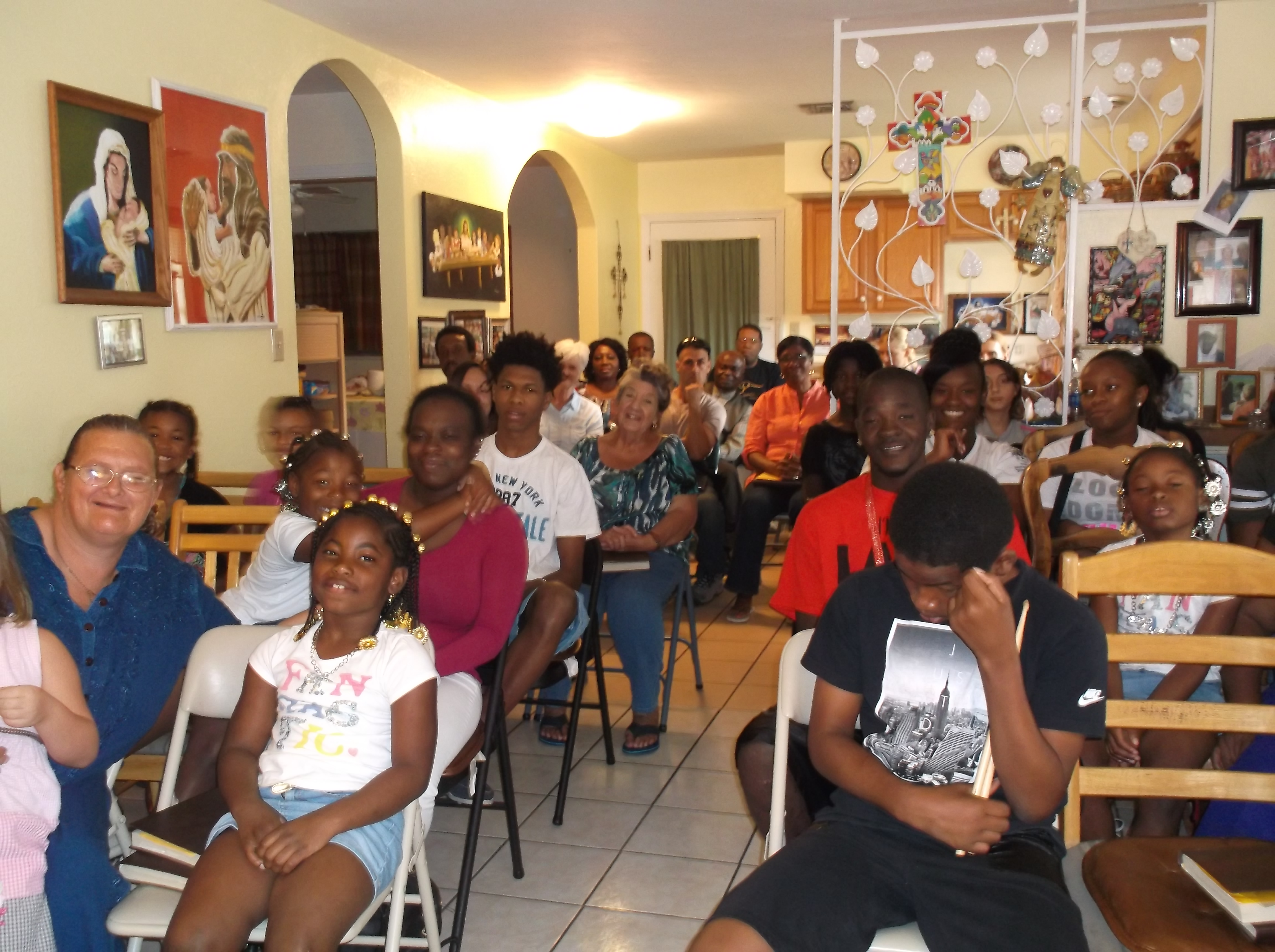
    Below Pastor Judy Beaumont and I with our God Shepherd Community Dec 2015

    DSCF1437

    DSCF1077

    Pastor Judy Beaumont and I with Rev. Gabriella Velardi Ward, Pastor of the St. Praxedis Inclusive Catholic Community in New York and Rvda. Marina Teresa Sanchez Mejia of Cali, Colombia who is celebrating her second year of Priestly Ordination, as of January 17,2014.  Felicidades Rvda. Marina Teresa y Rvda. Judy Beaumont en el aniversario de sus ordenaciones presbiteral de 17 de enero, 2014 y 21 de enero, 2012. Amor y Bendiciones!  


  • Today This is Fulfilled: A RC Women Priest Homily for the 3rd Sunday in Ordinary Time, Jan 24, 2016


    The readings for Sunday issue a call and remind us of how precious God’s Law and God’s word (Holy Scriptures) are. They show us a Hebrew people trying to preserve and fulfill God’s holy Law, reinstating and teaching the precious Law when the people of Israel are finally out of exile. The books of Nehemiah, the governor of Judah who depended upon God and rebuilt the walls of Jerusalem, and Ezra, the Prophet who taught the people the Mosaic Law and codified it in about 464-423, (BCE-Before the Common Era) are thought to be one book divided.  Together they tell the story of a faithful remnant of Jews restoring the Mosaic Law to God’s people. Psalm 19, the responsorial Psalm tells us that the words of our God are spirit and life, and the Ordinances just, giving wisdom to the simple and those who seek understanding.  The Scriptures, written, and taught are life-giving-often through them we are called to serve. We see Jesus beginning his teaching and preaching in the Temple in Nazareth as he vows himself to be the fulfillment of the Law and the Prophets-to live and embody the Messianic prophecy of Isaiah and the essence of the Law that mandated good news to the poor, liberty to the captives, recovery of sight to the blind, and a year of jubilee in which all debtors are forgiven their debts and can start over again.  In Sunday’s Gospel (Luke 1:1-4 and 4:14-21) Jesus is reading the Scrolls that he has been given in the Temple in Nazareth and he is reading Isaiah 61:1-2 and 58:6.

    (Some scholars say that probably Jesus could not read, but quoted this from memory.  This speculation is a distraction from the meaning in the text and other scholars clearly see Jesus as reading from the Scrolls in the synagogue as was the custom.   Jesus was the son of a tradesman who also had the trade of carpenter. Mary, his mother was thought by some in Catholic tradition to have been a temple Servant where she would have heard and learned the Scriptures. (taylormarshall.com/2011/12did-jewish-temple-virgins-exist-and–was-Mary-a temple-virgin.html.) Jesus spoke with authority in the Temple and amazed the rabbis at the age of twelve (Luke 2: 47, 52)).  But read or recited, Jesus embodied the fullness of the Law and Prophets.  Jesus’ call from his Abba God was to fully embody the Law of Compassion and Justice-to preach good news to the poor. Is this not our call too?

    In Luke 4:14-21, Jesus announces his call, his ministry and his purpose: to preach the Good News to the poor and least powerful while opening the eyes of the blind. I had a career dedicated to service to the poor as a social worker and Professor of Social Work. But In 1981 and 1982 I wrestled with what God was asking of me. I was an Associate Professor at NYU School of Social Work. I lived in NYU housing and crossed Washington Square Park every day to teach my classes on Washington Square.  But  inevitably I stopped along the way to talk with the many homeless individuals including women, who slept in the Park. My heart was moved, my soul was stirred, my spirit was restless and I spent many a night wrestling with the Scriptures and with God. One night in 1982 The Isaiah 61 passage and Luke 4 spoke to me in a way that I understood as God’s call to serve the homeless. With much excitement I brought my Faculty friends together and shared my hope that we could “do something” about homelessness.  We focused primarily on homeless women and the plan entailed the involvement of the NYC Department of Human Resources Administration on one level and my direct practice in women’s shelters on another level. It was this direct practice level that affirmed my call. I offered individual counseling and services and group counseling and heard the life stories of homeless women until I understood who “the homeless women” were-quite a diverse group. But when I went in the mornings the physically sicker women were still in bed, and they were clutching Bibles and rosaries. As I approached them they asked me to pray with them. I did and I read Scriptures with them and sometimes I sang hymns with them. I used all my social work skills as did my students and colleagues, but what God wanted from me was a return to faith and to preach good news to the poor and I could only do this by renewing and sharing my faith. I did, weeping tears of joy, and this began the realization of my call to serve the homeless that became lifelong, culminated in my ordination as a Roman Catholic woman Priest who would serve the poor directly and in my current Good Shepherd Ministry and Inclusive Catholic Community with co-Pastor Judy Beaumont. Through the words of Isaiah, the Holy Spirit called me even as Jesus was called. My life was totally changed, turned around. How precious are the Scriptures and our access to these sacred words.

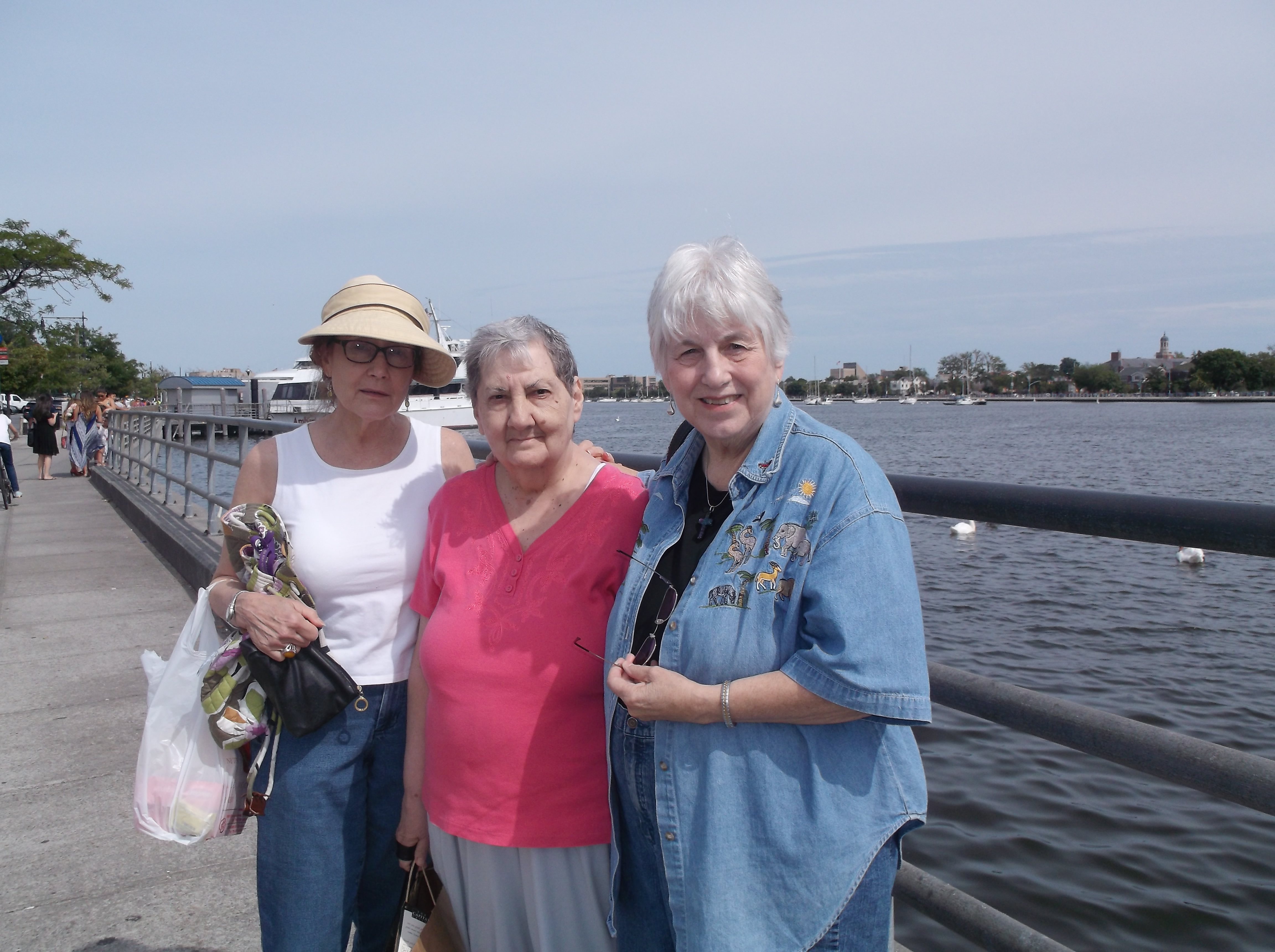
    In the middle of the picture below is Laura whom I first met in the East 3rd Street Women’s Shelter in 1982. The picture was taken last year and Laura continues to be my dear friend. On her other side is Danielle who shared in my ministry with the homeless and my life in the 70’s and early 80’s. We are enjoying a visit to Sheepshead Bay in Brooklyn as three old friends. Judy Beaumont took the picture and is now another old friend for Laura.  Laura’s story is a bit different as she is a traditional and devout Orthodox Jew, but she was alone and without resources or support after the deaths of her parents and the loss of an elderly woman she cared for. She was understandably depressed,anxious and  terrified of leaving the Shelter and we worked hard an reconnecting her to her world and to a degree of autonomy. She eventually moved into a residence for people with such problems and has become a blessing there for so many others over the years.  When people are discharged from hospitals and prisons with no clothes, Laura’s Boutique clothes them for free and her friendship mentors them. Hers is a life of mitzvot-selfless giving according to the Law that is a blessing to her and others. They know that she was where they are and they take heart.  

    DSCF0680

    Imagine living your life in exile, in a land that is not yours and not being able to practice the customs of your own land and the religion you love above all.  Imagine being forbidden to read the Scriptures or even hear them, and to worship God in the way of your people, in the way that you know and love. This was the plight of the Jewish people in exile for hundreds of years. In the reading from Nehemiah (Neh 8:2-4a, 5-6,8-10) we see a people just out of exile struggling to reestablish their own precious understanding of God, their religion, their Mosaic Law, once again. We see the people weeping to hear their own Scriptures read to them by Ezra. The Scriptures were “interpreted” by the prophet Ezra, that is translated from Hebrew to Aramaic so the people could understand. And, the people wept for joy because they could finally hear and understand. This, to me, is the essence of good preaching and teaching, to put the words of God out to all, in the language of the people, in the language of their experiences as well, so they can understand.

    I also imagine that some refugees and immigrants feel this way in a strange land-that their religious beliefs and practices are not welcome and should be hidden, even if it was their choice to migrate. But especially if there were no choices and if there was no religious freedom, people long to worship as they did in their own homelands. I know some devout Muslims even here in Florida who do not attend the Mosque so as not to bring discrimination down on their heads and the heads of their children. This happened after 9/11 but before the current terrorism of Isil. They practiced their religion and prayed as a family but did not feel comfortable at their place of worship. And now the discrimination against Muslims is so much stronger that even a Presidential candidate slurs and condemns a whole group and remains popular with a certain segment of the American people. I imagine if there were truly freedom of religion and freedom from oppression in all of America, some people would weep for Joy! How many levels of “to let the oppressed go free” are relevant to those of us who love the Law and love the Gospel!  Oppressed religious minorities are among those that the Mosaic Law and the Gospel might set free, and Jesus came to do just this.

    The reading from the letter of Paul to the Corinthians (1 Cor 12;12-30) establishes that we are all parts of the one body of Christ and that all parts are equal though quite different. We are all given unique and varying gifts to spread the Gospel, the words of God. If one part of the body suffers, all suffer, if one is honored, all share its joy. The likeliness of physical parts of the body to the body of Christ and even to all of God’s people is a good one-when my toe hurts (with arthritis) my whole body hurts. When any part of God’s people are hurt and not heard, be they religious minorities or sexual minorities, people of color or people of different lands, languages and cultures, all of us suffer.  (Those in the Abramic tradition have so much in common it is sad to always dwell on the differences).  We each have gifts to share so that the Law of Justice and Compassion can be shared, especially with the poorest and most disenfranchised among us.

    With the help of God’s Holy Spirit, the Spirit of Wisdom, Sofia, Jesus had a special call and mission to fulfill. Both Matthew and Luke see Jesus as the Messianic fulfillment-see Matt. 11:4-6 and compare to this Gospel (Luke 4:14-21). In both Gospels Jesus is saying that he has come to fulfill and is fulfilling the Law and prophets that preach good news to the poor. He is the One who is expected. In the Gospel of Mark (1: 14) we also see that Jesus went about in Galilee proclaiming the Kingdom of God: “the time is fulfilled, and the kingdom of God has come near, repent and believe in the good news…”  Jesus came to preach the good news, and to embody it.  But what he was expected to do, he expects US to do. We are to preach Good News to the poor that will include them being poor no more as that is the essence of compassion, justice and mercy. We are not to say to the hungry and thirsty, be filled, go find water, but we are to give them food and a drink of water and a way to getting these basic rights. We are to act to change social structures that are victimizing the poor and those who are disenfranchised. In Fort Myers there is finally a statute that states people do not have to list felonies on job applications, for how will they ever pick themselves up if they are denied jobs? Certainly some employers will still do background checks, but hopefully a few more people will get a chance to work if they do not have to list past felonies. This is to preach liberty to the captives in a tangible way.

    We are to share in the Mission Jesus outlines at the beginning of his Ministry in Luke 4 as the Spirit of the Lord is upon him. God’s Holy Spirit still rests on us and speaks today and it reminds us of the sacred Scriptures and the commands of the Law and of the prophets: we too are to bring glad tidings to the poor and to everyone!


    Rev. Dr. Judy Lee, RCWP

    Co-Pastor Good shepherd Inclusive Catholic Community in Fort Myers, Florida

    Listening to the Word at Good Shepherd Inclusive Catholic CommunityDSCF1227

  • Praying with Dr. Martin Luther King, Jr. On His Day

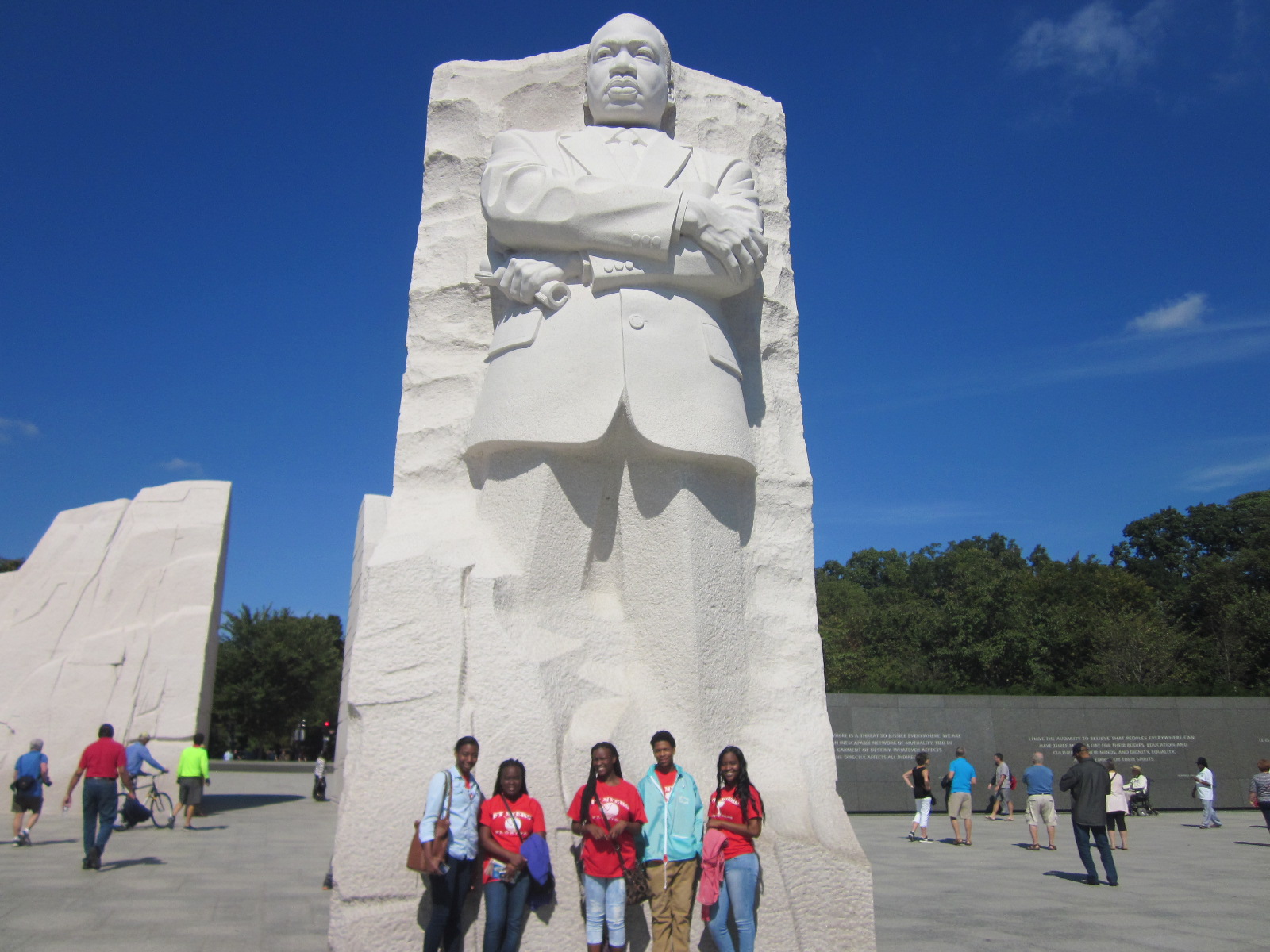
    Happy Birthday, Dr. King! Born on 1/15/29 and killed on April 4, 1968 while working for justice in the midst of a garbage collectors strike, where he fought for the poor of all races as well as for justice for African Americans long denied justice. In the USA we celebrate his life and work today and the kids are delighted to be off from school for this holiday . I like to add his name next to St. Martin De Porres in the lexicon of Saints. As a Christian, a Roman Catholic and a Priest I believe in Saints and their powers to pray for us. But I think that there are countless saints who have never been canonized by the church nor are they likely to be. Dr. Martin Luther King, Jr. is one of my saints, along with Dorothy Day. Real people who struggled with all of the levels and imperfections of being human including love and sexuality and self discipline and mostly with despair-and hope. Real people who lived the Gospel, witnessed  justice and human compassion that they dreamed about and gave inspirational leadership to the cause of equality and justice, no matter what the costs. Like Jesus, King was killed for what he did for love and justice and for what he believed and dreamed. Like Jesus, King’s life changed the world. And, like Jesus he rises again in the living embodiments of his dream.

    We celebrated the life and work of Dr. King along with Jesus’”First Miracle” of changing water into wine, on Sunday. Jesus made a statement that announced a new way to do what is pleasing to God when he filled the six huge ceremonial water purification vessels with wine. Not only did he keep the wedding party going and save face for the host whose wine ran out, he made the symbolic statement that legalisms are not as important as the essence of the Law – the abundant loving kindness and merciful justice of God and our responsibilities for those who are oppressed and poor, and to everyone.

    As I looked around at our congregation, I was pleased to see some young people who were working hard to live the dream that Dr. King had, who were working hard at college and High School, and at earlier levels of education who were open to befriending people of other groups and joining with them to pursue justice, going outside of their comfort zones.  And, alas, this was not true for all, not yet, some are not trustful outside their own very small group,  remain self centered and not community centered, and are also eager to pay back for harms done real and imagined. Hope is needed to see them progress-to progress as Christians and as human beings. Similarly, what wonderful adults we have who have crossed many mountains to become one loving church with a passion for justice. And yet, even among the adults there are some who are works in progress in Christian unity. What moved me most about King was his ability to dream and to hope when things were still difficult.

    In his Stride to Freedom,1958 King spoke against retaliation and a response of bitterness and hatred to very real injustices. He spoke of the redemptive power of community and of  love, not sentimental love but the refusal to hate, understanding and redemptive goodwill. He spoke about “having sense enough and morality enough to cut off the chain of hate…this can only be done by projecting the ethic of love to the center of our lives. ” He quoted Booker T Washington who said “let no man pull you so low as to make you hate him”. “When he pulls you that low he brings you to the point of working against community…Love (agape) is the only cement that can hold this broken community together. When I am commanded to love, I am commanded to restore community, to resist injustice, and to meet the needs of my brothers”.   ( pp. 85-88).

    King’s dream came from his deep faith. In his famous I Have A Dream speech of 8/28/1963 King quoted from the prophet Isaiah (Chapter 40 verses 4 and 5):

    I have a dream that one day every valley shall be exalted, every hill and mountain shall be made low, the rough places will be made plain, and the crooked places will be made straight, and the glory of the Lord shall be revealed and all flesh shall see it together”. This is our hope, and this is the faith that I go back to the south with. With this faith, we will be able to hew out of the mountain of despair a stone of hope. With this faith, we will be able to transform the jangling discords of our nation into a beautiful symphony of brotherhood….”  

    Well, it is over 48 years since that wonderful speech  and “we have come a long way, baby”  but not nearly far enough as the inequities for the poor and especially African Americans and all minorities of color as well as women, the LGBT community and other minorities stand out in stark relief.  So the despair is often still here, but the stone of hope remains strong for those who possess it. As to despair King said in his Dream… speech:

    “Let us not wallow in the valley of despair, I say to you today my friends. …even though we face the difficulties of today and tomorrow I still have a dream”. His dream was that together we can build the beloved community(his term) of love and justice for all. Let us dare to continue to build that dream and that beloved community.

    We now present a lexicon of King’s life and work from the Seattle Times, and then a commentary by Sr. Joan Chittister. together these are a beautiful tribute to the life of Dr. Martin Luther King ,Jr. and a profound challenge to us all.

    Rev. Dr. Judy Lee, RCWP

    CO-Pastor The Good Shepherd Inclusive Catholic Community in Fort Myers, Florida

    From The Seattle Times:

    Martin Luther King Jr. lived an extraordinary life. At 33, he was pressing the case of civil rights with President John Kennedy. At 34, he galvanized the nation with his “I Have a Dream” speech. At 35, he won the Nobel Peace Prize. At 39, he was assassinated, but he left a legacy of hope and inspiration that continues today.

    In 1996, The Seattle Times created a web page in tribute to Dr. King, collecting the story of his life, photographs of the times in which he lived, and perspectives from politicians, activists, and ordinary citizens on his tremendous legacy. Now, 20 years later, we have created an updated home for that tribute. We hope it will continue to be useful for readers in the years to come.

    Biography

    King, and his policy of nonviolence, was the dominant force in the civil-rights movement

    His words

    A selection of King’s speeches, sermons and letters, plus his “I Have a Dream” speech

    Galleries

    Take a look back at King’s life through three collections of photographs

    “I have a dream that my four little children will one day live in a nation where they will not be judged by the color of their skin, but by the content of their character.”

    Martin Luther King Jr., Lincoln Memorial, Washington D.C., August 28, 1963

    Local perspectives

    Viewpoints on King’s legacy, both past and present

    Timeline

    See how key events in King’s life connect with those of the civil-rights movement

    This is by Sr. Joan Chittister from Bridget Marys blog:

    Monday, January 18, 2016

    “Martin Luther King, Jr. legacy” by Joan Chittister

    Martin Luther King, Jr. legacy
    Martin Luther King was assassinated at the age of thirty-nine, young by one standard but far too late to destroy what he had begun, not only in this country but throughout the world.

    King followed a light, saw a star, felt a pulse, was consumed by a vision that few of us ever see. He may have had to grapple with his own inner discipline, but he was deeply and consistently converted from the “ways things are” to the ways of the Will of God for us, and in his concentration on the things of God he converted us all. Though angry, he was also committed to nonviolence. Though depressed, he was also awash in hope. Though struggling with the pressures of sensuality, he was also loving beyond measure. King knew that sin was not as simple as a lack of personal discipline and that sanctity was not as simple as the gauge of personal control.

    King preached, “If a person hasn’t found something they will die for, they aren’t fit to live.” Martin Luther King takes the indifference of all of us and turns it into the stuff of sin. He takes the powerlessness of all of us and turns it into the stuff of strength if we will only pay its price. He casts the shadow of conversion in a new light. Conversion is not so much what we struggle with, perhaps, as it is what we are at our best. If, indeed, as Julian of Norwich says, “Sin is behovable”—necessary, in other words—then Martin Luther King learned his limits so that we could come within the aura of his greatness with confidence and consider it possible for ourselves as well. Martin Luther King’s sins became as public as his powerful heart perhaps so that small people like ourselves could feel comfortable in his presence and challenged by his dream. Martin Luther King, Jr. isn’t above any of us. He is simply more committed than most of us.

    King left us four things: the courage to confront evil square on without the hope of being able to ignore it; the courage to confront ourselves square on without the luxury of despair; the courage to love when hate is more satisfying; and the courage to continue to live until death so that others may have life.

    —from A Passion for Life: Fragments of the Face of God by Joan Chittister (Orbis)

    Posted by Bridget Mary Meehan at 8:49 AM 

    Thanks be to God for the life of this prophet in our times!

    My spirits are lifted today as I read his words and Chittister’s astute analysis once again.

    Rev. Dr. Judy Lee,RCWP

    DSCF1539

    IMG_0028

    IMG_0085

  • The Best Wine for the Wedding: A RC Woman Priest’s Homily for Jan 17,2016

    The Best Wine For the Wedding: A RC Woman Priest’s Homily for the 2nd Sunday in OT-1/17/16

    God loves God’s people with the passion of a spouse for the beloved, and this IS a transforming love. The readings for today have many meanings but God’s transforming love is the common denominator.  And how thankful I am for this transformation and its possibilities for everyone. If you recall the times of deep love in your life, especially when it was new, or newly reaffirmed   and remember the many ways that your own most powerful love transformed you, you will have a sense of how God works in our lives. I remember being filled with joy and nearly dancing down the street. All of the common sights were made new and I noticed the beauty in everything. Every task was elevated to something important and done with greater care. My energy was uncharacteristically so heightened that people smiled and were lifted in our interactions. Nothing was ordinary, nothing was dull, and nothing was too hard or too simple to do. I was alive and the whole world was alive with me.  I was on fire and setting the world around me on fire. The transformations of love, of being loved and of loving, of reciprocal love-what an untapped power!

    Such transforming love is for lovers, for spouses, for parents of all types (biological, adoptive, foster and others), and it is for teachers and pastors, priests, and preachers and dear friends, it is for community workers of all sorts, including those whose love activates and animates a community. This may be a community of faith, or a community that stands together to make the changes for justice that must be made, even in adversity. This is the love that is prophetic, often charismatic, and strong enough to precipitate change. Dr. Martin Luther King, Jr., whose birthday is celebrated on January 18th and whose dream was to build the beloved community,   was a prophet who was motivated and transformed by such love. The love of his “Precious Lord” motivated King (his favorite hymn was “Precious Lord, take my hand, Lead me on, let me stand….”).  His experience of God’s love was transformed into his love for his African-American people and for all oppressed and poor people. It gave him the courage to inspire others, to  lead a Movement and to die for the dream of justice and equality for all.  In this he followed Jesus, the Precious Lord he loved.

    Who or what do you call “precious” in your life? Partner, spouse, family, friends, co-workers, pets, neighbors, church members?  Or is it the things you love, house, car, jewelry, expensive electronic devices? What is precious to you can transform you-one way or the other.

    The first reading is Isaiah 62:1-5 where God’s love for Jerusalem changes her name from “Forsaken” to “My Delight is in Her” and “Espoused”…. “Your land will be joined with God in wedlock” –“Your Builder will marry you”….  “As the newly married couple rejoice over each other, so will YHWH rejoice over you”. (Various translations, TIB, NIV, NAB, ICEL).  Clearly, in any translation, God’s love transforms completely.  When this love is reciprocal, we rejoice in God and God rejoices in us and we rejoice each other. God’s transformative love is the love of the Beloved Community, where justice and compassion are the order of the day. And we are empowered to be builders with God of this community.

    To do this God gives us many varied gifts (I Corinthians 12: 4-11). God’s Spirit produces a wide variety of gifts and distributes them at will so that we can all help to build the Beloved Community with God. As the Psalm (96: 1-3: 7-10) says “Proclaim God’s marvelous deeds to all the nations.” The Beloved Community, based on Justice, is to be inclusive of all. And the song we sing must be a new song! (PS 96:1).  I often hear our kids say: “That is the same old, same old”. And, no one is listening to “the same old, same old”. But, when we are full of the passion and fire of Love the song IS a new song. And we sing it with energy, joy and conviction.  We are back to the wedding theme, praying that our love with God does not grow old and stale but is kept new, as new as a young couple rejoicing in one another, and like the new wine in the Gospel.

    The Gospel for Sunday, 2nd Sunday in Ordinary Time, (John 2:1-11) is a segway from the special feast days of Christmas, Epiphany and the Baptism to the works of Jesus, the Christ, God’s Beloved, the Anointed One. Accounts of Jesus’ works are called Ordinary Time by the church, though what Jesus does and says is anything but ordinary. Jesus and his Mother Mary and probably his friends and other family members are at a wedding in Cana. It is a joyful time for the community.  But the music will soon stop as the host has run out of wine. This is shameful for the host and will certainly disrupt the celebration. Mary brings this problem to her son, and she expects him to do something about it, instructing the stewards to do whatever he says to do. Jesus has not planned to start his ministry this way (John 2: 4), but he takes the opportunity to show God’s abundant love and, in a passage rich with symbolism, to let the community know that something new is about to happen. The six huge stone water purification jars are standing there in disuse, quite empty.  If people wanted to fulfill washing rituals they would not have been able to do so. Jesus has these huge jars, each holding from 15 to 25 or 30 gallons, filled with water then turns it into wine. Probably a whole town could not consume so much wine-it is wine in great abundance. And it is described as “the best wine”, “the good wine”, “choice, wine” that has been “kept until now”.

    Jesus moves the religious symbolism of the day from purification to abundant love, from a religion based on laws governing everything including when and how to wash to a religion based on God’s abundant love for all. The wedding is an apt metaphor for this, even as it was in Isaiah 62.  On another level, Jesus is the new wine. He has faith that the new wine can be contained in the old vessels, but this is yet to be determined by the response of the people to the Way taught, lived and exemplified by Jesus. Jesus not only saves the host from shame but he brings life to the party. In the context of a wedding party, Jesus invites us to dance with the Beloved. Here’s to the dance! And, here’s to building the Beloved Community with the Beloved! Get on up now!

    Rev. Dr. Judy Lee, RCWP

    Co-Pastor Good Shepherd Inclusive Catholic Community

    http://www.goodshepmin.org

    DSCF0495

    IMG_0022

  • It is time for An Epiphany with Wise Women

    The following is an NCR (National Catholic Reporter) article of January 7,2015 by Sr. Chris Schenk on the possibility of Wise Women among the Magi (Magoi), the outsiders from other lands who sought and found the baby Jesus by following the leading of a star. More important, perhaps is the conclusion that it is time for those who seek the Christ, who seek peace and justice and compassion to find the wisdom of women who have found this Christ and are part of the “newborn church”.

    For some it will be a profound epiphany to find and accept as equals the wisdom of women who serve as birthers of the new kin(g)dom, including Roman Catholic Women Priests. There are now over 210 of us world-wide and we are growing every day. We pray for all who have eyes to see, to see the wholeness of the people of God where any and all who are called and prepared can become priests and midwives of the new creation.

    All  are welcome to the home of the Christ-child! ( Two of our girls at the Good Shepherd Inclusive Catholic Community in Fort Myers, Florida  were The Wise Ones this year).

    DSCF1427

    Love and blessings,

    Pastors-Rev. Dr. Judy Lee,RCWP and Rev. Judith Beaumont, RCWP


    And here is the NCR Article by Chris Schenk:

    An Epiphany with Wise Women?

    79

    Throughout the Christmas season, friends occasionally send me cards, cups and other assorted tchotchkes praising the “three Wise Women.” You have probably seen them: “Three Wise Women would have asked directions, arrived on time, helped deliver the baby, swept the stable, made a casserole and brought practical gifts.”I love this humorous feminist take on a beloved Christmas story.

    But, recently, a renowned authority on the Gospel of Matthew, Dominican Fr. Benedict Thomas Viviano, believes it entirely possible that women could have been among the Magi portrayed in the Matthean birth narrative. Viviano is professor emeritus at the University of Fribourg, Switzerland. He also wrote the commentary on Matthew in The New Jerome Biblical Commentary.

    Matthew is the only Gospel that says anything at all about Magi. You may be surprised to learn that this Gospel does not ascribe number, gender or royal status to the Wise Ones from the East. The traditional number three was deduced from the three gifts of gold, frankincense and myrrh, and the idea that the Magi were kings didn’t appear until the fifth century. Matthew’s use of the Greek masculine plural magoi for magi can be used inclusively, just as the English word “men” often includes women.

    But there is more to Viviano’s wonderfully provocative claim than grammar. Matthew’s Gospel was meant for a Jewish audience. Viviano specializes in examining the book of Matthew in light of its literary connections to the Hebrew Bible (Old Testament). It is upon this analysis that he bases his arguments about female magoi.

    According to Viviano, “The main reason to think of the presence of one or more women among the magi is the background story of the queen of Sheba, with her quest for Israelite royal wisdom, her reverent awe, and her three gifts fit for a king.”

    The first book of Kings, Chapter 10:1-29, narrates the visit of the queen to King Solomon with gifts of gold and spices such as myrrh and frankincense.

    Viviano believes viewing the Solomon-Sheba background as a close biblical parallel to the Magi story opens up some “previously neglected possibilities” such as the “wisdom and feminine aspects of the narrative.”

    He points to the Israelite tradition of personifying wisdom as female (Proverbs 8:22-30, 9:1-6 and Sirach 24) and notes that for Matthew, Jesus embodies wisdom (Matthew 11:19, 25-30).

    Even more compelling to me is that in the Middle East it would have been inconceivable for men to be in the presence of a woman without the presence of other women. Joseph is conspicuously absent when the Magi visit. This is surprising, since Matthew’s infancy account normally narrates events from the point of view of Joseph. (In Luke’s account, Mary is more prominent).

    The phrase “the child and his mother” is used five times in the Magi-flight-into-Egypt narrative (Matthew 2:11, 13, 14, 19, 21). For Viviano, “The presence of Jesus’ mother Mary is an explicit statement of the presence of a woman at the time of the magi’s visit. It is a question of attending to the feminine resonances in the text.”

    Scholars tell us that the magoi were a caste associated with the interpretation of dreams, astrology, Zoroastrianism and magic. In support of Viviano’s thesis, Zoroastrianism allowed women to serve as priests and in ancient Persia there were female astronomers and rulers.

    According to the late Sulpician Fr. Raymond E. Brown, an acclaimed biblical scholar, scholars believe the magoi probably hailed from one of three places: Persia (present day Iran) because term magoi was originally associated with Persians; Babylon (Iraq) because Babylonians were interested in astronomy and astrology and there was a large Jewish colony there; or Arabia because of the gifts of gold and frankincense associated with Sheba.

    But what can be said about the historicity of Matthew’s Magi story?

    I think Viviano’s discussion in The New Jerome Biblical Commentary has it right. While the Matthean infancy narrative has several likely historical elements in common with Luke’s account (Jesus was of the tribe of Judah, born in Bethlehem and raised in Nazareth), “there are also some legendary elements in Matthew 1 and 2” that Brown identifies as a “genre of infancy narratives of famous men.”

    In the ancient world, it was common to retrospectively ascribe unusual signs in the heavens (a rising star) and events on earth (portents and predictions by wisdom figures) to the birth of a new and powerful ruler.

    Brown also points to the historical improbability that King Herod would have difficulty locating the infant Jesus in a town just 5 miles away from Jerusalem when, according to the legend, a bright star allowed the Magi to find it with ease.

    So what is the likelihood that female Magi were at the manger when it seems improbable that male Magi were ever there at all?

    Enter the exquisite Jewish concept of Midrash.

    A Midrash is a creative interpretation of the Old Testament, often used for homiletic purposes, that frequently employs storytelling. It is a sort of lectio divina — theological reflection by which believers discover the personal and communal meaning of Scripture.

    For Viviano, even though Matthew 1-2 is not a Midrash in the strict sense (since it is not about the Old Testament), it nevertheless “employs midrashic techniques of exposition” to interpret the person of Jesus. In his masterly work The Birth of the Messiah, Brown notes, “But if midrash is understood as the popular and imaginative exposition of the Scriptures for faith and piety, then the term may quite appropriately be applied to the way the infancy narratives were interpreted and enlivened in subsequent Christianity.”

    And so it is that we soon find three royal (male) kings named Caspar, Balthasar and Melchior. Caspar is portrayed as black to represent all the diversity of the Eastern Gentile world. Eventually, midrashic reflection led to the three gifts being viewed as symbols for different aspects of Christian life: gold for virtue, incense for prayer and myrrh for suffering.

    Given the rich history of midrashic elements associated with the Epiphany, we are therefore not at all amiss in reflecting that the Magi could also have included wise women.

    For most, the overriding message of Matthew’s Magi narrative is that learned, wise foreigners — the ultimate “outsiders” for his Jewish-Christian audience — came to pay homage to a newborn ruler, Jesus the Christ, whose spiritual power and wisdom surpassed their own.

    Women’s diverse leadership, so rich in spiritual giftedness, is often viewed as “foreign” by male leaders in the Catholic church.

    I pray our brothers will soon celebrate a new kind of Epiphany — one in which wise women’s rich gifts of virtue, prayer and suffering leadership are accepted equally and graciously in the newborn body of Christ.

    [A Sister of St. Joseph, Sr. Christine Schenk served urban families for 18 years as a nurse midwife before co-founding FutureChurch, where she served for 23 years. She holds master’s degrees in nursing and theology.]

  • Welcome All to the Place of Epiphany: Reflections on the Feast of the Epiphany

    Welcome All To The Place of Epiphany

     At this Feast of the Epiphany we celebrate the full inclusion of people of other religions and countries to the discovery of Jesus, the Christ.  Significantly, these seekers from another place and religion who saw an amazingly bright star in the darkness and followed it to the baby Jesus may well have been from Persia, Iran today.  They sought, they followed, they found and they brought their gifts. The hunger for something more of God, the willingness to leave the familiar and comfortable, to travel in the darkness, to see with new light, to understand anew and thereby find, and to respond by the gift of one’s treasures to God is a road that we are all invited to take. May it lead us to God, may it lead us to the Christ-child.  And may we welcome all people from everywhere and in all states of knowledge and being to the Christ, leaving no one out.

    Here we present some insights from other preachers and theologians- from an African American woman theologian, from a Roman Catholic woman priest, from a contemporary Protestant preacher and a time honored theologian,that add to our epiphany this day.

    As I look at my congregation on Sunday-all colors, all races, from several countries speaking several languages, very poor and financially comfortable, young and old I see the richness of Epiphany before me-for I discover in each the face of Christ.

    Let us look up and look around and open our eyes.

    Rev. Dr. Judy Lee, RCWP

    DSCF1548DSCF1437

    From African American Theologian Bernice Reagon Johnson

    The Feast of the Epiphany, as this Sunday is sometimes called in Christendom, marks the last of the Twelve Days of Christmas. It is the significant celebration of the visit of the Magi to the Manger Messiah. Epiphany retells to us the story of the adoration and welcome from foreign delegations to Bethlehem’s stable and the witness of the corral of livestock, shepherds, and an angelic retinue in that crisp, cold, quiet stillness of the night where the Prince of Peace and infant King of Kings lay.

    In the Classical sense an epiphany, a concept derived from the ancient Greek word   (epiphaneia), meaning a “manifestation” or “striking appearance,” is the sudden realization, understanding, or comprehension of the larger essence or meaning of something. This term is often used in either a philosophical or literal sense to signify that the claimant has “found the last piece of the puzzle and now sees the whole picture.” It is indicative of new information or a new experience, often insignificant by itself, that illuminates a deeper numinous foundational frame of reference. The Epiphanic Juncture is the place where a luminous light is cast upon deep darkness and that which was enigmatic is now startlingly clear.

    Such was the occasion of both the visit of those whose wisdom had given them the insight to know that this happening in the backstretches of Judea was no insignificant occurrence….”

    FROM ROMAN CATHOLIC WOMAN PRIEST REV BEVERLY BINGLE:

    Jesus of Nazareth is indeed our epiphany,

    opening our eyes and hearts

    to what is deepest in the life of all things,
    the sacredness of everything that is.
    He reveals the hidden ground of our being.
    It’s an epiphany!
    The manifestation of God in human form!….
    __________________________________________
    Matthew’s gospel gives us snapshots
    of two kinds of relationships in our human world:
    there is the wrong relationship,
    revealed in Herod’s fear and malicious intent,
    and there is the right relationship,
    revealed in the open searching of the magi,
    their honest questioning,
    their recognition of the graciousness of God
    in the newborn child,
    and the unquestioning welcome
    extended to these strangers from the East
    by the family in the stable.
    __________________________________________
    The news these days is pretty much awful—
    pain and suffering,
    violence and mayhem,
    tragedy and catastrophe.
    If I thought that was all there was,
    I could conclude that the world is nothing but evil.
    And I would be wrong.
    The fact is that the TV and radio and newspaper stories
    are news
    because they are the exception.
    The rule is love, peace, and harmony.
    People get along.
    Goodness is the norm.
    Love and peace are unexceptional—
    the way things are, and that’s not news.
    __________________________________________
    Violet had been in a pretty tough situation
    when she walked into Claver House five months ago,
    unkempt and hungry and wary and sad…
    and pregnant.
    One of the volunteers sat down
    and talked with her as she was eating
    and asked the right questions:
    any doctor for pre-natal care?
    any resources to get baby stuff?
    family and friends to help along the way?
    And she was given phone numbers and contact names
    for Heartbeat, and a shelter, and the hours at the food pantry.
    The change was gradual over the next few months—
    clean clothes, clean hair, the beginnings of trust.
    She came in regularly, began to smile and talk with folks.
    On Christmas Eve morning, Vi showed up
    with her tiny baby daughter, three weeks old.
    I watched as this rough-and-tumble, down-and-out gathering
    of women and men surrounded mother and child,
    fussing over them, gentle and kind.
    I saw the good news come alive once again,
    another manifestation of God-with-us and in us and among us.
    It is good news, and it’s everywhere,
    but it doesn’t make headlines because it’s normal.
    __________________________________________
    Depravity is not what we find in the very depth of our being.
    We’re not sinful in our basic nature.
    We come forth on this earth as part of the gracious mystery of God,
    sparking forth from all eternity.
    We are created in relationship.
    When we separate ourselves from other people or from nature,
    we separate ourselves from God.
    When we act in right relationship,
    we show what we are made of.
    We manifest God in the world.
    We—you, me, each of us—is an epiphany,
    a revelation of God to one another and to the world.


    Holy Spirit Catholic Community
    Saturdays at 4:30 p.m.
    Sundays at 5:30 p.m.
    at 3925 West Central Avenue (Washington Church)

    www.holyspirittoledo.org

    Rev. Dr. Bev Bingle, Pastor
    Mailing address: 3156 Doyle Street, Toledo, OH 43608-2006


    From Bruce Epperly

    “….The Adventurous Lectionary – Epiphany Sunday – January 3, 2016
    Matthew 2:1-15

    The Second Sunday of Christmas will also be celebrated as Epiphany Sunday …. we will celebrate God’s light through gospel music and communion. In a time of political xenophobia, we will remember that the magi most likely came from Iran, and we will look for God’s presence in unexpected places and among unexpected people – the homeless, Syrian refugees, and undocumented immigrants….


    Today, certain politicians would bar Muslims from entering our nation. Native born terrorists deface Muslim houses of worship. This passage doesn’t prescribe immigration law or public policy, or privilege liberal or conservative ideologies, but it does affirm that God is present in other faith traditions, even those from which our enemies arise.

    The magi were guided by a star. However we understand the movements of the stars – astronomically or astrologically – there is congruence, the scripture suggests, between heaven and earth, between the non-human and human worlds. God’s word and wisdom – Logos and Sophia – are the creative principles of all things, guiding the stars and our souls to wholeness. We live in a revelatory universe, where the stars above and the spirit within witness to God’s loving providence. A child’s cry echoes God’s voice; a camel bearing the magi presents divine gifts; and foreigners receive a revelation…

    The magi “left for their country by another road.” Following God may mean changing direction or choosing a new route for our lives. Sometimes this road presents new vistas and fills us with excitement. God’s star may take us to strange places, and yet when God changes our direction, God gives us directions for the journey.

    Other times, we recognize that we will be lost if we fail to take another route, or change our lives. Transformation occurs as a result of divine lure, it also occurs through our recognition that we must change or die. The magi’s careful planning needed to be revised in light of God’s new vision presented to them….

    The flight of the holy family is a reminder that forced immigration – political or economic – is also part of God’s revelation to humankind. While we need to be a “nation of laws,” we should greet immigrant children as Christ-children rather than alien invaders, and we should welcome them with clothes and meals, not placards and invectives. They too are following stars and are inspired by dreams – of survival, a better life for their children, and peaceful communities. The journey of the magi also reminds us that revelation is given to – and can come from – persons beyond our ethnic and religious boundaries. God is generous with revelation and salvation….”

    And for our Meditation a Poem by Lutheran theologian: Walter Brueggemann

    Epiphany

    On Epiphany day,
    we are still the people walking.
    We are still people in the dark,
    and the darkness looms large around us,
    beset as we are by fear,
    anxiety,
    brutality,
    violence,
    loss —
    a dozen alienations that we cannot manage.

    We are — we could be — people of your light.
    So we pray for the light of your glorious presence
    as we wait for your appearing;
    we pray for the light of your wondrous grace
    as we exhaust our coping capacity;
    we pray for your gift of newness that
    will override our weariness;
    we pray that we may see and know and hear and trust
    in your good rule.

    That we may have energy, courage, and freedom to enact
    your rule through the demands of this day.
    We submit our day to you and to your rule, with deep joy and high hope.

    Now a professor emeritus of Old Testament studies at Columbia Theological Seminary in Decatur, Georgia, Brueggemann has authored over seventy books. Taken from his Prayers for a Privileged People (Nashville: Abingdon, 2008), p. 163.


    A Blessed Day and New Year of Epiphany! 

    Rev Judy Lee RCWP,

    http://www.goodshepmin.org


  • More of Christmas at Good Shepherd

    We celebrate Christmas over many days at Good Shepherd and in many ways.  It ends for us next Sunday at Epiphany when some of our people celebrate with gifts for the giving of the Wise Persons also known as The Three Kings, (El Dia de los Tres Reyes) to the baby Jesus.

    This is our visit to a Central American family that that we have known for many years.

    DSCF1548

    We are happy to continue to wish them Feliz Navidad y Prospero Ano Nuevo, and to serve this family, a family whose grandparents and parents started as migrant workers  that now has two girls in College. Carmen, with Pastor Judy B., is in her Junior year.

    Christmas week , as a gift and enrichment for the people we serve, we took twenty-four children and adults to see a Christmas production of the Velveteen Rabbit at the Broadway Palm Dinner Theater. While some have been to a show and dinner before, for others it was a first time. Although it was technically Children’s Theater everyone present enjoyed it. Our Grandma, three older ladies, our teens and our young children all enjoyed this creative effort. “When you are loved you are real” was the message they thought about and wondered about afterward. DSCF1513

    DSCF1539.JPG


    What a wonderful time together!  Thanks to all our donors who make trips like this possible. A blessed New Year to all!

    Love and blessings,

    Rev. Dr. Judy Lee, RCWP, and Rev. Judy Beaumont, RCWP

    Co-Pastors Good Shepherd Inclusive Catholic Community in Fort Myers

    DSCF1514

  • Homilies and Reflection on the Feast of the Holy Family: 12/27/15

    Today is the celebration of the Holy Family of Jesus, and we celebrate all families as holy as well. The Holy Family was included in my last homily at the Good Shepherd. Last Sunday I looked around our church of The Good Shepherd Inclusive Catholic Community, a poor church of and with the poor. My eyes rested on the  families and individuals gathered with eager faces, some lined and worn, some smiling and joyful, to celebrate closing advent with love and Christmas with the coming of God to earth in a new way, as one of us, starting off as we all do as a helpless baby dependent on parents and caretakers for everything. My eyes rested on Linda who has seven children, five still at home with herself and her husband, Joe, father of the 13 year old twins, her last children. A few weeks ago both Linda and Joe were hospitalized at the same time in different hospitals with life threatening illness. Both are recovering now, thank God and much prayer and family and church support. Linda has been battling life altering illness for the last several months, being hospitalized again and again. And yet her one focus is her family, making sure they are housed and well and doing well at school and work and coming to church. One way or the other they never miss a Sunday of worship.

    And my eyes rested on Grandma Harmon, Linda’s mother who has faithfully brought over 23 of the grandchildren to church with her ranging in age from 2 to 22.  Linda’s brother’s children rest their heads on Grandma’s lap and her sister’s children sit on the laps of their older cousins in our crowded space.  I looked at them gently in my homily about God’s love manifest in human form on Christmas and said that they are like the holy family of the baby and child Jesus, loving one another and leading one another to God and God’s house, no matter what. I said that even as I baptized Mrs. Harmon and Linda, they also led many members of the family to baptism and worshiping our loving God here with us.  I looked at 13 year old Elizabeth whose parents do not come but who brings her two little brothers regularly. I said that even as Jesus liked to go to the Temple, his church, her love of coming here and bringing her brothers tells who she is , a child of God.  I smiled at Pearl and Dr. Joe Cudjoe whose daughters were raised in the church and are now studying medicine. Efe Jane, their younger daughter joined her mother in leading our youth and children in the Sunday School for several years. My eyes moved to Lili, an Italian immigrant who works so hard to house and care for her family. Her 14 year old daughter ,Marcella, sat next to her,  participating in the holy Mass. (We also baptized Marcella and her older sister Maria). I said they are another holy family, and so is everyone here as we are all parts of families and if we do not have our blood family present we do have our spiritual family, this church. The church is a holy family. We are all ages, races, languages, colors and states of being but we are God’s family. There were many “Amens.” During our prayer, Our church Elder, Mr. Gary who was homeless and estranged from his family when we met him, thanked God for his family (that he now leads to Christ) and for his home.  He prayed for all those who are homeless and feel alone that they may find a home inside and especially a home with God, and with us as a church family. We joined in prayer that all children may have loving families,biological, foster, other mother,adoptive and church families.

    Today, I read the texts for this Sunday- in the First Samuel 1 reading Hannah and Elkanah are thankful for the unexpected birth of their first son in their older years, Samuel. Hannah says to God “I asked YHWH for this boy and God granted my request. Now I give him to YHWH, for his entire life is given to YHWH (Verses 27-28 TIB).” I am so thankful for the parents who like Hannah and Elkanah and Mary and Joseph and Linda and Jolinda Harmon, and Pearl and Joe Cudjoe and all of the others who have dedicated their children to God. It was my grandmother Ella and my mother, Anne, who did this for me early in life.  In today’s Gospel reading Luke 2:41-52 we read of the time Jesus stayed behind in the Temple when he was 12, after the Passover Feast in Jerusalem-to be about his Parent, God’s, ( in Aramaic,Abwoon’s -Birther God’s)  business. And we also remember when Mary and Joseph dedicated Jesus to God as their firstborn son in Jewish custom, and the joy of the prophetess Anna and elderly Simeon at seeing the “light of the revelation to the Gentiles and the glory of your people Israel (Luke 2: 20-39)”. And now we too are all God’s children: (I John 3:1-2;21-24) “See what Love Abba God has lavished on us in letting us be called God’s children! Yet,that in fact is what we are!”

    Let us rejoice this day that we are part of the holy Family of God! Amen.

    rev. Dr. Judy Lee, RCWP

    Co-Pastor Good Shepherd Inclusive Catholic Community

    http://www.goodshepmin.org

    DSCF1432

    Our  Good Shepherd Church Family

    IMG_0004

    And now we present Pope Francis Homily on the Holy Family:

    (Vatican Radio) Pope Francis delivered the homily at Mass in St. Peter’s Basilica on Sunday morning – the Feast of the Holy Family of Nazareth and the Jubilee for Families in the context of the Extraordinary Jubilee Year of Mercy currently underway in Rome and around the world. Below, please find the official English translation of the Holy Father’s remarks, including his extemporaneous additions

    **************************************************

    Homily of His Holiness Pope Francis

    Feast of the Holy Family of Jesus, Mary and Joseph

    27 December 2015

    The biblical readings which we just heard presented us with the image of two families on pilgrimage to the house of God.  Elkanah and Hannah bring their son Samuel to the Temple of Shiloh and consecrate him to the Lord (cf. 1 Sam1:20-22, 24-28).  In the same way, Joseph and Mary, in the company of Jesus, go as pilgrims to Jerusalem for the feast of Passover (cf. Lk 2:41-52).

    We often see pilgrims journeying to shrines and places dear to popular piety.  These days, many of them are making their way to the Holy Door opened in all the cathedrals of the world and in many shrines.  But the most beautiful thing which emerges from the word of God today is that the whole family goes on pilgrimage.  Fathers, mothers and children together go to the house of the Lord, in order to sanctify the holy day with prayer.  It is an important teaching, which is meant for our own families as well. Indeed, we could say that family life is a series of pilgrimages, both small and big.

    For example, how comforting it is for us to reflect on Mary and Josephteaching Jesus how to pray!  This is a sort of pilgrimage, the pilgrimage of education in prayer. And it is comforting also to know that throughout the day they would pray together, and then go each Sabbath to the synagogue to listen to readings from the Law and the Prophets, and to praise the Lord with the assembly.  Certainly, during their pilgrimage to Jerusalem, they prayed by singing the Psalm: “I was glad when they said to me, ‘Let us go to the house of the Lord!’  Our feet are standing within your gates, O Jerusalem (122:1-2).

    How important it is for our families to journey together towards a single goal! We know that we have a road to travel together; a road along which we encounter difficulties but also enjoy moments of joy and consolation.  And on this pilgrimage of life we also share in moments of prayer.  What can be more beautiful than for a father and mother to bless their children at the beginning and end of each day, to trace on their forehead the sign of the cross, as they did on the day of their baptism?  Is this not the simplest prayer which parents can offer for their children?  To bless them, that is, to entrust them to the Lord, just like Elkanah and Anna, Joseph and Mary, so that he can be their protection and support throughout the day.  In the same way, it is important for families to join in a brief prayer before meals, in order to thank the Lord for these gifts and to learn how to share what we have received with those in greater need.   These are all little gestures, yet they point to the great formative role played by the family in the pilgrimage of everyday life.

    At the end of that pilgrimage, Jesus returned to Nazareth and was obedient to his parents (cf. Lk 2:51).  This image also contains a beautiful teaching about our families.  A pilgrimage does not end when we arrive at our destination, butwhen we return home and resume our everyday lives, putting into practice the spiritual fruits of our experience.  We know what Jesus did on that occasion.  Instead of returning home with his family, he stayed in Jerusalem, in the Temple, causing great distress to Mary and Joseph who were unable to find him.  For this little “escapade”, Jesus probably had to beg forgiveness of his parents.  The Gospel doesn’t say this, but I believe that we can presume it.  Mary’s question, moreover, contains a certain reproach, revealing the concern and anguish which she and Joseph felt.  Returning home, Jesus surely remained close to them, as a sign of his complete affection and obedience.  Moments like these become part of the pilgrimage of each family; the Lord transforms the moments into opportunities to grow, to ask for and to receive forgiveness, to show love and obedience.

    In the Year of Mercy, every Christian family can become a privileged place on this pilgrimage for experiencing the joy of forgiveness.  Forgiveness is the essence of the love which can understand mistakes and mend them.  How miserable we would be if God did not forgive us! Within the family we learn how to forgive, because we are certain that we are understood and supported, whatever the mistakes we make.

    Let us not lose confidence in the family!  It is beautiful when we can always open our hearts to one another, and hide nothing.  Where there is love, there is also understanding and forgiveness.  To all of you, dear families, I entrust this most important mission – the domestic pilgrimage of daily family life – which the world and the Church need, now more than ever.


    Amen!

    And here is a special homily for this day from New Ways Ministries, Bondings 2.0 

    What Makes the Holy Family–And Our Families–Holy?

    Today’s blog post for the Feast of the Holy Family is a reflection on Luke 2:41-52. The reflection is written by Joseanne and Joseph Peregin, leaders of Drachma Parents’ Group, an organization for Catholic parents of LGBT children in the island nation of Malta (a more complete bio of the Peregins can be found at the end of this post).

    “Son, why have you done this to us? Your father and I have been looking for you with great anxiety.”

    In today’s Gospel, we are reminded that the Holy Family, too, experienced moments of frustration and anxiety similar to that of many parents these days.  Mary and Joseph must have felt let down by their family’s communication breakdown and possibly considered themselves, failures as parents.

    They were travelling for one full day when they realised Jesus was not with them. And it took them three days to return and find him. It probably took them this long because they had been looking in all the wrong places before.  But in the end, they found him – in what was probably the least likely place they expected. The parents were stunned to find out their twelve-year-old son was not in some dire situation as they may have imagined: distressed, panicking, or severely sick. Instead, he was found quizzing the teachers in the temple, totally engrossed and fully absorbed in his quest to learn.

    Jesus’ choice to stay in Jerusalem, seemingly indifferent to the family’s plan to head back home to Nazareth, may have stirred a relationship power struggle, quite similar to the ones that families experience today. The dynamics in the Holy Family seem very familiar to our own, so what is it that makes this family holy?

    They are holy primarily because of the way in which they faced this challenging occasion. It was a moment for them to understand that parents must give up their own expectations and allow necessary space for their children to live out their own roles and fulfil their own life calling.  This gospel story is more about Jesus’ role and place in society, and not about their own hopes and plans.  Mary and Joseph probably touched the pain parents feel when they think they are being side-lined, made redundant, and feel out of touch with the reality of their children. This was their first leap in parenthood.

    Jesus digs the wound even deeper: ‘Why were you looking for me?’ as if to say that if they knew him at all, it was obvious where he would be. Was it not yet clear to them that he should be in his Father’s house?  Have they been so blind to all his attempts to talk to them about his life purpose?  Although they may have felt worried and hurt over those four or more days travelling, in the end, they knew it was not all about them.  It was rather about Jesus and his well-being. This was their second leap in parenthood.

    It is similar to the anxiety felt when teenage LGBT sons or daughters ‘come out’ to their parents.  Many parents still see this announcement as their child causing them anxiety, rather than their child showing trust – which is a gift. Mary and Joseph did not understand what Jesus was all about, and sometimes we parents don’t understand what being LGBT is all about. As parents we are sometimes astonished and bewildered.  We too would not have seen it coming.  We too may have ‘looked everywhere’ except in ‘the proper place’ and this leaves us feeling like failures. But the Holy Family assures us that this is all part of the process – all part of the journey to holiness!

    In the silence of their hearts, during that dramatic moment, Mary and Joseph must have recognised they did not have all the answers any more.  Their son needed to find things out for himself. The holiness is, therefore, in their humility to backtrack–to go to that place where Jesus was and to meet him there. To acknowledge Jesus’ life calling, perhaps different from theirs.

    So during their second attempt to return to Nazareth, they probably stuck closer together and used this crucial time to iron out any of their differences, hurts, and conflicts. They probably shared their own pains and dreams. This second journey must have united this family more significantly. Jesus was obedient and advanced in wisdom, age and favour. He knew he was loved unconditionally and felt supported by his parents. They did not walk ahead or he lag behind. Instead, they walked together aware of their unique purpose and holy path.

    This story may uncover the secret to our own families’ journeys to holiness: to accompany one  another.

    –Joseanne and Joseph Peregin, Drachma Parents’ Group

    joseanne & joe

    Joseph & Joseanne Peregin have been married for over 30 years and have two sons and a daughter, all in their 20s. They have been active leaders in the Christian Life Community (CLC) of Malta for over 35 years. CLC is an international lay association inspired by Ignatian spirituality, integrating contemplation and action in a spirit of discernment. They are among the co-founders of the Drachma Parents’ Group (est.2008) which is a support group for parents of LGBT people in Malta.  They are members of the newly founded Global Network of Rainbow Catholics, for which Joseanne serves on the steering committee.