Home

  • Radical Love-Rev. Judy’s Reflections on the Cross: Holy Cross Sunday 9/14/14

    When we love someone deeply we remember all we can about their lives including the manner of their dying and parting from us. We remember most of all how they loved us in big and little ways and what they taught us. As we mature we attribute meaning to many of the things they did and said and this gives meaning to our own lives.  I was raised by my mother and my Grandmother and we lived together in a small frame house in Brooklyn, New York with my two Uncles. We were also surrounded by a host of other family members from near and far in my youngest years. My Grandmother was the head of this clan and a leader in her church and in the community. Her vibrant faith, accepting love and joy drew people to her. She was my best friend and my anchor and I loved her very much. She always said that she wanted to live until I was married. She was 65 when I was born and almost 85 when she died. I was married for four months when she died.

    I was not ready for her death but if it had been gentle it would have been easier. She died of a cancer that had metastasized and her suffering unhinged all who loved her. Her faith held strong but pain management in those days was totally inadequate. My faith in God was strong like hers, but I did not know how God could let one of God’s most faithful suffer and die like this. After almost two months of awful suffering in Kings County Hospital, hooked up to IV’s and not visibly responsive to my evening visit, she finally got to go home to God in the early morning hours. I wondered what took God so long. I was numb and could not cry until my friend Barbara’s Grandmother, Hattie Ballard, a beautiful African- American woman of faith, took me in her arms and said “She’s at home with God, I’ll be your Grandma now”.

    Even as I write this so many years later tears well up. And that is the same way I feel about Jesus and remembering his execution. It is my love for him that makes me remember the giving of himself throughout his life and in the Last Supper, his terrible suffering on the cross and the unbelievable miracle of his resurrection. In Aramaic the word “believe” carries connotations of love not abstract belief. In love I remember it all.

    I do not seek to wipe out the hard parts and have a Pollyanna faith built on a flimsy superficial notion of love. Real love remembers all of it and does not simply delete the suffering at the end.  But his death should not loom so large that we forget all he did and taught-all he was in all of his humanity and all of his Godness.

    It is not that his death overshadows his life and his resurrection for me. I remember everything I can about my Grandmother and I remember all that Jesus did and taught and what I can comprehend about what and who he was-the Christ he is. It is that, as hard as it is, I did learn from my Grandmother’s hard death. I learned about suffering. I learned it early and I have learned much more of it in my life than may be “a fair share”. But I also learned there is no fair share-only that God is with us through the suffering and sometimes a Grandma Ballard will step forward and will help ease the pain. And I learned that life comes after death, for the deceased and also for those who mourn and live on. Let us not be afraid of remembering and embracing the cross.

    This is what Pope Francis said about the centrality of the cross in our faith. “When we journey without the cross,when we build without the cross,when we profess Christ without the cross,we are not disciples of the Lord,we are worldly….My wish is that all of us will have the courage to walk in the presence of the Lord,with the Lord’s cross….” Pope Francis

    On September 14, 2014 we will celebrate the feast day of the Holy Cross.  The following is from the writings of Frederick Beuchner in  FrederickBeuchnersBlog.com.

    “Here is this week’s reading from the gospel of John:  John 3:13-17

    “…. just as Moses lifted up the serpent in the wilderness, so must the Son of Man be lifted up, that whoever believes in him may have eternal life. For God so loved the world that he gave his only Son, so that everyone who believes in him may not perish but may have eternal life. For God did not send his Son into the world to condemn the world, but that the world might be saved through him.”

    “The following excerpt was originally published in The Faces of Jesus and later in Listening to Your Life.

    “God so loved the world,” John writes, “that he gave his only son, that whoever believes in him should not perish but have eternal life.” That is to say that God so loved the world that he gave his only son even to this obscene horror; so loved the world that in some ultimately indescribable way and at some ultimately immeasurable cost he gave the world himself. Out of this terrible death, John says, came eternal life not just in the sense of resurrection to life after death but in the sense of life so precious even this side of death that to live it is to stand with one foot already in eternity. To participate in the sacrificial life and death of Jesus Christ is to live already in his kingdom. This is the essence of the Christian message, the heart of the Good News, and it is why the cross has become the chief Christian symbol. A cross of all things – a guillotine, a gallows – but the cross at the same time as the crossroads of eternity and time, as the place where such a mighty heart was broken that the healing power of God himself could flow through it into a sick and broken world. It was for this reason that of all the possible words they could have used to describe the day of his death, the word they settled on was “good.”Good Friday.”

    No, I don’t understand all of what happened on the Cross or how time and eternity met, but I understand that Jesus asked his Abba God to “forgive them, for they know not what they do”. In relationship with Jesus, the Christ, I know his love and I know the life that it gives, now, and forever. I know it within and for myself and I see it every day in the lives of those around me who have suffered the ravages of poverty and illness. I know that the Cross and Resurrection are two parts of one action and that they form the centerpiece of Christianity. A centerpiece centers us,draws us in, but all else that Jesus did and taught about love and justice, peace and inclusion and forgiveness completes the picture. In a way it is our love for Christ and following Christ, our functions as part of the body of Christ,that is completing the picture of God’s kingdom or kin-dom on earth that includes everyone. And it is all about the power of Love/love.

    There are some who make the Cross the whole picture. As in the Mel Gibson film The Passion they center only on the suffering. They ignore all that Jesus was, taught, did and wants us to do. They even minimize the Resurrection! At the end of the film the Resurrection was pictured in one frame, in a small box on the screen. They got the proportions all wrong. The Resurrection is even bigger than the death as new and forever life flows from it-from the life of Christ to the Cross and through the Resurrection. The early church would have never lived and spread far and wide if something huge like the Resurrection had not happened.

    As feminist social ethicist Beverly W. Harrison said crucifixions are going to happen. From Jesus, to many of the saints, to M.L.King, Jr, to Oscar Romero and beyond. “Radical love is a dangerous and serious business….There is no way around crucifixions given the power of evil in the world. But….the aim of love is not to perpetuate crucifixions but to bring an end to them.’’ Indeed, she continues, “we are not called to practice the virtue of sacrifice but to lovingly pass on the power of radical love.” Harrison is right, “there is no way around crucifixions given the evil in the world” and there is no way around the existence and pain of sin, social sin, mass killings, rape and genocide, corporate and individual greed and other individual sins that may also be horrendous. The presence of evil does not negate the wonderful presence of beauty and love in our world and in the cosmos and in our very lives, but only makes it sweeter. Yet a theology without addressing evil and sin is at best the weakest skim milk of theology. In embracing radical love, we need more substantial understanding.

    There are some who see Christ’s death as a cultic sacrifice, even as lambs and other animals were sacrificed before him. But it is clear in the Scriptures that God did not desire animal sacrifice, let alone its human counterpart. Even in the story of Abraham and Isaac, there was no human sacrifice. The prophet Samuel says (I Sam 15:22) “Does the Lord delight in burnt offerings and sacrifices as much as in obeying the voice of the Lord”? The prophet Hosea says (6:6) God desires mercy and acknowledgement not sacrifice. In Psalm 51(16-17) we learn that God does not desire or need living sacrifices, but thanksgiving, praise, and a spirit in need of wholeness.  So Christ did not die for “atonement” but simply for love-God’s radical love for us and for all of God’s creation.

    Some of today’s theologians, including some feminist theologians like Schussler-Fiorenza(1994: Jesus Miriam’s Child…) and black feminist theologian Delores Williams(S-F,1994:103) are wary of identification with a suffering Christ especially for women in general and black women in particular who should not tolerate the self- sacrifice replete with suffering that is often expected. Yet, Williams allows that most black women do believe in redemption through Jesus suffering on the cross (SF,1994,273). She does not think one should accept suffering for any reason “including the reason Dr. Martin Luther King, Jr. had: that suffering might serve to transform the social situation”. I am with Dr. King on this. As I recall the Civil Rights era it is clear that a lot of courageous suffering came before life-giving change (including Dr. King’s) and it was not “for nothing”-it gave birth to change. The suffering was like the pain of childbirth. Womanist theologians Grant,Terrell and Mitchem also disagree with Williams’ conclusions and see Jesus as co-sufferer (Mitchem, Introducing womanist Theology,2002:113). Terrell says” The idea of Jesus’ suffering invites those who live in oppression to identify with God’s love—the extent to which God goes to bring us back from alienation and human estrangement (Mitchem, 2002, 117). For these and for a range of Latin-American and Asian feminist theologians Jesus is seen as the Liberator Christ who calls us to be active participants in our own liberation. Ritchie,an Argentinian theologian quotes Sobrino “Any theo-logy must hold that Jesus is God. Liberation Christology emphasizes that we only know what God is from a point of departure in Jesus.” In the midst of historical and political conflict Jesus is “the Savior who incarnates God’s plan to liberate humanity….” (Ritchie in Tamez,Through Her Eyes ,1989). Tamez says: “The God of life, our Creator and Liberator, who through God’s Son Jesus Christ-incarnated in history, died and rose again to give us abundant life-lead us in the quest to recreate history and culture so that God’s kingdom may be visible on earth” (1989:13).

    Korean feminist theologian Chung Hyun Kyung says “Jesus takes sides with the silenced Asian women in his solidarity with oppressed people.” Hong Kong theologian Kwok Pui-Lan says “We see Jesus as the God who takes human form and suffers and weeps with us.” ( In Schussler-Fiorenza, 1994: 103). For further discussion on this and its relation to the poor and homeless everywhere please see my book about building church with the poor (Lee, 2010, Come By Here: Church with the Poor especially pp. 70-78.)

    And, finally consider these words of the theologian and author of Raising Abel James Alison:

    “… In the context of discussing the revelation of God as Love, using John 3:16 as a prime example, Alison poses the story of Genesis 22 as a story that can be demythologized by John 3:16:

    Now, this “giving his only Son” is not an idea pulled out of a hat. It is, itself, the demythologization of a story from the Old Testament: the story of Abraham who was prepared to give up his only (legitimate) son to God, by sacrificing him. But look at what has happened meanwhile: in the first story God is a god who demands sacrifices from humans, including the one sacrifice which really mattered, even though, in the story as we have it in Genesis 22, God himself organizes a substitute for the sacrifice. In any case, we still have a capricious deity. What we see in the New Testament, completely in line with the change in the perception of God that I’ve been setting out, is that it is not humans who offer a sacrifice to God (by, for instance, killing a blasphemous transgressor), but God who offers a sacrifice to humans. The whole self-giving of Jesus becomes possible because Jesus is obedient to God, giving himself in the midst of violent humans who demand blood, so as finally to unmask and annul the system of murderous mendacity which the world is.

    Once more, if you think I’m making this up, everything which I have been saying is beautifully and exactly resumed in the first epistle of John. There we see what the message is, the nucleus of the Gospel:

    This then is the message which we have heard of him [i.e., Jesus], and declare unto you, that God is light and in him is no darkness at all. (1 John 1:5)

    That is: what Jesus came to announce was a message about God, and God’s being entirely without violence, darkness, duplicity, ambivalence or ambiguity. This message is then unpacked by the author in the following verses, and then he gives us the famous summing up of where this process of the changing perception of God has led to:

    …for God is love. In this was manifested the love of God toward us, that God sent his only begotten Son into the world that we might live through him. Herein is love, not that we loved God, but that he loved us, and sent his Son to be the propitiation for our sins. (1 John 4:8-10)

    Here we have the element of the discovery of the absolutely vivacious and effervescent nature of God leading to the realization that behind the death of Jesus there was no violent God, but a loving God who was planning a way to get us out of our violent and sinful life. Not a human sacrifice to God, but God’s sacrifice to humans”. (pp. 45-46) ( Bold emphasis mine).

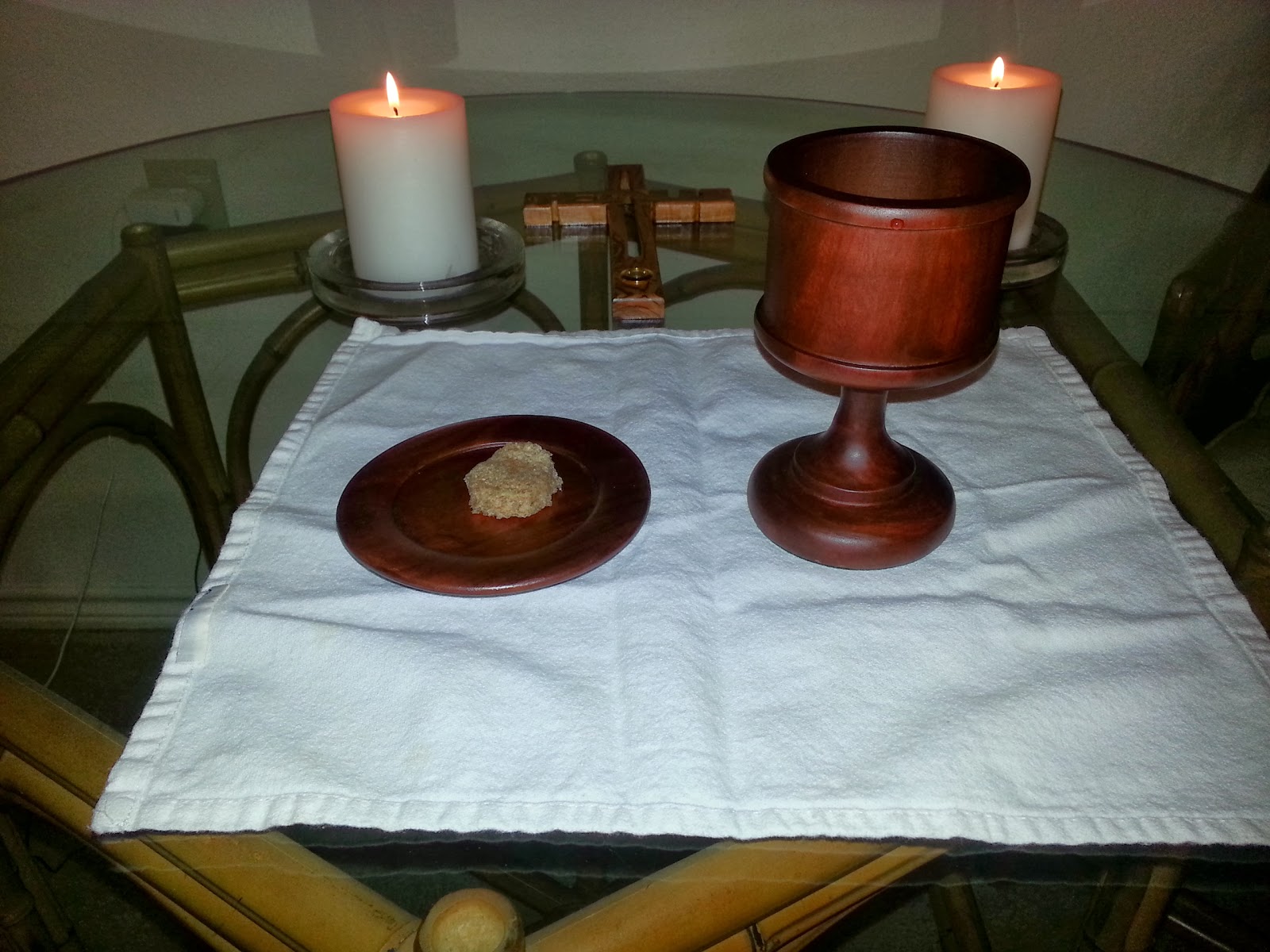
    Let us thank God for the life, teachings, death, and resurrection of Jesus the Christ. Let us gather around the Table together in love and remember.

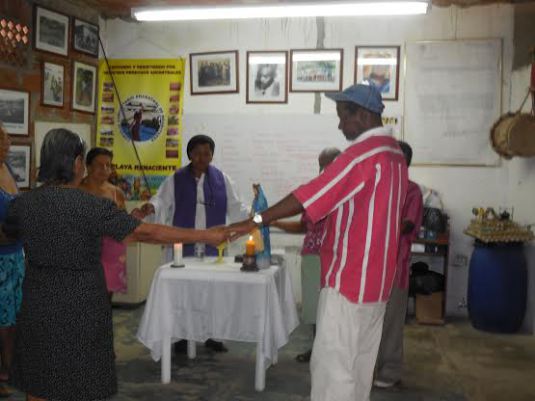
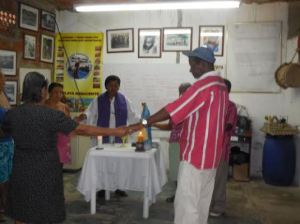
    This is Rvda. Marina Teresa Sanchez Mejia,RCWP celebrating the Eucharist with some of the faithful in Cali,ColombiaCon los lideres de la Comunidad en la Corporación "Playa Renaciente"
    Like Christ, LIVE , now and forever!

    Rev.Dr.Judy Lee,RCWP

    Co-Pastor Good Shepherd Inclusive Catholic Community of Fort Myers, Florida


  • Irish St. Vincent de Paul Society Gives Grant to LGBT Center Despite Bishop’s Challenge

    We thank Francis De Bernardo of the blog Bondings2.0  (NewWaysMinistry) for this hopeful good news!

    photo 3


    St. Vincent de Paul Society Gives Grant to LGBT Center Despite Bishop’s Challenge

    Yesterday, we reported on some developments in Ireland that showed that Irish Catholics were responding more and more positively to LGBT issues.  We saved one story for its own post, not only because it is a remarkable development, but because it contrasts so strikingly with what sometimes happens here in the States.

    The Irish Times reported that Ireland’s St. Vincent de Paul (SVP) Societyrecently gave a grant of €45,000  to  “Amach! LGBT Galway,”  a resource center which serves the sexual and gender minority community there.  The grant will be disbursed over three years. [Editor’s Note:  “Amach” is Gaelic for “out.”]

    What makes this story even more remarkable is that when Bishop Martin Drennan of Galway objected to the grant and asked for a clarification of the decision, the SVP defended their action, and countered the bishop’s concerns about “moral grounds” with an accounting of how they indeed acted morally.

    The Irish Times  reports:

    “Bishop Drennan said that ‘on moral grounds we can’t support that.’ Homosexual activity was ‘in our eyes morally wrong behaviour and we cannot put funds at the service of what we don’t believe is morally incorrect.’ His problem was ‘the moral judgement involved.’ The reputation of the SVP ‘has been put in question by this grant,’ he said.”

    Initially, according to the newspaper, an SVP official responded that the decision to fund the LGBT group

    “was made purely on the basis of need in the Galway area, in the same way as all requests for support are assessed. It does not signify any other motive.”

    In an article in The Independent, Jim Walsh, SVP spokesperson, further explained where the grant money came from, and that it did not impact their donations to other needy causes, which totalled about €42 million pounds in 2012.  Walsh stated:

    ” ‘The money that has been granted comes from a specific fund, the Maureen O’Connell Fund, and so it has no direct connection to any of the other money spent by the SVP,’ Jim Walsh said.

    “He rejected suggestions that the money would be better spent on funding those more obviously in poverty, such as those asylum seekers trapped in direct provision or the elderly.”

    Indeed,  “Amach! LGBT Galway” itself serves needy clients.  The Indedpent offers this description:

    “The centre is intended to be a safe space where LGBT people can address issues and concerns such as prejudice, isolation, loneliness, depression and the lack of opportunities to network with peers.”

    An Irish blogger on Gaelick.com points out:

    “A popular stereotype is that LGBT people are happy! Fun! And are inundated with disposable income! They are fabulous and ageless men, they live fabulous lives, with fabulous homes and fabulous lifestyles. Everything is rosy, just like on TV or just like in some kind of liberal, south Dublin bubble.

    “The reality, according to the evidence, can often be very different.

    “LGBT people can experience marginalisation, stigmatisation, difficulty accessing essential services, all of which impacts on our health and well-being.”

    The statistics used to support the above claim are staggering, especially on the situation of LGBT people in Ireland.  The numbers strongly support the SVP statement that the grant was given to an “excluded and marginalised group in need.”

    The main question that arises for me from this story is “Why does Bishop Drennan think of morality only in terms of sexual morality and not the morality of helping a population that has been ostracized, under-served, and in need of healing and reconciliation?”  The SVP obviously saw morality in much broader terms than the bishop did.

    An equally important point to make, though, is that the SVP action contrasts greatly with many recent actions in the U.S. where Catholic funds have been withdrawn from social service agencies because of LGBT issues.  In all the cases, the funds were withdrawn not even because the agencies were serving LGBT clients, but because from time to time they acted in coalition with LGBT organizations.  You can read about all those actions by clicking here.

    Obviously, Catholic leaders in the U.S. have something to learn about humility, charity, and a-political service from Ireland’s St. Vincent de Paul Society.

    –Francis DeBernardo, New Ways Ministry

  • Two Moving Reflections: Love in The Midst of Sorrow – Rev. Chava’s Ministry with Migrants and Fr. Mychal Judge A Gay Saint on 9/11

    Here we present Rev. Chava’s reflections on her migrant ministry and also a reflection on Saint Mychal Judge by Don Pachuta a friend of Woman Priest Eileen Di Franco of Philadelphia and also from thejesusinlove.blogspot.com.  In both reflections we can feel the love in the midst of sorrow and the worst things that can happen. How beautiful are these preachers and their people. 

    Rev Chava’s Reflection On Noticing the Joy

    Oscar Romero Inclusive Catholic Church
    Bulletin for Sunday, September 7, 2014
    23rd Sunday in Ordinary Time

    Dear friends,

    There have been so many times that there has been hard news to write about
    in this bulletin: people picked up by immigration, deportations, the I-9
    audit that cost everyone in our little migrant church their jobs two years
    ago – and bed bugs and cockroaches and long working hours and exhaustion.
    It’s important to share those stories because our friends are hidden from
    mainstream North America. I’ve met people who didn’t even know there was an
    immigration problem in our area. But as difficult as all those things are,
    and as necessary as it is to share them, it is also important to notice the
    joy.

    This past weekend held some very real joy, as we celebrated the wedding of
    two folks from our community. The happiest memory for me is of the bride
    and groom’s 15-month-old son toddling up the aisle and into his Papi’s
    arms. He was the only member of the wedding party who didn’t know he was in
    it! …and he provided some entertainment (or competition) during the homily.
    After the ceremony, a neighbor invited the wedding party to take photos in
    her garden across the street. I thought that was so kind. The one
    disappointment in the day was the noticeable dearth of Mexicans, because
    the groom’s co-workers all had to work. The bride actually drove out to the
    fields to get the best man, a couple hours before the ceremony. In spite of
    that, there was lots and lots of joy. Best wishes in your life together,
    Constantino and Cassandra!

    On Thursday I finally got our projector working with both picture and
    sound, and to celebrate the first week of school, plus having a pretty
    thoroughly exhausted pastor, and a very small group at church due to
    illness and extra long work hours, we decided to have a movie night instead
    of Mass. Brenda from St Joe’s was with us for the first time, but the kids
    she had come to teach weren’t there. She had, however, made some wonderful
    chili to share, so we ate and watched “Harry Potter” – until the two older
    kids that were there said they needed to stop watching and go do their
    homework. It was getting late anyway, so I gave them the video to watch at
    home, we found containers so everyone could take home some chili, and that
    was our night. I found I missed the joy of celebrating Mass together, but
    was delighted and impressed by the kids’ devotion to their schoolwork.

    Another source of joy this week was learning that the book “Border Patrol
    Nation” is being used as a textbook at the Divinity School this fall. The
    author, Todd Miller, will be doing a speaking  tour of upstate NY in
    November. He will be at St John Fisher the evening of November 4 (6:15) and
    at ROCLA (which meets at DUPC) at 7 pm on November 5. I recommend his book
    highly and hope you can make it to one or both of his talks.

    Love to all
    Chava

    Oscar Romero Church
    An Inclusive Community of Liberation, Justice and Joy
    Worshiping in the Catholic Tradition
    Mass: Sundays, 11 am
    St Joseph’s House of Hospitality, 402 South Ave, Rochester NY 14620
    A member community of the Federation of Christian Ministries


    Saint Michael Judge by Don Pachuta

    REMEMBERING 9/11 – SAINT MYCHAL JUDGE
    As we approach the memory of that horrific day, we pause to honor Saint Mychal Judge, a Franciscan priest, and Fire Department of New York Chaplain, died on September 11, 2001. They labeled him casualty 001. Thepicture of his lifeless body being carried out from the Tower has become an icon of that day. He died because he loved his neighbors, and even put them above himself. He walked in the feet of Jesus as he went into the burning NorthTower to minister to others. Other priests were present but he was the only priest to enter the Towers. He walked in the feet of Jesus when he refused the evacuation order, saying his work was not yet done. He continued to anoint those who were stricken and to pray with them, for them, and over them, until he was killed by flying debris from the collapse of the South Tower. He is oneof the great heroes of that day and a martyr in every sense of that word. Hegave his life for others walking in the feet of Jesus – “Greater love no one has than this, than to lay down one’s life for one’s friends.” (John 15:13). He lived a saintly and compassionate life, whether in Northern Ireland, or New York. He ministered to everyone, including those most outcast in society,addicts and people with AIDS. He continued serving as chaplain to Dignity,despite his hierarchy’s objections to such a ministry to people who are gay. Oh yes, incidentally, he happened to be born gay, a fact totally irrelevant to the New York mayor, fire commissioner, and firefighters. He remained a celibate priest true to his vows. The Orthodox Church recognizes him as a saint. There is an Old Catholic Church in Dallas named Saint Mychal Judge. You will feel inspired if you visit the website saintmychaljudge.blogspot.com. That would pay homage to him and all the dead heroes of that day and since. Fr.Mychal truly manifests that greater love which Jesus expounds on. Here is the prayer he spontaneously spoke in his last homily the day before, a prayer for all seasons
     
    Prayer ofThanksgiving
    by Fr. Mychal Judge


    Thank You, Lord, for life.
    Thank You for love.
    Thank You for goodness.
    Thank You for work.
    Thank You for family.
    Thank You for friends.
    Thank You for every gift
    because we know
    that every gift comes from You, and
    without You, we have and are nothing.

    As we celebrate this day in thanksgiving to You,
    keep our hearts and minds open.
    Let us enjoy each other’s company, and
    most of all, let us be conscious of Your presence in our lives,
    and in a special way, in the lives of those who have gone before us.
    Father, we make our prayer in Jesus’ name,
    who lives with You forever.  Amen.
     

    Gay saint of 9/11: Mychal Judge

     
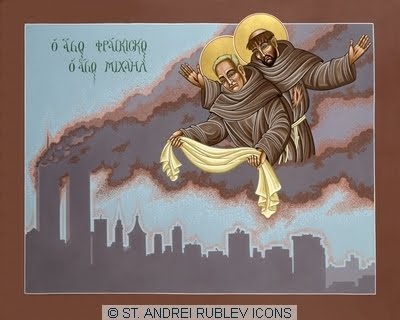
    “Holy Passion Bearer Mychal Judge and St. Francis of Assisi”
    By Father William Hart McNichols

    A gay priest is considered a saint by many since his heroic death in the Sept. 11 terrorist attack on the World Trade Center in 2001.

    Father Mychal Judge (1933-2001), chaplain to New York City firefighters, responded quickly when Muslim extremists flew hijacked planes into the twin towers. He rushed with firefighters into the north tower right after the first plane hit. Refusing to be evacuated, he prayed and administered sacraments as debris crashed outside. He saw dozens of bodies hit the plaza outside as people jumped to their deaths. His final prayer, repeated over and over, was “Jesus, please end this right now! God, please end this!”

    While he was praying, Father Mychal was struck and killed in a storm of flying steel and concrete that exploded when the south tower collapsed. He was the first officially recorded fatality of the 9/11 attack. Father Mychal was designated as Victim 0001 because his was the first body recovered at the scene. More than 2,500 people from many nationalities and walks of life were killed. Thousands more escaped the buildings safely.

    After Father Mychal’s death, some of his friends revealed that he considered himself a gay man. He had a homosexual orientation, but by all accounts he remained faithful to his vow of celibacy as a Roman Catholic priest of the Franciscan order.

    The charismatic, elderly priest was a long-term member of Dignity, the oldest and largest national lay movement of LGBT Catholics and their allies. Father Mychal voiced disagreement with the Vatican’s condemnation of homosexuality, and found ways to welcome Dignity’s AIDS ministry despite a ban by church leaders. He defied a church boycott of the first gay-inclusive St. Patrick’s Day parade in Queens, showing up in his habit and granting news media interviews.

    Many people, both inside and outside the GLBT community, call Father Mychal a saint. He has not been canonized by his own Roman Catholic Church, but some feel that he has already become a saint by popular acclamation, and the Orthodox-Catholic Church of America did declare officially declare him a saint. For more info on Father Mychal, visit  his Wikipedia entry or the Saint Mychal Judge Blog.

    The above icon by Father William Hart McNichols shows Father Mychal with St. Francis of Assisi as the World Trade Center burns behind them. They hold out a veil to gather and help people who cry out in times of violence and terror. In the text accompanying the icon, Father McNichols describes Father Mychal as a Passion Bearer who “takes on the on-coming violence rather than returning it… choosing solidarity with the unprotected…..”

    We thank God for Rev. Chava and for Fr. Mychal Judge for they are the pioneer priests of a new day of justice for all and truly “walk in Jesus’ shoes.  May God help us all to walk in those shoes. Pastor Judy Lee  

    photo 3


  • Bound Together in Love: We Are Responsible For One Another: Rev. Judy’s Homily 23rd Sunday OT

                                                                                                                                           Some of our Good Shepherd LeadersIMG_0061

    Our Judeo- Christian heritage teaches us another way to be in an increasingly secular, self-centered world where day after day we wonder at the tragedies taking place on every level of life.  Locally, still another young teen is accused of killing his mother. We weep for our children and our world as we recall that just a few weeks ago in the same town a thirteen year old killed a homeless man.  On the world scene wars and terrorist actions from beheadings to outright slaughter and genocide fills our hearts with outrage and sadness.  Our times right now often bear comparison to the violence described in the Holy Scriptures of Judaism and Christianity.   Yet the Law and the prophets and the teachings and life, death and resurrection of Jesus, the Christ, show us another way.

    Our Lectionary readings for this Sunday have one common theme: we are responsible for one another.  The priest and prophet Ezekiel ministered to his fellow exiles from 593 to perhaps 563 BCE. His very hard job was to keep them faithful to the Law and to loving God throughout the despair of their exile and even as they made the transition to freedom and their own homeland. He held to the Law and to the integrity of the individual and the responsibility of each one toward God and toward one another. While we focus on Ezekiel 33 today, in Ezekiel 18 the prophet enumerates the laws that must be observed and the consequences for those who do not observe them. Beyond indulging in forms of pagan idolatry, the laws are social laws that make God’s people responsible for their neighbors’ basic needs(verses 1-13)- not defiling a neighbor’s wife, not oppressing anyone, restoring the debtor his pledge, no robbery, giving bread and clothing to the poor and hungry, and so on. This responsibility also includes a father raising his sons to follow these laws, and if the sons are violent toward others, shedding blood, the father remains responsible. Following these laws brings righteousness and life, not doing so brings death-both metaphoric and actual.  Yet, if the wicked, who have chosen death turn away from their sins and keep God’s statutes, “they shall surely live”. The converse is also true for the righteous who turn away from God-death follows. But, Ezekiel concludes: “….get yourselves a new heart and a new spirit! Why will you die, O house of Israel? For I have no pleasure in the death of anyone, says the Lord God. Turn, then, and live.”(EZ 18:32).   

    This sets the stage for Ezekiel 33: 7-9, our first reading. Here God is telling Ezekiel that it is his job to give the people warning so that they can turn back to God and live. If he gives up on this unpleasant job of correcting others, their sins are upon his head. If they have been instructed and still break the Laws of loving God and being responsible for their neighbors, that is their own fault. In Ez 33:11, the sentiments of Ez 18:32 are again repeated. God loves God’s people and wants Ezekiel to help them turn back to God and live. In essence, not only priests and prophets have that responsibility but we are all Ezekiel-we can act lovingly and with justice and we can help one another to act lovingly toward God and toward one another.  If we don’t it is on us!  That is the essence of tzedakah and the intersection of tzedakah  and chesed with tikun olam.  EEK, you may say, now she’s speaking in a foreign language! Yes, this is Hebrew and these are the living concepts from the Hebrew Scriptures and midrash/commentary that the prophet Ezekiel and Rabbis Paul and Jesus not only knew intimately but lived, taught and wanted others to live. Tzedakah is not just charity or philanthropy but enacting righteousness and justice as well as charitable aid on behalf of the poor. Chesed is even more comprehensive and includes all acts of loving kindness extended toward every one, poor or rich, friend or enemy.  These acts of justice and kindness, or ethical mitzvot, are not optional but obligatory in Orthodox Judaism. Tikun Olam is the concept that “humanity is responsible to perfect-to heal, repair and transform the world along with G-d.” It is our responsibility to take on social action for justice as well as philanthropy and genuine caring, to exercise our communal social responsibility especially in the absence of a strong welfare state.**

    (**Online:  Jonathan Sacks Orthodoxy’s Responsibility to Perfect G-d’s World; wikipedia Tikun Olam;  Journal of Yeshiva University,-Jewish Social Work Forum, Eric Levine “The Ethical-Ritual In Judaism: A Review of Sources on Torah Study and Social Action,(pp. 44-50, Vol 26,Spring 1990). I am also indebted to my teacher of Jewish Social Philosophy at Yeshiva University, Wurzweiler School of Social Work Doctoral Program, Rabbi and Professor Irving Levitz,and to Rev. Becky Robbins-Penniman for mentioning Tikun Olam in her last Sunday’s sermon..)

     Our church community enacts love and justice by seeking out and serving the homeless and poorest among us, and by reaching out to families and young people with the teachings of the Scriptures and the love of God and Christ. Both co-pastors are now in their seventh decades. There are times when this call is just too much for us. I am the grumbler and I grumble-“how can I do this now, oh God?” Sometimes we may be short tempered with one another and even with the people if the day is heavy and long with need after need. But we are continuing because we must.  On Sundays there is a meal and fellowship time after the Mass and after that I teach Sunday school along with one or two others. Sometimes we are so tired by the time Sunday school time comes along that we just want to call it off for the day. But we don’t because we feel that the only way to prevent the kinds of horrors we discussed in the first paragraph where young teens are killing parents and elders and, indeed, one another in our community is to spend time with our young people, loving them, listening to them, and teaching them. And, yes, I am very plain and clear in the sermons I give as to what right relationship with God and others looks like. The people, especially the teens know what I mean when I say “don’t call yourself a Christian if you are packing heat (carrying a gun or weapon) or carrying a beef (a need for vengeance)”. What we do will not change the world or violence on a mass scale but it does make a difference with those we can reach. We are praying for more to join us in this work with the homeless and with the young because for us it is not an option but an obligation in living the Gospel.  It is important to us that our church stand as a beacon of love. People say they can feel the love when they enter the door, and that is so good.

    100_4169100_4174

    And that is what Paul means in Romans 13:8-10 where he says “Owe no debt to anyone-except the debt that binds us to love one another”. He sums up the Law and says “Love your neighbor as yourself” Love never does any wrongs to anyone-hence love is the fulfillment of the Law”. Like Jesus, he is boiling all 613 Jewish laws down into the essential two: love God, love your neighbor (everyone else)-and that is our obligation as Christians even as it is the obligation laid down in the Hebrew Scriptures. On Sunday we are going to sing the very old hymn “Blessed Be the Tie That Binds”-our hearts in Christian love…. We share each other’s woes, Our mutual burdens bear, And often for each other flows the sympathetic tear”.  Yes, the tie binds, we are bound together in love. And we are bound in  love to our Jewish and Muslim brothers and sisters who share Father Abraham. Jews, Christians and Muslims have scriptural obligations to enact love and justice in common. In Fort Myers there has been a wonderful Tri-Faith Dialogue. Rev. Walter Fohs of Lamb of God Lutheran-Episcopal Church led in that Dialogue for Christians. He faced much opposition as he strongly paved the way in this for several years. Now that he has moved West I am not sure what has happened to the group. But it must continue as a vehicle of Interfaith understanding and unity in the midst of world-wide conflicts in “the name of God” who does not want that even one life should be lost. 

    Conflicts abound on every scale. Of course, sometimes these conflicts are within the church as well. Perhaps these are the hardest ones. In the Gospel, in Matthew 18:15-20 we are taught how to handle conflicts within the community of believers. This teaching comes right after Jesus tells the parable of the lost sheep where we are to go out after the one who is lost because God is not willing that any of the little ones, which can also mean new believers, or just plain “unimportant/little folks” are lost. To God not one should perish. (Sounds like the God of Ezekiel here as well).

    Now Jesus is on the theme of social responsibility. Once again here he is steeped in the Law and knows that the Law has much harder remedies for sins against one another. (See for example Deuteronomy 25:1-take the offender to the judge and give him 40 lashes-not more, but enough. And, Deut 17: 8-13- if the court can’t decide take the offender to the priest and follow his decision-if contempt is shown toward the priest death follows). Jesus asks that the problem be talked out “between the two of you”. That is a lot better than 40 lashes and a lot less hierarchical! Then he says if she or he listens you have won a loved one back. Wow-the binding together in love is not broken. But, he cautions, quoting Deuteronomy 19:15 do this in the presence of two or three witnesses. Finally if the problem remains, refer the matter to the whole church. If that doesn’t work see the offender as one who is outside of the group because we have the power to forgive one another’s debts and to hold one another accountable. But this is not a light thing, for it is forgiving the debt that makes us even worthy to pray and be granted our prayers. (In Aramaic, in the context here ,to be ‘in agreement’ means to be worthy!).  So when we are able to forgive sins against one another, we can pray and God is in our midst.

    (Below are some of our teens and Juniors.)

    100_4039100_4034

    What a wonderful teaching this is in the context of Judaic law and language. It does what Jesus often does, takes the Law one step further. This is certainly one of the several cases where I think it is very high-minded of the members of the Jesus Seminar to say “definitively” that Jesus did not say these words. I challenge us to remember that there is great difference among scholars including progressive scholars about what Jesus actually said. Timothy Luke Johnson and Gary Wills, for example seriously question the presumptions and assumptions that the members of the Jesus Seminar act on in voting for what Jesus may or may not have said. Certainly there were conflicts in Jesus’ community of believers-even the disciples fought about who would sit on Jesus’ right and left hands-who was closest to Jesus. Peter was teased and called kepas, or brick-head, stupid. And the problems between Peter and Mary of Magdala or Peter and James probably did not start only after his death. Jesus, the Christ, who lived Love, was also a Palestinian Jewish Rabbi who could indeed have said the words of Matt 18:15-20.  We can all use these suggestions as to how to deal with conflict among believers.

    Blessed be the tie that binds us together in love. For love feels less like an obligation or responsibility and more like simply what we want to do. We want to help one another, to challenge injustice and to reach out to those who have not or those who need something from us because of love. We want to forgive one another even the most painful hurts against ourselves and against the innocents of this world, only because of love. Thank God for God’s love for us and for helping us to really love one another. May God continue to bind us together in love.

      Some of our Good Shepherd Board Members                                        

       An Interfaith Group                                                           Pastor Walter Fohs with Pastors Judy L and Judy B

    IMG_0003IMG_0099

    Rev. Dr. Judith Lee, RCWP Co-Pastor Good Shepherd Inclusive Catholic Community, Fort Myers   9/5/14

  • Pastor Becky’s Sermon on Matthew 16: 21-27:Pill Bugs and Crosses

    On Sunday 8/31 after our day and evening in Tampa with Miriam who needed her Pastors and friends, we were able to visit the Church of the Good Shepherd in Dunedin, Florida and once again experience Dean and Rector Becky Robbins Penniman’s wonderful ability to deliver a sermon. As I noted in an earlier blog,Pastor Becky, then an Episcopal Priest and Associate Pastor in the Lamb of God Lutheran-Episcopal Church  was my local priest mentor when I studied to be a Roman Catholic Woman Priest in 2007 and 2008. How blessed I was to reflect, share, experience and learn from this wonderful priest. I share this sermon with you as it is well worth reading, but seeing Pastor Becky curl up like the “pill bugs” she noticed when sweeping her porch, little black hard-backed bugs that curl up into a ball when in trouble, and stretch her arms out like a cross with the vertical lines (her long arms) able to embrace others, dramatized the meanings and was a real and rare treat for us. (I am only deleting the texts of the first two readings here).

    PILL BUGS & CROSSES
    PENTECOST 12 – PROPER 17 – YEAR A
    August 31, 2014
    Becky Robbins-Penniman
    Church of the Good Shepherd, Dunedin, Florida
    Collect of the Day:
    Lord of all power and might, the author and giver of all good things: Graft in our hearts the love of
    your Name; increase in us true religion; nourish us with all goodness; and bring forth in us the fruit of
    good works; through Jesus Christ our Lord.

    Matthew 16:21–28
    Jesus began to show his disciples that he must go to Jerusalem and undergo great suffering at the
    hands of the elders and chief priests and scribes, and be killed, and on the third day be raised. And
    Peter took him aside and began to rebuke him, saying, “God forbid it, Lord! This must never happen to
    you.” But he turned and said to Peter, “Get behind me, Satan! You are a stumbling block to me; for you
    are setting your mind not on divine things but on human things.”
    Then Jesus told his disciples, “If any want to become my followers, let them deny themselves and
    take up their cross and follow me. For those who want to save their life will lose it, and those who lose
    their life for my sake will find it. For what will it profit them if they gain the whole world but forfeit their
    life? Or what will they give in return for their life?
    For the Son of Man is to come with his angels in the glory of his Father, and then he will repay
    everyone for what has been done. Truly I tell you, there are some standing here who will not taste death
    before they see the Son of Man coming in his kingdom.”

    Why on earth did you come to church today?
    When you think about it, there are lots of reasons not to go.
    In some countries, it’s illegal to be a Christian,
    and there aren’t any churches.
    So folks can’t go.
    In some communities, it’s dangerous to be outside your house.
    Going to go to church is a major safety risk.
    So folks are afraid to go.
    In some cultures, it’s weird to go to church.
    Going to church means others will think you are a clueless wonder,
    which could affect your standing among your peers.
    So folks are embarrassed to go.
    In some contexts, it’s complicated to go to church.
    Going to church means you can’t do other things,
    from getting much-needed rest to being with friends
    to working a second or third job to support your family.
    So folks are too conflicted to go.
    In some congregations, it’s the church that’s the problem.
    Going to church is boring, or annoying, or depressing.
    So folks simply choose not to go.
    BUT – You are none of those, because, at least today, you are here.
    The implications are enormous:
    you are free, you are safe, you are accepted, you have free time,
    and, I hope, it means you find Good Shepherd to be an OK place.
    But, WHY are you here? To what purpose?
    As you ponder that, I’d like turn the question in inside out,
    because I think that’s the heart of the Peter was making with Jesus.
    In Matthew 16:17, which we heard last week,
    Peter says Jesus is the Messiah, the Son of the Living God,
    then Jesus tells Peter he’s the rock of the church.
    Today, in Matthew 16: 21, Jesus tells Peter and the others
    he must go to Jerusalem and undergo great suffering.
    Just 6 short verses after Peter says Jesus is the Son of God,
    Peter basically asks Jesus what the heck he thinks he’s doing?
    I’ve asked you why on earth you think you came to church today.
    Peter wants to be clear about why Jesus thinks he came to earth.
    Everyone knows: a Messiah doesn’t come from heaven to earth to suffer!
    A Messiah comes from heaven to earth to fix things,
    kick some serious tail and git ’r done.
    But Jesus tells Peter he’s looking at things from a human angle,
    while he, the Son of God, literally has a different mindset.
    Jesus’ divine mindset is not to git ’r done, but to free captives,
    to show people that no matter who we are, great or ordinary,
    we have the almost unbearable freedom to choose
    what mindset to use as we approach our lives, the human one or the divine one.
    The human one is, it seems, to get things for ourselves and hold on tight,
    rolling up like a pill bug to protect ourselves.
    The divine one is to focus on God, then throw our arms open wide.
    The divine mindset shapes our life like a cross.
    Now, I’m hardly the first preacher to point this out, but a cross goes in two directions at once.
    The first direction is vertical –
    grounded on the earth, it stretches to the infinity of the heavens.
    The second direction is horizontal,
    and if you paid any attention at all in sophomore geometry class,
    you know that a horizontal line is also infinite.
    To take up the cross is to practice, as our collect puts it,true religion.
    “Religion” does not mean rites and ceremonies and doctrines;
    the word “religion” comes from the Latin word “ligare”
    which means to bind together, to connect together;
    the word “ligament” has the same root as the word “religion.”
    To practice true religion is to have the cross shape our lives.
    What is left out of a life shaped like a cross?
    Who is the person left out of a life shaped like a cross?
    Where is the place left out of a life shaped like a cross?
    A cross-shaped life connects everything on earth with the will of God,
    and the will of God is peace for all people and the earth, Shalom;
    the will of God is the healing of the universe, Tikkun Olam. 4
    Moses had true religion; he started out as a prince, became a murderer,
    then, in exile beyond the wilderness, a humble shepherd.
    Shepherds definitely have their feet on the ground.
    One day, he lifted his head and noticed the living God in the world.
    From a burning bush, God gave Moses a pretty daunting mission,
    and at first Moses rolled up like a pill bug.
    But God worked with him, encouraged him,
    and Moses stretched himself out to both God and his people.
    He marched right into Pharaoh’s throne room
    and led thousands of slaves out of oppression.
    Moses lived a cross-shaped life.
    Paul had a true religion: He was a Pharisee grounded in the Torah,
    and thought this meant he should kill Christians to honor God.
    He heard a voice from the heavens and at first rolled up like a pill bug,
    but soon he opened his mind to Jesus.
    Paul stretched himself toward God and perfect strangers,
    marching all over the Roman Empire to tell people Good News:
    God had come to earth as Jesus the Christ,
    who conquered evil with divine, agape love, a tireless, rugged love
    that does what is best for the other, even if it costs us dearly,
    or, as in the case of Jesus and so many others who live cross-shaped lives,
    even if it costs them everything.
    Paul says the only way to overcome evil is to love like Christ did,
    to stretch out and embody goodness, harmony, rejoicing,
    inclusion, and hospitality to everyone – even enemies.
    Paul practiced what he preached, and lived a cross-shaped life.
    Jesus, of course, had the truest religion of all.
    The cross is Christ’s commitment to his Father and to us;
    the price he was willing to pay to do the Father’s will on earth,
    to bring hope and healing to his sisters and brothers,
    to assure each of us that we are more than our sins,
    and tell us that the only way we would ever find
    real peace, real joy, real meaning on this side of the grave
    was to make exactly the same kind of commitment.
    Most of us, of course, won’t be executed, like Jesus and Paul,
    because we choose to practice true religion – but some of us will.
    People like James Foley, who was beheaded by ISIL,
    was a committed Roman Catholic who talked openly of praying,
    and who reached out to the world to expose
    the suffering of the Syrian people and the horrors of war1
    When he was captured, he didn’t roll up like a pill bug to protect himself,
    he kept praying and encouraging other captives,
    and even in his last words refused to denigrate his captors.
    His was a cross-shaped life.
    https://www.facebook.com/FreeJamesFoley?hc_location=timeline; 1
    see also http://jamesfoley.rsf.org/5
    A life of divine love is not kittens and lollipops and rainbows,
    nor is it pie in the sky after you die.
    It is not easy, but a cross-shaped life is the only way –
    according to Jesus and Paul – to live a life of meaning and purpose.
    God will repay us for this work, according to both Paul and Jesus.
    Those who live with their minds set on divine things, on shalom and tikkun and grace,
    will be repaid by getting their heart’s desire: more of all that. Cool.
    God will also repay those who set their minds on human things,
    who grabbed whatever they could for themselves,
    clutched it close and rolled up like a pill bug,
    closing their eyes to the suffering of others.
    What will that repayment look like?
    A lot of people in the church say that God will repay evil
    by heaping hot coals on them, torturing them in fire forever and ever.
    But the verse Paul quotes about God’s vengeance is Proverbs 25:21-22, which says
    “If your enemies are hungry, give them bread to eat;
    and if they are thirsty, give them water to drink;
    for you will heap coals of fire on their heads,
    and the Lord will reward you.”
    It goes full circle: if you are compassionate to your enemies, this will please God.
    Now, if it pleases God when you are compassionate to your enemies,
    how does it make any sense for God to turn around and torture them for ever and ever?
    Those burning coals are not the coals of hellfire and brimstone,
    but the burning face of shame when our ugliness and evil.
    are met with grace and beauty and forgiveness.
    Setting our minds on divine things changes the world.
    Perhaps you’ve heard the story of Corrie ten Boom
    a young woman who, with her family, hid Jews in their home
    when Germany occupied the Netherlands during WWII.
    A Dutch collaborator – someone who cooperated with the Nazis –
    ratted them out to the Gestapo, and the family was imprisoned.
    Corrie was sent to Ravensbrück Concentration Camp.
    She suffered immensely there until she was liberated.
    A few years after the war ended, she was approached by one of the camp guards
    who had been one of the cruelest. He asked for forgiveness.
    Appalled, Corrie prayed that she would be able to. She wrote:
    For a long moment we grasped each other’s hands,
    the former guard and the former prisoner.
    I had never known God’s love so intensely as I did then.
    Later, she ran a shelter for both Holocaust survivors
    AND Dutch collaborators, who could not get jobs after the war.
    Remember, it was a collaborator who turned her family into the Gestapo.
    She watched them, and noted that, among victims of Nazi brutality,
    those who were able to forgive were best able to rebuild their lives.
    Corrie practiced true religion and lived a cross-shaped life.
    2 http://en.wikipedia.org/wiki/Corrie_ten_Boom6
    Corrie ten Boom is famous, great woman; how about someone ordinary?
    How about Tim Lee, a veteran from Texas
    who lost both legs to a land mine while was in the Army in Viet Nam.
    From the wheelchair he has been in for 37 years, Lee leads other veterans
    back to the hills and rice paddies of Southeast Asia
    to heal and be healed, to forgive and be forgiven.
    Lee is a man connected with God, and he said that
    if he found the Viet Cong soldier who set the land mine,
    he would tell him he loves him.3
    Lee practices true religion and lives a cross-shaped life.
    Why on earth do you come to church?
    I come because I’ve seen what happens when people set their minds on human things.
    We shoot our young men, and our young men,
    having learned how things work, shoot others.
    We hate first and refuse to hear the cries of the poor.
    We swallow the message that we are primarily consumers,
    that our value is measured by what’s in our wallets.
    We trade our God-given freedom for the captivity of fear.
    We roll up like pill bugs.
    But here in church, in the presence of the cross, I’ve seen what happens
    when people sets their minds on divine things.
    I’ve seen you practice true religion, embodying divine love,
    sharing your God-given gifts with strangers and even enemies.
    I’ve seen you listen carefully to each other,
    even though you have very different beliefs and opinions.
    I’ve seen you give your last dollar to those with even less.
    I’ve seen you banish your fear and burst out of prison.
    When I’ve seen you do these things, practicing true religion, living cross-shaped lives,
    I know what I’ve actually witnessed, right here and right now,
    is the Son of Man coming in his kingdom.
    And that is why I come to church.
    http://www.breakingchristiannews.com/articles/display_art.html?ID=5945 3
    See also http://tinyurl.com/Veteran-sReturn – though it’s not a specifically Christian piece. 

  • One Woman’s Lessons From Living on the Street and Other NPR Links and Reflections on Homeless Women

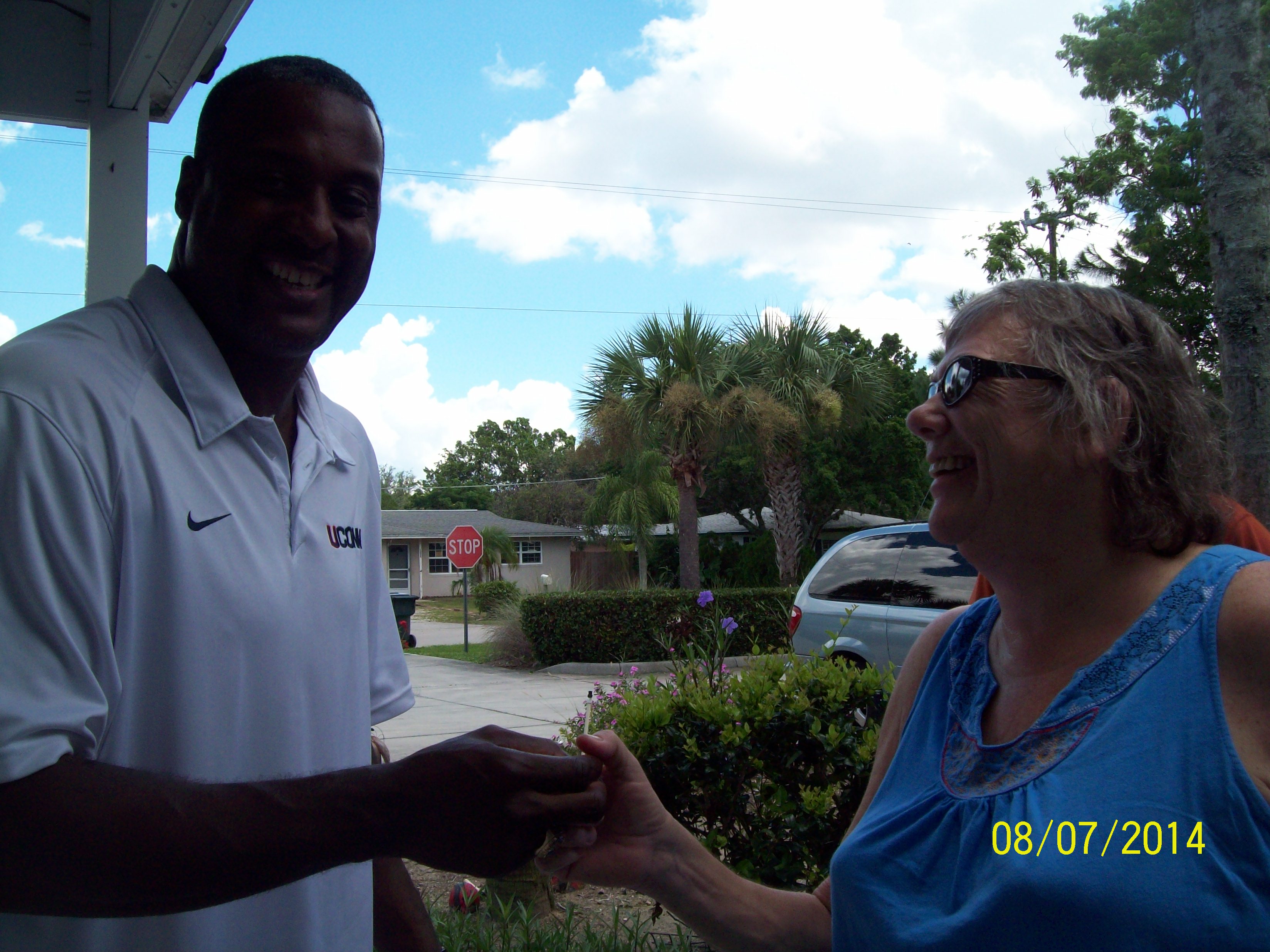
    In the NPR Article below by Gabrielle Emanuel we learn about how very difficult it is to be a homeless woman living on the streets. This and the links throughout the article are important to reflect on as we consider how we can be there for homeless women, men, youth and families.  In my experience in working with homeless women since 1982 in three cities, reaching out does matter  and more often than not makes a big difference. It is when we turn away and say “they want to live this way” that the tragedy of homelessness continues. This link was sent to me by Rev.Debbie Little, founder of Ecclesia Street Ministries and mentor to many street ministers. Ecclesia  and Street Ministries make a difference and we at Good Shepherd Ministries of Southwest Florida are honored to be associated with them. You know from former blogs that we were able to house five women who have been homeless this summer. This was a major blessing and the culmination of lots of groundwork, relationship building and prayer. Now some of these women are ministering to others who face homelessness and that is the greatest blessing.  100_4122 This is Rose getting the key to her new apartment. It does help to be able to intervene before chronic homelessness spans years as in the NPR article.

    But even when women experience chronic homelessness, loving, accepting, patient relationships and skills in leaving no stone leading to health and housing unturned pays off. IMG_0083

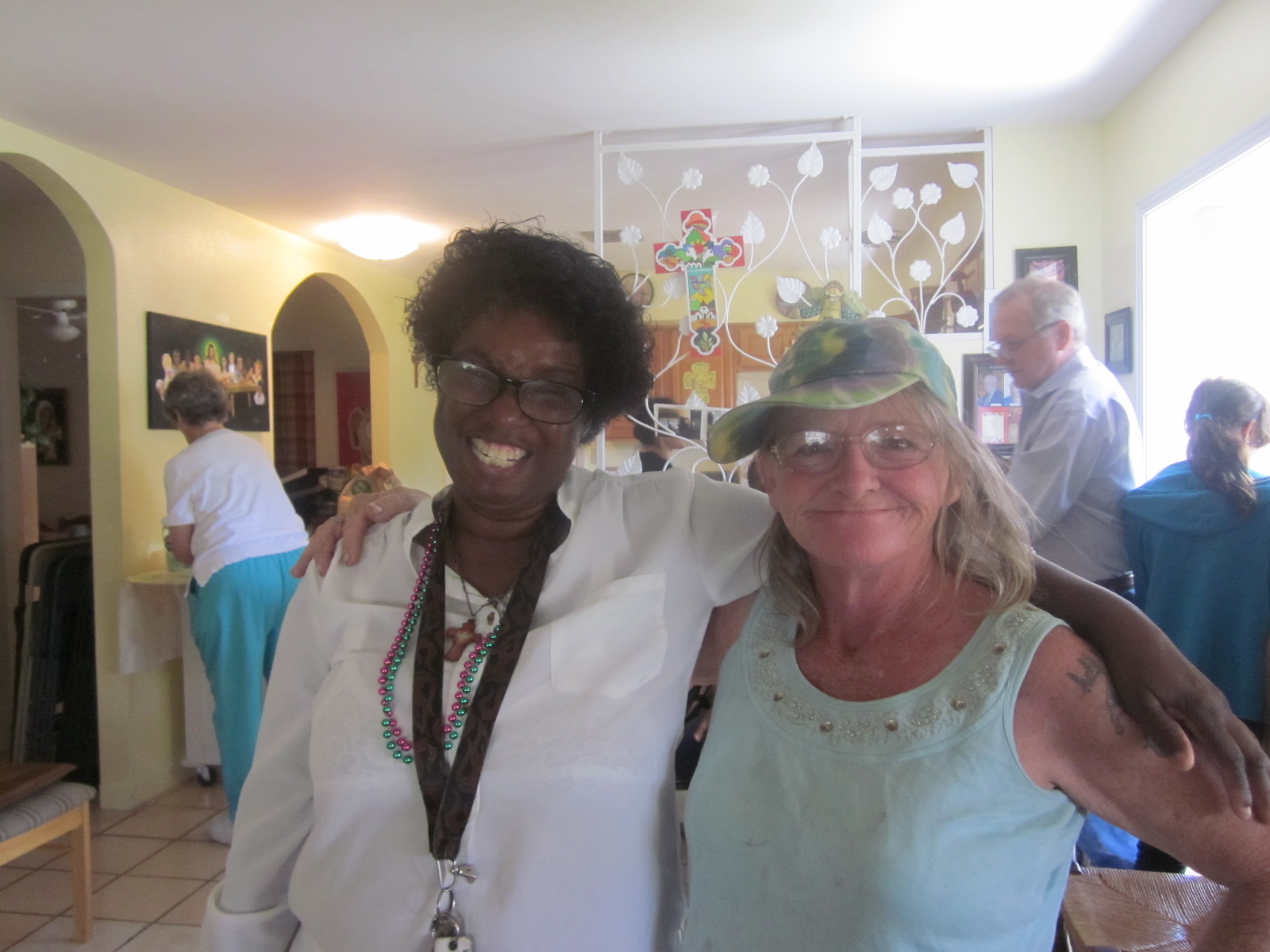
    On the right is Lauretta who had been chronically homeless over many years,disruptive and not welcome in any church or service agency in Fort Myers until she responded to the love and acceptance of our Good Shepherd ministry. Her story under her “pen name” Marietta for she wrote a part of the story herself is in my book Come By Here: Church with the Poor, 2010,Publish America now America Star Books.com.  But the best part of the story is that it continues to be a story of a woman who is housed since 2009, happy and reaching out to family and others who are homeless to offer hope and help.  Today we had our Tuesday Ministry and Lauretta shared with us how she is helping a relative who has cancer and is homeless with a child. She knew that we would help her to help this woman.  One of the women,Diane, whom we housed this summer was  brought to us by Lauretta who found her  in the same park where we offered meals on Friday nights in 2007-2009 and where we met Lauretta. We also celebrated her birthday today, along with Betty’s and Louie’s both of whom we housed this summer. What a joyful celebration we had! But at the same time we had two men with us who were still homeless and whom we promised to continue to help toward housing. Yet they are hopeful because they know that if Lauretta and Louie who were chronically homeless can be housed, they can too.  For us, it is not fast enough and the road is hard for all who live outside, but when we walk it together as a church community, with Jesus who brought good news to the poor and asked us to follow, it is easier.   

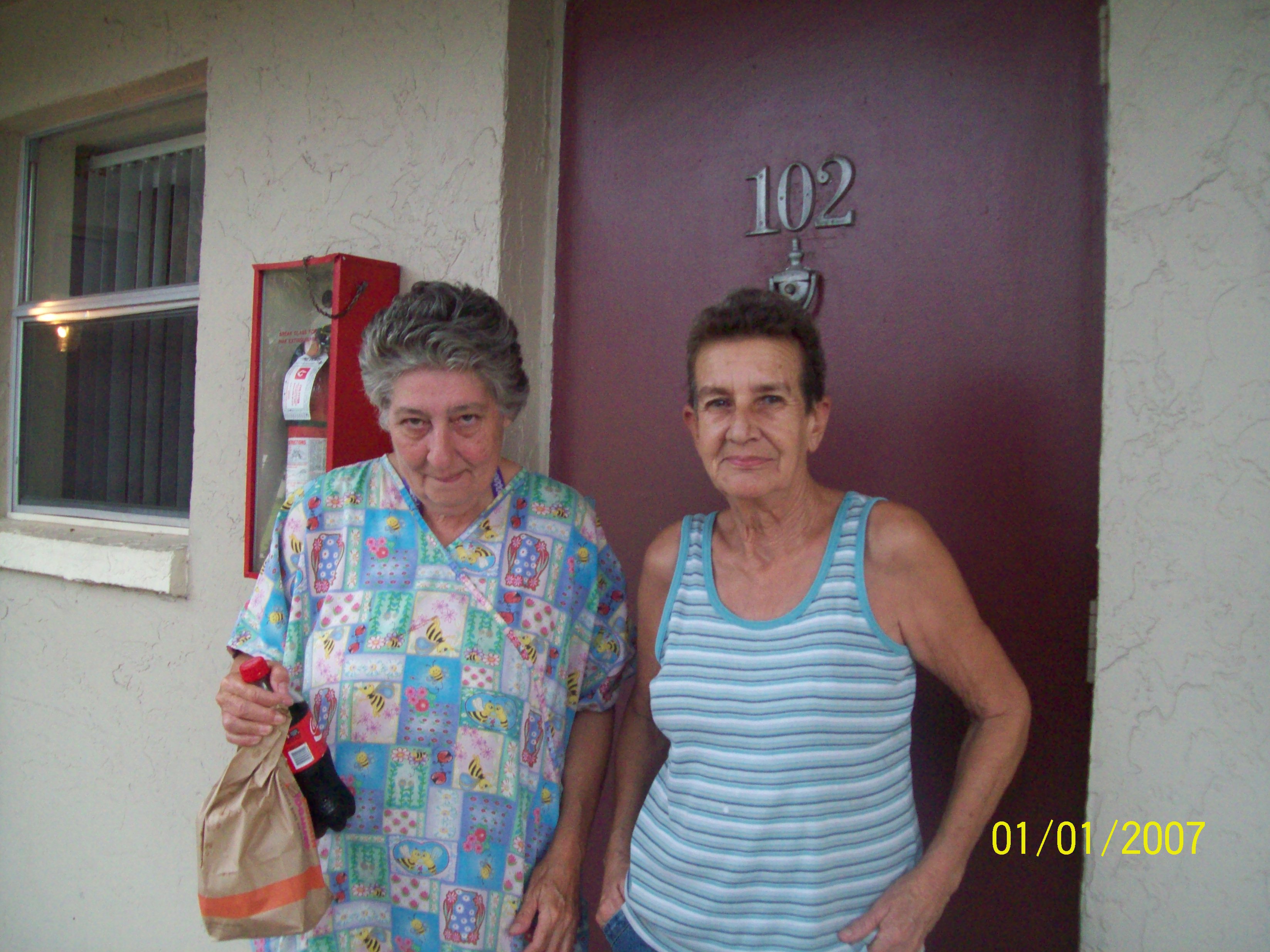
    This is Daine on the left and her new friend and neighbor, Bev in front of Diane’s door. Lauretta, once chronically homeless, was the one who brought Diane to us . Diane loves her new home. We pray for outreach to “Susan” and to all who are homeless and for the multiplication of housing resources. No One should have to live outside.100_4017


    One Woman’s Lessons From Living On The Street

    August 30, 2014 5:19 PM ET
    Susan sits on a park bench in Washington, D.C. She has struggled with homelessness for nearly two decades.

    Susan sits on a park bench in Washington, D.C. She has struggled with homelessness for nearly two decades.

    Gabrielle Emanuel/NPR

    The grass is fraying around the edges in Washington, D.C.’s Franklin Square Park, but the trees are more important. They offer much-appreciated shade to the homeless people who sit below.

    Many of the park benches are occupied by homeless men — but there are a few women too. Susan, sitting amid her bags in the park’s northwest corner, is one of them. She’s been on and off the streets of Washington since 1995 and asked that her last name not be used because she was in an abusive relationship and doesn’t want her whereabouts known.

    Susan says life on the streets is a constant battle for all homeless people, but for women it’s particularly hard. On top of the everyday challenges of finding food and a safe place to sleep, she says, women face the threat of sexual violence and cruelty.

    In nearly two decades on the streets, Susan, with graying hair and bright eyes, has learned some tough lessons.

    Lesson One: Don’t Look Like A Woman

    “It’s not easy to be a woman on the streets, OK?” Susan says. “We tend to hide our features. In other words, we will wear more than one sweatshirt to look more like a man than a woman.”

    When darkness falls, Susan pulls out her dark and bulky clothes.

    A slight Boston accent betrays her childhood origins, and it’s particularly strong when she speaks of her children and grandchildren. But Susan says those relationships are complicated.

    Susan is what experts call a rough sleeper; it’s a small and hard-core subset of the homeless population. Research suggests this group often struggles with mental health issues and substance abuse, but their defining feature is that they choose not to go into shelters.

    Susan sometimes stays in shelters but she doesn’t like them. There is no place for her bags and she finds them rigid, with strict curfews and rules.

    She says she prefers the freedom of the outdoors, where “I can go and I can come.”

    After decades as a rough sleeper coming and going, Susan’s confident about her strategies.

    Lesson Two: ‘Act Crazy’

    “On the street we tend to carry a real nasty personality,” Susan says. “If you act crazy, they’ll leave you alone.”

    That means screaming, cursing and acting wild.

    She says the reaction she’s looking for is, ” ‘Oh, she’s crazy, leave her alone. We don’t want to be bothered with her.’ And walk away. OK? You can only act kind and sweet to so many people.”

    Dr. Jim O’Connell, president of the Boston Health Care for the Homeless Program and a physician who has been caring for the homeless population for almost three decades, confirms that Susan’s hard-learned lessons hold up more broadly.

    O’Connell says that on the streets of Boston, homeless men outnumber women 3 to 1. And those women are “among the most vulnerable” members of the homeless population. Thus, he says, disguising yourself as a man can be a good strategy.

    “Many of the women like to get clothes that are much bigger than usual,” O’Connell says. “They like to get clothes that have dark colors and no colors. They like to dress essentially as the men on the street would dress.”

    But O’Connell points out that while most female rough sleepers “masculinize” themselves, “they will be quick to say that’s not who they are or how they feel. It’s a protective mechanism.”

    How about what Susan calls acting crazy?

    “It’s a strategy we have seen many, many times,” O’Connell says. “We will frequently see, as anyone goes near any of those women, they will start screaming at the top of their lungs.”

    Both strategies, O’Connell says, are safety strategies.

    “Where they are probably going to be the victim of some kind of violence, they don’t want it to be sexual violence,” he says.

    Lesson Three: Pick Your Spot Carefully

    For a rough sleeper, much of the day can be spent planning where to sleep.

    One of Susan’s caseworkers, Paula Dyan, works the night shift for the Salvation Army. She says “the normal standard operating procedure [is] you don’t bed down until 10 p.m., up by 5 a.m.”

    The most important factor, Dyan says, is to avoid anyone who is “really psychotic or really drunk.”

    Susan explains that the worry is they’ll “try to do something to a female.”

    So, Susan spends time planning in the hopes of ensuring safety. “You walk around and you scope the area out, OK? To find out what’s going on.”

    She checks out who is in the area, but she also takes a look at the nearby buildings.

    That way when dusk starts to wipe away the trees’ shadows, Susan knows where to go. She gravitates toward big public buildings. They represent one thing to her: safety.

    “[If] somebody [is] chasing me and trying to cause me problem, then I look at the closest place that I can go and what its affiliation is — the United States Capitol, the White House, the Senate Buildings, an embassy,” Susan says.

    Crossing onto their property is like calling 911, for someone who doesn’t have a cellphone.

    Lesson Four: Partner With A Man

    More than dressing like a man or seeing the protection of public buildings, Susan says she’s learned the importance of being associated with a man — ideally he’s ex-military, trained in survival.

    “If you befriend a veteran, then you won’t die on the street,” Susan says, “because they will treat you as part of their unit and part of their family. OK? You just have to learn their little ticks, their little moments when — they kinda just have their moments.”

    Jim O’Connell, the expert on homelessness, has seen this dynamic many times.

    “The underbelly of that protection, though, is it’s frequently someone who has a streak of violence,” he says.

    This can be physical and sexual. “And then the issue of domestic violence becomes a really paramount issue,” O’Connell explains.

    He says it’s nearly impossible to pull homeless women away from abusive relationships. The women prefer the predictability of one man’s violence to the unpredictability of street violence.

    Susan says protection and the never-ending need for money require sacrifices. In her experience, “the main thing is sexual favors.”

    And over the years she’s had to make some tough choices. But she is adamant that “everybody walking down the street is not a prostitute.”

    As Susan gathers her things and prepares to head into the night’s darkness, she says, “the men have it a little easier most of the time.”

    She says decades of rough sleeping have taught her that women on the streets can be as tough as men — but they have to be smarter.


  • Rev. Chava’s Labor Day Reflections and Rev. Judy’s Commentary

    We join Rev. Chava Redonnet in affirming all those who labor with little reward for their labors so that we all may live. 

    We also affirm the life all around us that keeps pushing forward despite tragedy and death.

    On Saturday Pastor Judy Beaumont and I  traveled to Tampa to visit a woman in her late eighties who survived her only daughter over three years ago. Miriam continues to grieve Nancy,a wonderful Christian preacher, teacher,social worker, mother and daughter who died suddenly of advanced diabetes. Nancy and her family became friends with us when she studied Master’s level social work with me at the University of Connecticut starting in 1985. Over the years we became extended family for one another. Miriam is still reeling from the loss of Nancy although she finds the good in life and holds on to it. She is looking forward to the birth of a second great grandchild. Yet, she is praying to get into an Assisted Living residence where she would not have to be alone and have the assistance she needs given her aging and physical illnesses and forgetting. Her days are lonely and she finds it hard to cook or eat alone. But her nights are full of fears. Miriam is bilingual but lapses into her mother tongue Spanish as she tells us about her nights of horrors.  Her low income means a complicated and long wait. We are praying and working to find a speedy respite for this frail but hopeful woman.  

    It is significant that the Scriptures for this day include Jesus’ call to bring good tidings to the poor (Luke 4:16-30). As we follow Jesus is this not our call as well? Here is a woman who worked hard her whole life as a sewing factory worker and tailor while a single Mom yet she does not have enough income to easily access the level of care that she needs.  On this Labor Day I recognize her labor and that of all those who barely survive yet work hard. I struggle with how we can find ways to support the changes that would guarantee this woman and those like her an old age that is free of fear and replete with adequate resources and supports.

    IMG_0222This is Miriam with Rev. Judy Lee and Rvda. Marina Teresa Sanchez Mejia, who serves the poor in Cali,Colombia

    A prayer for this Labor Day is that Jesus’ call to bring glad tidings to the poor throughout the world will be answered by dedicated servants like Rev. Chava Redonnet who serves the migrant workers in New York and Rvda. Sanchez-Mejia who serves the community of Afro-descendents in Colombia and all of the Street Ministers in  Ecclesia Street Ministries who serve the homeless and at risk in the USA including our Good Shepherd Ministries, and all who make efforts in various ways to bring glad tidings to the poor and who stand with them as they seek justice.

    Rev. Chava’s Labor Day Reflections

    Oscar Romero Inclusive Catholic Church Bulletin for Sunday, August 31, 2014

    Dear friends,
    Last night as I was driving out to the casita for the Migrant Mass, I took
    a shortcut that Librada showed me once. It led through onion fields – all
    around, everywhere but on the road itself, were onions, onions, onions.
    Those fields were pregnant with onions ready to harvest.

    Across the street from Santiago’s house is a huge field of cabbage – the
    field is about as big as my whole city neighborhood. He and his companions
    planted that cabbage, and all summer we have watched them grow. Now there
    are thousands and thousands of gorgeous, enormous cabbages.

    The corn is ripe, too. This week Santiago showed me how to tell the
    difference between a field of corn that’s for human consumption (elote) and
    a field of corn for cows (maize). There’s a difference in the tassels that
    you can’t miss once you know what to look for.

    My yard is also full of abundance. I can’t keep up with the tomatoes this
    year! – and have shared more than a few with some passing animals. There’s
    more than enough to go around.

    In our part of the world it feels like an explosion of life. Carl Sandburg
    said once that “a baby is God’s opinion that the world should go on.” In
    the midst of all the sad news, the worrisome news, the sometimes scary news
    – look at the harvest. Look at the life, teeming around us. I think that’s
    an expression of God’s opinion, as well. Life, holy life, is all around us.

    And as we prepare to celebrate Labor Day, think of the hands that planted
    and tended that harvest, that are picking and packing it now. At dinner
    each night I pray that God will bless “all the hands that brought this food
    to our table.” Last week Santiago said he wanted to say grace. He had an
    addition to my prayer. He said, “Bless all the hands that brought this food
    to our table, most of them illegal.”

    May we have a Harvest of Justice: abundant and overflowing with life, for
    all.

    This weekend we will celebrate the first wedding in our migrant community.
    Please join me in wishing Constantino and Cassandra well. Another sign of
    life and God’s great goodness!!

    Love to all
    Chava

    Oscar Romero Church
    An Inclusive Community of Liberation, Justice and Joy
    Worshiping in the Catholic Tradition
    Mass: Sundays, 11 am
    St Joseph’s House of Hospitality, 402 South Ave, Rochester NY 14620
    A member community of the Federation of Christian Ministries 


  • Your word burns in my Heart: 22nd Sunday in OT- with Rev. Judy and Rev. Bev

    Today we place ourselves in the shoes of those called by God to do the hardest things. To follow Christ, to be prophetic is not easy and we often get it wrong. Sometimes we complain and struggle like Jeremiah (20:7-9), or we try to avoid the hardest parts of our calling like Peter encouraged Jesus to do in Matthew 16:21-27. Paul asks us to to transform ourselves and be transformed in order to live the Gospel. (Romans 12:1-2) It is not easy to follow a hard calling. It is not easy to be prophetic. It is not easy to follow the Gospel. Its okay to complain and to err in our understandings like Jeremiah and Peter as long as we know deeply that we are called and God’s word burns within us so it must be spoken. I am a Jeremiah. I complain that serving the poorest is hard, but I want to do it and I know I must do it- to be who I am to enact my very essence. . That is why Jesus says “take up your cross”-meaning take up the thing you must do no matter how hard it is. Can we use this Sunday to look at our lives and to take up those very hard parts of living the Gospel that are difficult for us. Jesus moved forward and beyond death, and we too live as we follow him in this.
    IMG_001379e7b-20131213_134325 
    Rev. Bev’s Homily
    After Officer Frank Serpico exposed police corruption in New York.
    he was set up by fellow officers and shot.
    He survived.
    When asked why he had stepped forward, Serpico replied,
    “Well, I don’t know. I guess
    I would have to say it would be because…
    if I didn’t, who would I be when I listened to a piece of music?”
    __________________________________________
    Karen Gay Silkwood, working at a nuclear manufacturing company,
    called them to task over faulty nuclear fuel rods,
    falsified reports, and employee safety risks.
    She had assembled documentation for her claims
    and decided to go public with the evidence.
    She left to meet a reporter, taking the documentation with her;
    she was found dead
    from a car crash of suspicious but undetermined cause,
    and the documentation was never found.
    _________________________________________
    Fr. Roy Bourgeois.
    He stood up for women’s ordination
    and was ejected from Maryknoll and the priesthood
    when he refused to back down.
    ______________________________________________
    And more whose names are not household words:
    Sister Sally Butler, Sister Maureen Paul Turlish;
    Fr. Ronald Lemmert, Fr. John Bambrick,
    Msgr. Kenneth E. Lasch, Robert Hoatson,
    Fr. James Connell; Fr. Thomas P. Doyle;
    Bishop Tom Gumbleton.
    They have exposed cases of sexual abuse and cover-up.
    ______________________________
    Doing what’s right and just.
    It risks everything.
    Dietrich Bonhoeffer called it “the cost of discipleship.”
    There’s no option; they cannot not do it.
    ____________________________________________
    So for us.
    We’re not likely to be killed for doing what’s right,
    but we will undoubtedly suffer.
    Being a Christian is not easy.
    Following Jesus means keeping the two greatest commandments—
    love God and love our neighbor.
    It means being a prophet.
    Today’s scriptures tell us
    that it has always been an all-consuming task
    to be faithful to God.
    For Jeremiah of Anathoth;
    for Jesus of Nazareth;
    for Paul of Tarsus;
    and for us:
    living as children of God takes all we have.
    Yet we are called to be prophets.
    ____________________________________
    There are two classic definitions of a prophet.
    Fr. Bruce Vawter defines a prophet as
    the conscience of the people.
    Hans Walter Wolff defnes prophets as
    the people in the community
    who tell us the future implications
    of our present actions.
    Prophets are whistleblowers.
    Prophets are reformers.
    There’s a price for that, and sometimes it’s high.
    _____________________________________
    Peter wants Jesus to avoid the consequences of his stand
    for reform, for justice, for good.
    He wants to follow Jesus,
    but he doesn’t want to have to risk anything for it.
    Jesus says no; the New American Bible translation reads:
    “Those who wish to come after me must deny themselves,
    take up their cross, and follow me.”
    Scholars point out that taking up one’s cross
    would have meant nothing to anyone
    before Jesus historically took up his own cross.
    By the time Matthew writes the story,
    the cross metaphor has meaning
    because he can look back on Jesus’ crucifixion and death.
    When Jesus speaks of discipleship before he died,
    he is telling his followers to be completely open
    to whatever God wanted them to do,
    to make God present and working in their lives
    the center of their existence.
    He was echoing Jeremiah’s demand
    that people cut through their religious entanglements
    and return to Yahweh.
    Jesus is not asking us
    to patiently endure some dramatic moment of suffering.
    He is calling us to an ongoing, generous,
    open, and honest relationship with God,
    a daily quest to discover what is right and do it.
    That search involves a real death to self, and real sacrifice.
    It means looking with open eyes at what’s in front of us.
    It means taking stock
    of what we’re doing with this precious gift of life and talent.
    It means doing what we can do
    to make God’s love alive in the world.
    For grandparents, it means putting aside their retirement leisure
    and making a home for a troubled grandchild
    while Mom and Dad work out their marital conflicts.
    For teachers, it means taking an average of $936 a year
    out of their personal pocketbooks
    to buy school supplies and educational materials
    for their classes.
    For a retiree, it means hobbling into Claver House to every week
    to wash dishes for three hours
    instead of sitting comfortably at home
    reading the paper and drinking coffee.
    It means sending ten bucks to Catholic Relief Services
    to help the victims of the typhoon, or the flood,
    or the hurricane, or the earthquake.
    It means listening to our grouchy neighbor.
    It means working to save future generations
    from the impending disasters of climate change.
    It means going about doing good.
    ______________________________________
    If we don’t do it, who would we be?


    Holy Spirit Catholic Community
    at 3535 Executive Parkway (Unity of Toledo)
    Saturdays at 4:30 p.m.
    Sundays at 5:30 p.m.
    www.holyspirittoledo.org

    Rev. Dr. Bev Bingle, Pastor

  • Acting on a Deep Call to a Different Ministry-Religious Sisters Becoming Priests

    In the article below we learn that many former Roman Catholic  Religious Sisters are now ordained Roman Catholic Women Priests. This includes our own Co-Pastor Judy Beaumont, who was a Benedictine Sister for thirty-four years. (Pastor Judy Beaumont is pictured below in this excellent article by Dawn Cherie Araujo). How blessed are the people of God to have such devoted and experienced priests. 

    Nancy Meyer a former Franciscan nun being ordained a Roman Catholic Woman Bishop for the Midwest Region. 


    Acting on a deep call to a different ministry

    If there’s one thing Mary Bergan Blanchard wants to make clear, it’s this: she is definitely not a radical.

    “I’m too old to be a radical,” she said, laughing. “I’m too practical.”

    The thing is, most people would probably consider the 82-year-old Albuquerque retiree to be rather radical. Take, for example, the fact that in the 1970s, when a federal mandate to desegregate the city’s public schools set Boston ablaze with racial violence, Blanchard moved there from New York specifically to teach in the public school system. Or consider that in May, the former Sister of Mercy was ordained by the Association of Roman Catholic Women Priests in direct opposition to Catholic canon law, which forbids the ordination of women.

    But if you think any of that is radical, Blanchard says you would be wrong. She moved to Boston because she was deeply disturbed by the country’s racial issues; she was a teacher and she wanted to do something about it. Practical. She became a woman priest because women are underrepresented in the world’s religions, and, because she was recently retired, she was looking for a new calling. Also practical.

    In fact, for Blanchard, the decision to become a priest was so pragmatic that – despite the fact that ordination meant almost certain excommunication – she describes the decision as having fallen into her lap. There was no dramatic epiphany, no vision from heaven. “It just happened,” she said.

    Blanchard may not consider herself a radical, but she is at least an anomaly in this regard, because for many other women priests, the decision for ordination was anything but pragmatic. Rather, they say they were acting upon a deep, existential call to priestly ministry they felt as young women growing up in the ’50 and ‘60s – back when the only substantive ministry work open to Catholic women required putting on a habit.

    It’s impossible to know exactly how many women entered religious life with an unrequited or latent desire for priestly ministry. But if the current number of womenpriests who used to be nuns is any indication, it was more than a few. There’s no hard data on the issue, but insiders at the Association of Roman Catholic Women Priests, a wing of the international Roman Catholic Womenpriests movement that has been ordaining women and married men since 2002, estimate – based on conversations and observations – that more than half of the women they’ve ordained were once Catholic sisters.

    Nancy Meyer says she had a clear call to the priesthood in the sixth grade; it was during Mass, and three things came to her: that she was to be a priest, that she was to work in a parish and that she was to be in the convent.

    “I couldn’t do the first one,” she said. “I couldn’t do the second one because nobody worked in the parish except the priest in the ’50s, so it was clear that I needed to go to the convent.”

    In 1965, Meyer joined a Franciscan community and stayed for 31 years. She left in 1996, under the guidance of her spiritual director, after a series of recurring dreams about leaving the community. She continued her work as a pastoral associate in her parish, but she felt parishoners reaffirming her childhood call to the priesthood, a call she hadn’t exactly advertised.

    “The older women in the parish, they would say to me, ‘Oh, Nancy! I don’t understand why they don’t ordain you!’ Out of nowhere,” she said. And eventually, in 2010, she was ordained – as a Roman Catholic Womanpriest, submitting, as she puts it, to an unsolicited grace that was given to her. She currently pastors a small house church in Indianapolis, and in June, she was ordained bishop of the Roman Catholic Womenpriests’ Midwest region.

    Maria Thornton McClain as a Sister of Mercy, right, and later as a Roman Catholic Womanpriest in 2012, left. (Maria Thornton McClain, edited by GSR)

    Like so many nuns-turned-priest, Meyer left her religious community on good terms and keeps in touch. She doesn’t disparage her time as a woman religious, regarding it, rather, as a God-given grace – that is, the “crucible” in which she was nurtured and formed for her current ministry.

    “The difference for me is that the call to priesthood is my first calling. That is what I have been called to deeply,” she said. “I think my whole life has been a preparation for this moment.”

    This idea that the convents of the late 20th century were an ideal training ground for female priests is popular in some corners of the women’s ordination movement. First, Blanchard – who left her order in 1969 after almost 20 years – points out, any woman willing to enter into religious life is probably already hardwired for the life of service required of a priest. Second, she said, Catholic sisters have already been doing the kind of work priests do.

    “They run parishes, and they give Communion services,” Blanchard said before describing a missionary nun she knows in Alaska. People, she said, often stop this sister on the street so she can hear their confession. “She’d say to them, ‘I can’t do that!’ but they didn’t care. She was all they had. The nuns are doing wonderful work at the moment.”

    So why leave? If nuns have already assumed some pastoral duties usually associated with ordained priests, and if there were no hard feelings between would-be priests and their communities, what was the point in leaving?

    The answer varies in the specifics, but for most of the women, the overarching theme is the same: after the Second Vatican Council, they no longer saw religious life as congruent with their vision of spiritual fulfillment. In the ’70s and ‘80s – when most of these women left their orders – they say they had a sense that a new era of opportunity was dawning for Catholic women.

    It would still be decades before any of them became priests; women’s ordination, even in a rogue iteration, was still a ways away, and almost all of them would need a nudge from family and friends. For example, Blanchard, who left the Sisters of Mercy in 1969 after almost 20 years, wasn’t ordained until last year – at the age of 82 – after encouragement from a former student. Blanchard spent the years between the convent and the priesthood as a teacher, a school psychologist and a parish counselor. She also got married and raised six children.

    Many of the women left their sister communities specifically to get married, shedding what they considered to be the church’s incomplete understanding of human relationships. Maria Thornton McClain became a Sister of Mercy in 1958 because she knew as a teenager that she wanted to devote her life to the Eucharist – and being a nun, she understood, was the only way that a woman could do that. When McClain left the order in 1974, she had not yet met her husband, but she knew she wanted to explore the possibility of romantic love and married life.

    “I guess I had evolved in thinking that loving relationships are where I experience God, as well as the Eucharist,” she said.

    As a nun, McClain had been a teacher, and she continued teaching in Catholic schools in her hometown of Buffalo, N.Y., until she moved to Indianapolis to take a job as a religious education director. In 1981 McClain did get married, and in 2012 she was ordained a Roman Catholic Womanpriest. She currently pastors a small congregation in Indianapolis and says being able to love both her husband and the Eucharist was always her true calling.

    Former Carmelite sister Rosemarie Smead, left of center, Bridget Mary Meehan, center, and Barbara Duff, right, prepare for the Eucharist. (Rosemary Smead)

    Some of the would-be priests GSR interviewed, like Linda Spear, truly believed the Vatican’s stamp of approval for women’s ordination was eminent. Spear, a former sister of the Holy Names of Jesus and Mary, left the order in 1966 after her temporary vows expired; religious life, she had discovered, was not for her. However, after Vatican II, Spear remembers bishops telling women to hone up on their theological studies in preparation for ordination – and she remembers knowing that ordination, unlike religious life, was for her. So she racked up advanced degrees in medieval studies, French and pastoral theology.

    “But it came to naught, as you know,” she said. “I was all dressed up with no place to go.”

    But in 2010, Spear was ordained a Roman Catholic Womanpriest, and today she presides over a Wednesday morning Mass in a Canadian ski resort town. She declined to say where exactly, in order to protect the local diocesan clergy with whom she is on friendly terms – a constant refrain heard when talking to nuns-turned-priests.

    Being an ordained woman is an offense punishable by excommunication, but so is participating in a woman’s ordination. In 2007, the Congregation for the Doctrine of the Faith issued a decree stating that any woman who “attempts to receive a sacred order” as well as any person attempting to confer upon her a sacred order would, “incur an excommunication latae sententiae [automatically] reserved to the Apostolic See.”

    And while most of the former women religious have made peace with their punishment (“I know my relationship is with God, and in no way can I be excommunicated from God,” said Helen Moorman Umphrey, a former Sister of the Precious Blood who was ordained last year.), they are careful not to implicate others. That includes members of their former religious communities who support their ordination, albeit secretly, and also the parish churches some of them still attend when not presiding over their own monthly or semimonthly Masses.

    But not all female priests have been able to maintain a relationship with their parish church. Martha Sherman, a former School Sister of Notre Dame, said when she was ordained a deacon in 2010 and a Roman Catholic Womanpriest in 2013, the bishop of the Sioux Falls Diocese had a letter detailing her excommunication read at every church in Salem, S.D., where she and her wife run a 10-acre RV campground ministry.

    Judith Beaumont as a Benedictine sister in 1964, left, as a Roman Catholic Womanpriest in 2012, center, and with the mother of a Vietnamese family the Benedictine Sisters of Chicago helped resettle in 1976. (Judith Beaumont, edited by GSR)

    Sherman, who celebrates a Sunday Mass for her campers, never imagined that one day she would be a priest. In fact, the story of how Sherman tried to explain to her aunts, the family matriarchs, that she wanted to be a nun was a source of endless amusement to both Sherman and the other postulants when she entered the convent in 1985

    “They said, ‘We love and support you, Martha, but don’t you think you’d make a better priest?’” Sherman said. “And this was in the ‘80s!” And although the idea seemed ludicrous at the time, she says she now knows her aunts were right – that the reason she felt so ill at ease in the convent was because she was always meant to be a priest.

    “The call to become a religious felt safe and secure,” she said. “I knew that this band of women would always be there for me, and I would always be there for them – that I would always have a ministry, I would always be taken care of. I would be accepted, I would be in.” And yet, as soon as she made her first vows, she immediately felt an absence of peace in her heart

    She left shortly thereafter.

    The call to the priesthood has been different. “Even when I’ve received letters of excommunication from the bishop,” Sherman said, “yeah, it hurt. But I found a peace with myself and my God – that I was on the right path, that I was on a path of love and justice and equality, that I was pushing for the Gospel to be lived by our church.”

    Like Sherman, Umphrey says she has gotten an icy reception from her local parish ever since her ordination. She is still registered with the parish, but no longer attends Mass because she has been refused the Eucharist. Similarly, Judith Beaumont, a former Benedictine sister, says she has been shunned by the Catholic community in Fort Meyers, Fla., where she currently resides and pastors a mixed-income house church.

    This quiet acquiescence may seem strange coming from a woman who openly and knowingly defies the Vatican on a weekly basis, but if there’s another hallmark of this particular group of women, it’s this: yes, they are trying to ignite a revolution, but their revolution is not about violent transformation. It’s about what they see as a re-recognition of the God-given, natural way of things.

    Former Franciscan sister Nancy Meyer, center, with other Roman Catholic Womenpriests bishops her bishop ordination in June. Top row, from left: Bishop Andrea Johnson, Bishop Olivia Doko, Bishop Christine Mayr-Lumetzberger. Second row, from left: Bishop Regina Nicolosi, Bishop Nancy Meyer, Bishop Marie Bouclin. Front row, from left: Bridget Mary Meehan, bishop of the Association of Roman Catholic Women Priests; Bishop Joan Houk. (Roman Catholic Womenpriests)

    Actually, in many ways, these women are traditionalists. For example, unlike some of the current members of the religious communities they left, as priests, they affirm the idea of the church’s clerical hierarchy. Furthermore, they celebrate traditional Masses – even if they do edit readings and hymns to include gender-inclusive language. The way they describe it, they’re just cradle Catholics trying to change the church from the inside out.

    “So many other denominations have worked through the issues related to ordaining women, and they especially are thrilled that we are moving forward, not waiting for permission from the dudes to be ordained,” said Rosemarie Smead, a former Carmelite sister and a current priest  in the Association of Roman Catholic Woman Priests in Bedford, Ky.

    Mary Theresa Streck, a Sister of St. Joseph of Carondelet for 19 years and now ordained by the Association of Roman Catholic Women Priests, puts it succinctly: “I became a priest to continue a life of service as part of an intentional Roman Catholic community that was both inclusive and equal.” Streck, who left the convent in 1984 to get married, intrinsically believes that God never intended for either her gender or her marital status to bar her from priestly ministry.

    Smead agrees. “It does not take male parts to consecrate or ‘magic fingers,’” she said. “It takes heart, brains, dedication and love – the love that Jesus gives to us all and we can all respond to.”

    But until the church is ready to see things that way, these women say they are ready and willing to quietly and steadily – much like the religious communities they left decades ago – continue pushing for change, no matter what.

    “You can’t worry about the manufactured, legislated laws of the church,” said Sherman. “You have to follow your own well-formed conscience. You have to trust that your conscience is well-formed, and that it ultimately is inconsequential what the institutional church shoots back at you.”

    [Dawn Cherie Araujo is a staff writer for Global Sisters Report.]

  • WE NEED TO STOP WHAT WE ARE DOING AND GIVE A HUG!

    IMG_0072Hugs are big in our Good Shepherd MinistryIMG_0083100_4173


     And, if a hug does not seem like what to do in a given circumstance, give a smile and a prayer. Most of all getup, get out, and be involved in the hurts around you. Find a place to serve, whether it is in street ministries or other ministries or just daily life, and do it. You do have something to give-it is your love.
    Blessings on Rev. Deniray who is also another street preacher who feeds the homeless with the finest wheat..
    Rev. Dr. Judy Lee,
    Good Shepherd Community in Fort Myers, Florida

    rev deniray's avatardeni doulos

    This has been a terrible few weeks for all of humanity. We have been struck with tragedies and cruelty and injustice. . . this has truly been the ‘dog days of summer’.

    First, we heard of the suicide of Robin Williams, an icon to many of us. Some of you sitting here grew up with his humor and wit in such zany characters as Mork from Ork, making us all laugh at the impossibility of a creator from outer space. Some of us remember his role as the professor who encouraged his students to go outside the box and become authentic people. And for us Episcopalians, we remember (and wear on tee-shirts) the top ten reasons to be Episcopalian.

    What you probably don’t know that is for every movie, program or event he participated in, he required that the sponsoring agency hire a certain number of homeless people as part…

    View original post 651 more words